When Hot Water Stops Working, So Does Everything Else
Water heater removal and installation is one of those home projects that feels straightforward until you are standing in a cold shower at 6 a.m. on a freezing January morning in Northern Michigan wondering what went wrong. When your system fails, your entire household routine comes to a sudden halt.
Here is a quick overview of what the professional replacement process involves:
- Identify the problem: Determine whether your existing unit needs a simple repair or a full replacement.
- Choose the right system: Select the correct type and size for your household’s daily demands.
- Shut down the old unit: Turn off the gas or electricity and the main water supply, then fully drain the tank.
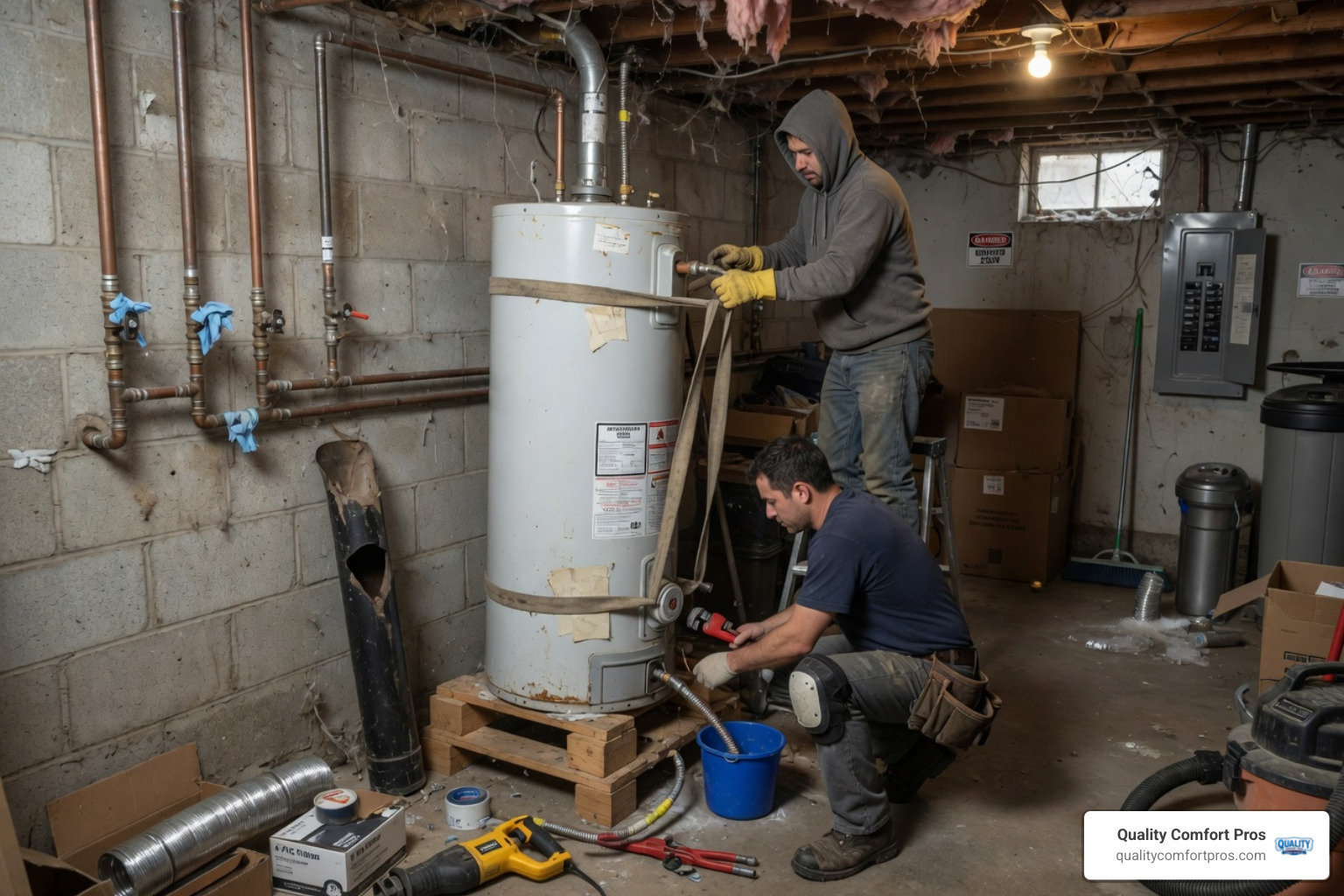
- Disconnect and remove: Detach the supply lines, gas or electrical connections, and vent pipes before hauling out the old unit.
- Prepare the installation site: Inspect the plumbing connections, check for local code requirements, and gather proper materials.
- Install the new unit: Connect the supply lines, gas or electrical lines, and venting systems, then install safety devices like a temperature and pressure relief valve.
- Test and inspect: Check for leaks, verify proper heating function, and schedule any required municipal permit inspections.
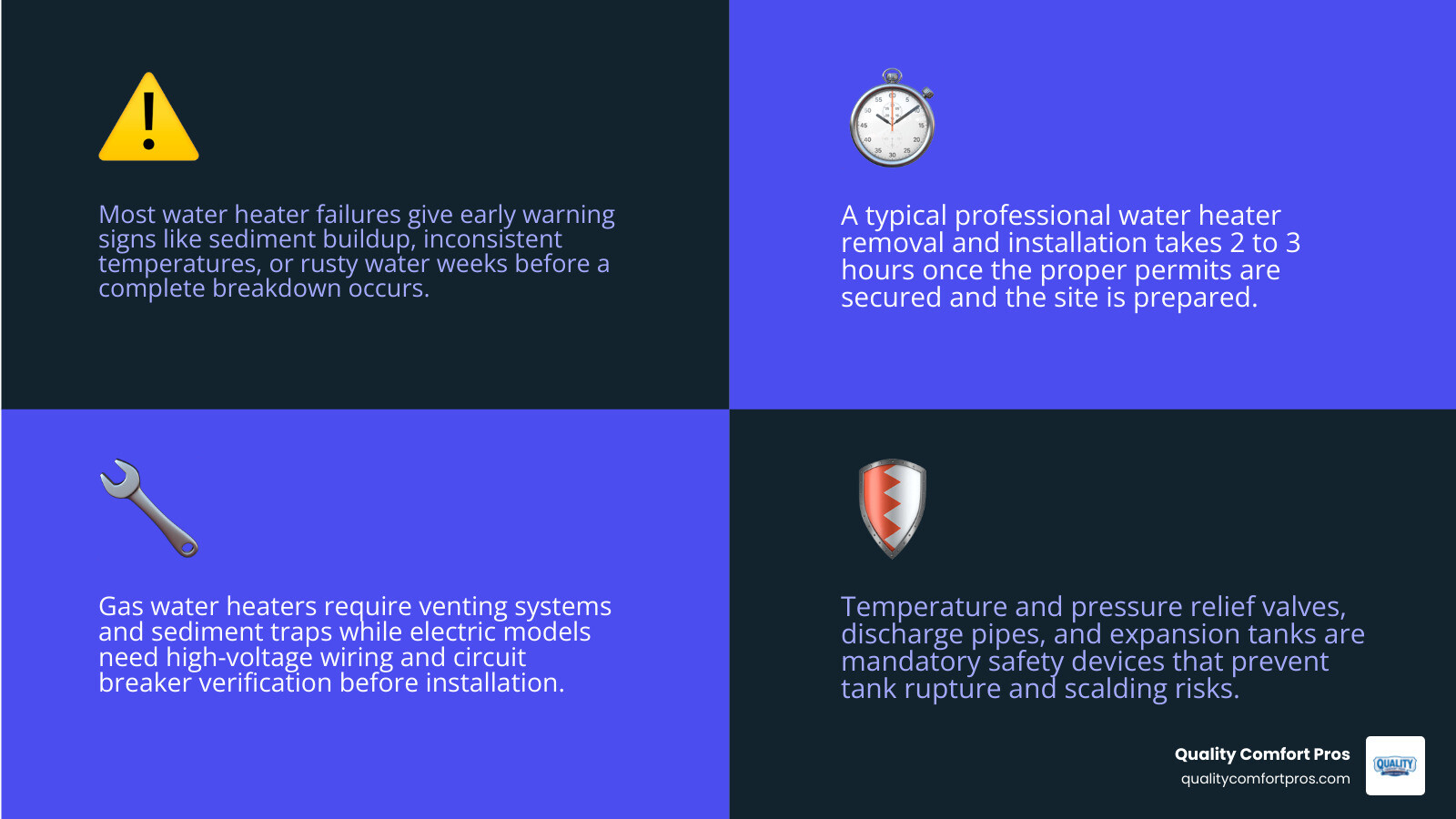
Most professional installations are completed within 2 to 3 hours. Costs vary depending on the type of system, fuel source, and installation complexity. Pulling the proper permits is required in most Michigan municipalities before any work begins.
Most homeowners only think about their water heater when something goes wrong. According to plumbing professionals, the majority of people wait until a major leak forces their hand, leaving them less than 24 hours to make a major decision about a system that affects nearly every part of their daily routine. Hot showers, clean dishes, and laundry all depend on a unit that quietly does its job until it simply cannot anymore.
The challenge is that water heater replacement is not a simple swap. It involves pressurized plumbing, high-voltage electrical connections or live gas lines, local building codes, permit requirements, and safety devices that most homeowners have never thought about. A single misstep can mean a flooded utility room, a carbon monoxide risk, or a failed home inspection down the road.
This guide is built specifically for Northern Michigan homeowners who want to understand the full picture before making any decisions, whether that means rolling up their sleeves or picking up the phone.
I’m JD Osman, a home services business owner and the driving force behind Quality Comfort Pros, where I apply over 20 years of industry and operational experience to help homeowners navigate complex decisions around water heater removal and installation with confidence. My goal here is to give you the honest, practical information you need to protect your home, your budget, and your family’s comfort.
Signs It Is Time for Water Heater Replacement
Recognizing when your system is on its last legs can save you from a major household emergency. When a water heater fails, it rarely does so quietly. Usually, there are subtle clues that sediment buildup, thermal stress, or simple age are taking their toll. Keeping an eye out for these indicators helps you plan for an upgrade on your own terms rather than during a midnight flood.
If you are noticing that your showers are getting shorter or your utility bills are creeping up, it is helpful to understand how to tell it’s time for a water heater replacement before the tank fails completely.
Recognizing the Warning Signs of System Failure
A failing water heater has several classic symptoms. One of the most common is a rumbling or banging noise coming from the tank. As water is heated, mineral deposits and sediment settle at the bottom of the tank. Over time, this sediment hardens, trapping water underneath it. When that water boils, it bubbles through the sediment crust, causing loud popping or rumbling sounds. This buildup also acts as a barrier, forcing the burner or heating elements to work much harder, which accelerates tank fatigue.
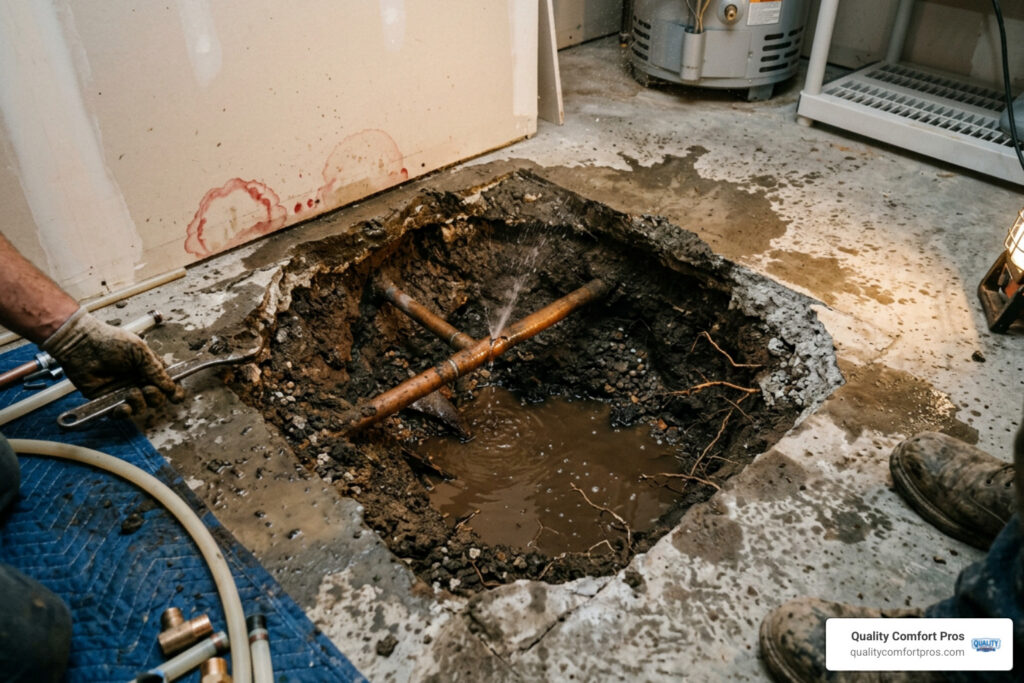
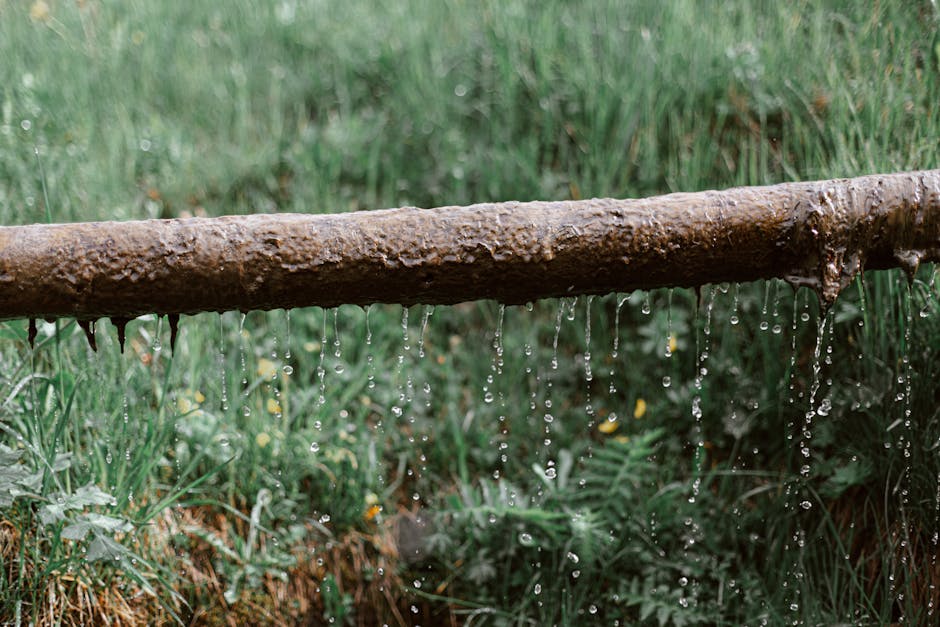
Visible corrosion on the tank or the connected piping is another major red flag. If you notice rusty water coming out of your hot water faucets, it is a strong sign that the internal lining of the tank has deteriorated. Once the steel tank begins to rust, it is only a matter of time before a microscopic crack develops into a major leak. Pooling water around the base of the unit is an immediate emergency. Even a small trickle indicates that the structural integrity of the tank has been compromised, requiring immediate shutdown and replacement.
Lifespan of Tank vs Tankless Systems
The expected service life of your system depends heavily on its design and the water quality in your local area. Traditional storage tank water heaters typically last between 8 and 12 years. Because they constantly hold dozens of gallons of water at a high temperature, they are subject to continuous thermal stress, corrosion, and sediment accumulation. Regular maintenance, such as replacing the sacrificial anode rod, can help extend this window, but eventual replacement is inevitable.
In contrast, tankless systems offer a much longer operational lifespan, often exceeding 15 to 20 years. Because they only heat water on demand, they do not suffer from the constant standby heat loss or the continuous water exposure that degrades tank models. However, they are still susceptible to mineral scale buildup, especially in areas with hard water. Regardless of the system type, ignoring routine flushing will lead to early efficiency degradation and premature component failure.
Choosing the Right System for Your Home
Selecting a replacement system requires balancing your household’s daily hot water demand, your energy goals, and the physical space available in your home. Upgrading your system is an excellent opportunity to lower your monthly utility costs, especially if you transition to a highly efficient modern unit.
If you are curious about how modern technology can improve your home’s energy profile, you can read about why tankless water heaters gaining popularity is a major trend among Northern Michigan homeowners looking to cut down on waste.
Comparing Tank, Tankless, and Hybrid Models
To make an informed decision, it is helpful to compare the primary system types side by side. Each has distinct installation requirements, performance characteristics, and long-term operating costs.
| System Type | Average Lifespan | Energy Efficiency | Space Requirements | Ideal For |
|---|---|---|---|---|
| Traditional Tank | 8 to 12 Years | Standard | Large floor space | Budget-conscious households with consistent demand |
| Tankless (On-Demand) | 15 to 20+ Years | High (24% to 34% savings) | Minimal wall space | Large families, compact homes, and seasonal properties |
| Hybrid Heat Pump | 10 to 15 Years | Exceptionally High | Large, well-ventilated space | Homes in moderate climates with high hot water usage |
Traditional storage tanks remain popular because they are familiar and have lower initial equipment costs. However, they must constantly reheat water to maintain a set temperature, which wastes energy when no one is home. Tankless models eliminate standby energy loss entirely by heating water instantly as it flows through the heat exchanger. Hybrid heat pump models pull heat from the surrounding air to warm the water, making them incredibly efficient, though they require a larger installation area with adequate airflow.
Sizing Your System for Peak Demand
Getting the right size is critical. If your system is too small, you will run out of hot water during peak times. If it is too large, you will pay for heating capacity you never use. For storage tank systems, sizing is determined by the first-hour rating, which measures how many gallons of hot water the unit can deliver in a single hour starting with a fully heated tank. A typical family of three or four usually requires a 40 to 50 gallon tank to meet morning shower and kitchen demands.
For tankless systems, sizing is calculated in gallons per minute and required temperature rise. You must estimate how many hot water fixtures might run simultaneously. For example, running a shower uses about 2.0 gallons per minute, while a dishwasher uses roughly 1.5 gallons per minute. If you plan to run both at once, your tankless unit must be rated for at least 3.5 gallons per minute.
Additionally, the system must be powerful enough to raise the incoming cold ground water, which can be exceptionally cold during winters in Charlevoix, MI or Petoskey, MI, up to a comfortable 120 degrees Fahrenheit.
The Realities of DIY Water Heater Removal and Installation
Many homeowners consider taking on water heater removal and installation as a weekend DIY project. While swapping out a few plumbing fittings might seem simple, the physical reality of handling a water heater is highly demanding. A fully grown storage tank filled with sediment can weigh over 300 pounds, requiring specialized transport equipment and physical strength just to move it out of a basement or utility closet.
Before purchasing tools, it is worth asking: is replacing your hot water tank actually hard for an amateur? For those who want to see what a complete project looks like, the This Old House guide on replacing a water heater provides a detailed look at the tools, materials, and physical labor involved.
Step-by-Step Water Heater Removal and Installation Prep
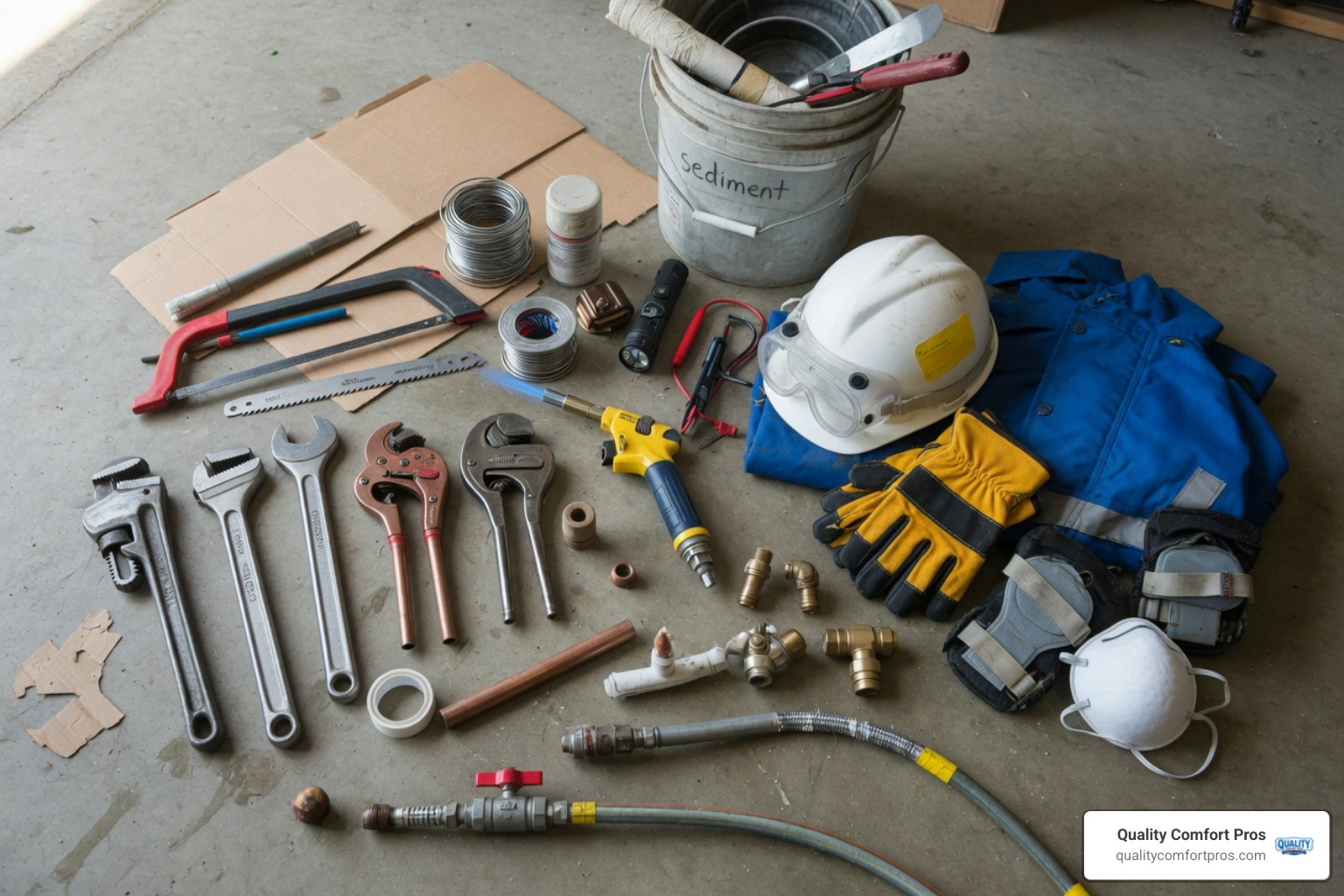
If you do choose to attempt this project, preparation is everything. You must gather the proper tools before starting to avoid being stuck without running water for days. Essential gear includes pipe wrenches, tongue-and-groove pliers, a copper pipe cutter, a voltage tester, and a garden hose.
- Power and Gas Shutdown: For electric units, turn off the dedicated circuit breaker and verify the power is off using a non-contact voltage tester. For gas units, shut off the gas control valve on the supply line.
- Water Supply Isolation: Close the cold water shutoff valve located above the water heater.
- System Draining: Connect a heavy-duty garden hose to the drain valve at the bottom of the tank. Run the other end to a floor drain or outside. Open a hot water faucet upstairs to break the vacuum, then open the drain valve.
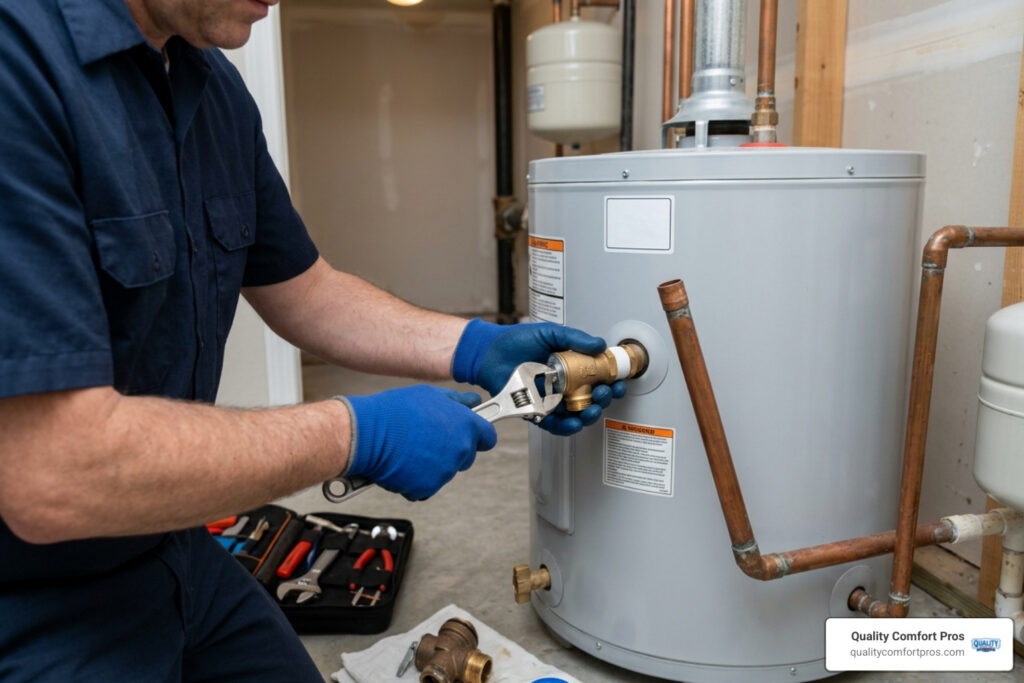
- Disconnection: Once empty, disconnect the hot and cold water supply lines. If the pipes are copper, you may need to cut them above the old connections. For gas units, carefully disconnect the gas line and the vent draft hood.
- Safe Disposal: Use a heavy-duty appliance dolly to wheel the old tank out of the home. Old water heaters must be disposed of according to local environmental regulations in your specific municipality.
Gas vs Electric Water Heater Removal and Installation Requirements
The installation requirements change drastically depending on your fuel source. Electric water heaters require a dedicated 240-volt electrical circuit. Connecting these units involves handling heavy-gauge wiring, securing proper strain relief connections, and ensuring the unit is perfectly grounded to prevent electrical shock hazards.
Gas water heaters are significantly more complex. They require precise gas line connections using gas-rated pipe dope or yellow Teflon tape to seal the threaded joints. A sediment trap must be installed on the gas line to catch debris before it enters the control valve.
Furthermore, venting is a matter of life and death. Improperly aligned draft hoods or blocked vents can cause carbon monoxide to backdraft into your living space. Gas units also require a continuous supply of combustion air, meaning they cannot be sealed in tight closets without proper louvers or dedicated intake piping.
Important Safety and Professional Guidance
Plumbing, electrical, and HVAC systems require specialized knowledge to handle safely. If safety concerns arise, if you lack the specialized tools required for the job, or if you are at all unsure about performing any step of the process correctly, it is always best to contact a licensed professional. Attempting to manage these systems without proper training can lead to severe property damage, electrical shock, gas leaks, or personal injury.
Codes, Permits, and Safety Standards
Local building codes are not suggestions: they are legally binding regulations designed to protect your household and your property value. In Michigan, any major plumbing or electrical work requires a permit and a follow-up safety inspection. Skipping this step can lead to serious consequences, including denied insurance claims if a DIY installation leaks or causes a fire.
To find verified professional services that adhere to these strict guidelines, you can consult the Better Business Bureau page for water heater installation to ensure you are working with reputable, licensed contractors in the Alba, MI area.
Why Permits and Inspections Matter
When you pull a permit for water heater removal and installation in Gaylord, MI or Grayling, MI, you are ensuring that an independent inspector will review the completed work. This inspector checks for proper venting clearances, correct gas line sizing, secure electrical connections, and the presence of mandatory safety devices.
If you ever decide to sell your home, unpermitted work can hold up the closing process, as home inspectors routinely check the installation dates of major appliances against municipal permit records. More importantly, if an unpermitted DIY installation fails and causes water damage or structural fire, your homeowner’s insurance policy may completely deny coverage for the repairs.
Crucial Safety Devices and Venting Rules
Modern building codes require several safety components that older installations often lacked. The most critical is the Temperature and Pressure (T&P) relief valve. This valve is designed to open and release water if the internal temperature or pressure of the tank exceeds safe limits, preventing the tank from exploding under extreme conditions. The T&P valve must have a discharge pipe made of approved material, like copper or CPVC, that drains downward to within 6 inches of the floor.
An expansion tank is also required in closed plumbing systems. When water is heated, it expands. If your plumbing system has a backflow preventer or pressure-reducing valve, this expanding water has nowhere to go, causing rapid pressure spikes that stress your pipes and water heater tank. The expansion tank absorbs this excess volume, protecting your system.
Other code requirements include placing a corrosion-resistant drain pan under the unit if it is installed in a finished space, and mounting carbon monoxide detectors nearby to monitor gas venting performance.
What to Expect from Professional Water Heater Removal and Installation
Hiring a licensed professional is the easiest way to guarantee that your new system is installed safely, efficiently, and in full compliance with all local regulations. Professional installation eliminates the stress of hauling heavy equipment, handling volatile gas lines, and spending your weekend running back and forth to the hardware store for missing parts.
If you want to ensure your system is set up perfectly from day one, investing in professional water heater installation is the most reliable option. A professional team can also help you evaluate whether you are a candidate for comprehensive water heater replacement services to upgrade your home’s overall efficiency.
The Professional Installation Process and Timeline
When you schedule a professional installation, the entire process is streamlined to minimize disruption to your day. A standard replacement typically takes between 2 and 3 hours from start to finish.
- Arrival and Site Protection: The technicians will place drop cloths and wear protective shoe covers to keep your floors clean.
- System Assessment: The team will verify that the new unit matches your home’s utility connections and space requirements.
- Removal of Old Unit: The old tank will be drained rapidly using professional-grade pumps and wheeled out to the service truck for proper recycling.
- New Installation: The team will install the new unit, replacing worn valves, updating the gas sediment trap, and mounting a new expansion tank.
- Testing and Clean-Up: After filling the tank and activating the power source, the plumbers will test all joints for gas and water leaks, adjust the thermostat to a safe 120 degrees Fahrenheit, and clean up the work area completely.
Costs, Warranties, and Retailer Financing Options
While the initial investment for a new water heater can vary depending on several factors, including the fuel type, system capacity, and venting complexity, it is helpful to look at the long-term value. Labor typically accounts for a significant portion of the project cost, but this fee covers the expertise, licensing, and insurance of the technicians.
Professional installations also come with robust protection. In addition to the manufacturer’s warranty on the tank and parts, reputable service companies provide a labor warranty on their workmanship. Many homeowners also take advantage of flexible financing options or monthly payment plans, allowing them to restore their hot water comfort immediately without straining their household budget.
Frequently Asked Questions about Water Heater Replacement
How long does a typical water heater removal and installation take?
A professional water heater replacement typically takes between 2 and 3 hours to complete. This timeframe includes draining the old tank, disconnecting the utility lines, positioning the new unit, making all plumbing and energy connections, and testing the system for safety.
Can I perform a water heater removal and installation myself?
While DIY installation is physically possible for homeowners with advanced plumbing and electrical skills, it is not recommended. Handling high-voltage electricity, combustible gas lines, and complex venting systems carries significant safety risks. Mistakes can lead to gas leaks, electrical shock, or water damage that may void your homeowner’s insurance.
What are the main differences between gas and electric water heater installation?
Gas water heaters require a dedicated gas line connection, a sediment trap, and a properly designed venting system to safely exhaust combustion gases like carbon monoxide outside. Electric water heaters do not require venting but need a dedicated 240-volt electrical circuit and precise electrical wiring to function safely.
Do I need a permit for water heater removal and installation in Michigan?
Yes, most municipalities in Michigan require a permit for water heater replacement, even when swapping an old unit for an identical model. Permits ensure that the finished installation is reviewed by a local inspector to guarantee compliance with safety and building codes.
How do I know if my water heater needs to be replaced or just repaired?
If your water heater is under 8 years old and experiencing a minor issue like a failed heating element or a faulty thermostat, a repair is often the most sensible choice. However, if the unit is over 10 years old, has a leaking tank, or shows signs of severe internal rust, a full replacement is necessary.
What is an expansion tank and do I need one?
An expansion tank is a small safety device installed on the cold water supply line above your water heater. It absorbs the excess water volume created by thermal expansion as water heats up. If your home has a closed plumbing system, an expansion tank is required by building codes to prevent pressure spikes.
Why is my new water heater making high-pitched whistling noises?
A high-pitched whistling noise usually indicates that water is forcing its way through a partially closed valve or a restricted pipe connection. It can also be caused by high incoming water pressure. A professional plumber can diagnose the restriction and adjust your home’s pressure-reducing valve if necessary.
How often should I drain my water heater to prevent sediment buildup?
You should drain and flush your water heater at least once or twice a year. Regular flushing removes the accumulated mineral sediment that settles at the bottom of the tank, preserving the unit’s heating efficiency and extending its overall lifespan.
Can I convert from a traditional tank to a tankless water heater?
Yes, you can convert to a tankless system, but the installation will require modifications. These typically include upgrading your gas line to handle a higher BTU demand, installing specialized Category III or IV venting, or updating your electrical panel to support the power requirements of an electric tankless unit.
What should I do immediately if my water heater starts leaking?
If your water heater begins leaking, immediately turn off its power source. For electric units, flip the dedicated breaker; for gas units, turn the control dial to the off position. Next, turn off the cold water supply valve located above the tank, and contact a professional plumber to address the leak.
Conclusion
Navigating the process of water heater removal and installation does not have to be an overwhelming experience. By understanding the signs of system failure, exploring modern energy-efficient options, and respecting local safety codes, you can make the best choice for your home’s long-term comfort. Given the demanding winters in Northern Michigan, keeping your heating and plumbing systems in peak condition is essential for protecting your property.
To keep your system running efficiently year after year, scheduling routine water heater maintenance is the best preventative step you can take. If you are currently dealing with an aging or unreliable unit, comparing the benefits of water heater replacement or repairs will help you make a financially smart decision.
Whether you need fast AC repairs, seasonal HVAC maintenance, or a complete system replacement, the team at Quality Comfort Pros is ready to help. Contact us today to schedule your professional water heater removal and installation service.