Stop Guessing: Know When to Replace Your Water Heater
A water heater that still turns on can fool you into thinking everything is fine. But when repairs keep popping up, you start to wonder if it is smarter to stop fixing and start planning for water heater replacement instead. That choice affects your comfort, your budget, and your stress level, especially when you depend on a steady supply of hot water in a Northern Michigan home.
In this article, we will walk through how to tell whether your current water heater deserves one more repair or is wiser to replace it before it fails. We will look at age, performance, safety, and long-term costs so you can make a calm, confident decision instead of reacting to a cold shower at the worst time.
Signs Your Water Heater Is Near the End
The first step is to be honest about where your water heater is in its life.
Age and lifespan realities
Most traditional tank-style water heaters last about 8 to 12 years when they are installed and maintained properly. Some tankless systems can last longer, especially with proper care and optimal water conditions. As the years go by, parts wear out, sediment builds up, and the tank materials weaken.
Older units often:
- Lose efficiency, so they run more and use more energy
- Need more frequent repairs on valves, burners, or elements
- Are more likely to develop leaks or tank damage
Performance warning signs
You can often feel the end coming before you see it. Watch for:
- Water that turns hot, then cold, then hot again
- Shorter hot showers than you used to get
- Longer recoveries between showers or loads of laundry
- Rusty or discolored hot water from your taps
- Rumbling, popping, or banging sounds from the tank
Noise is usually a sign of heavy sediment at the bottom of the tank. That sediment can trap heat, stress the tank, and push the heater harder than it should.
Safety and structural concerns
Some warning signs are more serious and should not be ignored:
- Persistent puddles or dampness under or around the tank
- Visible rust, corrosion, or bulging on the tank or fittings
- A gas smell near a gas water heater
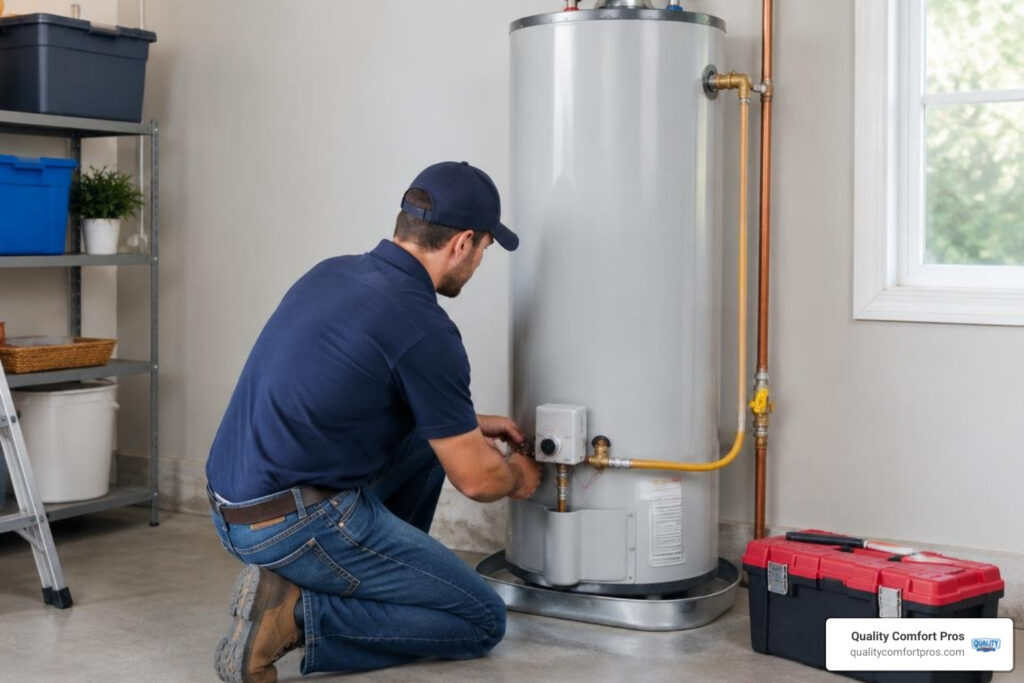
When the actual tank starts to rust and leak, repair is rarely a good long-term answer. At that point, water heater replacement is usually the safer route. The same is true if there are concerns about gas leaks or venting. That is when you want a trained pro to inspect the system and give clear advice.
When Repair Still Makes Sense
Not every problem means your water heater is done. Some issues are simple, isolated, and worth fixing.
Simple, isolated issues
On a younger unit that has been cared for, it can make sense to repair things like:
- Faulty thermostats
- Burned-out heating elements
- Worn igniters or pilot assemblies
- Stuck pressure relief valves
These parts can often be replaced without tearing into the whole heater. A well-timed repair can give you a few more good years before you need to think about water heater replacement, just as a well-planned furnace replacement can delay more extensive system changes.
Cost comparison and rule of thumb
A simple way to think about it is this: if the repair is less than about half the cost of a new unit and the heater is still under its usual lifespan, repair can be a smart choice. But there is a catch. Even smaller repairs can add up if you keep making them on an older, less efficient unit.
If you have called for service several times recently, it might be time to compare the pattern of bills and headaches with the one-time cost of a new heater, as many homeowners do when weighing heating replacement for older systems.
Evaluating recent performance
Think back over the last year or so. Ask yourself:
- Have you had more than one breakdown or emergency visit?
- Are your energy bills slowly climbing without a clear reason?
- Are family members complaining about running out of hot water?
One surprise breakdown on an otherwise steady unit is one thing. A string of annoying problems is usually the system telling you it is ready to retire.
How Water Heater Replacement Saves Money Long Term
It might feel like you are spending less by choosing another repair, but a new water heater can often save money over time.
Lower utility bills through better efficiency
Modern water heaters are designed to use less energy while providing the hot water you need. That includes:
- High-efficiency gas models
- Improved electric units
- Heat pump water heaters in the right homes
In a cooler climate, groundwater comes into your tank at a lower temperature, so your heater has to work harder. A more efficient model can cut that workload and help your system pair well with other upgrades, like a new AC replacement that keeps your home comfortable year-round.
Reduced risk of water damage and emergencies
A failing tank does not always just stop heating. It can leak, sometimes slowly, sometimes suddenly. That water can damage:
- Floors and subfloors
- Drywall and framing
- Stored items in basements or utility rooms
When you plan water heater replacement on your schedule, you reduce the risk of late-night emergencies, rush visits, and days without hot water.
Incentives and rebates
High-efficiency water heaters may qualify for rebates or tax incentives, helping soften the upfront cost. Local utilities sometimes offer seasonal promotions on energy-saving equipment, similar to programs that encourage upgrades such as ductless mini-split replacement in some homes. A local pro can explain what is currently available in your area.
Choosing the Right Replacement for Your Home
When you decide it is time to replace, you want the right system, not just the first one you see.
Tank vs. tankless and fuel type
Traditional tank heaters store a set amount of hot water. Tankless systems heat water on demand. In general:
- Tanks usually have a lower upfront cost
- Tankless units can save space and can be more efficient
- Existing gas, propane, or electric hookups matter for what makes sense
Your current setup in Northern Michigan will play a big role in which type is the smart choice for your home.
Sizing for your family’s needs
Sizing is not just about how big the tank looks. It is about how your family uses hot water:
- Number of people in the home
- How many bathrooms do you have
- How often do you run showers, laundry, and dishwashers at the same time
An undersized heater will leave you cold. An oversized heater can waste energy because it keeps more water hotter than you actually use.
Considering water quality and maintenance
Hard water and minerals are common concerns in many areas. They can shorten a water heater’s lifespan if they are not managed properly. A pro can talk with you about:
- How local water conditions affect tank or tankless systems
- Flushing schedules to clear sediment
- Anode rod checks and replacement in tank models
- Filter cleaning for tankless heaters
Good maintenance after installation helps your investment last longer and perform better, especially during those long heating seasons when your whole HVAC system works harder.
Take Control of Your Hot Water Before Summer Hits
Spring is a smart time to check your water heater before heavy summer use, guests, and busy schedules arrive. A simple inspection can help you understand the age, condition, and risks of your current unit so you can plan water heater replacement or repair with less pressure.
At Quality Plumbing Heating and Air, we work with homeowners across Northern Michigan every day and see the same patterns of wear, leaks, and performance drops. An honest assessment from a local team that understands your climate and water conditions can make the choice between repair and replacement much clearer and give you more peace of mind about your hot water for years to come.
Get Started with Your Project Today
If your hot water is unreliable or your system is showing its age, our team at Quality Comfort Pros can help you plan the right water heater replacement for your home and budget. We will walk you through your options, handle the installation, and clean up when the job is done so you can get back to your routine with confidence. To schedule service or ask questions, just contact us, and we will respond promptly.