Why Proper AC Unit Maintenance Saves You Time, Money, and Comfort
AC unit maintenance is one of the most important things a homeowner can do to keep their cooling system running reliably, efficiently, and affordably through every warm season.
Here is a quick overview of the essential AC maintenance tasks most homeowners should know:
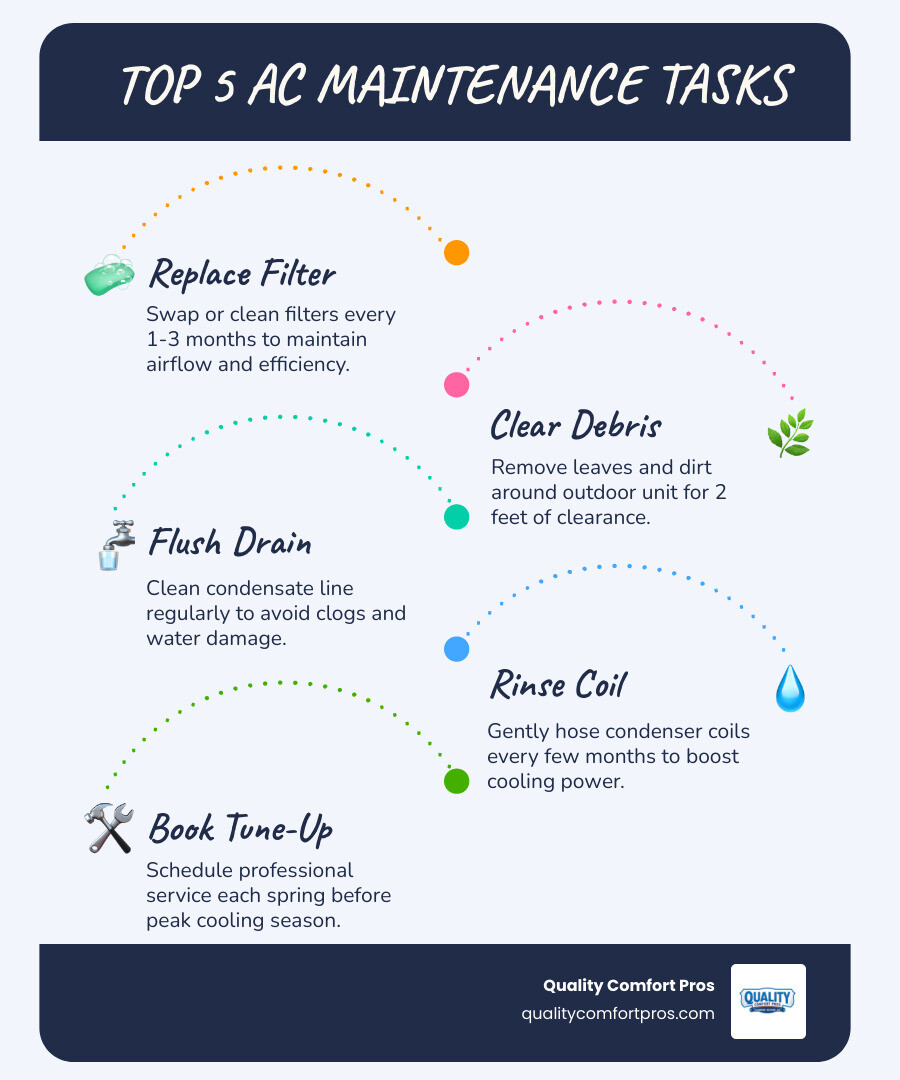
- Replace or clean your air filter every 1 to 3 months during the cooling season
- Clear debris and vegetation from around the outdoor condenser unit, maintaining at least 2 feet of clearance
- Flush the condensate drain line regularly to prevent clogs, mold, and potential water damage
- Rinse the condenser coil gently with a garden hose every few months to remove built-up dirt and debris
- Schedule a professional HVAC tune-up once a year, ideally in spring before peak cooling demand
These five steps alone can reduce your system’s energy consumption significantly, extend its lifespan, and help you avoid costly surprise repairs when temperatures climb.
Most homeowners do not think about their AC unit until something goes wrong. But just like skipping oil changes on your car eventually leads to engine trouble, neglecting your cooling system leads to reduced efficiency, higher utility bills, and premature breakdowns. According to industry data, a poorly maintained AC system can consume 15 to 25 percent more electricity than a properly serviced one, and air conditioning already accounts for roughly 12 percent of U.S. home energy expenditures. The math on regular maintenance is hard to argue with.
Whether you live in a climate that demands months of continuous cooling or you only run your AC for a few weeks each year, the fundamentals of keeping your system in top shape remain the same.
I’m JD Osman, and through my work at Quality Comfort Pros, I have seen how consistent AC unit maintenance is the single most effective way homeowners can protect their comfort and avoid unexpected repair costs. In the sections ahead, I will walk you through the exact steps that make the biggest difference.
Why Annual AC Maintenance is Essential
To understand why yearly system care is so critical, think of your cooling system as a high-performance machine. During a humid Northern Michigan summer, your cooling system works tirelessly to keep your indoor spaces comfortable. Without routine care, the wear and tear of continuous operation will quickly catch up to your equipment.
Regular attention directly impacts three primary areas of home comfort: energy savings, system lifespan, and indoor air quality. When dirt and dust coat the internal components, your system has to run longer and work harder to achieve the target temperature on your thermostat. This extra effort accelerates component wear, leading to sudden mechanical failures in the middle of a heatwave.
Furthermore, your cooling system plays a major role in filtering out airborne pollutants. A clean, well-maintained system traps dust, pollen, and pet dander, ensuring your family breathes clean air. For more details on keeping your system running smoothly throughout the year, you can explore these essential HVAC maintenance tips to establish a reliable baseline of care.
Boosting Energy Efficiency and Lowering Utility Bills
Electricity consumption is directly tied to how freely air can move through your cooling system. When air filters are clogged and condenser coils are caked in dirt, the system suffers from severe airflow restriction. To compensate, the blower motor and compressor must consume significantly more power to move air through your home.
According to the Air Conditioner maintenance guide from the Department of Energy, replacing a dirty, clogged filter with a clean one can lower your air conditioner’s energy consumption by 5 to 15 percent. Over a full cooling season in places like Petoskey, MI or Boyne City, MI, those monthly savings add up to a substantial reduction in your utility costs. Keeping the system clean ensures that heat transfer occurs rapidly and efficiently, keeping your power bills as low as possible.
Protecting Your System Warranty and Lifespan
Most homeowners do not realize that skipping annual professional maintenance can actually void their manufacturer warranty. Major equipment brands typically require documented proof of yearly professional servicing to honor warranty claims on expensive parts like compressors or evaporator coils.
Beyond warranty validation, routine care prevents minor component wear from cascading into catastrophic failure. For example, a slightly dirty coil can cause the system to run longer cycles, which overheats the compressor and leads to premature failure. Investing in routine care ensures system longevity, allowing you to get the maximum possible years of service out of your investment before needing a replacement.
5 DIY Secrets to Perfect Air Conditioning Unit Maintenance
While some complex tasks require specialized diagnostic tools, there are several highly effective steps you can take yourself. Performing these basic tasks on a regular maintenance schedule will keep your system running beautifully and minimize the need for emergency service calls.

Before performing any hands-on work on your cooling system, safety must be your top priority. Always turn off the electrical power to your unit. For the indoor unit, switch off the corresponding circuit breaker in your main electrical panel. For the outdoor unit, locate the metal disconnect box mounted on your exterior wall and pull out the safety disconnect switch.
To tackle these DIY tasks, you only need a few basic tools:
- A screwdriver or nut driver to open access panels
- A soft-bristle brush or vacuum cleaner with a brush attachment
- A standard garden hose with a spray nozzle (never use a pressure washer)
- A specialized fin comb
- A basic wet/dry utility vacuum
1. Master the Art of Air Filter Replacement for Air Conditioning Unit Maintenance
Replacing your air filter is the single most impactful DIY task you can perform. The air filter is designed to protect the sensitive internal mechanics of your system from dust buildup, while also purifying your indoor air.
To locate your filter, look along the return air duct next to your indoor air handler unit, or check behind the large return air grilles mounted on your walls or ceilings. In ductless mini-split systems, the filters are located right inside the front panel of the wall-mounted indoor units.
When choosing a replacement filter, pay close attention to the Minimum Efficiency Reporting Value (MERV) rating. For standard residential systems, a filter with a MERV rating between 8 and 11 offers an excellent balance of effective particle filtration without restricting airflow. Avoid using high-MERV commercial filters unless your system has been specifically modified to handle them, as they can restrict airflow and strain your blower motor.
Your replacement cycle depends heavily on your household environment:
- Standard Homes: Replace filters every 60 to 90 days.
- Homes with Pets or Allergies: Replace filters every 30 to 45 days.
- Peak Cooling Season: Check the filter every 30 days and replace it if it looks gray or dusty.
To prepare your system properly before the warm weather arrives, refer to this detailed early spring central AC start up checklist to ensure no steps are missed.
2. Clear and Clean the Outdoor Condenser Unit
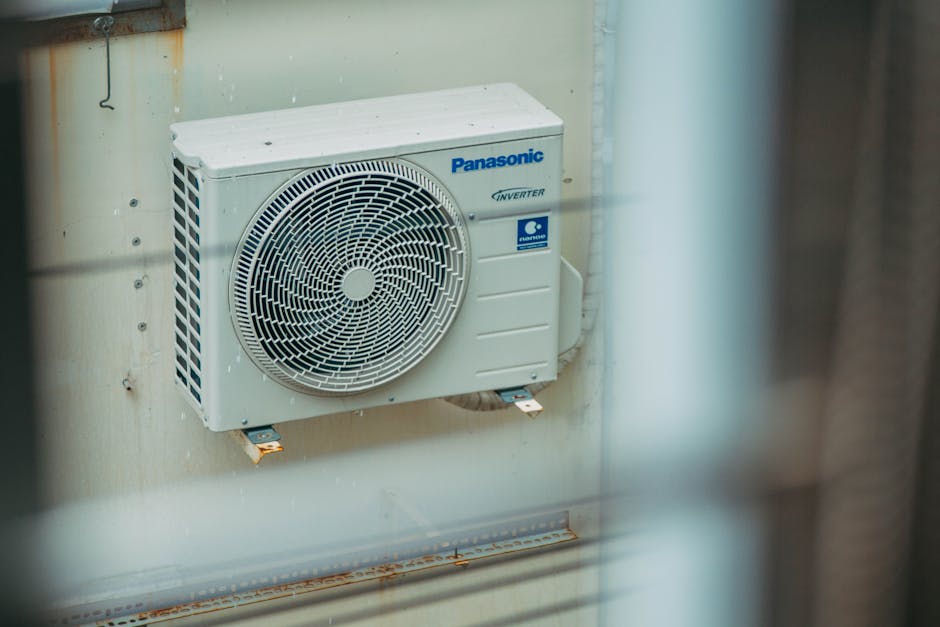
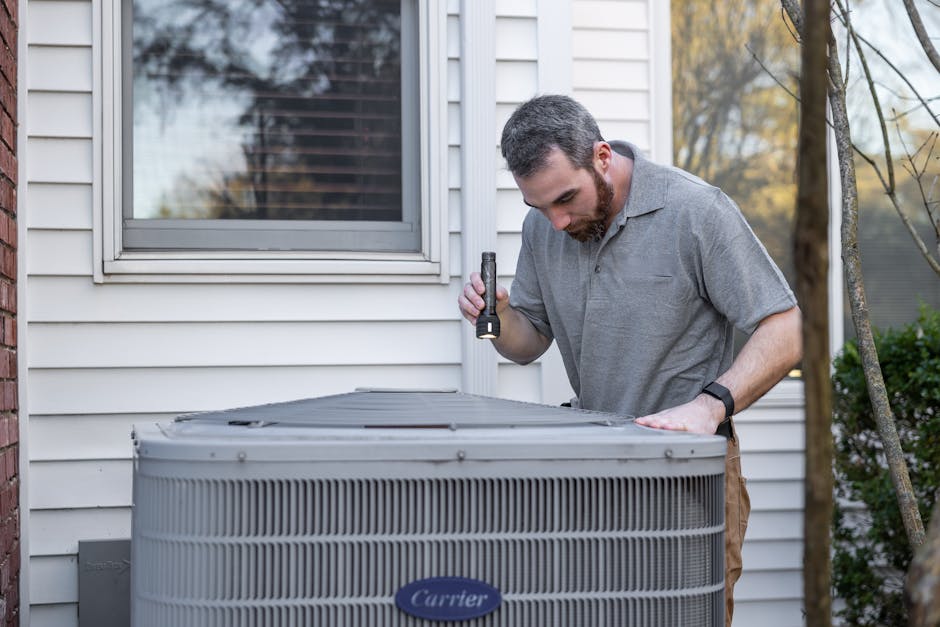
Your outdoor condenser unit is responsible for releasing the heat collected from inside your home into the outdoor air. Because it sits outside year-round, it easily becomes clogged with grass clippings, leaves, dirt, and wild vegetation.
Start by clearing away any plants, shrubs, weeds, or low-hanging branches around the unit. Maintain a clear zone of at least 2 feet in all directions to allow unrestricted airflow around the condenser.
Next, perform a gentle coil rinsing. Over time, wind-driven dust and cottonwood seeds coat the delicate aluminum fins, insulating the coils and blocking heat transfer. After ensuring the power is completely shut off, use your garden hose to spray the coils. Direct the spray from the inside out or at a downward angle to wash the dirt out of the fins. Never use a high-pressure washer, as the intense pressure will instantly bend and ruin the soft aluminum fins.
3. Flush the Condensate Drain Line
As your AC cools your home, it also removes moisture from the air. This moisture condenses on the cold indoor evaporator coil and drips into a drain pan, where it flows out of your home through a plastic condensate drain line.
Because this environment is constantly dark and damp, it is a breeding ground for algae, mold, and slime. If left neglected, these organisms will create a thick clog. When a clog occurs, the drain pan will overflow, leading to water damage on your ceilings, walls, or floors. In many modern systems, a clogged drain line will trigger a safety float switch, causing your entire system to shut down unexpectedly.
To prevent clogs, locate the access T-joint on your indoor drain line. Pour a cup of regular household white vinegar or a diluted bleach solution down the line once every few months during the cooling season. This simple step kills algae and mold before it can form a clog. If you suspect a clog has already formed, you can hook up your wet/dry utility vacuum to the outdoor end of the drain line and vacuum out the blockage.
4. Straighten Bent Coil Fins and Clear Debris
The exterior of your condenser unit is wrapped in hundreds of thin aluminum fins. These fins maximize the surface area available for heat transfer. Because they are made of thin aluminum, they bend easily when struck by stray rocks, hail, or yard equipment.
Bent fins block the air from flowing through the condenser coil, reducing your system’s overall cooling capacity. To fix this, purchase an inexpensive tool called a fin comb from a local hardware store. A fin comb has various interchangeable heads designed to match the specific spacing of your unit’s fins.
Carefully slide the comb through the bent sections to straighten them back into their original positions. While doing this, use a soft-bristle brush to clear away any deeply embedded dirt or debris trapped between the fins. Take your time during this process, as rushing can cause further damage to the delicate aluminum.
5. Prepare Your AC Unit for Winter Off-Season Storage
In Northern Michigan, our winters are long and snowy. Preparing your cooling equipment for the freezing winter months is essential to prevent damage from ice accumulation and rust.
First, perform a thorough cleanup of the outdoor unit, removing any lingering leaves, twigs, or dirt. Once the unit is clean and dry, turn off the outdoor electrical disconnect switch. This prevents the system from accidentally turning on during an unseasonably warm winter day, which could damage the compressor.
Next, cover the unit to protect it from heavy snow and falling icicles. However, avoid wrapping the entire unit in a solid plastic tarp. Solid plastic traps moisture inside, creating a highly corrosive environment that rusts metal components and damages electrical wiring. It also creates an inviting nesting area for mice and other small rodents. Instead, use a breathable cover designed specifically for outdoor units, or simply place a piece of plywood over the top of the unit secured with a heavy brick to protect it from falling ice. For a complete seasonal breakdown, check out our comprehensive seasonal HVAC preparation guide to keep your home protected year-round.
Knowing When to Call a Professional for DIY Tasks
While performing basic AC unit maintenance tasks can keep your system running smoothly, safety must always be your top priority. We strongly encourage homeowners to contact a certified professional if safety concerns arise during any maintenance step, if specialized diagnostic tools are required, or if complex HVAC, electrical, plumbing, or structural systems are involved. If you are ever unsure about performing a task correctly, it is always best to rely on an expert to avoid accidental damage or personal injury.
Central AC vs. Window Units: Key Maintenance Differences
While central AC systems and smaller room or window units operate on the same basic refrigeration principles, their scale and design require different maintenance approaches.
| Feature / Task | Central AC Systems | Window / Room AC Units |
|---|---|---|
| System Scale | Cools the entire home via ductwork | Cools a single room or localized zone |
| Filter Accessibility | Located at the central air handler or return grilles | Located directly behind the front intake grille |
| Drainage System | Uses a dedicated condensate pump or gravity drain line | Relies on a built-in sloped pan or drain plug |
| Coil Cleaning | Requires professional access for indoor coils | Can be partially cleaned by slide-out chassis |
| Seasonal Care | Stays outdoors; requires exterior winterization | Should be removed and stored indoors for winter |
Tailoring Your Air Conditioning Unit Maintenance by System Type
Because window units are self-contained, they are highly prone to water leaks if the unit is not installed with a slight backward tilt. This tilt allows condensation to drain outdoors rather than dripping down your indoor walls. Additionally, the window seals around these units must be inspected annually to prevent hot outdoor air and pests from entering your home.
For ductless systems, maintenance involves washing the reusable filters every few weeks and ensuring the indoor unit’s blower wheel remains free of dust. If you have a central ducted system, you also need to ensure your ductwork remains sealed and insulated. To keep your central system running at peak performance, scheduling regular professional AC maintenance is the best way to address complex internal components that are difficult to access.
When to Call a Professional for HVAC Servicing
While DIY tasks are fantastic for routine upkeep, there are several critical maintenance procedures that should only be performed by a certified professional. Modern air conditioners are complex systems containing high-voltage electrical circuits and pressurized chemical refrigerants that pose serious safety hazards if handled incorrectly.
Attempting to service electrical controls or refrigerant lines yourself can result in severe electrical shocks, chemical burns, or system damage. Certified technicians have the specialized training, licensing, and diagnostic tools required to safely service these systems in compliance with local environmental regulations.
Crucial Tasks for a Certified HVAC Technician
When a professional technician performs your annual tune-up, they complete a comprehensive multi-point inspection that goes far beyond basic cleaning. Key professional tasks include:
- Checking Refrigerant Charge: Measuring the exact refrigerant level to ensure there are no leaks and that the system is operating within manufacturer specifications.
- Inspecting Electrical Terminals: Tightening loose electrical connections, measuring voltage and motor currents, and applying protective non-conductive coatings.
- Thermostat Calibration: Testing your thermostat to ensure it accurately communicates with your heating and cooling equipment.
- Inspecting Safety Controls: Verifying that all built-in safety switches operate correctly to prevent system damage or fire hazards.
Scheduling these pre-summer air conditioner tune-ups ensures that minor issues are identified and resolved before they cause major breakdowns during the hottest weeks of the year.
Warning Signs Your Cooling System Needs Immediate Repair
Even with regular upkeep, components will eventually wear out. It is important to recognize the early warning signs that indicate your system needs professional attention:
- Weak Airflow: If you feel warm air or very weak airflow coming from your supply vents, your blower motor may be failing or your evaporator coil could be frozen.
- Strange Noises: Squealing, grinding, rattling, or clicking sounds indicate loose components, failing bearings, or electrical issues.
- Short Cycling: If your AC turns on and off rapidly without ever completing a full cooling cycle, it is putting extreme stress on your compressor.
If you notice any of these warning signs, do not wait for the system to break down completely. Booking a professional air conditioner repair immediately will prevent further damage and keep your repair costs as manageable as possible.
Frequently Asked Questions About AC Unit Maintenance
How often should I perform AC unit maintenance?
You should perform basic DIY maintenance, like checking your air filter and clearing outdoor debris, once a month during the cooling season. Professional maintenance should be scheduled once a year, ideally in the spring, to prepare your system for the summer heat.
Where is my AC air filter located and how do I change it?
In central systems, the filter is typically located in the return air duct next to the indoor air handler or behind a return air grille in your wall or ceiling. To change it, turn off the system power, slide out the old filter, and insert the new one, making sure the airflow arrows point toward the unit.
Can I clean my own outdoor AC condenser unit?
Yes, homeowners can safely clear away weeds, leaves, and debris from around the outdoor unit and gently rinse the aluminum fins with a garden hose. However, deep chemical cleaning of the coils and electrical component servicing should be left to a professional.
What happens if I do not clean my AC condensate drain line?
If neglected, algae and mold can clog the drain line, causing the condensate pan to overflow. This leads to serious water damage to your home’s walls or ceilings and can cause your cooling system to shut down completely.
How does regular AC maintenance reduce my monthly energy bills?
Regular maintenance keeps air filters and coils clean, which maximizes airflow and heat transfer. This allows your system to cool your home much faster while consuming significantly less electricity, resulting in lower monthly utility bills.
Should I cover my outdoor AC unit during the winter?
You should cover the top of your outdoor unit with a breathable cover or a piece of plywood to protect it from falling ice and heavy snow. Avoid wrapping the entire unit in solid plastic, as this traps moisture, rusts components, and attracts nesting rodents.
What are the signs that my AC unit needs professional repair?
Warning signs include weak airflow, blowing warm air, unusual squealing or grinding noises, frequent short cycling, and sudden spikes in your monthly energy bills.
What is the difference between central AC and window unit maintenance?
Central AC systems require ductwork inspections and professional servicing of complex split-system components. Window units are self-contained and require simpler filter cleanings, checking the window seals, and ensuring the unit tilts slightly outward to drain water.
What does a professional HVAC technician do during an annual tune-up?
A professional technician will inspect electrical connections, measure refrigerant levels, test safety controls, calibrate your thermostat, clean the evaporator and condenser coils, and lubricate moving parts to ensure peak efficiency.
Will skipping annual AC maintenance void my manufacturer warranty?
Yes, many manufacturers require documented proof of annual professional maintenance to keep your warranty valid. Skipping yearly service can leave you responsible for the full cost of replacement parts if a major component fails.
Conclusion
Taking a proactive approach to AC unit maintenance is the single best way to ensure your home remains a cool, comfortable sanctuary all summer long. From simple monthly tasks like replacing your air filter to clearing away yard debris from your outdoor condenser, these straightforward steps pay massive dividends in the form of lower energy bills, improved indoor air quality, and a longer lifespan for your cooling equipment.
While DIY care is incredibly valuable, it works best when paired with expert professional support. At Quality Comfort Pros, we have spent 28 years delivering reliable, family-owned HVAC solutions to our neighbors throughout Gaylord, MI and Northern Michigan. Whether you are located in Bellaire, MI, Boyne City, MI, Charlevoix, MI, or Petoskey, MI, our experienced team is always ready to help you keep your home systems running flawlessly.
To take the hassle out of your seasonal upkeep and enjoy year-round peace of mind, explore our affordable preventative maintenance plans. Whether you need fast AC repairs, seasonal HVAC maintenance, or a complete system replacement, the team at Quality Comfort Pros is ready to help. Schedule your professional HVAC service today.