Why Water Softener Maintenance Services Matter for Your Home
Water softener maintenance services are the single most effective way to protect your home’s plumbing, appliances, and water quality from the damaging effects of hard water. If you are looking for a quick answer on what these services typically include, here is what professional maintenance covers:
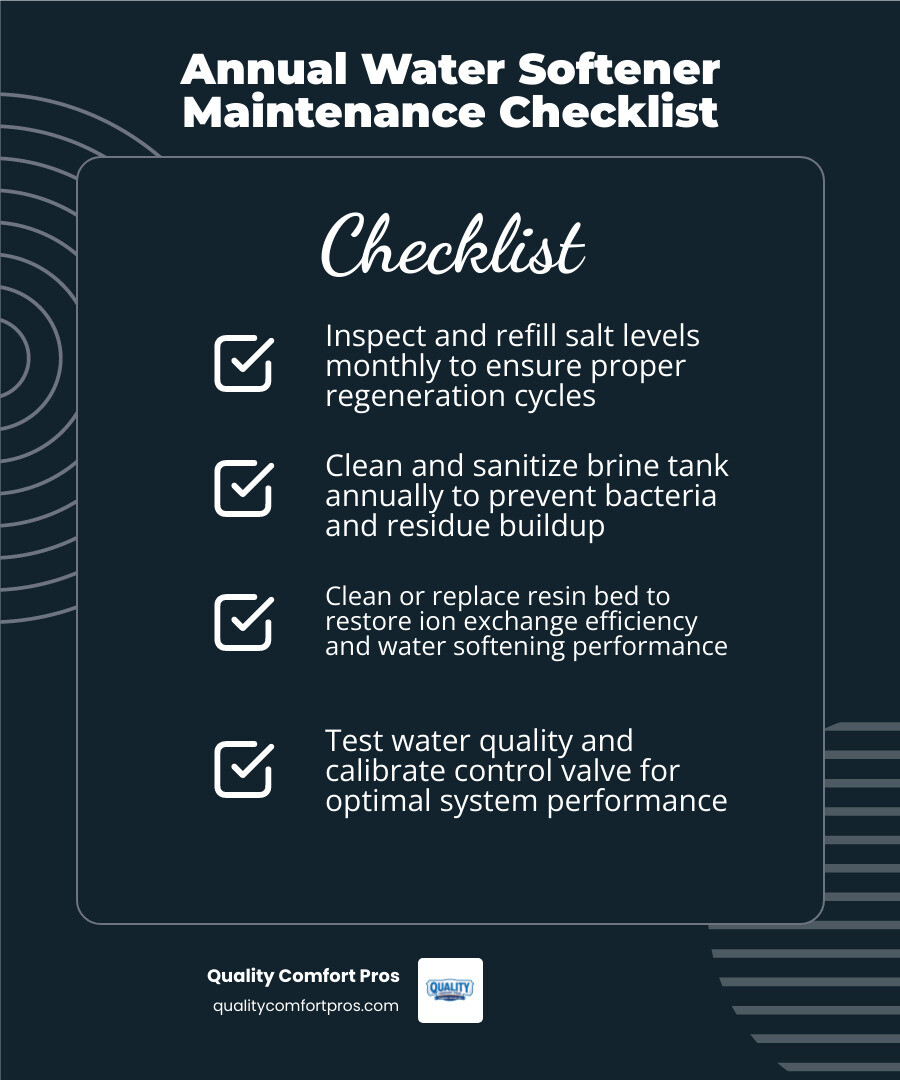
- Salt level inspection and refill to keep the system regenerating properly
- Brine tank cleaning and sanitization to prevent bacteria and residue buildup
- Resin bed cleaning or replacement to restore softening efficiency
- Control valve and timer inspection to ensure accurate regeneration cycles
- Water quality testing to confirm your system is performing as expected
- System calibration and optimization for peak efficiency
Most professionals recommend scheduling annual service, with monthly visual checks of your salt levels in between.
Hard water is far more common than most homeowners realize. According to the U.S. Geological Survey, approximately 85% of homes across the United States deal with hard water, which means mineral-heavy water flowing through pipes, appliances, and fixtures every single day. Over time, that calcium and magnesium buildup quietly chips away at your water heater’s efficiency, clogs your plumbing, and leaves your skin feeling dry and your dishes looking cloudy.
A water softener solves all of that. But here is the part many homeowners miss: the softener itself needs regular care to keep doing its job. Without proper upkeep, even a high-quality system can lose efficiency, develop salt bridges, or fail entirely, often at the worst possible time.
In Northern Michigan, where seasonal changes and local water conditions can put added stress on home systems, staying ahead of maintenance is especially important. Neglected systems do not just perform poorly; they can end up costing you significantly more in repairs or premature replacement. The unique geology of our region means that groundwater often travels through deep layers of limestone and glacial till, picking up heavy concentrations of calcium, magnesium, and iron along the way. This makes routine care an absolute necessity rather than an optional chore.
I’m JD Osman, a home services industry professional with over 20 years of experience helping homeowners make smarter decisions about their systems, including water softener maintenance services that protect long-term comfort and efficiency. In this guide, I will walk you through everything you need to know to keep your softener running at its best.
What is Water Softener Maintenance and Why is it Crucial?
At its core, water softener maintenance is the routine process of inspecting, cleaning, and calibrating your water treatment system to ensure it continues to remove heavy minerals from your water supply. To understand why this is so important, it helps to understand how your system operates.
Most residential water softeners rely on a scientific process called ion exchange. Inside your system’s resin tank are thousands of tiny plastic beads coated with sodium ions. As hard water enters the tank, the calcium and magnesium minerals are magnetically attracted to the resin beads. The beads grab onto the hard minerals and release a tiny, imperceptible amount of sodium in their place.
Eventually, those resin beads become completely covered in calcium and magnesium. When this happens, the system must undergo a regeneration cycle, flushing the beads with a highly concentrated salt brine solution from the brine tank to wash away the hard minerals and replenish the sodium.
Over time, this continuous cycle takes a toll on the system. Salt can clump together, dirt and impurities from the salt can settle at the bottom of the brine tank, and the resin beads can become fouled by iron or organic matter. This is why having a comprehensive water quality test performed is an excellent first step. It helps determine the exact mineral levels in your local water supply, allowing technicians to calibrate your system’s regeneration schedule with absolute precision.
Without consistent maintenance, your system has to work twice as hard to produce soft water. This leads to increased salt consumption, wasted water, and eventual system failure. For homeowners in Northern Michigan, where well water often contains high levels of iron and calcium, neglecting your softener can quickly lead to ruined plumbing fixtures and scaled-up water heaters. Regular upkeep ensures that the ion exchange process remains highly efficient, saving you money on utility bills and preventing premature wear on your plumbing infrastructure.
Key Signs Your System Needs Water Softener Maintenance Services
How do you know when your system is crying out for professional attention? While some water softener issues happen suddenly, most develop slowly over several months. If you notice any of the following warning signs in your home, it is time to schedule water softener maintenance services before a minor issue turns into a major breakdown.
1. Dry, Itchy Skin and Dull Hair
Hard water minerals strip away the natural oils on your skin and hair, leaving behind a sticky residue that prevents moisture from absorbing. If you notice your skin feels unusually dry or itchy after showering, or if your hair feels brittle and difficult to style, your water softener is likely failing to remove those harsh minerals. This is because the calcium and magnesium ions are bonding with your soap, creating a film that is incredibly difficult to rinse away.
2. Cloudy Glassware and Stubborn Soap Scum
Have you noticed a white, chalky film on your freshly washed dishes? Or perhaps you are scrubbing your shower doors more often because of a persistent soap scum buildup? These are classic signs of hard water. When calcium and magnesium mix with soap, they create a curd-like substance that clings to surfaces instead of rinsing away cleanly. Over time, this mineral scale can permanently etch your glassware, leaving it looking permanently foggy.

3. A Sudden Drop in Water Pressure
If your showerhead or kitchen faucet suddenly feels like it is running on low power, mineral scale might be clogging the internal plumbing. Alternatively, a fouled resin bed inside the water softener itself can restrict water flow, causing a noticeable drop in pressure throughout your entire home. This restriction forces your well pump or municipal water system to work harder, increasing energy consumption.
4. No Change in Salt Levels
Your water softener should consume salt at a steady rate. If you peer into your brine tank and notice that the salt level has not budged in several weeks, your system is not regenerating. This is often caused by a salt bridge, which is a hard crust of salt that forms over the water in the tank, preventing the brine solution from mixing properly. Another common issue is salt mushing, where salt recrystallizes at the bottom of the tank, forming a thick sludge that blocks the system’s intake.
When these signs begin to pile up, simple maintenance may no longer be enough. In many cases, you may need a professional water softener repair to address damaged valves, worn-out seals, or a cracked distributor tube.
What is Included in Professional Upkeep?
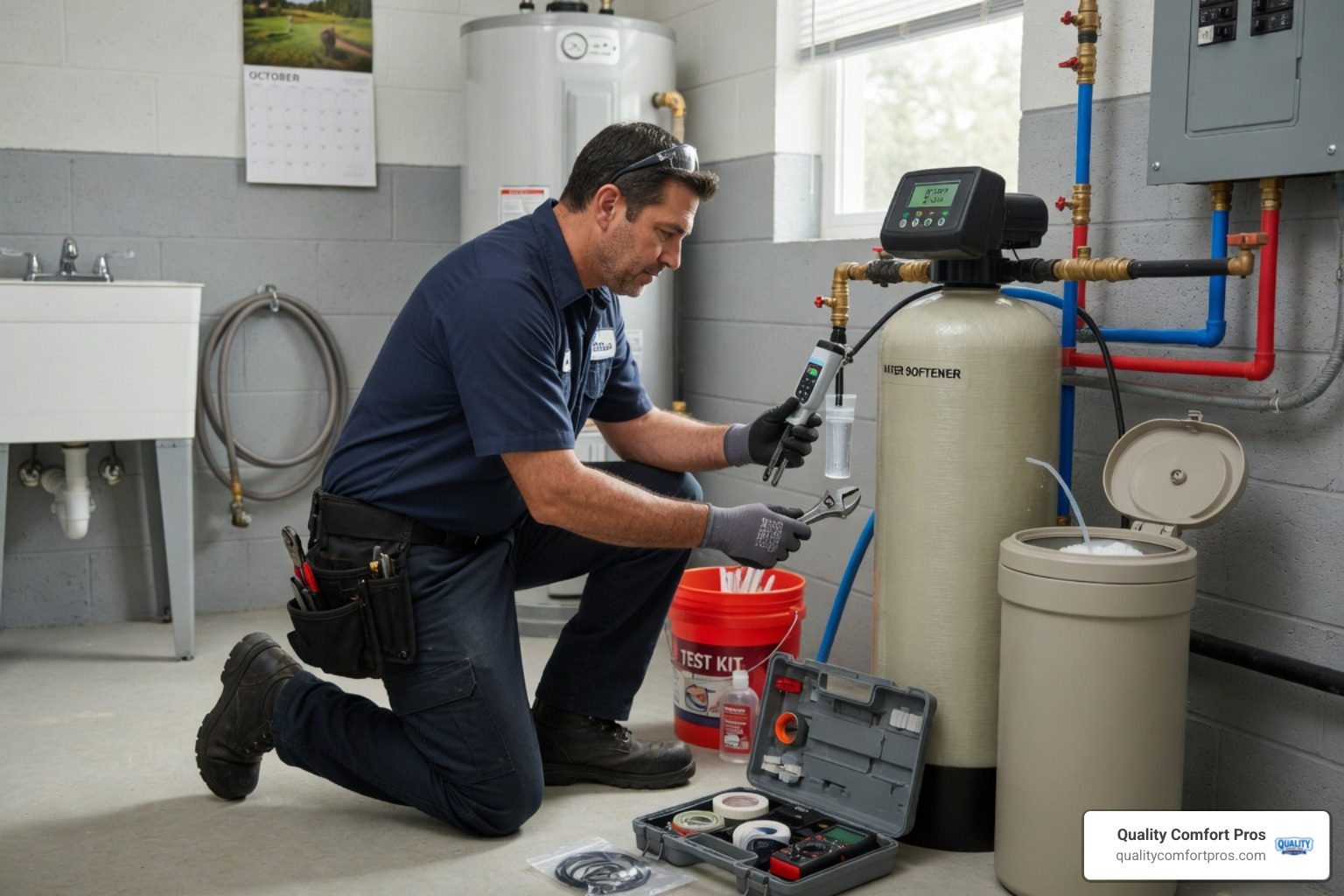
While some homeowners feel comfortable adding salt to their system, a truly comprehensive service requires specialized tools and expertise. Professional water softener maintenance services go far beyond simply dumping a bag of salt into the tank.
When a certified technician services your system, they perform a multi-point inspection and cleaning process designed to restore the unit to factory-spec efficiency. Here is exactly what is included in a professional maintenance visit:
- Brine Tank Cleanout and Sanitization: Technicians empty the brine tank, break up any hardened salt crusts, wash out accumulated dirt and sludge, and sanitize the tank to prevent bacterial growth.
- Resin Bed Deep Cleaning: Using specialized chemical cleaners, the technician flushes the resin tank to strip away stubborn iron and heavy metal deposits that normal regeneration cycles cannot remove.
- Valve and Seal Inspection: The moving parts inside the control valve are checked for wear, lubricated, and replaced if necessary to prevent internal leaks.
- System Calibration: The technician tests your incoming water hardness and programs the control head to regenerate only when necessary, saving you money on water and salt.
- Water Flow and Pressure Checks: The system is run through a manual regeneration cycle to verify that water flows freely and that there are no hidden leaks.
To help you decide whether to tackle this yourself or hire a professional, here is a quick comparison of what DIY maintenance looks like compared to professional care:
| Maintenance Task | DIY Approach | Professional Service |
|---|---|---|
| Salt Refills | Easy to perform; requires lifting heavy bags. | Included as part of routine service visits. |
| Salt Bridge Removal | Can be done with a broom handle, but risks damaging the tank walls. | Safely cleared using specialized tools without risking damage. |
| Resin Cleaning | Limited to basic over-the-counter pour-in additives. | Deep chemical flush that removes heavy iron and metal fouling. |
| Mechanical Diagnostics | Difficult; requires specialized plumbing and electrical knowledge. | Full diagnostic check of valves, timers, and internal seals. |
| Sanitization | Often skipped due to safety concerns with chemicals. | Safe, controlled sanitization compliant with health standards. |
How Regular Upkeep Extends Lifespan and Efficiency
Investing in routine upkeep is not just about avoiding cloudy dishes; it is also about protecting your wallet. A water softener that is maintained regularly operates at peak efficiency, which translates directly into lower utility bills and a longer equipment lifespan.
When hard water minerals build up inside a water heater, they form an insulating layer of scale on the heating elements. This forces the heater to work significantly harder and consume more energy to warm your water. By keeping your water softener in top shape, you prevent this scale from ever forming, keeping your energy bills low and extending the life of your water heater by several years. This is especially critical for modern tankless water heaters, which have extremely narrow water pathways that can clog completely from even minor scale accumulation.
Regular maintenance also prevents the formation of salt bridges and salt mushing inside the brine tank. Salt mushing occurs when salt recrystallizes at the bottom of the tank, forming a thick, muddy sludge that blocks the well pipe and prevents the system from regenerating. Preventing these issues ensures that your home always has access to clean, soft water.
Furthermore, a well-maintained softener protects your household plumbing. Over time, scale buildup can narrow the inside of your pipes, restricting water flow and eventually requiring costly pipe replacement. If you want to take your home’s water quality to the next level, combining your softener with professional water filtration solutions can remove chlorine, sediment, and other contaminants, providing your family with the cleanest water possible. For more information on how home water treatment systems protect public health and safety, you can explore the EPA guide on home water treatment.
Choosing the Right Provider for Your Home
When it comes to servicing the systems that keep your home running smoothly, you want to work with a team you can trust. Not all plumbing and water treatment companies are created equal, and choosing the wrong provider can lead to incomplete repairs, voided warranties, and recurring water quality issues.
If you live in Northern Michigan, including communities like Gaylord, MI, Petoskey, MI, Bellaire, MI, or East Jordan, MI, you need a local partner who understands the unique water chemistry of our region. Our local water supply often contains high concentrations of iron and calcium, which requires a specific approach to maintenance and system calibration. A technician who is unfamiliar with local water conditions might set your system to regenerate too frequently, wasting water and salt, or too infrequently, allowing hard water to slip into your home.
Look for a company that employs certified, licensed technicians who have extensive experience working with all major water softener brands and models. A reliable provider will offer transparent pricing, explaining any necessary repairs before the work begins. Because pricing can vary depending on several factors, such as the age of your system and the hardness of your water, a professional technician should always provide an upfront estimate.
To make home maintenance completely stress-free, ask about all-inclusive maintenance plans. These plans often include annual inspections, discounted repairs, and priority service, ensuring your water softener and other vital home systems always get the care they need. By partnering with a dedicated local expert for expert water quality services, you can enjoy peace of mind knowing your home’s water is always safe, clean, and soft.
Frequently Asked Questions about Water Softener Maintenance
How often should I schedule water softener maintenance services?
It is highly recommended to schedule professional maintenance services at least once a year. This annual visit ensures that the resin bed is deep-cleaned, the valves are calibrated, and the brine tank is sanitized. In addition to professional visits, you should perform a quick visual check of your salt levels once a month to ensure no salt bridges have formed.
Why should I invest in professional water softener maintenance services?
Professional maintenance ensures that your system is calibrated correctly for your specific water hardness levels, which prevents wasted salt and water. Technicians have the specialized tools and training to deep-clean the resin bed, inspect internal valves, and sanitize the system safely, protecting your manufacturer’s warranty and extending the unit’s lifespan.
Can I clean my water softener brine tank myself?
While homeowners can perform basic cleaning, completely emptying, scrubbing, and sanitizing a brine tank can be heavy, messy work. It involves handling concentrated salt brine and chemical sanitizers. If done incorrectly, you risk damaging the internal components or introducing contaminants into your water supply, which is why professional service is recommended.
What are the signs that my water softener is not working?
The most common signs include white water spots on glassware, a crusty white buildup on faucets, dry skin and hair, laundry that feels stiff or looks faded, and a lack of rich soap lather when washing dishes or showering. You may also notice that your salt tank level has not changed in several weeks.
How long does a typical water softener system last?
A high-quality water softener that receives regular professional care can easily last between 10 and 15 years. However, neglecting routine maintenance can cause the resin beads to degrade prematurely or the control valve to fail, shortening the system’s lifespan to just a few years.
Why is my water softener using salt so quickly?
If your system is burning through salt faster than usual, your regeneration settings may be incorrect, or the system may be regenerating too frequently. This can happen if your water usage has increased significantly or if the control valve timer is malfunctioning. A professional technician can recalibrate the system to optimize salt consumption.
Does soft water help with dry skin and hair?
Yes. Soft water lacks the heavy calcium and magnesium minerals that strip away natural oils and leave a sticky residue on your skin and hair. By removing these minerals, soft water allows soaps and shampoos to rinse away completely, leaving your skin hydrated and your hair soft and shiny.
What is a salt bridge and how do I fix it?
A salt bridge is a hard crust of salt that forms across the middle of the brine tank, leaving an empty space underneath. This prevents the water from reaching the salt, meaning the system cannot create the brine solution needed for regeneration. It can be cleared by gently breaking up the crust with a blunt tool, taking care not to puncture the tank walls.
Do I need to sanitize my water softener?
Yes. Over time, the moist environment inside the brine tank and resin tank can become a breeding ground for bacteria. Sanitizing the system with a controlled chlorine flush or specialized sanitizing solution during your annual maintenance visit keeps the system hygienic and prevents unpleasant odors.
How do I know if I need a new water softener installation?
If your water softener is more than 10 to 12 years old, requires frequent and expensive repairs, or is no longer able to keep your water soft despite regular maintenance, it is likely time for a replacement. Severe resin degradation or a cracked tank are also clear indicators that a new installation is necessary.
Conclusion
Keeping your water softener in peak condition does not have to be a headache. By understanding how your system works, recognizing the warning signs of trouble, and scheduling regular professional care, you can protect your home, your plumbing, and your family’s comfort for many years to come.
Whether you are dealing with stubborn hard water stains, a sudden drop in water pressure, or simply want to schedule your annual system checkup, the experienced team at Quality Comfort Pros is here to help. With 28 years of reliable, family-owned service in Gaylord, MI and across Northern Michigan, we have the expertise to keep your home’s water clean, clear, and soft. If your old system is beyond repair, we also specialize in professional water softener installation to give your home a fresh, efficient start.
Do not let hard water damage your pipes and appliances. Reach out to the experts at Quality Comfort Pros today to schedule your water softener maintenance services and experience the difference that professional care can make for your home!