When You Suspect a Slab Leak: What to Know First
Slab leak repair is one of the most urgent plumbing issues a homeowner can face, and knowing what to do quickly can save you from serious structural damage and costly water waste.
Quick Answer: How to Address a Slab Leak
- Confirm the leak: Turn off all fixtures and watch your water meter for movement over 15-30 minutes. Movement means water is escaping somewhere.
- Look for warning signs: Warm spots on floors, unexplained spikes in your water bill, the sound of running water when nothing is on, or new cracks in your foundation.
- Call a licensed plumber: Slab leaks require professional detection equipment like acoustic listening devices and thermal imaging cameras to locate the leak without unnecessary demolition.
- Choose the right repair method: Options include spot repair, pipe rerouting through walls or the attic, tunneling under the foundation, or a full whole-house repipe depending on the severity.
- Document everything: Take photos, save your water bills, and get a written detection report before any work begins, especially if you plan to file a homeowners insurance claim.
A slab leak occurs when a water supply pipe running beneath your home’s concrete foundation develops a crack, pinhole, or break. Left untreated, even a small leak can waste tens of gallons of water per day, erode the soil under your foundation, and create the damp conditions that mold needs to thrive. The longer it goes unaddressed, the more expensive and disruptive the repair tends to become.
The good news is that modern detection methods are non-invasive in the vast majority of cases, and today’s repair options give homeowners more flexibility than ever before, from targeted spot repairs to permanent rerouting solutions that bypass the problem area entirely. Pricing can vary depending on several factors including the leak’s location, your home’s construction, and the repair method that best fits your situation.
I’m JD Osman, and as a home services industry leader with over 20 years of experience helping homeowners navigate complex repairs, I’ve seen how quickly an undetected slab leak repair situation can escalate from a minor inconvenience into a major structural problem. In this guide, I’ll walk you through everything you need to know to handle it fast and make the right call for your home.

What is a Slab Leak and Why Does It Occur?
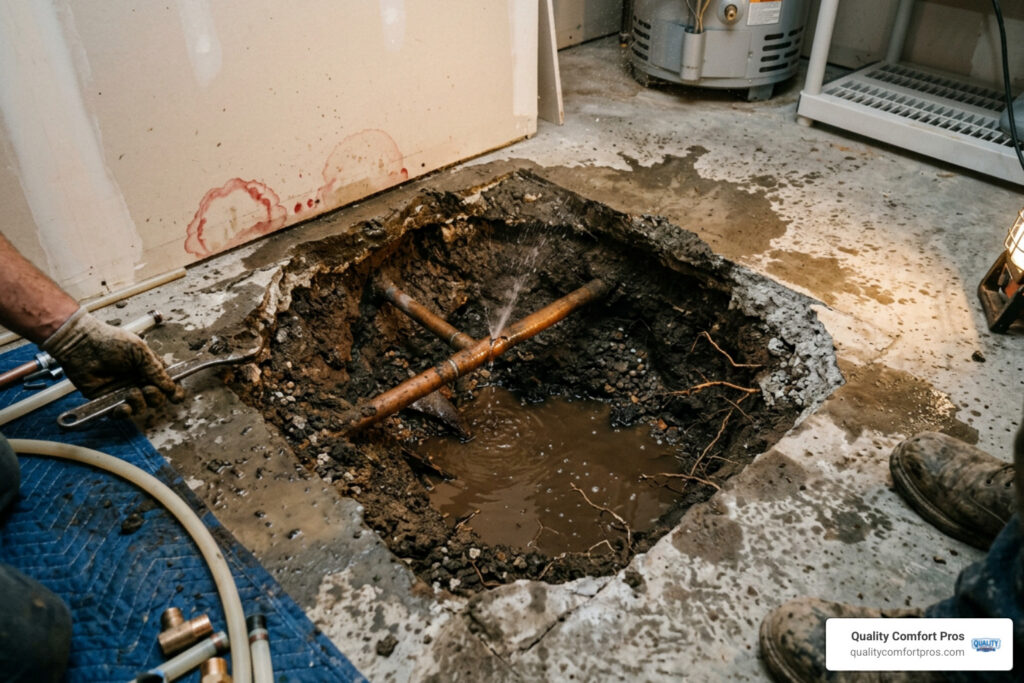
To understand how a slab leak develops, we have to look beneath the surface of your home. Most modern houses are built on a concrete slab foundation. Before that concrete is poured, plumbers lay out the main water supply lines and sewer pipes. Once the concrete is poured over them, these under-slab pipes are permanently encased in dirt, gravel, and stone beneath your floors.
Because these pipes are pressurized, any small structural compromise can quickly turn into a major water-loss event. But how do pipes buried under inches of concrete break in the first place? Several forces are constantly at work beneath your home:
- Soil Shifting and Settling: Earth moves. Depending on the local soil composition, the ground beneath your slab can expand when wet and contract when dry. This constant movement puts immense physical stress on copper or galvanized steel pipes, eventually causing them to bend, buckle, or shear at the joints.
- Pipe Corrosion: Over time, minerals in your water supply and the chemistry of the surrounding soil can cause chemical reactions that degrade metal pipes. Electrolysis, which occurs when copper pipes come into contact with concrete or other metals, can create tiny pinhole leaks.
- Thermal Expansion: Hot water lines are particularly vulnerable. As hot water flows through a pipe, the material expands. When the water cools, the pipe contracts. This continuous cycle causes the pipe to rub against the abrasive concrete or gravel surrounding it, wearing down the pipe walls.
When these under-slab lines fail, the escaping water has nowhere to go but up and out. This pressurized water will eventually find its way through the porous concrete of your foundation, saturating your subfloors and causing extensive property damage. Understanding how leaking pipes can lead to big plumbing headaches is the first step in protecting your home from structural compromise.
Common Warning Signs of Under-Slab Water Leaks

Because under-slab pipes are completely hidden from view, slab leaks are notoriously sneaky. You cannot simply look under the sink to see a drip. Instead, you must pay close attention to the indirect clues your home is giving you.
One of the most common signs is a sudden, unexplained spike in your monthly water utility bill. If your household water habits have not changed but your bill has risen significantly, water is likely escaping somewhere. To confirm this, you can perform a simple DIY test: turn off every faucet, appliance, and hose in your home, then locate your water meter. If the low-flow indicator dial is still spinning, you have an active leak.
Other telltale warning signs of a slab leak include:
- Mysterious Warm Spots on the Floor: If you walk barefoot across your tile, linoleum, or hardwood floors and notice an unusually warm patch, a hot water line beneath the slab is likely leaking and heating the concrete from below.
- The Sound of Running Water: When the house is completely quiet and no appliances are running, listen closely. If you hear a faint, constant hissing, rushing, or trickling sound behind your walls or beneath your feet, it is often pressurized water escaping a pipe.
- Foundation Cracks and Floor Buckling: Saturated soil swells, which can lift portions of your concrete slab. This movement, known as heaving, can cause visible cracks in your foundation, interior drywall, or tile floors. Saturated subflooring will also cause hardwood floors to cup or buckle.
- Musty Odors and Mold Growth: Damp conditions beneath your flooring create the perfect breeding ground for mold and mildew. If you notice a persistent musty smell in a specific room or see dark spots appearing along your baseboards, moisture is rising through the slab.
Learning what are the signs of a leaky pipe in Gaylord, MI homes? can help you catch these issues early. If you live in an older property, it is also wise to know how to detect hidden plumbing leaks in older homes before they cause irreversible damage to your structure.
How Professionals Detect Leaks Without Demolition
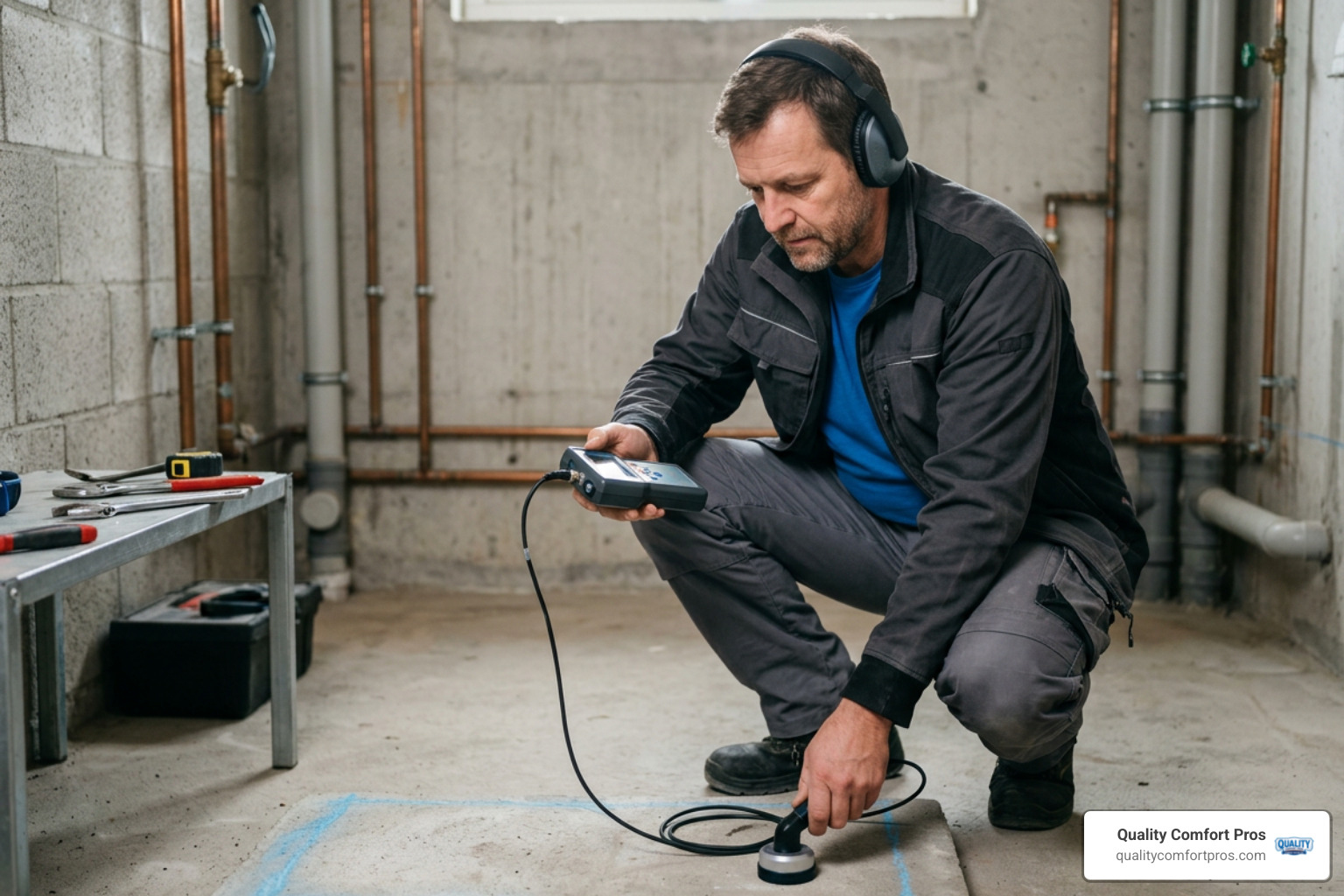
In the past, finding a slab leak involved a lot of guesswork and a heavy dose of destruction. Plumbers would routinely break through concrete floors with jackhammers just to find the general location of a leaking pipe. Thankfully, those days are long gone. Today, we use advanced, non-invasive technology to pinpoint the exact location of a leak before any concrete is ever touched.
When our professional plumbers arrive at your home, we use a systematic approach to diagnose the issue:
- Pressure Isolation Testing: We start by performing a hydrostatic pressure test on your entire plumbing system. By isolating different sections of your water supply lines, we can determine whether the leak is on the hot or cold water side, and which specific zone of the house is affected.
- Acoustic Listening Devices: Pressurized water escaping from a tiny hole in a pipe makes a highly distinct hissing or whooshing sound. Using specialized ground microphones and acoustic amplifiers, we can listen through feet of concrete and soil. The sound grows louder as we approach the source, allowing us to find the leak within inches.
- Infrared Thermal Imaging: For hot water leaks, we use thermal imaging cameras to see the heat signature rising through your floor. This technology displays temperature differentials on a screen, revealing the exact path of the hot water pipe and the warm plume of water pooling beneath the concrete.
- Tracer Gas Detection: In challenging cases where acoustic methods are muffled by dense soil or insulation, we drain the water lines and introduce a safe, non-toxic mixture of helium and nitrogen. Because gas molecules are incredibly small, they escape through the pipe leak and rise rapidly through the concrete, where our electronic gas detectors sniff them out at the surface.
By utilizing these advanced diagnostic tools, we can offer precise slab leak detection and repair services that save you from unnecessary demolition, keeping your home intact and minimizing your overall repair costs.
Modern Methods for Slab Leak Repair
Once we have pinpointed the exact location of the leak, it is time to discuss your repair options. There is no single one-size-fits-all solution for a slab leak; the best approach depends on the age of your plumbing, the material of your pipes, the location of the break, and your long-term goals for your home.
In some cases, specialized structural repairs are necessary, especially when dealing with utilities that run through concrete penetrations. Homeowners can review technical pipe through wall and slab repair procedures to understand how deep-seal waterproofing and structural reinforcement keep water from penetrating concrete boundaries.
To help you understand your choices, here is a breakdown of the four primary methods we use to repair slab leaks:
| Repair Method | Invasiveness | Longevity | Best Suited For |
|---|---|---|---|
| Spot Repair | Moderate | Short to Medium Term | Newer homes with localized, accidental pipe damage. |
| Pipe Rerouting | Low | Long Term | Single line failures in accessible walls or attics. |
| Under-Slab Tunneling | Very Low (Interior) | Long Term | High-end flooring or leaks located under expensive cabinetry. |
| Whole-House Repiping | Low (Floor) / Moderate (Walls) | Permanent | Older homes with multiple leaks or failing copper lines. |
When to Choose Spot Slab Leak Repair
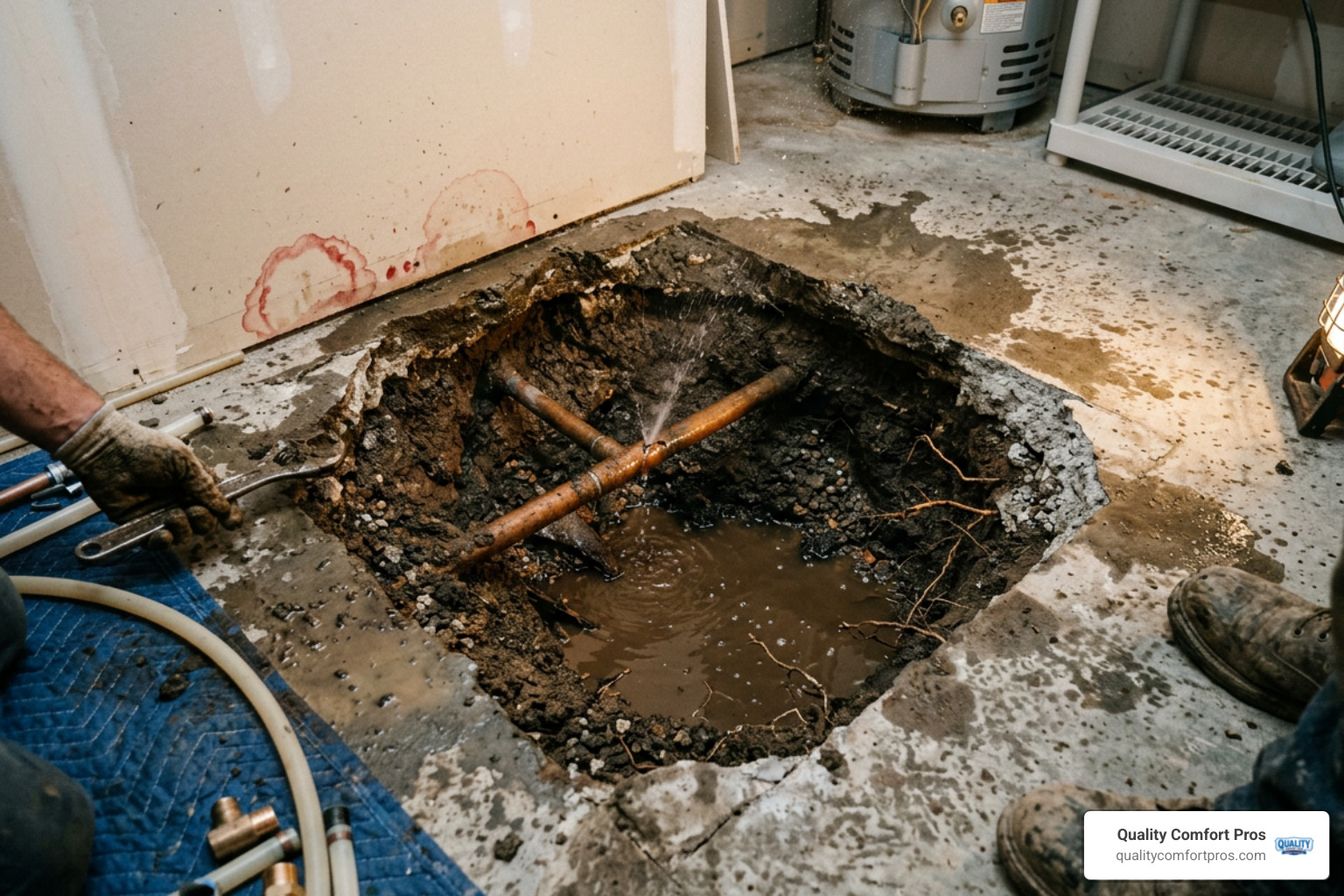
A spot repair is a highly localized fix. Once we pinpoint the leak, we cut a small, targeted opening in the concrete floor directly above the damaged pipe. We then remove the soil, cut out the leaking section of the pipe, and solder in a new piece of high-grade copper or install a durable PEX bridge.
While this method is straightforward, we typically only recommend it for newer homes where the rest of the plumbing system is in excellent condition. If your home has older copper lines, performing a spot repair can actually increase the water pressure in the rest of the line, potentially causing a new leak to break out nearby in the near future.
Pipe Rerouting and Attic Bypass
Pipe rerouting is often the most cost-effective and least disruptive long-term solution. Instead of breaking through your floors to fix the broken pipe, we simply abandon the leaking line beneath the concrete. We disconnect it entirely and run a brand-new, flexible PEX water line through your walls or attic space.
This method completely bypasses the concrete slab, which means your new plumbing will never again be subject to the shifting soils, friction, and chemical corrosion that caused the original leak. It is an excellent way to preserve your expensive hardwood, tile, or stone flooring.
Under-Slab Tunneling
If the leak is located under a newly remodeled kitchen, custom cabinetry, or high-end stone flooring, breaking the floor from the inside is out of the question. In these situations, we can utilize under-slab tunneling.
Our team digs an access pit on the exterior of your home and carefully excavates a tunnel beneath your concrete foundation directly to the leak. This allows us to replace the damaged pipe from underneath the house without disturbing a single square inch of your interior flooring. Once the repair is complete and pressure-tested, we pump the soil back in and structurally support the slab to ensure its integrity.
Whole-House Repiping with PEX
If your home was built before 1995 and has original copper plumbing, a single slab leak is often a warning sign that the rest of your pipes are reaching the end of their lifespan. In this scenario, continually paying for individual spot repairs is a losing battle.
A whole-house repipe involves abandoning all the under-slab water lines and running a completely new water distribution system throughout your home using modern PEX piping. PEX is highly flexible, completely resistant to corrosion and scale buildup, and is not affected by the freezing temperatures of Northern Michigan winters, making it the ultimate permanent solution.
Cost Factors and Insurance Coverage for Foundation Leaks
When homeowners discover they have a slab leak, their first question is almost always about the cost. Because every home is unique, pricing can vary depending on several factors. The total investment for your repair will depend on:
- The Depth and Location of the Leak: A leak located under a carpeted hallway is much easier and less costly to access than a leak buried deep beneath a tiled bathroom floor or custom kitchen island.
- The Selected Repair Method: A simple spot repair or a single-line reroute will naturally require a different level of labor and materials than a comprehensive under-slab tunneling project or a full-house repipe.
- Permits and Local Codes: In many municipalities, resolving a slab leak is considered a structural plumbing event that requires city permits and official inspections to ensure compliance with local building codes.
Many homeowners wonder if their insurance policy will help cover these expenses. As of June 2026, standard homeowners insurance policies typically operate under a specific rule: they generally cover the consequences of the leak, but not the repair of the pipe itself.
This means your policy will likely pay for the cost of tearing out and replacing your water-damaged flooring, dry-walling, and even the labor cost required to break through the concrete slab to access the pipe. However, the actual plumbing repair or the cost of the new pipe is usually an out-of-pocket expense. To ensure a smooth claims process, it is critical to work with a licensed plumber who can provide detailed photographic documentation, pressure test results, and clear invoices. For more details on navigating these choices, you can explore professional slab leak repair options to see how documentation protects your investment.
Why Certain Regions Are Prone to Foundation Pipe Failures
While slab leaks can happen anywhere, certain geographical areas are far more susceptible to under-slab plumbing failures. In regions like Dallas, TX, expansive clay soils swell dramatically when wet and shrink during dry spells, putting immense shifting stress on concrete foundations and the pipes buried beneath them.
In Northern Michigan, we face a different set of environmental challenges. Our extreme seasonal temperature swings cause the ground to freeze and thaw, leading to soil movement and shifting. Additionally, many homes in our area rely on well water or municipal water with high mineral content. This hard water accelerates the internal corrosion of older copper pipes, leading to pinhole leaks.
Furthermore, the winter cold presents a major hazard for plumbing. Knowing how to handle dealing with frozen or leaky pipes in winter is essential for Northern Michigan homeowners, as frozen lines can easily split and begin leaking silently beneath your home once the spring thaw arrives.
Long-Term Benefits of Professional Slab Leak Repair
Investing in a timely, professional repair does more than just stop a water leak; it protects your single largest financial asset. When you address a slab leak promptly, you prevent the localized soil erosion that leads to foundation settling, saving you from incredibly expensive foundation piering down the road.
Furthermore, keeping moisture from rising through your slab prevents mold spores from colonizing your carpeting and drywall, protecting your family’s respiratory health. Proactive preventative plumbing protects homes from catastrophic failures, ensuring your property remains dry, structurally sound, and valuable for decades to come.
Frequently Asked Questions About Slab Leaks
What is a slab leak?
A slab leak is a leak that develops in either a pressurized fresh-water supply line or a wastewater sewer line running beneath the concrete foundation slab of a home. Because these lines are buried under concrete, the escaping water eventually forces its way upward into the living space or outward into the soil surrounding the foundation.
How do I know if I have a slab leak?
The most common indicators include a sudden spike in your monthly water bill, the sound of running water when all faucets are off, damp or warm spots on your floors, buckling hardwood, cracks in your walls or foundation, and a musty odor indicating mold growth beneath your carpets.
Can a slab leak cause foundation damage?
Yes. Saturated soil beneath a concrete foundation can swell and lift the slab, a process known as heaving. Conversely, a major leak can wash away the supporting soil, causing the foundation to sink, settle unevenly, and develop major structural cracks that compromise the entire home.
How much does slab leak repair typically cost?
Slab leak repair costs can vary widely depending on the location of the leak, the accessibility of the pipe, and whether you choose a localized spot repair, a line reroute, or a whole-house repipe. Minor localized repairs are generally less costly, while extensive repiping or tunneling projects represent a more significant investment.
Does homeowners insurance cover slab leak repairs?
Most standard homeowners insurance policies cover the “tear-out” costs to access the leak and the restoration of water-damaged flooring and drywall. However, they typically exclude the actual cost of repairing or replacing the broken plumbing pipe itself.
How long does a typical slab leak repair take?
A standard spot repair or a single-line reroute can usually be completed in one to two days. More extensive projects, such as under-slab tunneling or a full whole-house repipe, can take anywhere from three to seven days depending on the size of your home.
Is PEX better than copper for slab leak repairs?
Yes. Modern PEX piping is highly flexible, completely resistant to scale and chemical corrosion, and expands slightly to resist bursting in freezing temperatures. It also requires fewer joints, drastically reducing the number of potential failure points in your plumbing system.
Can I live in my house during slab leak repair?
In most cases, yes. While we will need to turn off your water service during active working hours, our team works diligently to restore your water supply at the end of each workday so your household can function normally in the evenings.
What happens if I ignore a slab leak?
Ignoring a slab leak will lead to progressive structural damage to your foundation, ruined flooring, drywall rot, severe mold growth, extremely high water bills, and eventually, a total failure of the under-slab plumbing line that will require emergency intervention.
How can I prevent future slab leaks?
You can prevent future leaks by installing a pressure-reducing valve to keep your water pressure below 60 psi, using a water softener to reduce mineral corrosion, and scheduling annual plumbing inspections to catch minor pressure drops before they turn into major pipe breaks.
Conclusion
Dealing with a slab leak can feel overwhelming, but you do not have to navigate it alone. Since 1998, our team has been providing reliable, expert plumbing solutions across Northern Michigan, from Gaylord, MI and Petoskey, MI to Boyne City, MI and Grayling, MI. As a family-owned business with 28 years of experience, we pride ourselves on all-brand compatibility, honest communication, and state-of-the-art diagnostic technology that gets to the root of your plumbing issues fast.
Whether you are dealing with a suspected water line break, need preventative maintenance, or require a complete home repiping solution, we are here to restore your comfort and peace of mind. If you suspect an issue under your floors, do not wait for structural damage to set in. Contact the licensed experts at Quality Comfort Pros today to schedule your professional slab leak repair and protect your home for the long haul.