Why Leak Detection Matters for Every Homeowner
Leak detection is the process of identifying and locating unwanted fluid escapes in residential plumbing, commercial pipe systems, and municipal water networks before they cause serious damage.
Quick Answer: What Is Leak Detection?
| Aspect | Key Facts |
|---|---|
| What it is | Locating hidden water or gas leaks in pipes, slabs, pools, and underground systems |
| Why it matters | Undetected leaks cause structural damage, mold growth, and wasted water |
| Common methods | Acoustic listening, tracer gas, thermal imaging, pressure testing |
| Who needs it | Homeowners, businesses, municipalities, pool owners |
| When to act | At first sign of high water bills, damp spots, or running water sounds |
If you suspect a hidden leak, here is what to do right now:
- Check your water meter with all fixtures off. If the dial is still moving, you likely have a leak.
- Look for damp spots, discoloration, or musty odors near walls, floors, and ceilings.
- Review your last few utility bills for unexplained increases in water usage.
- Contact a professional leak detection service to pinpoint the source without tearing up your property.
A hidden leak is one of those problems that starts small and quietly becomes expensive. Water works its way behind drywall, beneath concrete slabs, and under landscaping, often for weeks or months before the damage becomes visible. By that point, what started as a minor pipe issue can turn into significant structural damage, mold growth, and a water bill that seems to double overnight.
For homeowners in Northern Michigan, the stakes are even higher. Freezing winters, shifting soils, and aging infrastructure create conditions where plumbing systems are under constant stress year-round. Whether it is a slow drip beneath a kitchen slab or a break in an underground supply line, the consequences of doing nothing can be far more costly than the detection and repair itself.
The good news is that modern leak detection technology has advanced considerably. Professionals today can locate leaks with precision using non-invasive methods that require little to no digging or demolition, protecting your home while solving the problem at its source.
I am JD Osman, a home services industry professional with over 20 years of experience helping homeowners navigate complex service challenges, including leak detection and plumbing system management. In this guide, I will walk you through everything you need to know, from the warning signs of a hidden leak to the tools professionals use to find it fast.

Understanding the Importance of Professional Leak Detection
Water systems are the lifeblood of our properties, but because most of the infrastructure is buried out of sight, we tend to take it for granted until something goes wrong. In residential water systems, commercial plumbing, and municipal water networks, pressurized pipes are constantly working to deliver clean water. When a breach occurs, that same pressure turns a tiny crack into a high-speed exit point for thousands of gallons of water.
While a dripping faucet is easy to spot, a leak hidden behind drywall or buried deep beneath your lawn requires specialized expertise. Trying to find a leak by randomly cutting into walls or digging up your yard is like searching for a needle in a haystack with a bulldozer. Professional leak detection eliminates the guesswork, pinpointing the exact location of the escape with minimal disruption. Investing in preventative plumbing protects homes from catastrophic water damage and preserves the structural integrity of your property.
The Impact of Undetected Water Loss
When water escapes from a pressurized pipe, it does not just sit there. It actively migrates, seeking the path of least resistance. In municipal water systems, this leads to a massive issue known as non-revenue water. This is treated water that is lost to underground leaks before it ever reaches a customer meter. Surprisingly, industry data reveals that standard SCADA systems detect only 19% of pipeline leaks, while computational pipeline monitoring systems detect only 10%. Furthermore, more than half of pipeline leaks occur at facilities rather than along the main pipeline itself.
On a residential scale, this translates to private water loss that directly damages your property. Over time, escaping water can erode the soil beneath your foundation, leading to uneven settling, cracked drywall, and compromised structural supports. Additionally, the constant presence of moisture creates a perfect breeding ground for mold and mildew, which can spread through your HVAC system and impact your indoor air quality. Understanding how leaking pipes can lead to big plumbing headaches is the first step toward protecting your family and your investment.
Environmental and Financial Consequences
The financial toll of a hidden leak is often felt immediately on your monthly utility bills. A single pinhole leak can waste hundreds of gallons of water per day, resulting in sudden, unexplained spikes in your water bill. From an environmental standpoint, this level of waste puts an unnecessary strain on our local water tables and municipal treatment facilities.
Effective resource management starts at home. By utilizing professional leak detection services, we can conserve precious freshwater resources while keeping utility costs manageable. In Northern Michigan, where communities rely heavily on clean, well-managed water systems, proactive leak identification is essential for long-term environmental sustainability.
Common Causes of Pipeline and Plumbing Leaks
Plumbing systems are designed to last for decades, but they are not invincible. Over time, several physical and chemical factors can compromise the integrity of your pipes. The most common culprits include chemical corrosion, excessive water pressure, shifting soils, and physical wear and tear.
Corrosion is particularly common in older homes with copper or galvanized steel pipes. As water flows through the system, dissolved minerals and oxygen can slowly eat away at the metal, thinning the pipe walls until a pinhole leak develops. High water pressure, while pleasant in the shower, puts constant mechanical stress on joints and fittings, eventually causing them to fail.

Why Pipes Leak in Cold Michigan Winters
In regions like Gaylord, MI, and Petoskey, MI, the winter months bring a unique set of plumbing challenges. When temperatures plunge, water inside uninsulated or exposed pipes can freeze. As water freezes, it expands with incredible force, exerting thousands of pounds of pressure per square inch against the pipe walls.
This expansion does not just split the pipe at the point of freezing; it also drives up water pressure throughout the rest of the plumbing system, causing joints to rupture further down the line. Proper winterization and insulation are critical steps in avoiding these disasters. If you ever find yourself facing a frozen line, knowing the best practices for dealing with frozen or leaky pipes in winter can save you from a major residential flood.
Underground and Slab Leaks
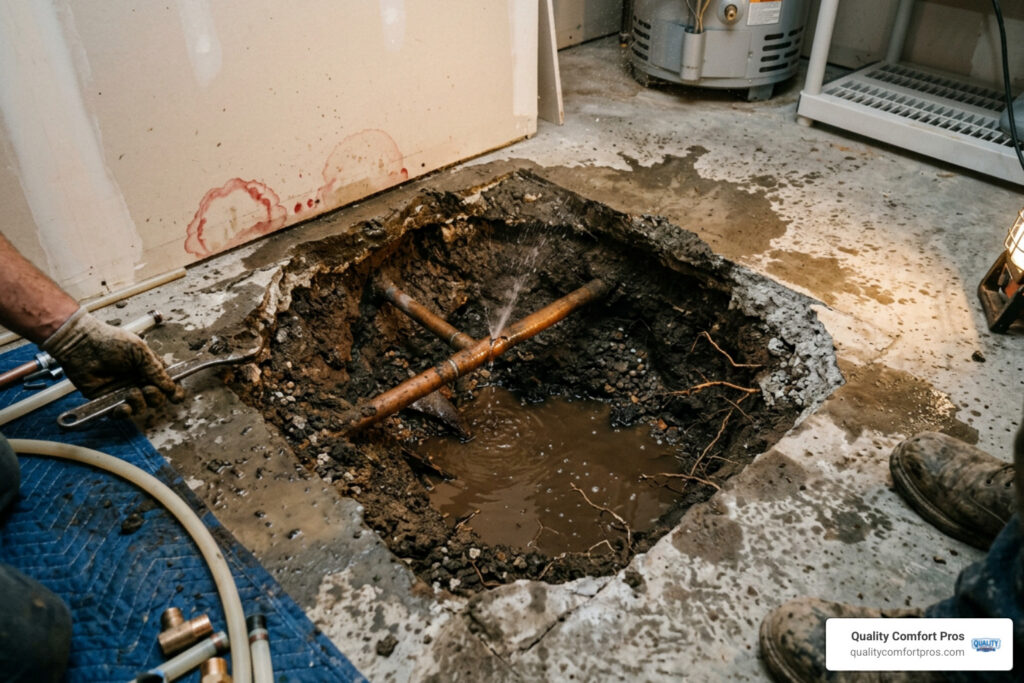
Some of the most challenging leaks to identify and repair are those that occur beneath the concrete foundation of your home, commonly referred to as slab leaks. These are often caused by foundation movement, where the heavy concrete slab shifts slightly due to changing soil moisture levels, putting immense shear stress on the copper or plastic pipes running beneath it.
Additionally, tree roots are drawn to the warmth and moisture of underground lines. Even a microscopic crack in a sewer or water line can release enough moisture to attract nearby roots, which then grow into the pipe, expanding the crack and eventually causing a complete blockage or rupture. Recognizing the 7 warning signs of a kitchen slab leak and what to do next is vital for preventing serious damage to your flooring and foundation.
Advanced Methods of Non-Invasive Leak Detection
Gone are the days when plumbers had to tear down entire walls or trench through beautiful landscaping just to find a suspected leak. Today, non-invasive and non-destructive methods allow technicians to pinpoint the exact location of a leak with surgical precision. This approach preserves your property, minimizes cleanup costs, and ensures a faster, more efficient repair process.
| Feature | Traditional Excavation Methods | Modern Non-Invasive Detection |
|---|---|---|
| Property Damage | High (demolition of drywall, concrete, or lawns) | Extremely low (no damage to surrounding structures) |
| Accuracy | Low (relies on guesswork and visual exploration) | Extremely high (pinpoints leaks within inches) |
| Time Required | Days of digging and rebuilding | Usually completed in a few hours |
| Overall Cost | High due to extensive restoration needs | Cost-effective with minimal repair footprint |
Acoustic Leak Detection Technology
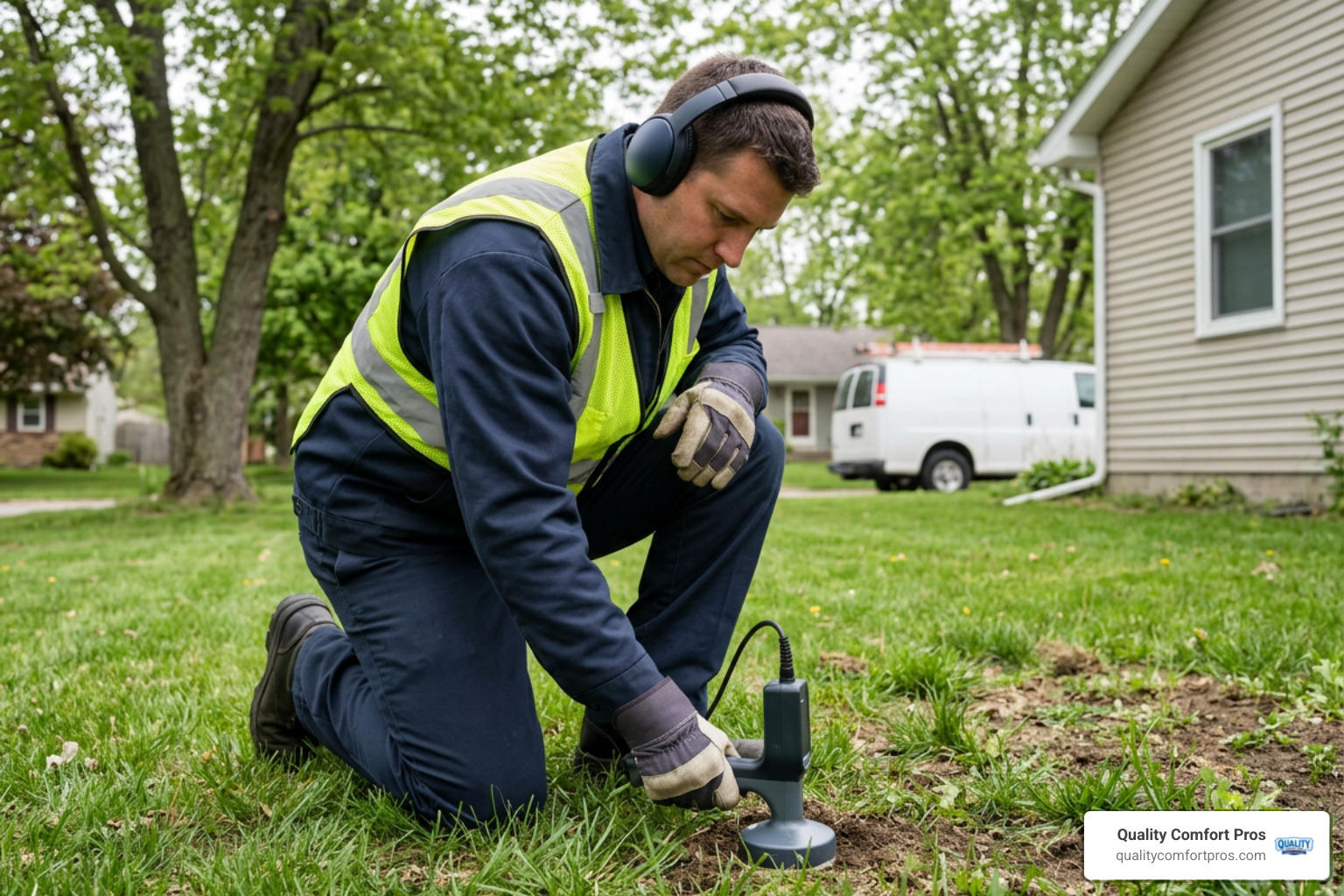
Acoustic leak detection is one of the most reliable and widely used non-invasive methods in the industry. When water escapes from a pressurized pipe, it generates a distinct sound. Smaller, high-pressure leaks typically produce high-frequency sounds, while larger breaks or lower-pressure leaks produce lower-frequency vibrations.
Professionals use highly sensitive acoustic sensor systems and ground microphones to listen through soil, concrete, and drywall. By analyzing these sound frequencies and filtering out ambient background noise, technicians can trace the sound directly to its loudest point, pinpointing the leak to within a few inches.
Tracer Gas and Thermal Imaging Leak Detection
For exceptionally quiet leaks or plastic pipes that do not conduct sound well, tracer gas is an excellent alternative. Technicians drain the suspected line and introduce a safe, non-toxic mixture of hydrogen and nitrogen gas. Because hydrogen is the lightest and smallest element, it easily escapes through the leak and rises vertically through concrete, soil, or flooring. A specialized gas detector is then swept across the surface to identify where the gas is escaping.
Thermal imaging, on the other hand, uses advanced infrared cameras to detect temperature anomalies behind walls or under floors. Since escaping water is typically a different temperature than the surrounding structure, it creates a distinct thermal footprint. Infrared cameras allow us to “see” this temperature difference, revealing the exact path of the moisture without making a single cut in your drywall.
Warning Signs of a Hidden Water Leak
While some leaks remain completely silent, they almost always leave behind clues. Being a proactive homeowner means keeping an eye and an ear out for these subtle indicators. The sooner you spot them, the sooner you can address the issue before it escalates.
- Unexplained Water Bill Spikes: If your water usage habits have not changed but your monthly bill continues to climb, you likely have a hidden leak.
- The Sound of Running Water: Hearing a faint trickling, hissing, or rushing sound when all faucets and appliances are turned off is a classic sign of a pipe breach.
- Damp Spots and Discoloration: Wet patches on your carpets, warped hardwood flooring, or yellow-brown stains on your ceilings and walls demand immediate investigation.
- Musty Odors: Water pooling behind drywall or under flooring will eventually lead to mold growth, which produces a distinct, earthy smell.
Detecting Hidden Plumbing Leaks in Older Homes
Older homes in Northern Michigan communities, such as Charlevoix, MI, and East Jordan, MI, possess a unique charm, but they also come with aging infrastructure. Many of these properties still feature original galvanized steel or lead pipes, which are highly susceptible to internal corrosion and slow, weeping leaks.
These slow leaks can go unnoticed for years, quietly rotting floor joists and wall studs behind the plaster. If you own an older property, it is wise to actively inspect accessible pipes in basements and crawlspaces. Learning how to detect hidden plumbing leaks in older homes can help you catch these slow-moving disasters before they cause structural failure.
Signs of a Leaky Pipe in Gaylord, MI
Our local climate in Gaylord, MI, and surrounding areas like Bellaire, MI, and Mancelona, MI, places unique demands on residential plumbing. The combination of deep winter freezes and summer humidity can cause soil to shift, stressing underground water mains.
If you notice a sudden drop in water pressure throughout your home, or if a patch of your lawn remains unusually lush and green during a dry spell, you may be dealing with a ruptured underground supply line. Staying vigilant and recognizing what are the signs of a leaky pipe in Gaylord, MI homes? will help you protect your property from costly foundation and landscaping damage.
Smart Monitoring and the Future of Water Conservation
As we look toward the future of home maintenance, smart technology is playing an increasingly vital role in water conservation and property protection. Internet of Things (IoT) sensors and smart water monitoring systems are changing the way we interact with our plumbing.
Instead of waiting for a stain to appear on the ceiling, homeowners can now install smart water monitors directly onto their main water lines. These devices continuously analyze water flow, pressure, and temperature. If the system detects an unusual, continuous flow of water, it instantly sends an alert to your smartphone. Many advanced models even feature an automatic shut-off valve, which can turn off your home’s main water supply in seconds if a major pipe rupture is detected, preventing thousands of dollars in water damage while you are away from home.
Frequently Asked Questions about Leak Detection
What is the most accurate method of leak detection?
The most accurate method depends on the pipe material and location, but acoustic leak detection combined with thermal imaging is generally considered the industry standard for residential properties. For plastic pipes or deeply buried lines, tracer gas detection provides unmatched precision.
How do professionals find water leaks under concrete?
Professionals use electroacoustic ground microphones and tracer gas sensors to locate leaks beneath concrete slabs. These tools allow technicians to hear the sound of escaping water or detect tracer gas rising through the concrete without having to break up the floor first.
Can smart water monitors prevent major water damage?
Yes, smart water monitors are highly effective. By continuously tracking water flow and pressure, they can identify microscopic leaks before they grow. Models equipped with automatic shut-off valves can stop the flow of water entirely if a major pipe burst is detected, saving your home from catastrophic flooding.
What causes pipes to leak suddenly in the winter?
Sudden winter leaks are almost always caused by frozen water expanding inside the pipes. This expansion splits the pipe walls or pushes joints apart. When the ice thaws, water flows freely out of the newly created opening, resulting in an immediate leak.
How much water is lost from a tiny pinhole leak?
A tiny pinhole leak of just 1/8 inch in diameter can lose over 2,500 gallons of water per day at standard residential water pressure. Over a month, this can add up to tens of thousands of gallons of wasted water and a massive utility bill.
What are the first signs of an underground water leak?
The earliest signs include an unexplained drop in household water pressure, a spinning water meter dial when all indoor water is shut off, damp or unusually green patches in your yard, and soft, sinking spots in your landscaping.
Is non-invasive leak detection safe for all pipe materials?
Yes, non-invasive methods like acoustic listening, thermal imaging, and tracer gas are completely safe for all pipe materials, including copper, PVC, PEX, galvanized steel, and cast iron. These methods do not put any physical stress on your plumbing system.
How does tracer gas leak detection work?
Technicians empty the water from the suspected pipe and fill it with a safe, pressurized mixture of hydrogen and nitrogen gas. Because hydrogen is incredibly light, it escapes through the leak and rises to the surface, where a highly sensitive gas detector pinpoints its location.
Can thermal imaging cameras see water behind walls?
Thermal imaging cameras do not see through walls directly; instead, they detect subtle temperature differences on the surface of the wall. Because wet drywall or insulation is cooler than dry areas, the camera reveals the exact shape and path of the hidden moisture.
When should I call a professional for leak detection?
You should call a professional immediately if you notice an unexplained spike in your water bill, hear running water when all fixtures are off, spot damp patches on your walls or floors, or see your water meter dial spinning continuously.
Conclusion
Taking a proactive approach to your plumbing system is the best way to avoid the stress, mess, and expense of water damage. By understanding the common causes of leaks and keeping an eye out for the early warning signs, you can protect your home and conserve valuable water resources. When a hidden leak is suspected, relying on advanced, non-destructive technology ensures the problem is found quickly and corrected with minimal disruption to your daily life.
At Quality Comfort Pros, we bring 28 years of reliable, family-owned expertise to every plumbing challenge. If you suspect a hidden water issue in your home, do not wait for a small drip to become a major headache. Contact us today to schedule your professional leak detection and enjoy the peace of mind that comes with expert, reliable home care.