Why Scheduling Furnace Maintenance Matters Before Winter Arrives
Furnace maintenance is the single most effective thing you can do to keep your home warm, safe, and energy-efficient through a Northern Michigan winter. And yet, according to a HomeServe survey, 21% of homeowners have never had their HVAC system tuned up, and 18% have never changed their furnace filter.
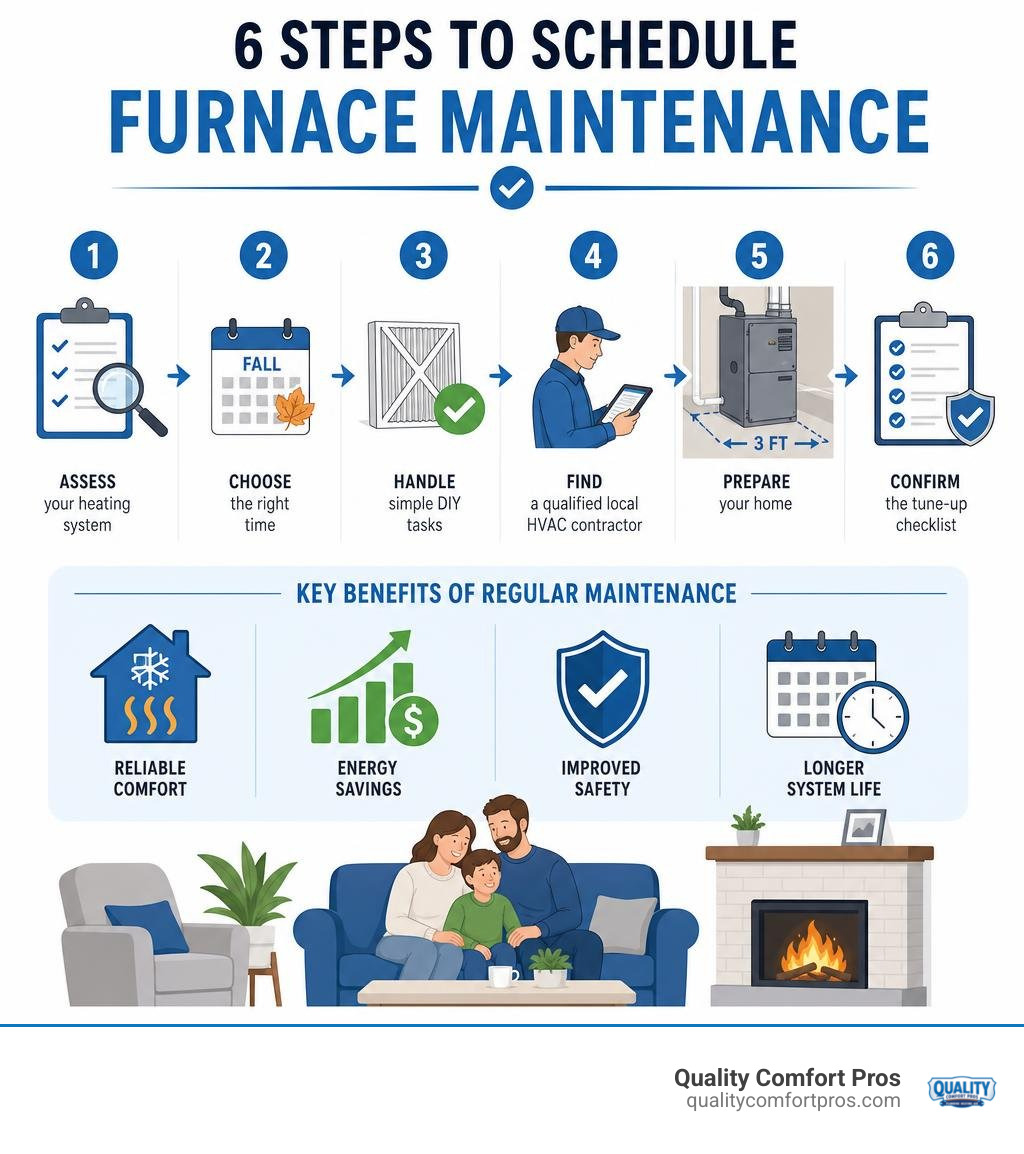
Here is a quick overview of how to schedule furnace maintenance:
- Assess your heating system for any performance issues, unusual noises, or airflow problems.
- Choose the right time, early fall is ideal, before the heating season begins.
- Handle simple DIY tasks like replacing the air filter and clearing space around the unit.
- Find a qualified local HVAC contractor with proper licensing and strong reviews.
- Prepare your home by clearing at least three feet around the furnace and removing combustible materials.
- Confirm the tune-up checklist covers combustion analysis, electrical connections, heat exchanger inspection, and blower motor testing.
The stakes are real. A well-maintained furnace can last 15 to 20 years and consume up to 30% less energy than a neglected one. Skip routine service and you risk voided warranties, higher utility bills, unexpected breakdowns, and, most seriously, carbon monoxide leaks from a cracked heat exchanger.
I’m JD Osman, owner of Quality Comfort Pros, and with over 20 years of experience helping homeowners navigate complex systems, including furnace maintenance planning, I’ll walk you through exactly how to get your heating system ready before the cold hits. Let’s get into it.
The Critical Importance of Annual Furnace Maintenance
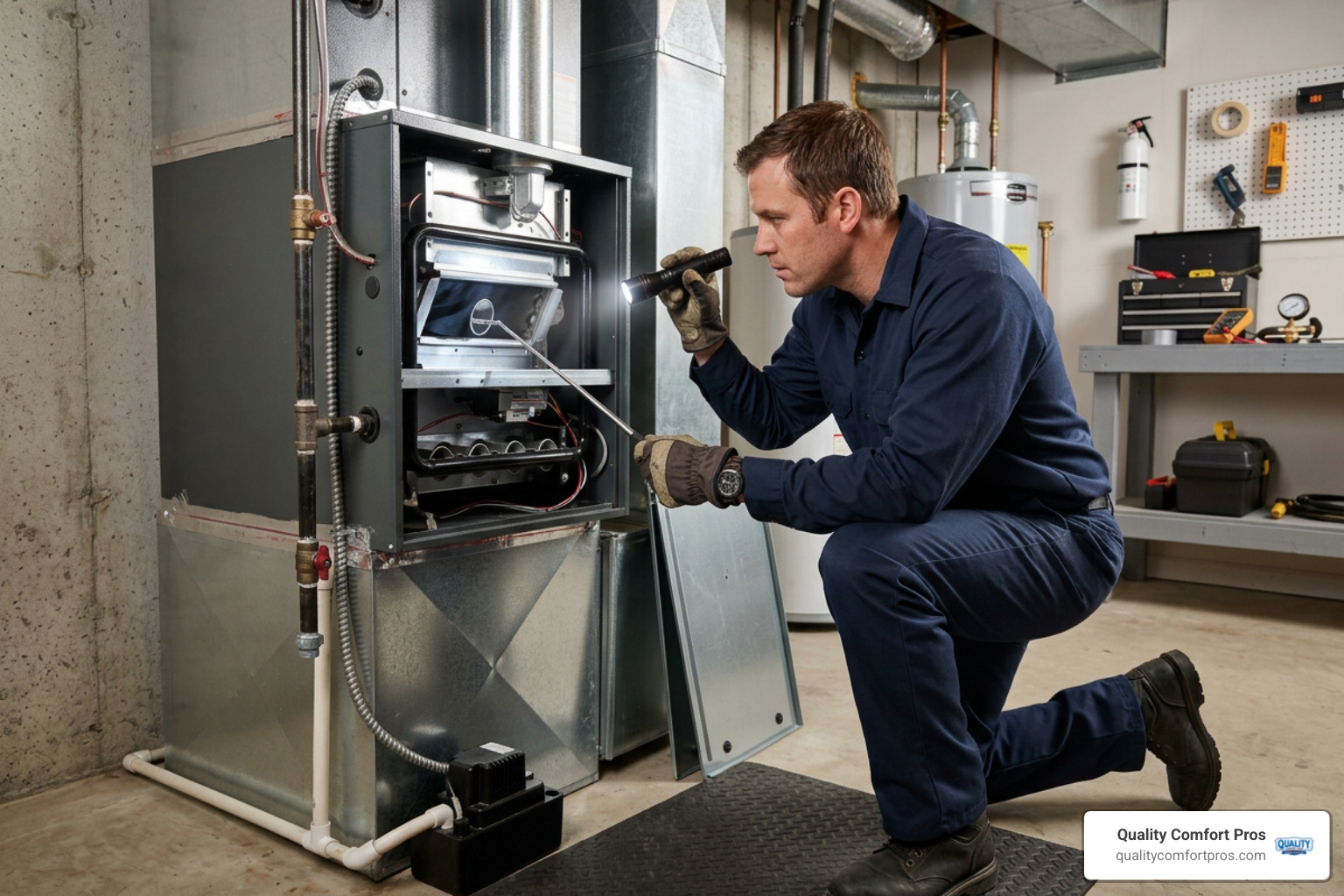
When the freezing winds blow off Lake Michigan, your heating system becomes the absolute heartbeat of your home. However, waiting for the first major snowfall to find out if your heater works is a recipe for a cold, stressful night. Annual preventative care is not just a recommendation, it is a necessity for keeping your household safe, comfortable, and financially protected.
The most critical reason to prioritize this service is safety protection. Most residential heating systems in Gaylord, MI, and the surrounding areas rely on combustion to produce heat. If your burner is dirty or your system has a cracked heat exchanger, it can allow lethal carbon monoxide to leak directly into your indoor breathing air. Professional furnace maintenance services are designed to catch these invisible, odorless hazards before they can threaten your family.
Beyond safety, regular care directly impacts your wallet. Dirt is the single greatest enemy of your heating system. When dust and grime coat internal components, your system has to work significantly harder to distribute warm air. This extra friction increases energy consumption and causes your utility bills to spike. By keeping the system clean and calibrated, you can reduce your heating energy consumption by up to 30%, keeping your monthly bills manageable even during the coldest months.
Finally, proactive care preserves your equipment. A neglected system often suffers a shortened system lifespan, sometimes failing completely in as little as ten years. Conversely, a system that receives routine care can easily serve your home for up to two decades. Think of it like changing the oil in your car: a small, routine investment now prevents a massive, premature replacement bill later.
How Annual Furnace Maintenance Keeps Your Warranty Valid
Many homeowners do not realize that skipping annual professional service can actually void their manufacturer warranty coverage. When you install a new heating system, the manufacturer provides a warranty to cover the cost of major replacement parts if they fail prematurely. However, this coverage is almost always contingent on regular, documented maintenance.
Manufacturers understand that dirty, neglected systems are far more likely to break down. If a major component like the blower motor or compressor fails and you cannot provide documented proof of annual professional service, the manufacturer may deny your claim. Keeping a clear file of your service records ensures that if a major issue does arise, your warranty remains fully intact to cover the costs. For more information on maintaining your coverage, you can review the Department of Energy guidelines for system maintenance to see exactly what is required.
Lowering Energy Bills and Preventing Costly Breakdowns
Investing in preventative care offers an outstanding return on investment. Industry data shows that for every dollar you spend on routine maintenance, you save approximately four dollars in avoided emergency repair costs and premature system wear.
A dirty system does not just waste fuel, it also creates unnecessary wear and tear on delicate electrical and mechanical components. For example, a clogged filter restricts airflow, which causes the heat exchanger to overheat and short cycle. Over time, this constant cycling leads to system failure. By addressing minor issues during a routine checkup, you can prevent the most common reasons a furnace stops working and keep your heating system running reliably all winter long.
How to Schedule Furnace Maintenance in 6 Steps

Scheduling your seasonal service does not have to be a chore. By following a structured process, you can ensure your system is perfectly prepared for the cold weather ahead while maximizing your energy savings.
Step 1: Assess Your Heating System Performance
Before you call a professional, take a few minutes to evaluate how your system is currently running. Turn your thermostat up a few degrees to activate the heat and pay close attention to how it responds.
Listen closely for any unusual noises like scraping, screeching, or loud bangs. Note whether the airflow coming from your registers feels weak or if some rooms in your home are significantly colder than others. If you notice any of these performance issues, write them down so you can share them with your technician when they arrive.
Step 2: Choose the Best Time of Year for Service
The absolute best time to schedule your tune-up is during the early fall, often referred to as the shoulder season. Scheduling your service during September or October ensures your system is clean and fully operational before you need to turn it on for the season.
Many homeowners use the autumn daylight saving time change as a helpful memory trigger to check their filters and schedule their professional tune-up. Scheduling early also means you will beat the winter rush, giving you greater flexibility in choosing an appointment time that fits your schedule. To help you plan, check out our seasonal HVAC preparation guide for a full breakdown of seasonal home care.
Step 3: Decide Between DIY Tasks and Professional Care
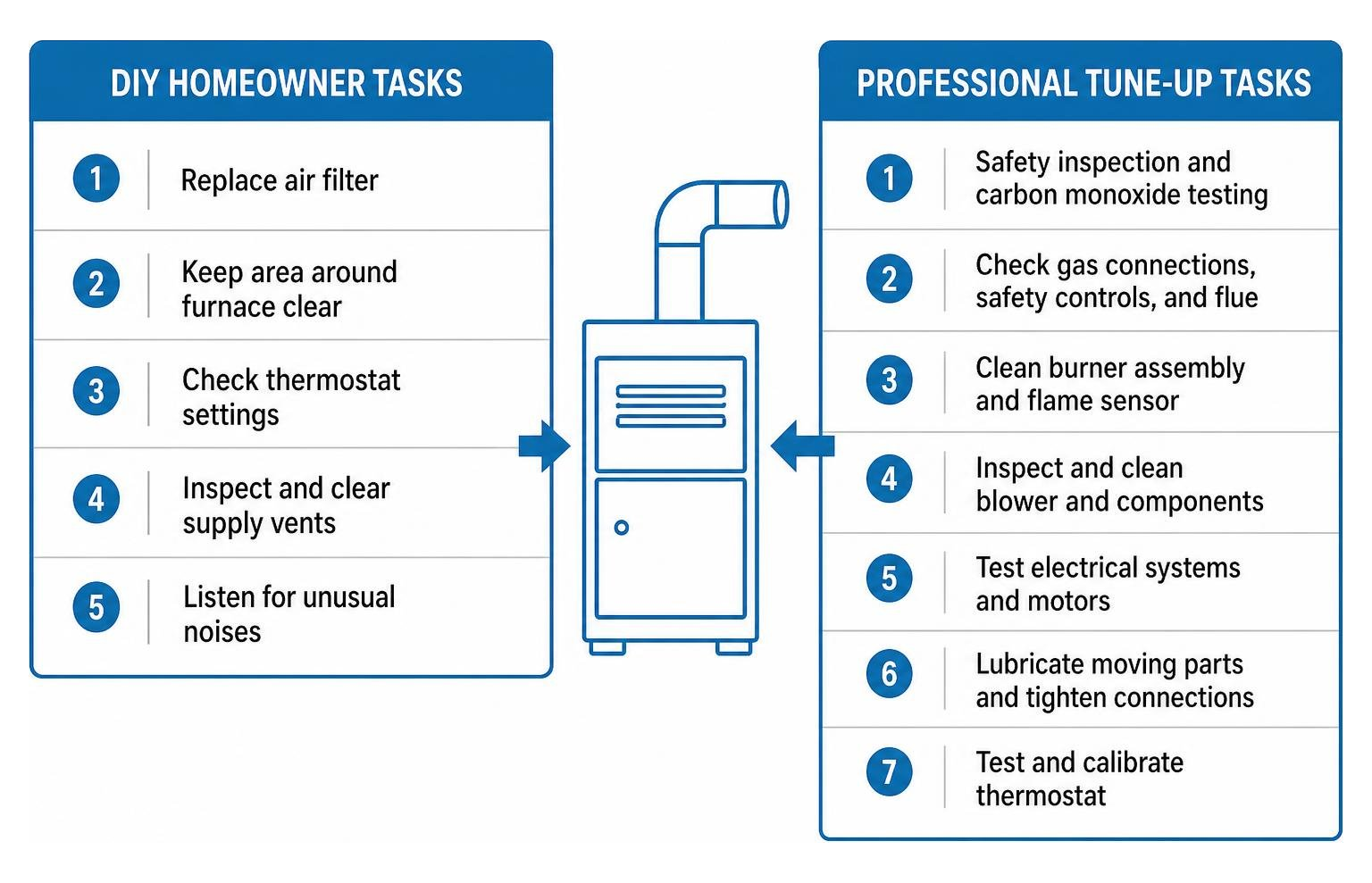
While there are several highly effective tasks you can handle yourself, a complete system tune-up requires professional diagnostic tools and technical expertise. Homeowners can safely replace air filters, clean around the exterior of the unit, and vacuum out floor registers.
However, tasks involving gas lines, electrical wiring, combustion analysis, and internal blower cleaning must be left to licensed professionals. Attempting to service these delicate components yourself can result in serious safety hazards, system damage, or a voided warranty. You can review this routine furnace maintenance checklist to better understand the division between homeowner tasks and professional services.
Step 4: Find a Qualified Local HVAC Contractor
When selecting a service provider, look for a highly rated, licensed, and insured local contractor who has extensive experience serving Northern Michigan. Check online reviews to ensure they have a proven track record of professionalism, prompt response times, and fair pricing.
It is also wise to ask if they offer a maintenance membership program. These programs often include annual tune-ups, priority scheduling, and discounts on repairs, making it incredibly easy to keep your system in peak condition year after year.
Step 5: Prepare Your Home and Furnace Area
Before your technician arrives, take a few minutes to prepare the area around your heating system. Clear at least three feet of open space around the entire unit to ensure the technician has safe, unobstructed access to all sides of the equipment.
Be sure to remove any combustible materials, such as paint cans, cleaning solvents, boxes, or seasonal decorations, from the immediate vicinity. Additionally, ensure there is a clear, well-lit path from your home entrance to the utility room or basement where your system is located.
Step 6: Confirm the Professional Furnace Maintenance Checklist
When you book your appointment, ask the contractor for a clear, written checklist of what their service includes. A truly comprehensive tune-up should go far beyond a simple visual inspection.
Ensure their service includes a full safety check, electrical connection tightening, blower motor testing, and a precise combustion analysis to verify that fuel is burning safely and efficiently. If you are ready to secure your appointment before the cold weather sets in, you can book a furnace tune-up before winter hits to guarantee your home stays warm and comfortable.
What to Expect During a Professional Tune-Up
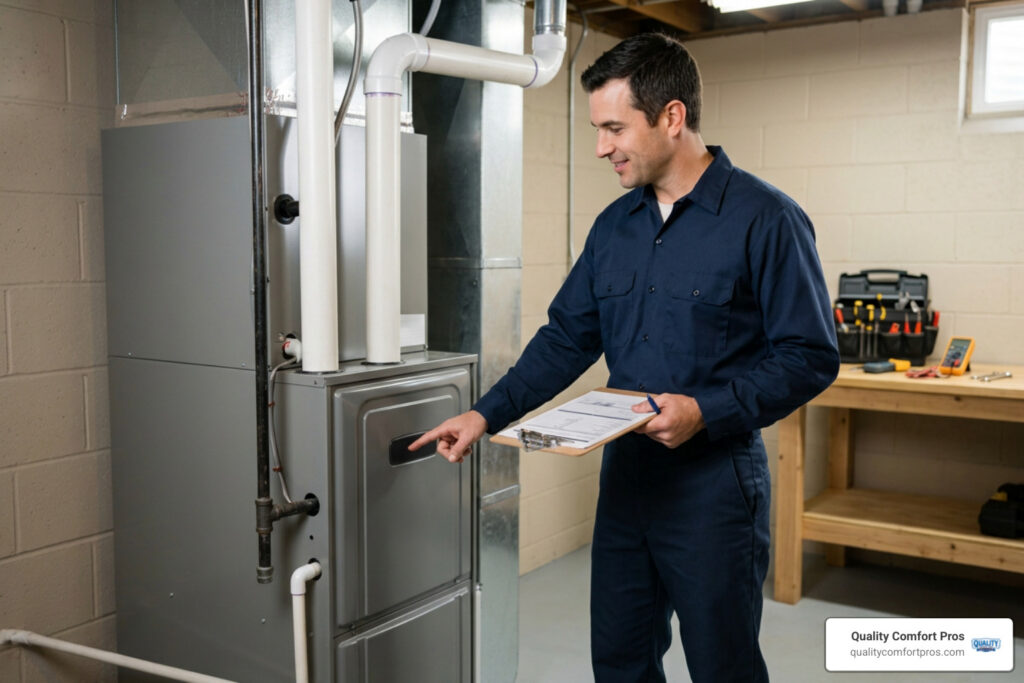
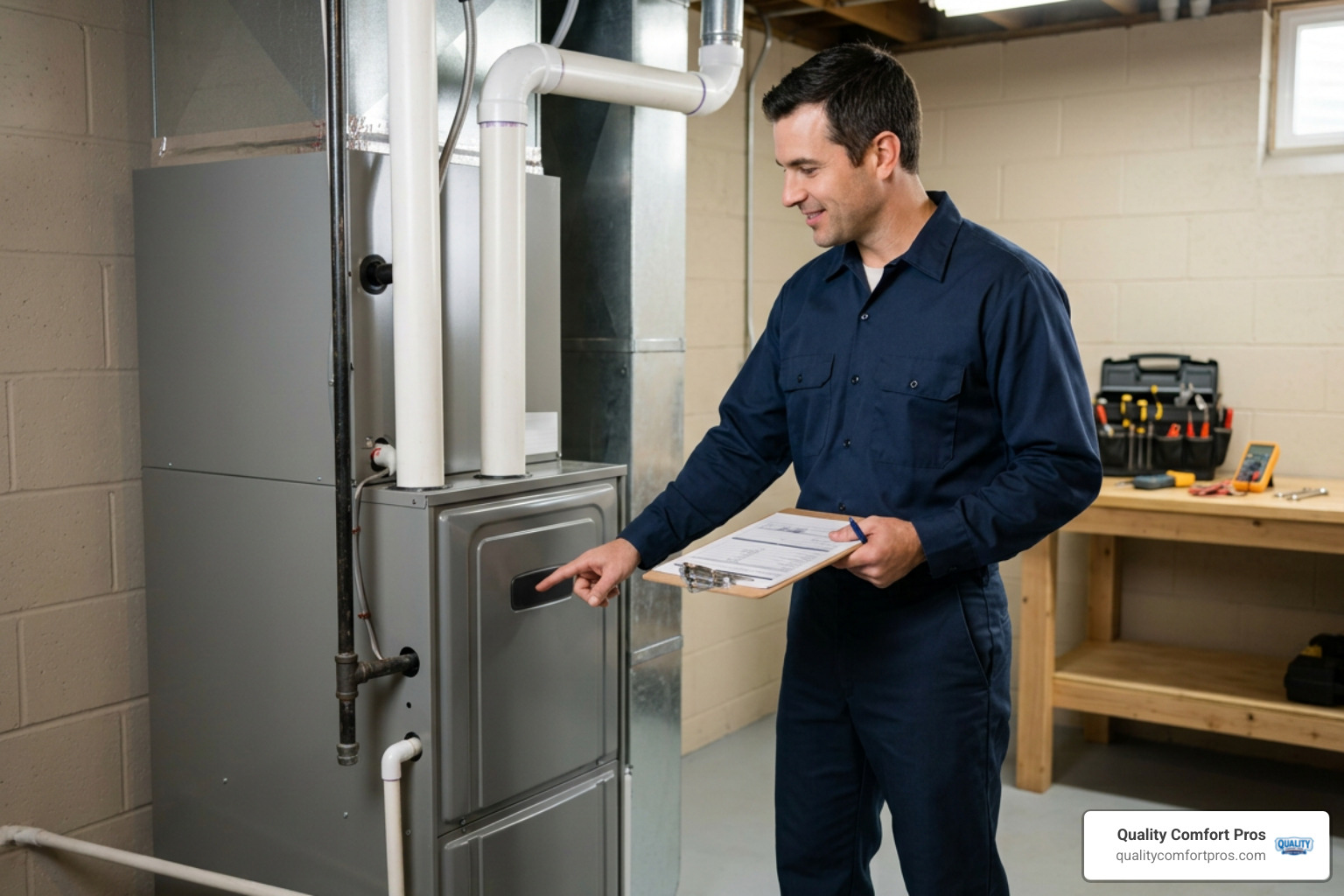
A professional tune-up is a detailed, highly technical process that typically takes between one and two hours to complete. During this time, a certified technician will utilize specialized diagnostic equipment to evaluate every aspect of your system’s operation.
Core Inspection and Safety Checks
The absolute priority of any professional visit is safety. The technician will perform a meticulous inspection of the heat exchanger, looking for any microscopic cracks or corrosion that could allow toxic combustion gases to enter your home. They will also perform carbon monoxide testing in the surrounding air to ensure your living environment is completely safe.
Additionally, the technician will check all gas piping connections for leaks, test the limit switches and safety controls to ensure the system will shut down safely in an emergency, and inspect the flue pipe to verify that combustion exhaust is venting properly to the outdoors.
Cleaning and Calibration Procedures
Once safety is verified, the technician will focus on optimizing your system’s efficiency. This involves deep cleaning the burner assembly and the flame sensor, which often accumulate soot and debris over time. A clean flame sensor prevents unexpected system shutdowns and ensures reliable ignition.
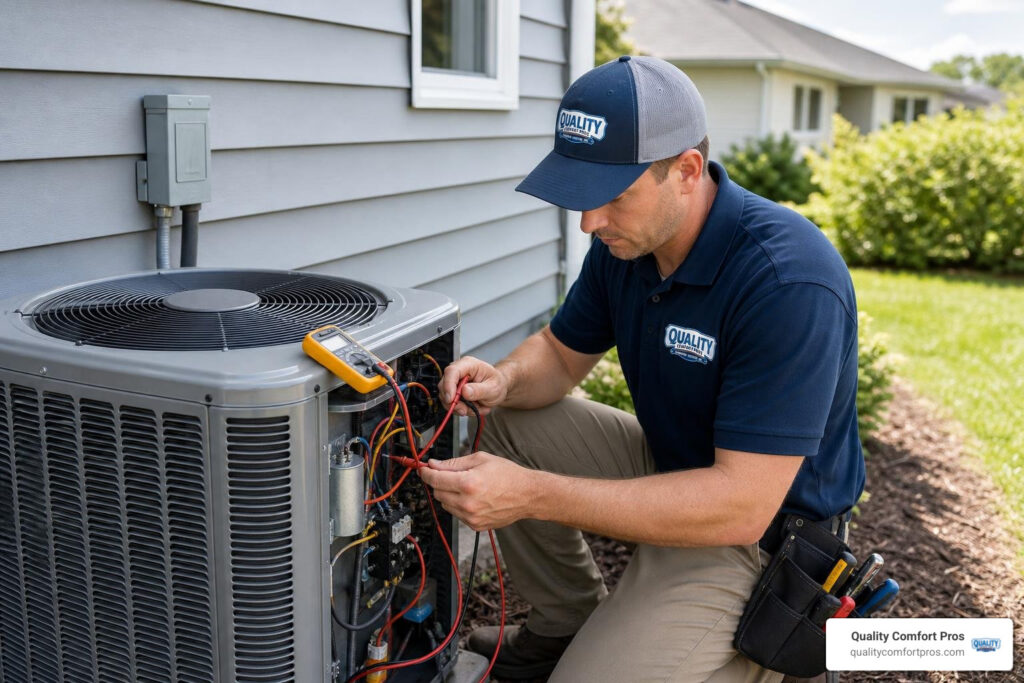
The technician will also inspect and clean the blower wheel, measure electrical voltage and current on all motors, tighten loose wiring terminals, and lubricate any moving parts to reduce friction. Finally, they will test and calibrate your thermostat to ensure it is communicating accurately with your heating system, helping you avoid uneven temperatures and wasted energy.
Warning Signs Your Heating System Needs Immediate Attention
While regular preventative care prevents the vast majority of heating issues, it is vital to know when your system is struggling. If you experience any of the following warning signs, do not wait for your scheduled annual visit:
- Short cycling: If your system turns on and off frequently without ever reaching your desired temperature, it is likely overheating due to restricted airflow or a failing safety sensor.
- A yellow burner flame: Your burner flames should always be a steady, bright blue. A yellow or orange flame indicates incomplete combustion, which is a major safety hazard and a primary sign of carbon monoxide production.
- Unusual smells: A faint dusty smell when you first turn on your heat in the autumn is normal. However, persistent metallic, electrical burning, or rotten egg smells (which indicate a gas leak) require immediate action.
- Loud or unusual noises: Screeching, scraping, rattling, or booming noises indicate mechanical wear, loose parts, or delayed ignition.
- Rising utility bills: A sudden, unexplained jump in your monthly heating bills is a clear indicator that your system has lost efficiency and is working too hard to heat your home.
If you notice any of these warning signs, shut down your system and schedule a professional furnace repair immediately to protect your home and prevent further equipment damage.
Frequently Asked Questions About Furnace Maintenance
How often should I replace my furnace filter?
You should inspect your filter monthly and replace it at least once every three months. If you have pets, allergies, or a large household, you may need to replace it every 30 to 60 days to maintain proper airflow and healthy indoor air quality.
What is the best type of furnace filter to use?
For most standard residential systems, a high-quality pleated filter with a MERV rating between 8 and 11 offers the best balance of air filtration and system airflow. Extremely thick, high-efficiency filters can restrict airflow and strain your blower motor unless your system is specifically designed for them.
How long does a professional furnace tune-up take?
A thorough, professional tune-up typically takes between 1 and 2 hours. The exact duration depends on the age and condition of your system, as well as how easily accessible the equipment is for the technician.
What is the average cost of professional furnace maintenance?
Pricing can vary depending on several factors, including the type of heating system you have and whether you are enrolled in a seasonal service agreement. Generally, a routine preventative tune-up is highly affordable and pays for itself through improved energy efficiency and avoided repair bills.
Can I perform a furnace tune-up myself?
You can easily handle basic tasks like replacing the air filter, cleaning vents, and keeping the surrounding utility area clear. However, internal cleaning, electrical testing, gas pressure adjustments, and safety inspections require specialized tools and training, and must be performed by a licensed professional.
What happens if I skip annual furnace maintenance?
Skipping annual service leads to higher monthly utility bills, a shortened system lifespan, frequent mechanical breakdowns, and potential safety hazards like carbon monoxide leaks. It can also completely void your manufacturer warranty coverage.
Why is my furnace short cycling?
Short cycling is most commonly caused by restricted airflow, which is often the result of a heavily clogged air filter or blocked vents. It can also be caused by a malfunctioning thermostat, a faulty flame sensor, or an oversized heating system.
What color should my furnace burner flame be?
Your burner flames should always burn a crisp, steady blue. A blue flame indicates clean, complete combustion. If the flame is yellow, orange, or flickering constantly, it means the burner is dirty or has an improper fuel-to-air ratio, requiring immediate professional service.
How long does a typical residential furnace last?
A well-maintained residential heating system typically lasts between 15 and 20 years. However, a system that is neglected and never receives professional maintenance may fail and require a complete replacement in as little as 10 years.
What is the $5,000 rule for furnace repair versus replacement?
The $5,000 rule is a simple mathematical guideline to help you decide whether to repair or replace your system. Multiply the estimated repair cost by the age of your furnace. If the result exceeds $5,000, replacing the unit is generally the more financially sensible long-term decision.
Secure Your Home Comfort for the Winter Ahead
Do not wait until the freezing temperatures arrive to think about your home comfort and safety. Taking action now ensures your heating system runs reliably, efficiently, and safely all winter long. The team at Quality Comfort Pros is proud to provide expert, family-owned solutions with all-brand compatibility to homeowners in Gaylord, MI, and across Northern Michigan. If you are ready to secure your home comfort, please contact us to schedule your furnace maintenance today to book an appointment with our friendly, certified technicians.