When a furnace stops producing heat, the cause is often one failed part rather than a complete system breakdown. A dirty flame sensor, a safety switch that has shut the furnace off, or a blocked drain line are common causes. Finding the exact problem is the first step toward getting your home warm again.
Northern Michigan winters put furnaces under sustained pressure. Gaylord sits at 1,382 feet in elevation, and temperatures can hold below freezing for weeks at a stretch. Properties supplied by propane face additional risk when tank levels drop unexpectedly during a cold stretch and pressure falls too low for the burners to light.
Common Furnace Problems We Diagnose and Repair
Furnace Blowing Cold Air
A furnace that runs but blows cold air may have shut off its burners because it could not detect a flame. A small part called the flame sensor checks that the burners are lit. When buildup coats the sensor, it may stop detecting the flame, causing the furnace to shut off the gas for safety. Cleaning or replacing the sensor may solve the problem. If the sensor is clean but the flame still goes out, we check the gas supply valve, the part that lights the burner, and the furnace’s electronic controls.
Furnace Short-Cycling: Turns On, Runs Briefly, Then Shuts Off
A furnace that starts, runs briefly, and shuts off before your home reaches the set temperature is turning off too soon. A clogged air filter is a common cause. It blocks airflow, allowing heat to build up inside the furnace until a safety switch shuts it off. Replacing the filter is the first step. If the problem continues after a filter change, a technician checks the safety switch and the part that transfers heat from the burners to your home’s air. Damage to this part can create a safety risk and needs professional attention.
Furnace Will Not Start or Ignite
When the furnace does not respond after you turn up the thermostat, the problem may be with the parts that start or control it. Common causes include a failed part that lights the burner, faulty electronic controls, or an exhaust fan that will not start. Propane furnaces can also fail to light if the tank cannot supply enough fuel pressure. Checking the thermostat settings, the circuit breaker, and the furnace reset button before calling for service eliminates the most basic causes. If the furnace still does not start, a technician needs to test the ignition sequence directly.
Water Pooling Around the Furnace Base
High-efficiency furnaces produce condensation as part of the combustion process, and that water drains through a small plastic line. When the line clogs or the condensate pump fails, water backs up and pools at the base of the unit. Clearing the drain line resolves most cases. A cracked drain line or a failing pump motor do occur, particularly on furnaces that have not had regular maintenance. If the condensate trap itself is clogged, the furnace will typically shut down rather than continue draining improperly.
Loud Bang or Boom at Startup
A sharp bang when the furnace starts is called delayed ignition. Gas builds in the burner chamber because dirty burners cannot light immediately, and when enough heat finally builds to ignite the accumulated gas, all of it lights at once. Cleaning the burner assembly resolves most cases. If you also notice soot, mention it when scheduling service. Repeated hard starts can damage furnace parts, so stop using the furnace until it has been inspected.
Snow or Ice Blocking the Furnace Vents
Many high-efficiency furnaces use two plastic pipes that exit through an outside wall, often close to the ground. One brings in air for the burners, and the other carries exhaust outside. Drifting snow or ice can block either opening and cause the furnace to shut down. Checking both openings for snow and ice is one of our first steps when a Northern Michigan home loses heat in winter. After heavy snow or freezing weather, clearing a blockage may restore heat without replacing any parts.
What Northern Michigan Homeowners Are Saying


What to Check Before You Call for Service
A few quick checks can save time and sometimes resolve the issue without a service visit.
- Confirm the thermostat is set to Heat and the setpoint is above the current room temperature.
- Replace the air filter if it has not been changed in the past few months.
- Press the furnace reset button once, then wait 30 minutes before pressing it a second time.
- Confirm the gas supply valve is open, or check that the propane tank is not empty.
- Inspect the outdoor intake and exhaust pipes for snow or ice blockage.
- Make sure the furnace door panel is fully closed and latched, since most units will not run with it open.
Furnace Repair Calls Across Northern Michigan
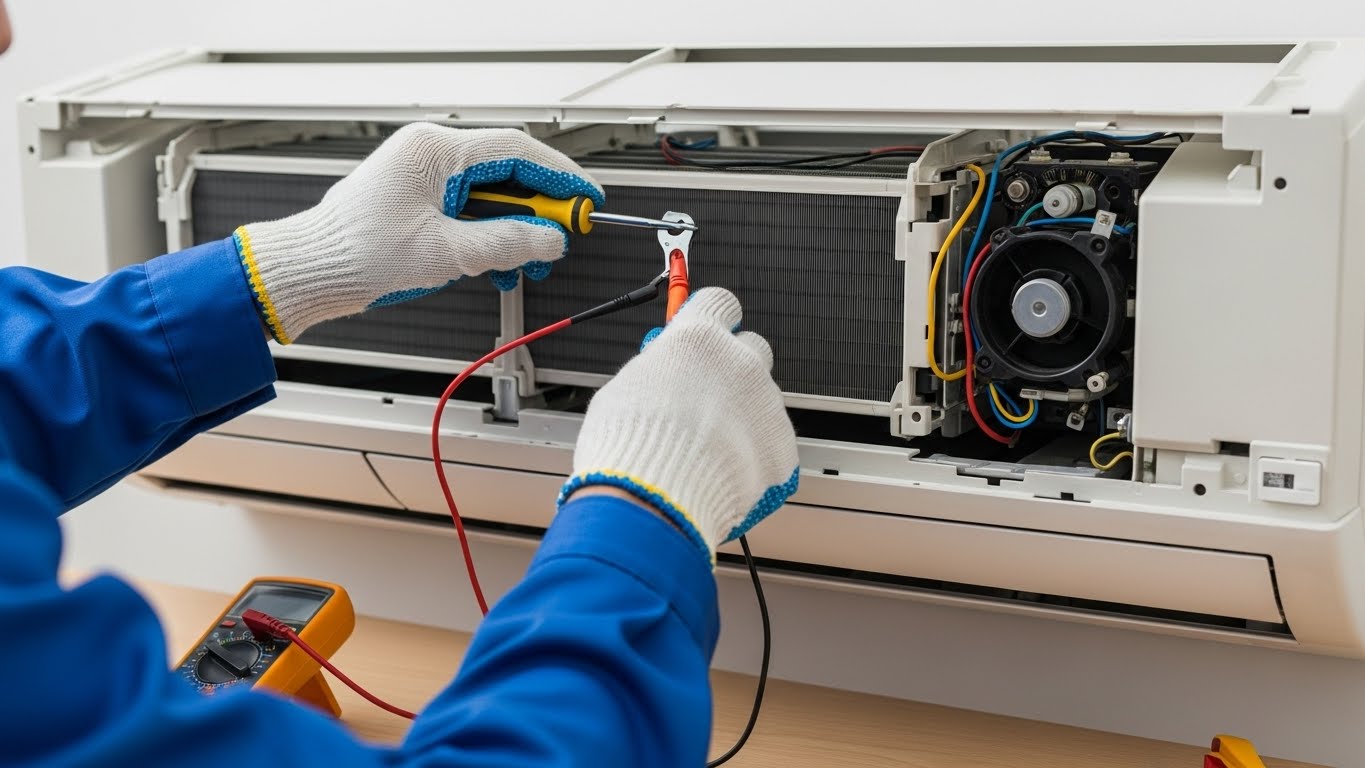
These are representative examples of furnace repair calls in this service area.
Seasonal Property: Furnace Locked Out at Season Opening
A Gaylord-area seasonal home had not been opened since the previous spring. When the heat was turned on at the start of the season, the furnace ran briefly and then locked out. The technician found the flame sensor coated in oxidation from months of inactivity and cleaned it, restoring normal operation through a full heating cycle.
Short-Cycling Furnace: Collapsed Filter and Limit Switch Trip
A homeowner called after the furnace began shutting off every few minutes without reaching temperature. The air filter had not been changed in over a year and had collapsed inward, blocking nearly all airflow and causing the limit switch to trip on each cycle. Replacing the filter and resetting the switch restored normal operation.
No-Heat Call: Cracked Heat Exchanger Found During Diagnosis
A no-heat call came in during a cold stretch in late January. Initial diagnosis pointed to the igniter, but a full inspection revealed a crack in the heat exchanger wall, which allows combustion gases to enter the living area and creates a CO risk. The technician documented the finding and connected the homeowner with the installation team for a replacement.
When Repair Is Not the Right Answer
Most furnace problems are repairable, and repair is usually the right call for a system that is performing well and has not had repeated failures. The calculation changes for older equipment.
A furnace that is 15 to 20 years old and has needed multiple repairs in recent seasons may cost more to keep running than it would to replace. Our technicians will give you a straightforward read on whether repair or replacement makes more financial sense before any work begins. If replacement is the better path, learn more about furnace installation and replacement.
Furnace Maintenance: Preventing the Next Repair Call
Most furnace failures are preventable with annual maintenance. A tune-up catches flame sensor oxidation, clogged condensate drains, and dirty burners before they become no-heat calls in January. Learn more about furnace maintenance, or see how a maintenance plan keeps your system on a regular service schedule.
Service Area
Serving Communities Across Northern Michigan
From Gaylord to Petoskey, Charlevoix, Grayling, and smaller communities throughout the region, Quality Comfort Pros serves year-round homes and seasonal properties with plumbing, air conditioning, heating, and related home services.
Choose your city for local service information and any city-specific repair pages available in that community.
Frequently Asked Questions: Furnace Repair in Northern Michigan
Why is my furnace blowing cold air?
A furnace blowing cold air has typically locked out after failing to confirm ignition. The flame sensor is the most common cause. When oxidation coats the sensor, the furnace shuts the gas valve rather than running without confirmed combustion. In most cases, cleaning or replacing the sensor restores normal operation.
Why does my furnace keep turning on and off?
Short-cycling is most often caused by a clogged air filter restricting airflow. As heat builds inside the unit, the high limit switch trips and shuts the furnace down. Replacing the filter is the first step. If the problem continues, the limit switch or heat exchanger may need a closer look.
Can snow shut down my furnace?
Yes. High-efficiency furnaces draw combustion air from outside and exhaust through PVC pipes near ground level. If snow or ice blocks either pipe, the furnace shuts off as a safety measure. Clearing both pipes is one of the first checks in a winter no-heat call in Northern Michigan.
What is a furnace flame sensor?
The flame sensor is a small metal rod inside the burner assembly. Its job is to confirm the burners have ignited. If it cannot detect a flame within a few seconds of the gas valve opening, it signals the control board to shut down. Cleaning or replacing a dirty sensor is a common furnace repair.
Is a cracked heat exchanger dangerous?
Yes. The heat exchanger separates combustion gases from the air that circulates through your home. A crack allows carbon monoxide to enter the living space. A cracked heat exchanger is not repairable and typically means the furnace needs replacement. If CO is detected, leave immediately and call 911.
Why is there water around my furnace?
High-efficiency furnaces produce condensation during the heating process. That water drains through a plastic line connected to a floor drain or condensate pump. When the line clogs or the pump fails, water backs up and pools at the base of the unit. Clearing the drain or replacing the pump resolves it in most cases.
How do I reset my furnace?
Find the reset button on the furnace, typically a red or yellow button on the burner housing. Press it once firmly and wait 30 minutes before trying again. If the furnace fails to start after one reset, the underlying cause needs diagnosis. Pressing the reset button repeatedly can cause a gas buildup.
Why does my furnace make a loud bang when it starts?
A bang at startup is called delayed ignition. Gas builds in the burner chamber because dirty burners do not light immediately. When enough heat finally builds to ignite the accumulated gas, it lights all at once. Cleaning the burners resolves most cases, and a heat exchanger inspection is advisable as well.
Schedule Furnace Repair in Northern Michigan
Furnace problems do not improve on their own. Getting a technician on-site quickly limits how far a small issue can develop and how long the home stays without reliable heat.
Reach us through the contact page or call directly to schedule a diagnostic visit. Our team serves Gaylord, Petoskey, Charlevoix, Boyne City, Cheboygan, and surrounding Northern Michigan communities.
Phone: (989) 778-9270. For service area coverage details, visit the heating services overview.