
A mini-split that stops working can be frustrating to diagnose on your own. The indoor head, the outdoor unit, and the refrigerant line between them all interact, and a symptom like a blinking light or a warm room could point to several different causes depending on what the system is trying to tell you.
We start every mini-split repair with a diagnosis. The technician goes through the system, identifies the cause, and gives you the repair cost before picking up a tool. If the repair does not make sense given the age or condition of the equipment, we will tell you that too.
See our full ductless mini-split service lineup for installation, maintenance, and replacement alongside repair.
Signs Your Mini-Split Needs Repair
Some mini-split problems are obvious. Others are easy to miss until the system stops working on the first hot day or the coldest night of the year. These are the symptoms that usually bring homeowners to call.
Not Cooling or Heating the Room
If the system runs but the room temperature does not change, common causes include low cooling fluid, a dirty indoor coil that makes it harder to heat or cool the air, or a failed pump inside the outdoor unit. If the system cools but no longer heats, or heats but no longer cools, there may be a problem with the valve that switches between the two modes or with the cooling fluid.
Blinking Lights or an Error Code on the Display
Mini-splits signal problems through blinking lights or codes made up of letters and numbers on the indoor unit’s screen. Each pattern or code points to a problem, and its meaning varies by brand and model. Looking up the code is only the starting point. A technician needs to review past error messages and test the parts linked to the code.
Water Dripping from the Indoor Unit
A mini-split that drips water inside the room may have a drainage problem. The indoor unit collects moisture from the air while cooling, and that water flows outside through a drain line. If the line is blocked or does not slope downward properly, water can back up and overflow from the tray beneath the unit.
Musty or Unusual Smell When Running
A musty odor from the indoor unit usually means mold or mildew has grown on the evaporator coil or inside the housing. Mini-splits create condensation when cooling, and a slow drain or reduced airflow gives that moisture time to sit. A burning smell is more serious and may indicate an electrical problem inside the unit.
Loud or Unusual Sounds
Mini-splits are designed to run quietly. A rattling sound often means something is loose inside the indoor or outdoor unit. A grinding or squealing noise from the outdoor unit can signal worn or failing parts inside the fan motor or compressor. Gurgling in the pipes that carry cooling fluid may point to low fluid levels or a blockage in the system.
Short Cycling or Running Constantly
A mini-split that turns on and off rapidly, or that runs nonstop without reaching the set temperature, is working against a problem it cannot resolve on its own. Short cycling puts extra wear on the compressor and usually signals a refrigerant, electrical, or sensor issue.
What We Check During a Mini-Split Repair Visit
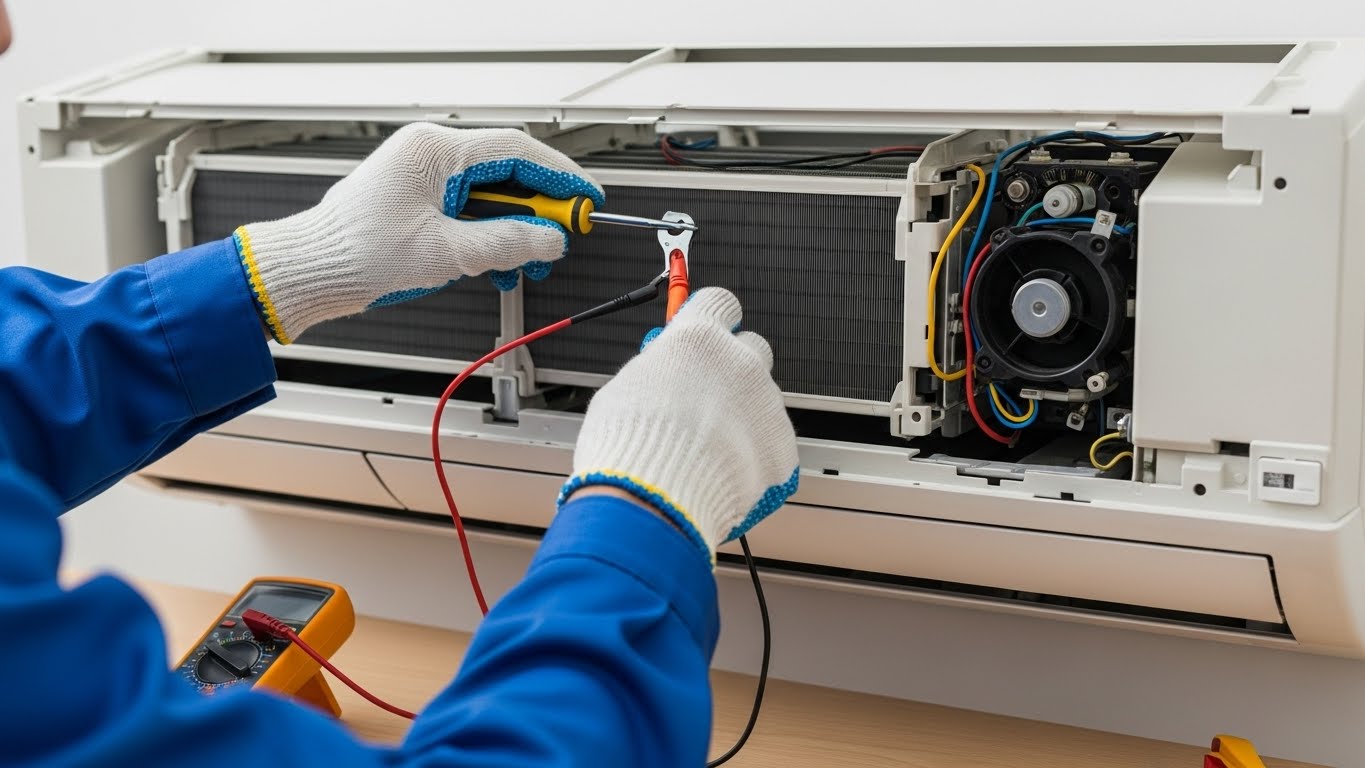
We do not guess at mini-split problems. The technician runs through a structured diagnosis that covers the components most likely to cause the symptom you described.
- Refrigerant pressures at both the high and low sides
- Fault codes and error history stored in the control board
- Capacitors and contactors that run the compressor and fan motors
- Evaporator and condenser coil condition
- Condensate drain line for blockages and pitch
- Communication wiring between the indoor head and outdoor unit
- Sensors and thermistors that monitor temperature and operation
- Fan motor operation and airflow from the indoor head
- Defrost sequence on systems used for heat
After the diagnosis, the technician explains what was found in plain language and gives you a repair quote. If the problem is something the homeowner can address, like a dirty filter, we will tell you that.
Repair or Replace? How to Decide
Most mini-split repairs are worth doing when the system is otherwise in good condition. A worn electrical part, a blocked drain, a dirty coil, or low cooling fluid can often be fixed without replacing the system.
Replacement may make more sense when the compressor—the main pump in the outdoor unit—fails on an older system, several parts need replacing, or repairs would cost nearly as much as a new unit. We explain the cost of both options and what each means for your system’s future.
If replacement makes more sense, see our ductless mini-split replacement page for what that process involves.
Recent Mini-Split Repair Work in the Area
These examples reflect the kinds of mini-split problems our technicians work through on service calls across Northern Michigan.
Communication Error on an Indoor Head Near Petoskey
A homeowner near Petoskey called about a mini-split indoor head displaying a communication error code and refusing to run. The technician traced the fault to a corroded connection in the communication wiring between the indoor head and the outdoor unit. After cleaning and reseating the connection, the system restarted normally and cleared the fault.
Condensate Drain Blockage in a Lake Home Near Charlevoix
A lake home near Charlevoix had a mini-split dripping water from the indoor unit onto the wall. The condensate drain line had collected enough debris to completely block the outlet. After clearing the blockage and verifying the drain pitch, the system ran without leaking.
Refrigerant Issue on a Ductless System Near Gaylord
A homeowner near Gaylord reported that a mini-split was running but no longer cooling the room. Pressure readings confirmed low refrigerant. After locating and repairing the source of the leak, the system was recharged and tested to confirm full cooling output.
Why Northern Michigan Mini-Splits Run Into Trouble More Often in Winter
Mini-splits are heat pumps. In cold weather, the outdoor unit pulls heat from the outside air and moves it indoors. Frost can build up on the outdoor unit, so the system periodically melts it away. If that process fails, ice can build up and reduce or stop the heat coming into your home.
Northern Michigan winters make this ice-clearing process especially important. A mini-split that worked fine in October can develop icing problems by January if its defrost controls, cooling fluid levels, or outdoor fan are not working properly.
We see this pattern regularly in the area, particularly on older systems or those that have missed maintenance. If your mini-split struggles to heat on the coldest days, we start by checking the outdoor unit and the parts that keep it clear of ice.
Licensed HVAC Technicians
Mini-split repair requires working with refrigerant, electrical components, and manufacturer-specific fault codes. Every repair visit is handled by a licensed HVAC technician, not a general handyman. We hold HVAC License TALA000041E and carry the equipment to diagnose and repair ductless systems from multiple manufacturers.
Diagnosis First, Repair Second
We do not start repair work before completing the diagnosis and quoting the cost. You decide what you want done, and the final invoice matches the quote. If we find something we cannot fix on that visit, we will tell you what is needed and give you the options.
Honest About Repair Versus Replace
A technician who recommends replacement when repair makes more sense costs you money. One who recommends repair when the system is near the end of its life also costs you money. We give you the honest assessment and let you decide.
Familiar With Ductless Systems in Northern Michigan Homes
Mini-splits are commonly installed in Northern Michigan in rooms without ductwork, in seasonal cottages as a primary cooling source, and in older homes where central AC cannot be easily added. We work on these systems regularly and understand how the local climate affects how they operate.

Prevent Future Breakdowns with a Maintenance Plan
Many mini-split repairs could have been caught earlier with regular service. The Quality Comfort Club includes annual mini-split maintenance as part of the membership.
Annual service catches low refrigerant, coil buildup, and drain issues before they turn into repair calls. Members also receive priority scheduling and member pricing on any repairs that come up during the year.

Financing When Repair Leads to Replacement
When a repair visit reveals that replacement makes more financial sense, financing is available to spread the cost of a new ductless system.
We can walk you through the financing options before any work begins so you have the full picture.
Service Area
Serving Communities Across Northern Michigan
From Gaylord to Petoskey, Charlevoix, Grayling, and smaller communities throughout the region, Quality Comfort Pros serves year-round homes and seasonal properties with plumbing, air conditioning, heating, and related home services.
Choose your city for local service information and any city-specific repair pages available in that community.
What Northern Michigan Homeowners Are Saying


Frequently Asked Questions About Mini-Split Repair
What does a mini-split communication error mean?
A communication error means the indoor unit and the outdoor unit have lost the signal they use to coordinate. Common causes are a wiring issue between the two units, a failed control board, or a sensor problem inside the indoor head. The code on the display tells a technician where to start.
Why is water dripping from my mini-split indoor unit?
Water dripping from the indoor unit almost always points to a blocked condensate drain line. When the drain cannot clear, water backs up and overflows from the drain pan. Clearing the blockage typically solves the problem, though the technician will also check that the drain line is properly pitched toward the exit.
Why is my mini-split blinking?
A blinking light on a mini-split is the system’s way of flagging a fault code. The pattern of flashes corresponds to a specific error, and the meaning varies by manufacturer. A technician can read the code, look it up against the manufacturer’s documentation, and diagnose the underlying cause.
Why isn't my mini-split heating in winter?
Mini-splits move heat from the outdoor unit into the house, and extreme cold reduces how well they can do that. A frozen outdoor unit that is not completing its defrost cycle will stop heating effectively. A technician can check the defrost sequence, refrigerant levels, and control settings to find the cause.
Why does my mini-split smell musty?
A musty smell from a mini-split usually means mold or mildew has grown on the evaporator coil or inside the indoor unit’s housing. Mini-splits that run in cooling mode produce condensation, and if airflow slows or the drain does not clear, that moisture creates conditions for mold. Cleaning the coil and flushing the drain typically clears the odor.
Can a mini-split be repaired or does it need replacing?
Most mini-split repairs are straightforward: a failed capacitor, a dirty coil, a blocked drain, or a refrigerant charge that needs adjusting. When a compressor fails on an older system, or when the repair cost would approach the price of a new unit, replacement usually makes more sense. We can walk you through both options after the diagnosis.
Related Ductless Mini-Split Services
Schedule Your Mini-Split Repair
If your mini-split is not cooling, showing an error code, dripping water, or not heating the way it should, call to schedule a diagnosis. We serve Gaylord, Petoskey, Charlevoix, Boyne City, Cheboygan, Traverse City, and surrounding communities across Northern Michigan.