
A ductless mini-split gives you targeted heating and cooling without tearing open walls or running new ductwork. For Northern Michigan homes, that flexibility matters. Whether you are conditioning a room addition, a seasonal cottage, or a home that was built without central air, a mini-split can handle it cleanly and efficiently.
The installation process starts with an assessment. We look at the space, the electrical panel, and where the line sets can be routed before recommending any equipment. That work happens before any equipment is ordered, which is how we avoid the surprise of a system that does not fit the space or the load.
Northern Michigan winters are hard on equipment that was not designed for them. We install cold-climate mini-splits that maintain heating output well below freezing, which matters when January temperatures in Gaylord drop into the single digits and stay there.
Who Gets the Most from a Ductless Mini-Split
Homes Without Ductwork
Older homes, cabins, and cottages built before central air was standard often have no ductwork. Adding air ducts can mean opening walls and fitting them through tight spaces. A mini-split needs only a small hole in an outside wall for the pipes and wiring, with an indoor unit mounted on the wall.
For a home with radiators, baseboard heat, or a boiler, a mini-split adds summer cooling without changing the existing heating system. Many Northern Michigan homeowners use their current heat in winter and the mini-split in summer, with extra heat from the mini-split during milder spring and fall weather.
Room Additions and Bonus Spaces
Room additions, finished basements, sunrooms, and converted garages are the most common places we install mini-splits. These spaces are often far from the main heating and cooling system or have no air ducts at all, making them difficult to keep comfortable. A mini-split heats and cools the space without changing the home’s main system.
A setup designed for one room works well here: one outdoor unit, one indoor unit, and its own electrical circuit. It heats and cools just the space that needs it, giving you direct control over the temperature.
Seasonal Homes and Cottages
Lake and vacation properties in Petoskey, Charlevoix, and Boyne City often sit empty for months at a time. A mini-split handles the cooling season efficiently, and the cold-climate heating function lets owners open the property in early spring without running the furnace constantly. The systems can be controlled remotely, which matters when you are managing a property from out of state.
Seasonal properties also tend to have older electrical panels and limited space or connections for heating and cooling equipment. We check whether the panel can handle the added power needs before recommending a system, including whether it needs a smaller additional panel or a separate electrical circuit for the mini-split.
Zoned Comfort in a Larger Home
Multi-zone mini-splits connect several indoor units to one outdoor unit, giving different rooms their own temperature controls. This is popular in two-story homes where heat rises and makes upstairs rooms uncomfortable in summer, and in households where family members prefer different temperatures. Each room can have its own temperature setting and schedule.
A multi-zone system is not automatically the right answer. It works best when the rooms are separate spaces with different temperature needs and the outdoor unit has enough power to heat or cool them all. We calculate how much heating and cooling each room needs before recommending a setup.
Single-Zone vs. Multi-Zone: Choosing the Right Configuration
A single-zone mini-split connects one outdoor unit to one indoor unit to heat and cool a single space. It is often a good fit for a room addition, sunroom, or finished basement. We size the system for that room, and it runs separately from the home’s main heating and cooling system.
A multi-zone mini-split connects one outdoor unit to several indoor units in different rooms. Each room has its own temperature control. This setup reduces the number of outdoor units needed, but installation costs depend on the rooms’ locations and how much heating and cooling they need.
Multi-zone is not always the better value. If rooms are far apart or have very different needs, separate single-zone systems may make more sense. We explain both options and their costs so you can choose what fits your home and budget.
What Our Mini-Split Installation Includes
Every installation covers the full scope from assessment to startup. There is no handoff to a separate crew at any point.
- Pre-installation assessment: room size, sun exposure, insulation level, panel capacity, and line-set routing options
- Equipment recommendation based on load calculation, not rule-of-thumb guessing
- Mounting of the indoor head at the height and position that gives the best airflow for the room
- Outdoor unit placement on a pad or wall bracket, positioned to stay above the typical snow line
- Line-set installation through the exterior wall, insulated and protected from weather
- Electrical connections to a dedicated circuit
- Refrigerant line connection and pressure testing before any refrigerant is added
- System startup, performance verification, and thermostat walkthrough
- Permit coordination for applicable installations
Cold-Climate Performance for Northern Michigan Winters
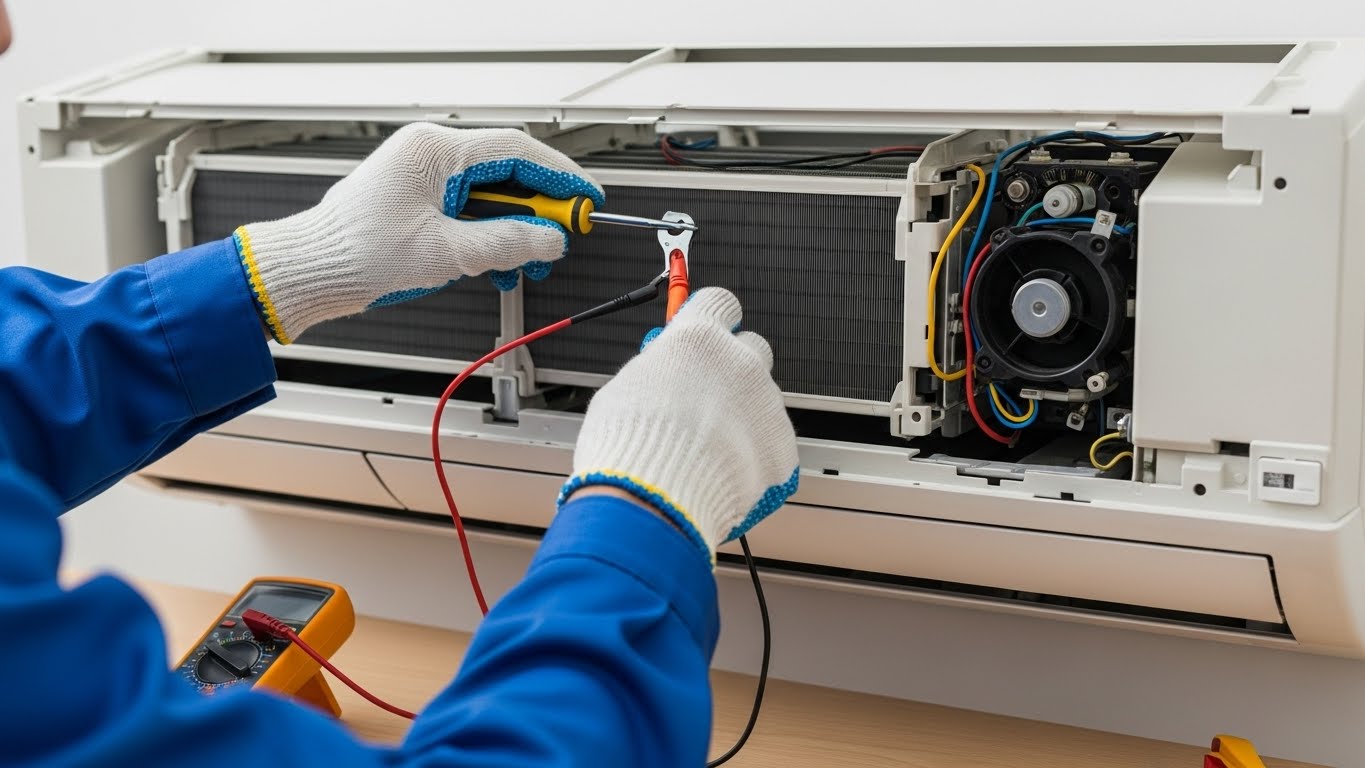
Some mini-splits provide less heat as outdoor temperatures fall, and their operating limits vary by model. Cold-climate mini-splits are designed to keep heating in much colder weather, making them a better fit for Northern Michigan winters. We check each model’s heating ability at low temperatures to make sure it meets your home’s needs.
We recommend cold-climate models when the mini-split will provide the home’s main heat or extra warmth alongside another system. This includes most of our installations in Gaylord, Petoskey, and the surrounding area. If you only need summer cooling and already have a furnace, a standard model may be a suitable option.
Recent Mini-Split Installations in the Area
Single-Zone Installation in a Sun Room Near Petoskey
A homeowner had converted their three-season room into a year-round sitting space but had no way to heat or cool it without opening windows or hauling in a space heater. The existing ductwork did not extend to that end of the house. We installed a single-zone cold-climate mini-split with the indoor head mounted high on the interior wall and the outdoor unit on a pad around the corner from the addition. The room now holds a consistent temperature regardless of what is happening outdoors, and the homeowner can control it from their phone.
Multi-Zone System for a Home Addition Near Gaylord
A family had added two rooms above their garage: a home office and a guest bedroom. The existing forced-air system could not reach the addition without a significant duct extension, and the second floor ran warm in summer regardless. We installed a two-zone mini-split with one head in each room, both served by a single outdoor condenser. Each room now has independent temperature control, and the system provides supplemental heat in winter so the homeowner can keep the guest room at a lower temperature until guests arrive.
Supplemental Heating at a Seasonal Property Near Charlevoix
A lake property owner wanted to extend their usable season into May and October without running the propane furnace for light shoulder-season warmth. The property had no central cooling at all. We installed a single-zone cold-climate mini-split that handles cooling through summer and provides efficient supplemental heat in spring and fall. The owner uses the remote app to pre-heat the property before arriving, which reduces their propane consumption during shoulder months.
What the Installation Day Looks Like
A mini-split installation does not follow a fixed script because every home is different. What we can tell you is what the general sequence looks like so you know what to expect.
Before We Arrive
Before installation, we confirm the equipment, electrical needs, where the indoor and outdoor units will go, and where the connecting pipes and wiring will run. Planning these details ahead helps the installation go smoothly.
You do not need to clear a large area of your home. We need access to the room where the indoor unit will go and the outside wall where the pipes and wiring pass through. Please also keep the electrical panel easy to reach if electrical work is included.
Installation Day
We start by securing the indoor unit’s mounting plate and confirming where the pipes and wiring will pass through the wall before making any holes. The outdoor unit sits on a sturdy base or wall bracket. We connect and cover the pipes between the units, complete the electrical connections, and check everything before preparing the system to run.
We test both heating and cooling before we leave. You will see and feel the system working before the crew packs up. We walk you through the remote or app controls so you know how to set schedules, switch between heating and cooling, and adjust the airflow direction.
After the Installation
If a permit was pulled, the final inspection is scheduled and we coordinate it. We let you know what the inspector will look at and whether you need to be present. If anything comes up during the inspection, we handle it.
Mini-splits benefit from annual maintenance to maintain their efficiency and catch small issues before they become repairs. If you want a maintenance plan that covers the system going forward, we can set that up at installation.
Licensed. We Pull the Permits. No Surprises on the Bill.
Licensed HVAC Contractor
Mini-split installation involves refrigerant handling, electrical work, and wall penetrations. It is not a DIY project, and in Michigan it is not a job for an unlicensed handyman. We are a licensed HVAC contractor, which means the technicians who install your system are qualified to do so legally and correctly.
Permit Coordination
Most mini-split installations in Michigan require a permit, particularly when the installation involves new electrical work or a new circuit. We handle the permit application so you do not have to work through the local approval process yourself. The permit is part of the installation, not an add-on.
Equipment Sizing, Not Guessing
An oversized mini-split short-cycles and does not dehumidify properly. An undersized one runs continuously and cannot hold temperature on the hottest or coldest days. We size equipment based on the actual load of the space, which means measuring the room, accounting for insulation and window area, and calculating the BTU requirement before recommending anything.
Upfront Pricing
You receive a price before we schedule the installation. That price covers the equipment, the labor, the line set, and the startup. If there is an electrical upgrade required, we tell you that during the assessment so it is in the quote, not a surprise on the day of installation.

Protect Your Investment with the Quality Comfort Club
A new mini-split is a meaningful investment. The Quality Comfort Club keeps it running at peak efficiency by catching small problems before they become costly repairs. Members receive scheduled maintenance visits, priority scheduling, and discounts on repairs.
Financing Available for New Mini-Split Systems
Equipment costs should not be the reason a homeowner puts off a system they need. We offer financing options for new mini-split installations so you can get the right system now and pay over time.
Service Area
Serving Communities Across Northern Michigan
From Gaylord to Petoskey, Charlevoix, Grayling, and smaller communities throughout the region, Quality Comfort Pros serves year-round homes and seasonal properties with plumbing, air conditioning, heating, and related home services.
Choose your city for local service information and any city-specific repair pages available in that community.
What Northern Michigan Homeowners Are Saying


Frequently Asked Questions About Mini-Split Installation
Can a ductless mini-split heat my home through a Northern Michigan winter?
Cold-climate mini-splits are designed to pull heat from outdoor air at temperatures well below freezing, so yes, many Northern Michigan homeowners use them as a primary heat source. The key is choosing a model rated for low-temperature performance and pairing it with a backup heating source for the coldest stretches.
How many indoor heads do I need?
The number of indoor heads depends on how many spaces you want to condition independently and how large each space is. A single outdoor unit can typically support one to four indoor heads, depending on the model. A technician will assess your home and recommend a configuration that matches your actual comfort goals.
How long does mini-split installation take?
A single-zone installation typically takes four to six hours when the location and electrical access are straightforward. A multi-zone system with several indoor heads can take a full day or more, depending on the number of heads and how the line sets need to be routed. We give a time estimate during the assessment.
Do I need a permit for a mini-split installation in Michigan?
In most Michigan municipalities, a permit is required for a mini-split installation, particularly when the system involves new electrical work. The permit process confirms the installation meets the state’s mechanical and electrical codes. We handle the permit coordination so you do not need to manage it yourself.
Where should the indoor and outdoor units be installed?
Indoor heads work best mounted high on a wall in the zone they serve, positioned where the airflow can reach the whole room without a furniture obstruction blocking it. The outdoor unit should sit on a firm surface that stays above the typical snow line. Both locations are evaluated during the pre-installation assessment.
How long does a ductless mini-split last?
Most mini-splits last 15 to 20 years when they are serviced regularly. The outdoor unit typically reaches the shorter end of that range in harsher conditions, while indoor heads often outlast it. Annual or biannual maintenance is the single biggest factor in reaching the longer end of that range.
Can one outdoor unit serve multiple rooms?
Yes, a multi-zone mini-split uses one outdoor condenser to serve multiple indoor heads, each conditioning a separate room or zone. Most residential systems can handle two to four indoor heads, though some commercial-grade units support more. Sizing the outdoor unit correctly for the combined load is part of what we assess before any equipment is ordered.
How loud is a ductless mini-split?
The indoor unit runs quietly, typically at noise levels comparable to a library or a soft conversation, which makes them popular in bedrooms and offices. The outdoor unit makes more noise but sits outside, and modern units are considerably quieter than older models. Placement away from bedroom windows and neighboring patios keeps sound from being an issue.
Related Ductless Mini-Split Services
Schedule Your Mini-Split Installation Assessment
If you are ready to find out whether a ductless mini-split is the right solution for your space, start with an assessment. We look at the room, the electrical panel, and the line-set options before recommending any equipment. You will have a clear recommendation and a price before anything is ordered.
Call or use the form below to schedule your assessment. We serve Gaylord, Petoskey, Charlevoix, Boyne City, and the surrounding Northern Michigan area.