
A mini-split that keeps running repair calls, struggles to heat on cold nights, or uses a refrigerant that is harder to source every year is sending a clear message. At some point, the money you spend keeping an aging system alive is better put toward a replacement that will run reliably for the next decade or more.
The harder question is knowing when that point has arrived. We walk through that assessment with every homeowner before recommending anything. Age, repair history, refrigerant type, and how the system has been performing in recent winters all factor into whether replacement makes financial sense right now or whether a targeted repair buys meaningful time.
If your system is past the point of cost-effective repair, we handle the full replacement: removal of the old equipment, recovery of the refrigerant as required by EPA regulations, and installation of a new system sized for your home. Visit our Cooling Services page or call to schedule a replacement assessment.
When Does Replacing Make More Sense Than Repairing?
No single sign means your system needs to be replaced, but these four can help you decide whether another repair is worthwhile. If two or more apply, replacement may be the more practical choice.
Age of the System
As a mini-split gets older, its age becomes an important part of any repair decision. An older system may still work well, but a major repair may be harder to justify. Replacing the main pump, fixing a cooling fluid leak, or replacing the system’s electronic controls is a bigger investment than fixing a small electrical part on a newer unit. We discuss the system’s condition, how much longer it may last, and whether more repairs are likely before recommending repair or replacement.
Repair Cost Approaching System Value
A common rule of thumb is that a repair costing more than half the replacement cost of the system is rarely a good investment, especially on a system past the midpoint of its expected life. The repair fixes the immediate failure but leaves the underlying wear in place. If a repair comes in at or above that threshold, we lay out the comparison directly: what the repair costs, what a replacement costs, and what the efficiency and comfort difference between the two options looks like over the next few years.
Refrigerant Availability and Cost
Many older mini-splits use a cooling fluid called R-410A, which is being phased out of new equipment. These systems can still be serviced, but adding cooling fluid may become more expensive over time. If your system is leaking, we compare the cost of fixing the leak and refilling it with the cost of replacement. Repeated leaks or expensive repairs can make a newer system the more practical choice.
Comfort Performance Has Declined
A mini-split that takes longer to reach your chosen temperature, cannot keep your home warm on cold nights, or runs constantly without making the room comfortable may need attention. These changes can happen slowly, making them easy to overlook until you realize the system “just stopped keeping up.” In Northern Michigan, heating performance during cold weather matters. If your mini-split now struggles in temperatures it once handled well, it is worth having the system checked. Our Mini-Split Repair page covers repair scenarios for systems that still have service life remaining.
Replacing One Component vs. the Whole System
Not every mini-split replacement involves removing everything. Depending on what has failed and how the rest of the system is holding up, replacing one component rather than the full system may be the right answer. Here is how we evaluate each scenario.
Replacing Just the Outdoor Unit
The outdoor unit contains the main pump and other costly parts that move cooling fluid through the system. If it fails but the indoor units are still in good condition, replacing only the outdoor unit may make sense—as long as the new unit works with the existing ones.
Only certain models can work together, and switching brands usually means replacing both the indoor and outdoor units. We check compatibility before quoting a partial replacement so any mismatch is caught before the old equipment is removed.
Replacing One Indoor Head
If one indoor unit fails and the outdoor unit is still in good condition, replacing only the indoor unit may make sense. A problem with one indoor unit does not necessarily mean the rest of the system needs replacing, especially on a newer system.
We confirm that the replacement works with your existing system and check whether we can reuse the wall mount, the opening for the connecting pipes, and the drain line. We explain any changes needed before installation.
Full System Replacement
When the indoor and outdoor units are both aging, you are changing brands, or you want to heat and cool more rooms or a larger space, a full system replacement may make sense. Replacing everything together ensures the units work with each other and gives you a new manufacturer’s warranty.
If you are replacing a mini-split for the first time and want to understand what goes into a new installation, our Mini-Split Installation page covers that process in detail.
What a Replacement Includes
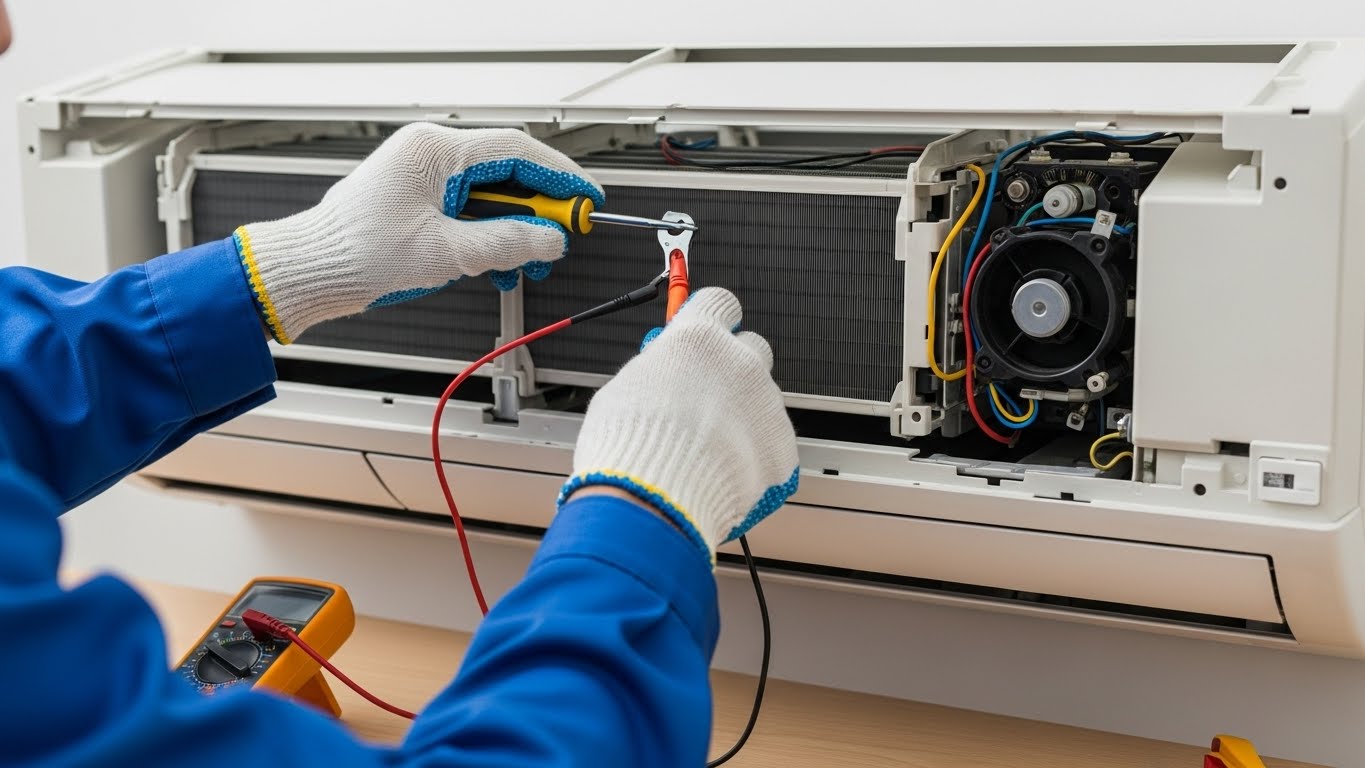
A mini-split replacement is more involved than an installation on a blank wall. The old system has to come out correctly before the new one goes in. Here is what the replacement process covers:
- Refrigerant recovery from the old system per EPA Section 608 requirements
- Disconnection and removal of the old indoor head(s) and outdoor unit
- Inspection of the existing line set for condition and compatibility with the new system
- Inspection of the existing electrical circuit for capacity and code compliance
- Installation of the new indoor head(s) and outdoor unit
- Refrigerant charge, startup, and system commissioning
- Old equipment haul-away
- Permit and final inspection
- Line set reuse depends on the condition of the existing tubing and whether the new system is compatible with it.
We inspect the line set as part of the replacement process and include any required line set replacement in the quote before work begins.
What to Expect from a New System
Newer mini-splits can use less electricity to heat and cool the same space than older models. As parts wear down, an older system may also work harder to keep your home comfortable.
Newer cold-climate mini-splits are designed to keep heating in temperatures where some older models struggle. Their heating ability varies by model, so choosing one that can handle Northern Michigan winters is an important part of replacement planning.
Newer systems also tend to run more quietly at lower fan speeds and offer finer temperature control. For homes that have been living with a declining system, the difference in day-to-day comfort is often more noticeable than the efficiency improvement on paper. Our Mini-Split Maintenance page covers how to protect the new system after installation.
Recent Mini-Split Replacements in the Area
Full System Replacement at a Home Near Petoskey
A homeowner near Petoskey contacted us after their mini-split outdoor unit failed during a cold stretch in January. The system was 14 years old and needed refrigerant added the previous season. After assessing the unit and confirming the compressor had failed, we recommended full replacement rather than a compressor swap on an aging system. We installed a new cold-climate system, reused the existing line set after inspection, and had the home heating again within the same week the assessment was completed.
Efficiency-Driven Upgrade in Gaylord
A Gaylord homeowner with a 12-year-old single-zone mini-split reported that the system had been struggling to maintain setpoint during the coldest nights of the past two winters. A diagnostic visit found the system was operating, but efficiency and cold-weather output had declined significantly. We discussed the repair-vs-replace calculation and the homeowner opted for a full replacement with a current cold-climate model. Heating performance during the following winter season was noticeably improved at low outdoor temperatures.
Single Indoor Head Replacement Near Charlevoix
A homeowner near Charlevoix had a three-zone mini-split where one indoor head stopped responding to controls and would not cool the room it served. The outdoor unit and the other two heads were operating normally. We assessed the failed head and confirmed the outdoor unit was in good condition and compatible with a current replacement head in the same product line. We replaced only the failed head, reused the existing bracket and line set penetration, and restored full three-zone operation without disrupting the rest of the installation.
What Happens to Your Old System
Before removing your mini-split, a certified technician safely collects the cooling fluid so it is not released into the air. We include this step in every replacement.
The old equipment is then disconnected and removed. During the assessment, we confirm whether haul-away is included in your quote or carries a separate charge.
We also check whether the existing wall mounts, openings for pipes, and electrical connections will work with the new system. Any needed changes are included in the installation plan.
Licensed. Permits. Clear Pricing.
Licensed HVAC Contractor
Mini-split replacement involves refrigerant handling, electrical work, and in many jurisdictions, a building permit. We are a licensed HVAC contractor, and the technicians who perform replacements are trained and certified for the work.
Permits When Required
Permit requirements for mini-split replacements vary by city and by the scope of work being done. Where permits are required, we handle the process and coordinate the final inspection. We do not skip permits to move faster.
Written Quotes Before Work Begins
Every replacement gets a written quote before any work is scheduled. The quote covers the replacement system, labor, refrigerant recovery, and any line set or electrical work identified during the assessment. If the scope changes after we open the wall or inspect the line set, we update the quote and review it with you before proceeding.
No Pressure, No Upsell
Our assessment tells you what the system needs and what the options are. If a repair makes more financial sense than replacement, we say so. If replacement is the right call, we explain why. The goal is that you have the information to make the right decision for your home and your budget.

Protect Your New System with the Quality Comfort Club
A new mini-split is a long-term investment, and regular maintenance is what protects that investment. Our Quality Comfort Club maintenance plan covers scheduled visits to keep your system running at rated efficiency and to catch issues before they become failures.
Financing Available
Mini-split replacement is a significant purchase for most homeowners. We offer financing options through our financing page to help spread the cost over time. Contact us to learn what financing options are available for your replacement project.
Service Area
Serving Communities Across Northern Michigan
From Gaylord to Petoskey, Charlevoix, Grayling, and smaller communities throughout the region, Quality Comfort Pros serves year-round homes and seasonal properties with plumbing, air conditioning, heating, and related home services.
Choose your city for local service information and any city-specific repair pages available in that community.
What Northern Michigan Homeowners Are Saying


Frequently Asked Questions About Mini-Split Replacement
How do I know when a mini-split is worth replacing rather than repairing?
A mini-split is typically worth replacing when it is more than 15 years old, when a single repair would cost more than half the price of a new system, or when the outdoor unit can no longer maintain heating output during Northern Michigan winters. An efficiency and comfort decline that has worsened over several seasons is also a reliable signal.
Can I keep my existing line set and wall bracket when I replace a mini-split head?
In most cases, yes. Replacement heads for the same brand and model line are typically designed to use the existing wall mounting bracket and line set penetration. If you are switching brands or upgrading to a different unit size, we assess the mounting location and line set during the replacement evaluation to confirm compatibility.
How long does a mini-split replacement take?
A single-zone replacement typically takes four to six hours when the existing line set and electrical are reused. A multi-zone replacement with several indoor heads can run a full day. If the line set needs replacing or additional electrical work is required, we include that time estimate in the assessment before scheduling.
Will a new mini-split use less electricity than my current system?
Yes, in most cases significantly so. Mini-split efficiency ratings have improved steadily, and a system installed a decade ago will typically use more electricity than a current model of the same size. Cold-climate performance at low temperatures has also improved, which matters during Northern Michigan winters when the system needs to maintain output.
What happens to my old mini-split when you replace it?
We remove both the indoor and outdoor components as part of the replacement. Refrigerant in the old system is recovered before disconnection, as required by EPA regulations. Whether haul-away of the old equipment is included in the replacement quote is confirmed during the assessment.
Can I replace just the outdoor unit without replacing the indoor heads?
If your outdoor unit is aging or no longer compatible with current refrigerants, replacing the whole system usually makes more sense than putting a new head on failing infrastructure. When the outdoor unit is solid and only one indoor head has failed, replacing just that head may be the better answer. We tell you which scenario fits after the assessment.
Related Ductless Mini-Split Services
Schedule Your Mini-Split Replacement Assessment
If your mini-split is aging, failing to keep up, or facing a repair bill that is getting hard to justify, a replacement assessment is the right first step. We walk through the system with you, give you an honest repair-versus-replace recommendation, and provide a written quote if replacement is the right path.
Call us or fill out the contact form to schedule. We serve Gaylord, Petoskey, Charlevoix, and communities across Northern Michigan.