What You’re Actually Paying for Faucet Installation Labor
The cost to install a faucet labor only is something most homeowners don’t think to ask about until they’re already on the phone with a plumber. Separating labor from the faucet price itself is one of the smartest moves you can make when budgeting for this project.
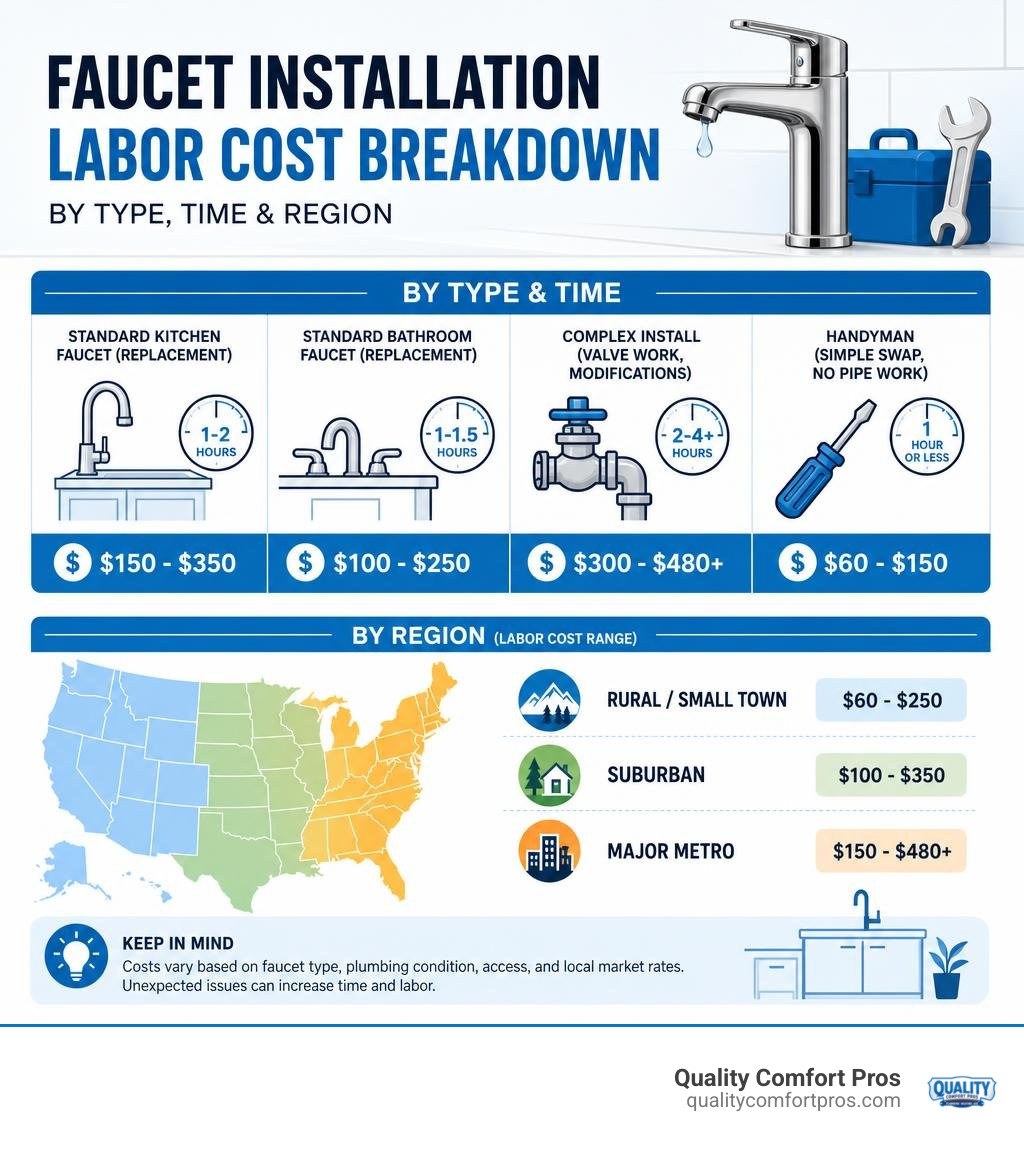
Here’s a quick look at what labor typically runs across the most common scenarios:
| Installation Type | Typical Labor Cost Range | Estimated Time |
|---|---|---|
| Standard kitchen faucet (replacement) | $150 – $350 | 1 – 2 hours |
| Standard bathroom faucet (replacement) | $100 – $250 | 1 – 1.5 hours |
| Complex install (valve work, modifications) | $300 – $480+ | 2 – 4+ hours |
| Handyman (simple swap, no pipe work) | $60 – $150 | 1 hour or less |
Pricing can vary depending on several factors, including your location, the type of faucet, and the condition of your existing plumbing. A straightforward swap in a rural area will cost noticeably less than the same job in a metro market.
What surprises many Northern Michigan homeowners is how quickly those labor hours add up when unexpected issues come into play. A stuck shut-off valve, corroded supply lines, or tight access under the sink can turn a one-hour job into a half-day project.
This guide breaks down exactly what drives those costs, how to compare your options, and where you have real room to save.
I’m JD Osman, a home services business owner with over 20 years of experience in customer-facing industries, and I’ve helped countless homeowners navigate decisions around the cost to install a faucet labor only without overpaying or being caught off guard. Let’s walk through everything you need to know before you hire anyone.
Understanding the Cost to Install a Faucet Labor Only
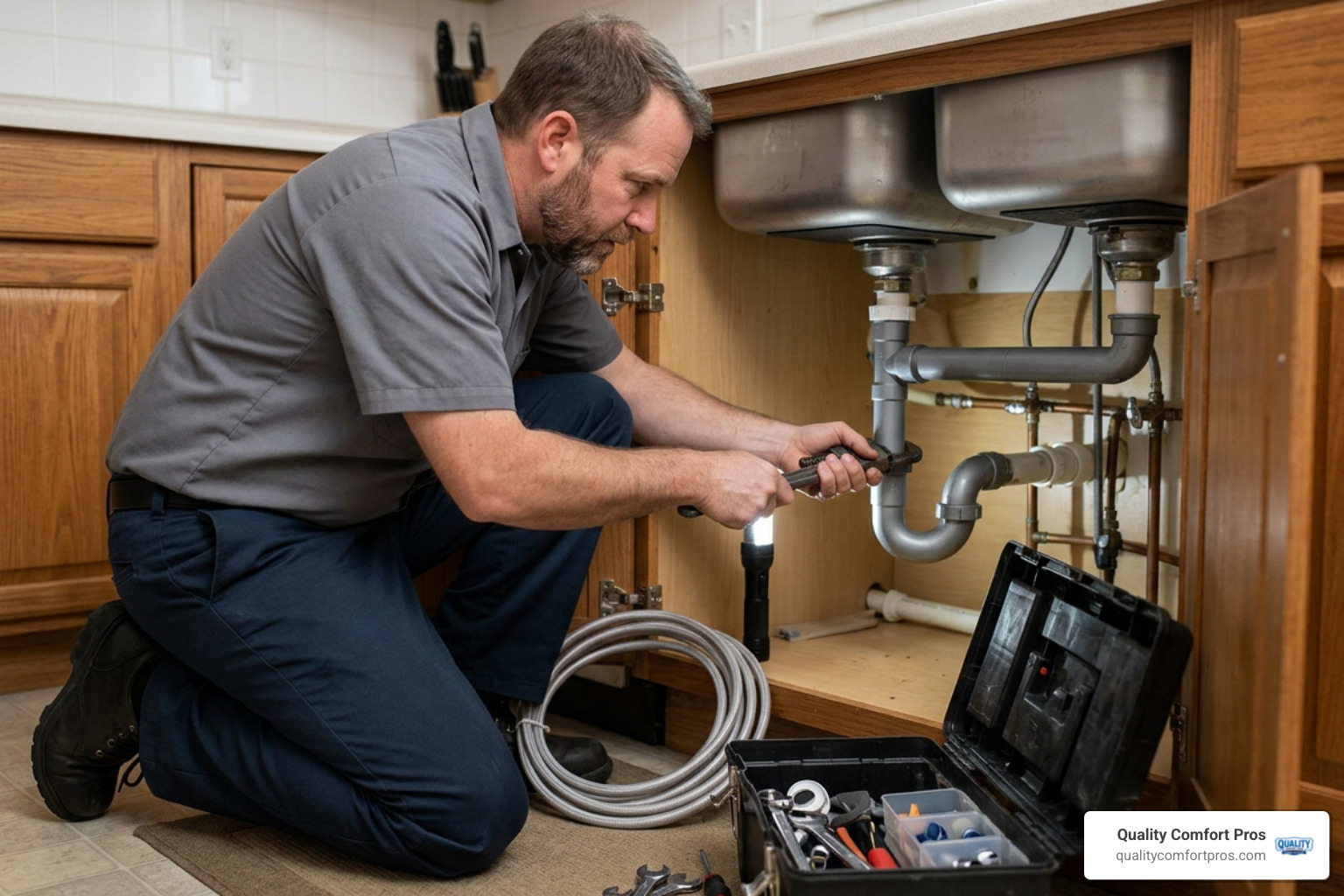
When you purchase your own plumbing fixture online or from a local home improvement store, you only need to hire a professional for the physical installation. This is known as a labor-only project. Isolating the labor fee helps you understand exactly what you are paying for, which is primarily the expertise, time, and specialized tools of the technician.
When researching the national average for plumbing work, you will find that a standard, no-surprises faucet replacement is relatively affordable. However, those national averages often combine simple urban handyperson rates with high-end emergency plumbing fees. To get a realistic idea of what to expect, it is best to consult a comprehensive faucet installation cost guide that breaks down these variables.
In Northern Michigan, our local labor rates are influenced by travel distances between communities like Gaylord, MI, Petoskey, MI, and Charlevoix, MI. Unlike dense metropolitan areas where a plumber might service five homes on a single street, our technicians often drive through rural terrain to reach your home. This travel time, combined with the local cost of living, shapes the baseline labor rates.
Generally, bathroom installations require slightly less time and labor than kitchen setups. Kitchen sinks are deeper, have more complex supply line configurations, and often feature additional accessories like sprayers or soap dispensers that require extra hands-on time.
Kitchen Faucet Labor Costs
A kitchen faucet is the workhorse of the home. Because of this, installing one is usually more involved than setting up a bathroom fixture. The physical space under a kitchen sink is often crowded with garbage disposals, water filtration systems, and pull-out drawer plumbing, which limits physical access and extends the installation time.
Standard kitchen models with pull-down sprayers require careful counterweight adjustments beneath the cabinet to ensure the hose retracts smoothly. If you are upgrading to a modern touchless model, the installer must also mount a battery pack or connect an AC adapter, which adds steps to the process. For a detailed breakdown of these specific kitchen variables, you can review current labor-only cost insights to see how complexity impacts the final bill.
Bathroom Faucet Labor Costs
Bathroom faucet installations are typically faster, but they come with their own set of physical challenges. The space inside a bathroom vanity is notoriously cramped, making it difficult to reach the mounting nuts behind the sink basin.
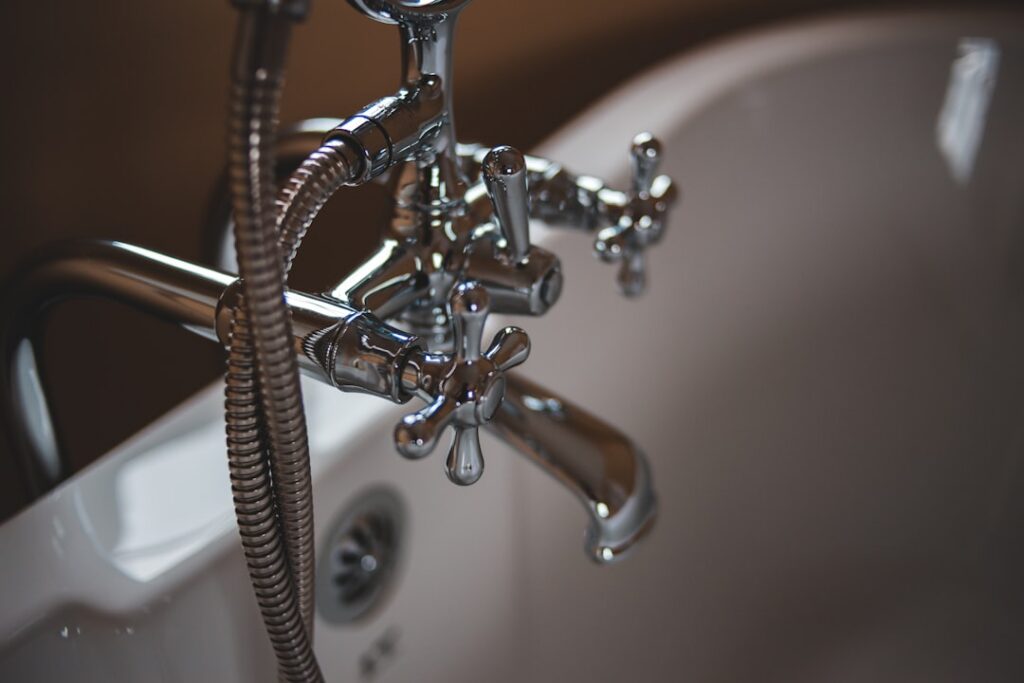
The two most common styles are centerset and widespread faucets. A centerset model has the spout and handles combined on a single base plate, making it very straightforward to install. Widespread faucets require the installer to mount three separate pieces (the spout and two individual handles) and connect them using a small manifold system under the deck. This extra assembly naturally increases the labor time.
If you are dealing with a leaking bathroom fixture or want to explore the differences in labor for various bathroom styles, reading about bathroom faucet replacement and leak repair costs will give you a clearer picture of what the process entails.
Key Factors and Hidden Expenses That Influence Faucet Labor Rates

The quote you receive over the phone is almost always based on a best-case scenario. When a technician actually crawls under your sink, they might find pre-existing conditions that require immediate attention. These plumbing modifications are not meant to inflate your bill, they are necessary steps to ensure your new fixture does not leak and cause structural damage to your home.
The condition of your shut-off valves and supply lines is the most common variable. Over time, these components can corrode or become seized. If a plumber cannot shut off the water locally at the sink, they will have to turn off the main water valve to the house and replace the faulty shut-off valves before they can even begin mounting the new faucet. If you want to avoid these surprises, working with a reputable team for your faucet replacement services ensures you get an honest, up-front assessment of your system.
Plumber vs Handyman Rates
One of the first decisions you will face is whether to hire a licensed plumber or a local handyman. A handyman is often highly capable of performing a basic swap where the existing plumbing is in pristine condition. Their hourly rates are generally lower, making them an appealing choice for budget-conscious homeowners.
However, there is a distinct risk. If a handyman encounters a rusted pipe that snaps during removal, they may not have the licensing, insurance, or specialized tools to repair the line. A licensed plumber charges higher hourly rates, but they bring specialized training, code compliance, and liability insurance to your home. According to verified faucet installation cost data, paying for professional expertise up front often saves money by preventing costly water damage down the road.
Why Setup and Prep Affect the Cost to Install a Faucet Labor Only
Professional labor is not just about turning a wrench. When a technician arrives at your home in Grayling, MI or Boyne City, MI, their labor time includes several critical phases:
- Planning and Area Preparation: Protecting your flooring, laying down drop cloths, and setting up workspace lighting.
- Old Fixture Removal: Carefully disconnecting and extracting the old faucet without damaging the sink deck or countertop.
- Surface Prep: Scraping away old plumbers putty, silicone, and mineral buildup to ensure a watertight seal for the new fixture.
- Assembly and Securing: Mounting the new faucet, aligning it perfectly, and securing it from below.
- Leak and Flow Testing: Running the water through multiple cycles, checking connections under pressure, and verifying hot and cold lines are correctly oriented.
To see how these individual steps are calculated into a professional estimate, you can use a bathroom faucet installation calculator to model different scenarios based on labor hours.
Unexpected Repairs That Increase the Cost to Install a Faucet Labor Only
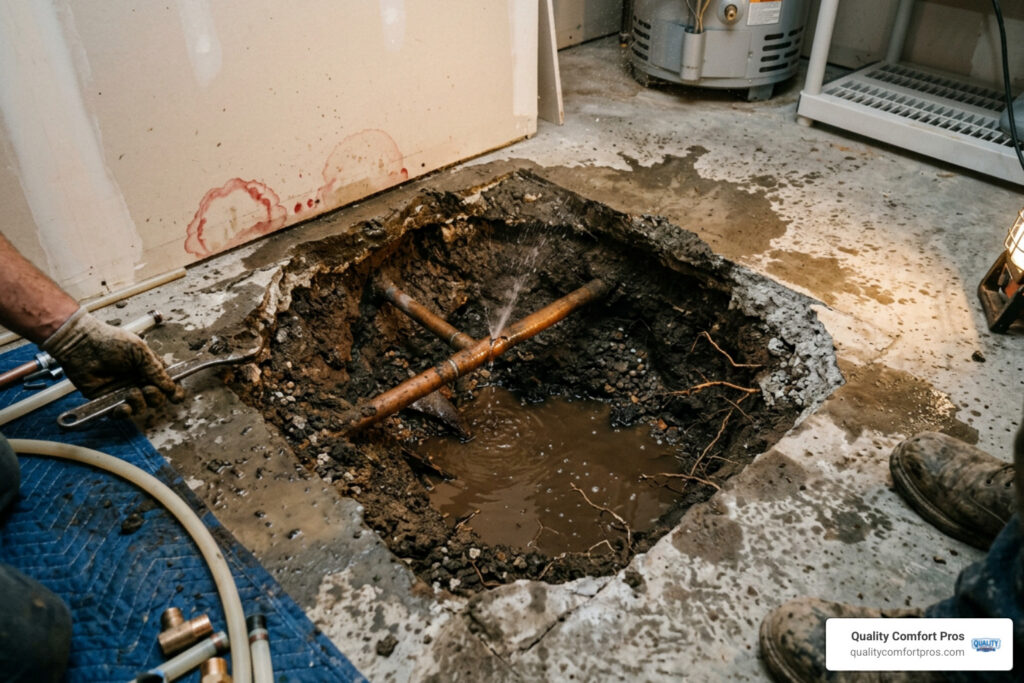
Older homes in Northern Michigan communities like Mancelona, MI or Bellaire, MI often have galvanized iron pipes or older copper lines that have degraded over decades. When these materials are disturbed during a faucet replacement, they can easily crack or develop pinhole leaks.
Replacing corroded pipes, upgrading outdated shut-off valves, or repairing minor water damage inside the cabinet will add to the overall labor time. Additionally, if you are transitioning from a traditional faucet to a wall-mounted model, the plumber must open up the wall, reroute the water supply lines, and secure new blocking. This level of modification requires significantly more labor. For a deeper dive into these complex structural scenarios, you can read more about kitchen faucet installation cost factors to prepare your budget.
How to Save Money on Faucet Installation Labor
While you should always leave the actual plumbing connections to a professional, there are several highly effective ways you can reduce the overall labor time and save money:
- Clear Out the Cabinets: Before the technician arrives, completely empty the cabinet under the sink. Removing cleaning supplies, trash cans, and water filters saves the technician from spending billable time moving your personal belongings.
- Perform a Compatibility Check: Ensure the new faucet you buy matches the exact hole configuration of your sink. If you buy a single-hole faucet for a three-hole sink, you will need a deck plate (escutcheon) to cover the extra holes. If you buy a three-hole faucet for a single-hole sink, the plumber will have to spend time drilling through your sink deck or countertop, which increases labor costs.
- Buy High-Quality Parts: Do not skimp on the supply lines. Purchase new, braided stainless steel supply lines along with your faucet. Reusing old, stiff supply lines is a recipe for leaks, and a professional plumber will likely refuse to reuse them anyway to protect their workmanship warranty.
- Coordinate Multiple Repairs: If you have a leaky toilet in East Jordan, MI or a slow drain in Vanderbilt, MI, bundle these tasks into a single visit. Most plumbing companies charge a baseline service call fee just to show up. Grouping small repairs together allows you to maximize the value of that initial visit.
Frequently Asked Questions About Faucet Installation Costs
How much does a plumber charge to install a faucet labor only?
Plumbers typically charge for labor based on their hourly rates, which generally range from standard residential rates to premium emergency fees depending on the company. A straightforward faucet installation usually takes between one and two hours. Most professional companies also apply a service call fee to cover travel and diagnostic time, though this is often rolled into the first hour of labor if you move forward with the work.
Is it cheaper to hire a handyman or a plumber for faucet installation?
Yes, handyman rates are generally lower than those of a licensed plumber. However, a handyman is best suited for simple, direct swaps where the existing plumbing, shut-off valves, and supply lines are in excellent condition. If your project requires complex plumbing modifications, valve replacements, or code compliance, hiring a licensed plumber is the safer, more cost-effective choice to prevent future leaks.
How long does it take a professional to install a kitchen faucet?
A straightforward kitchen faucet swap typically takes a professional plumber one to two hours to complete. This includes preparing the workspace, removing the old fixture, cleaning the mounting surface, installing the new unit, and performing thorough leak testing. If the technician encounters rusted hardware, seized valves, or tight access, the installation time can extend to three or four hours.
Do plumbers charge extra to remove the old faucet?
In most cases, the labor to remove the old faucet is included in the initial estimate. However, some contractors may charge a small additional fee for debris disposal if they have to haul the old fixture away. You can easily save on this by asking the plumber to leave the old faucet behind so you can dispose of or recycle it yourself.
What is the average labor cost to install a kitchen faucet?
The average labor cost for a standard kitchen faucet installation typically falls into a moderate range, with most straightforward replacements taking about one to two hours of professional labor. This cost can fluctuate depending on whether you are hiring a local handyman or a licensed plumbing contractor, as well as the complexity of the fixture itself.
Are there regional differences in faucet installation labor costs?
Yes, regional rates vary significantly across the country. Metro areas with a high cost of living, such as the Northeast or West Coast, have much higher labor rates compared to rural or suburban areas in the Midwest. In Northern Michigan, labor rates are also influenced by travel distances between communities, as technicians must cover larger geographic areas to service homes.
Do I need a permit to replace a kitchen or bathroom faucet?
No, a simple, like-for-like faucet replacement does not require a plumbing permit under standard local plumbing codes. Permits are generally only required if you are relocating fixtures, running entirely new water supply lines, or making structural alterations to your home’s main drainage or venting systems.
Can I save money by removing the old faucet myself?
Yes, performing the DIY removal of the old faucet can save you money by reducing the plumber’s billable hours. However, you must be extremely careful not to damage the sink deck, countertop, or water lines during the process. If you are unsure, it is best to leave the removal to the professional to ensure a clean slate for the new installation.
What additional parts might I need to pay labor for during installation?
During a faucet installation, you may need to pay for minor parts such as new braided stainless steel supply lines, replacement shut-off valves, or plumbers putty. While these materials are relatively inexpensive, replacing them ensures a reliable connection and prevents old, degraded parts from failing shortly after your new faucet is installed.
How do I know if my shut-off valves need to be replaced?
If your shut-off valves are leaking, covered in green corrosion, or completely seized when you try to turn them, they need to be replaced. A professional inspection by a plumber during your faucet installation will determine if the valves are safe to reuse or if they pose a long-term risk of water damage to your cabinets and flooring.
Conclusion
Upgrading your kitchen or bathroom fixtures is a fantastic way to refresh your home, but managing the labor expenses requires a clear understanding of what goes into the job. By preparing your workspace, purchasing compatible fixtures, and working with trusted local professionals, you can ensure your project is completed seamlessly without any unexpected financial surprises.
When you need reliable plumbing solutions in Gaylord, MI and the surrounding Northern Michigan communities, our family-owned team is here to help. With 28 years of experience, we provide expert assistance for all your home service needs, from simple fixture upgrades to comprehensive plumbing system maintenance.
Contact Quality Comfort Pros today for honest, professional, and code-compliant faucet replacement services.