What Does It Cost to Replace a Faucet in a Bathroom?
The cost to replace a faucet in a bathroom is something most homeowners will face at least once, whether they are dealing with a slow drip, a worn-out finish, or a fixture that simply stopped working. The good news is that this is one of the more straightforward home plumbing projects, and understanding what affects the investment helps you budget confidently before calling a pro or heading to the hardware store.
In most homes, bathroom faucet replacement is influenced by three things: the faucet you choose, the condition of the existing plumbing, and whether the installation is a direct swap or requires extra adjustments. A simple like-for-like replacement is usually a modest project, while specialty fixtures, wall-mounted designs, or corroded plumbing connections can make the job more involved.
Here is a simple way to think about the budget range without getting stuck on exact numbers:
| Project Factor | How It Affects the Overall Budget |
|---|---|
| Basic faucet fixture | Usually the most budget-friendly option for a direct replacement |
| Mid-range or premium fixture | Often increases the project total because of better materials, finishes, or features |
| Professional labor | Varies based on access, plumbing condition, and installation complexity |
| Added plumbing repairs | May increase the scope if valves, supply lines, drains, or traps need attention |
A few key points to know upfront:
- Most standard replacements are straightforward when the new faucet matches the existing sink or vanity holes.
- Labor is usually more predictable when the shut-off valves, supply lines, and drain assembly are in good condition.
- The faucet itself is often the most flexible part of the budget, since fixtures range from basic models to high-end designs.
- The final project can change if there are rusted connections, old valves, non-standard spacing, or hidden leaks under the vanity.
A leaking faucet dripping just once per second can waste a surprising amount of water over time. The EPA WaterSense program is a helpful resource for homeowners who want to reduce household water waste and choose more efficient fixtures. Acting sooner rather than later is not just about appearance. It can protect your vanity cabinet, reduce the chance of moisture damage, and help your bathroom function more reliably.
This guide walks you through everything you need to know, from faucet types and materials to labor considerations, DIY safety, and hidden expenses that can catch homeowners off guard.
Understanding the factors that influence the cost to replace a faucet in a bathroom helps you make a smart, informed decision. In the sections ahead, we will break down exactly what drives these expenses, from choosing the right fixture to knowing when to call a licensed plumber.
Understanding the Cost to Replace Faucet in Bathroom
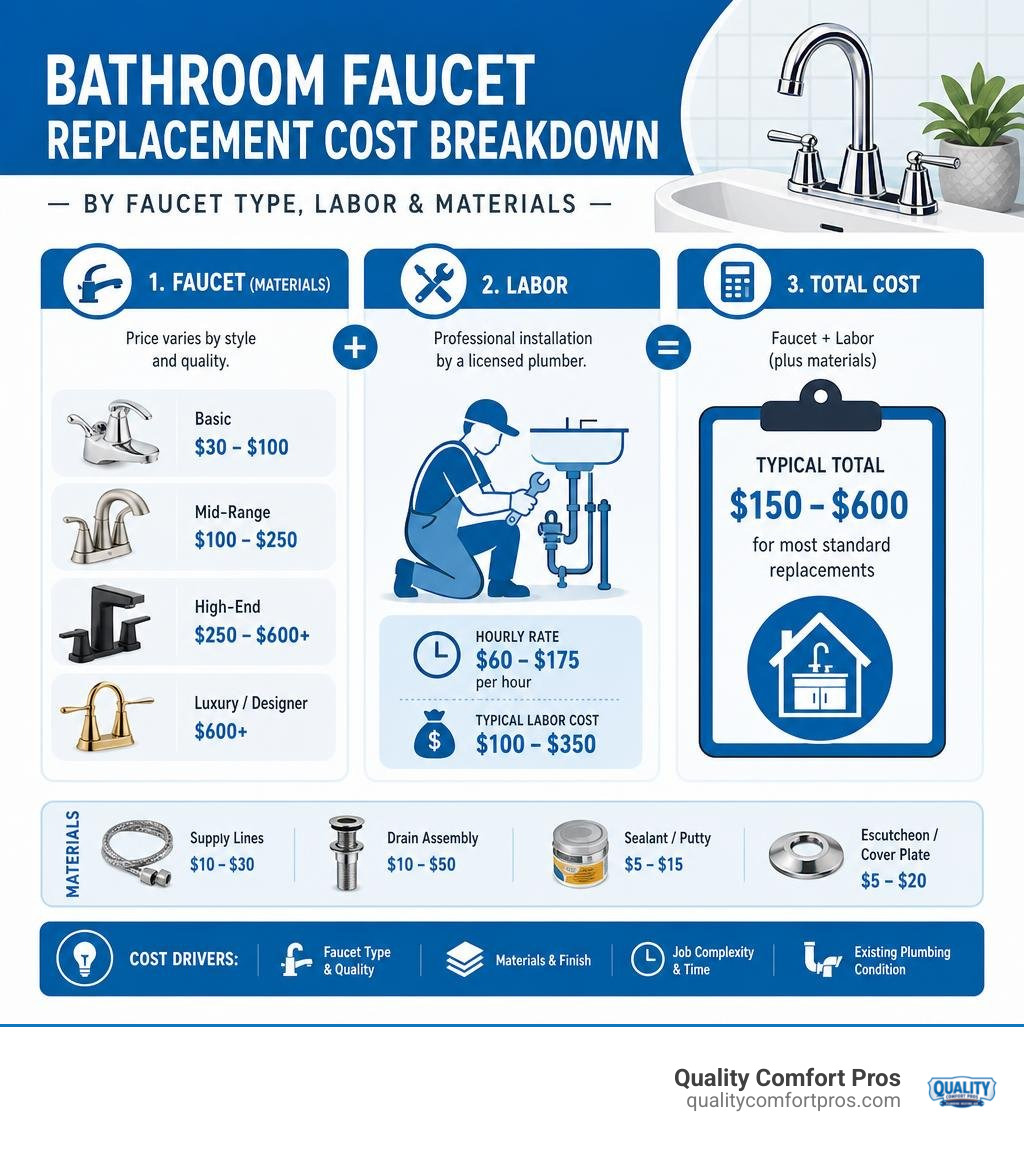
When you begin planning a bathroom upgrade, it helps to understand where your hard-earned money actually goes. The overall cost to replace faucet in bathroom projects is split between two main categories: the physical fixture you choose and the professional labor required to install it safely.
For most standard homes, the fixture itself represents the most flexible part of your budget. You can find budget-friendly models at local home improvement centers, or you can opt for high-end designer hardware that acts as a statement piece. On the other hand, professional labor is a highly consistent and necessary investment if you want to ensure your new hardware operates without slow, hidden leaks that could damage your subfloor or vanity cabinet.
According to industry data on bathroom faucet replacement cost in 2026, the final price tag is heavily influenced by how easily the old faucet can be removed and whether your existing water lines are in good condition. If you are dealing with rusted connections, corroded shut-off valves, or non-standard hole spacing in your countertop, a straightforward swap can turn into a more involved project.
Investing in professional plumbing services upfront ensures that any underlying issues, such as degraded supply lines or failing valves, are addressed at the same time, protecting your home from unexpected water damage.
Key Factors That Influence Bathroom Faucet Installation Costs
No two bathrooms are exactly alike, which means the cost to swap out a fixture can vary from one home to the next. Several critical factors will determine whether your project remains a quick, budget-friendly update or requires a more significant investment.
- Countertop and Sink Compatibility: If your new faucet matches the existing hole configuration in your sink or vanity top, the installation is straightforward. However, if you are switching from a three-hole setup to a single-hole faucet, you will either need a deck plate (escutcheon) to cover the extra holes or you will need to modify the countertop, which adds to the overall complexity.
- Accessibility and Plumbing Condition: Working inside a cramped vanity cabinet can be challenging. If your existing shut-off valves are corroded or stuck in the open position, they must be replaced before the new faucet can be installed.
- Fixture Technology: Standard manual faucets are relatively simple to install. If you choose a high-tech touchless or smart faucet, the installation may require mounting battery packs, calibrating motion sensors, or even running electrical lines, which naturally increases the labor required.

How Faucet Types Affect the Cost to Replace Faucet in Bathroom
The design and mounting style of your chosen fixture play a major role in the overall cost to replace faucet in bathroom projects. Different faucet configurations require varying levels of labor to align, secure, and connect to your water lines.
| Faucet Type | Description | Installation Complexity |
|---|---|---|
| Centerset | Compact design where the spout and handles are combined on a single base unit; fits standard three-hole sinks with 4-inch spacing. | Low |
| Single-Hole | Sleek, modern design requiring only one hole; often features a single lever to control both temperature and flow. | Low |
| Widespread | Three separate pieces (spout and two independent handles) spaced 8 inches apart; requires more alignment under the sink. | Medium |
| Vessel | Tall faucet designed to rise above a countertop-mounted vessel sink basin; requires precise height and reach alignment. | Medium |
| Wall-Mounted | Faucet mounted directly to the wall above the sink; requires plumbing lines to be run through the wall cavity. | High |
Choosing a wall-mounted faucet or transitioning to a completely different layout will typically require modifying the underlying plumbing support, which increases the labor time and complexity compared to a direct, like-for-like swap.
Material and Finish Choices and Their Impact on the Cost to Replace Faucet in Bathroom
The materials used to construct your faucet, along with the exterior finish, will directly impact both the purchase price and the long-term durability of the fixture. While budget-friendly options made of plastic or zinc alloy are inexpensive initially, they tend to wear out much faster than solid brass or stainless steel options.
When exploring your options, keep these common materials and finishes in mind:
- Chrome: This is the most common and cost-effective finish. It is highly durable and easy to clean, though it does show water spots and fingerprints more easily than brushed finishes.
- Brushed Nickel: A popular mid-range choice that offers a warmer tone than chrome. It is highly resistant to showing wear, water spots, and fingerprints, making it excellent for busy family bathrooms.
- Matte Black: A modern, stylish finish that offers a bold look. While highly attractive, cheaper matte black finishes can scratch or chip over time if they are painted on rather than chemically bonded.
- Solid Brass: The gold standard for plumbing durability. Brass naturally resists corrosion and can last for decades. High-end brass faucets often feature physical vapor deposition (PVD) finishes that are virtually scratch-proof.
- Zinc and Plastic: Often used in budget-grade faucets. While they are very affordable, they are highly prone to cracking and leaking after a few years of regular use.
For more detailed insights on how these material choices affect your home renovation budget, you can consult the guide on how much does it cost to install a bathroom faucet? (2026).
Professional Labor vs. DIY Faucet Replacement
For homeowners comfortable with basic tools, replacing a bathroom faucet is often considered a manageable weekend project. However, working in tight spaces under a sink can be physically demanding, and a single loose connection can lead to quiet, destructive water leaks inside your vanity.
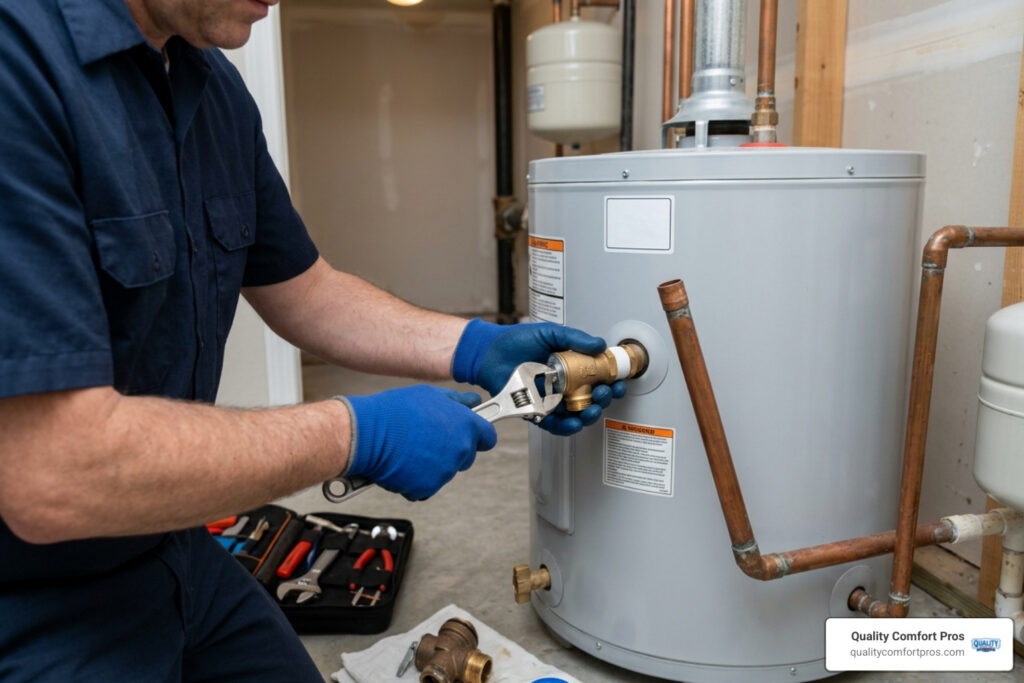
If you decide to attempt a DIY installation, you will need a few specialized tools to complete the job safely:
- Basin Wrench: This specialized tool is essential for reaching up behind the sink basin to loosen or tighten the mounting nuts that hold the faucet in place.
- Adjustable Wrenches: Useful for tightening supply line connections.
- Plumber’s Tape (Teflon Tape): Essential for creating watertight seals on threaded pipe connections.
- Bucket and Rags: Necessary to catch residual water left in the supply lines when you disconnect them.
Before starting any work, always locate your main water shut-off valves and confirm they are fully closed. If the valves under your sink are old, they may not close completely, which means you will need to shut off the main water valve to your entire home.

While DIY saves on immediate labor costs, hiring a licensed professional offers peace of mind. A certified plumber can quickly identify hidden issues, guarantee their leak-free workmanship, and save you the frustration of dealing with stubborn, rusted connections. If you prefer to leave the heavy lifting to the experts, you can explore professional faucet replacement options to get the job done right the first time.
Additional Plumbing Repairs and Hidden Costs
During a routine faucet replacement, it is common to discover other components under the sink that are worn out or failing. Addressing these issues while the plumbing is already disassembled is highly cost-effective and prevents future emergencies.
- Shut-Off Valves: The small valves under your sink are rarely turned. Over ten or fifteen years, mineral buildup can cause them to seize or leak when you finally try to close them. Replacing old gate valves with modern, quarter-turn ball valves is a smart preventative upgrade.
- Supply Lines: The flexible hoses connecting your faucet to the shut-off valves can degrade over time. It is highly recommended to replace old plastic or vinyl supply lines with durable, braided stainless steel lines during any faucet swap.
- Drain Assembly: Many new faucets come packaged with a matching drain and pop-up assembly. If your old drain is corroded or does not match the finish of your new faucet, replacing it at the same time is highly recommended.
- P-Trap and Waste Lines: The curved pipe under your sink trap can accumulate hair, soap scum, and corrosive mineral deposits. If these pipes are thin, brittle, or leaking, they should be replaced alongside the faucet.
If you notice signs of dampness, mold, or active dripping under your vanity, it is crucial to address these issues immediately. You can reach out for professional leak repair services or professional pipe repair solutions to ensure your home’s infrastructure remains safe, dry, and structurally sound.
Frequently Asked Questions About Bathroom Faucet Replacement
How much does a plumber charge to install a bathroom faucet?
Plumbing companies typically charge for faucet installation based on an hourly rate or a flat-rate service fee. Most standard installations take between one and two hours to complete. The final cost depends on regional labor rates, the complexity of the faucet design, and whether your existing shut-off valves and supply lines need to be replaced at the same time.
Is it cheaper to replace a bathroom faucet yourself?
Performing a DIY replacement is cheaper upfront because you avoid paying professional labor fees. However, you will need to purchase specialized tools like a basin wrench if you do not already own them. Additionally, if a DIY connection is not sealed perfectly, a slow leak can develop behind the vanity wall, potentially leading to costly mold remediation and cabinetry repairs that far exceed the cost of professional installation.
How long does it take to replace a bathroom faucet?
For a professional plumber, a standard, like-for-like bathroom faucet replacement typically takes between 45 minutes and two hours. If you are attempting the project yourself, expect it to take between two and four hours, as navigating tight spaces and loosening rusted, older mounting hardware can require extra time and patience.
Do bathroom faucets come with drain assemblies?
Many mid-range and premium bathroom faucets include a matching drain assembly and pop-up plug directly in the packaging. However, some budget-friendly models or specialty designer faucets sell the drain assembly separately. Always check the product packaging or online listing details before purchasing to ensure you have all the necessary parts.
Can you replace a bathroom faucet without replacing the drain?
Yes, you can keep your existing drain assembly if it is still in good working condition and matches the finish of your new faucet. However, because drains are subject to constant water exposure and soap buildup, they often wear out around the same time as the faucet. Replacing both components together ensures a cohesive look and prevents having to disassemble the plumbing again in the near future.
How do I know if my bathroom faucet needs to be replaced or repaired?
If your faucet has a minor drip, replacing an internal cartridge or washer is often a quick and affordable repair. However, if the faucet body is cracked, has severe mineral corrosion, or has a damaged exterior finish, a complete replacement is usually the most cost-effective long-term solution, especially for fixtures that are more than ten to fifteen years old.
Are bathroom faucets universal in size?
Bathroom faucets are not universal. They are designed to match specific hole configurations in your sink basin or countertop. The most common styles are single-hole, centerset (three holes spaced 4 inches apart), and widespread (three holes spaced 8 inches apart). You must measure your existing sink hole spacing before purchasing a replacement to ensure a proper fit.
What is the most durable finish for a bathroom faucet?
Brushed nickel and chrome are widely considered the most durable and low-maintenance finishes for everyday use. For maximum scratch and corrosion resistance, look for faucets manufactured with a physical vapor deposition (PVD) finish, which molecularly bonds the finish to the brass body of the faucet.
Should I replace the shut-off valves when replacing a faucet?
If your shut-off valves are more than 10 to 15 years old, or if they feel stiff and difficult to turn, it is highly recommended to replace them during a faucet installation. Installing new, reliable quarter-turn ball valves ensures you can quickly turn off the water supply in the event of a future plumbing emergency.
How do you remove a rusted or stuck bathroom faucet?
To remove a stubborn, rusted mounting nut under the sink, apply a generous amount of penetrating oil directly to the threads and let it sit for at least 15 to 30 minutes. Using a dedicated basin wrench or a specialized faucet removal tool will give you the necessary leverage to break the rust loose without damaging the sink basin.
Conclusion
Upgrading your bathroom faucet is an excellent way to refresh your space, stop wasteful water drips, and improve daily convenience. While the project is highly manageable, taking the time to understand the factors that drive installation complexity ensures you can budget effectively and choose the right fixture for your home’s unique plumbing layout.
Our experienced, licensed plumbing team is compatible with all major brands and designs, ensuring your new bathroom hardware is installed with absolute precision. Whether you are located in Alba, MI, Atlanta, MI, Bellaire, MI, Boyne City, MI, Boyne Falls, MI, Charlevoix, MI, East Jordan, MI, Frederic, MI, Grayling, MI, Johannesburg, MI, Mancelona, MI, Petoskey, MI, Vanderbilt, MI, Walloon Lake, MI, or Wolverine, MI, we are here to help.
Contact Quality Comfort Pros today to schedule your appointment or to learn more about our professional faucet repair services to keep your home running smoothly and efficiently.