
Why AC Maintenance and Servicing Matters Before Summer Hits
AC maintenance and servicing is the scheduled process of inspecting, cleaning, and testing your air conditioning system to keep it running safely and efficiently throughout the cooling season.
Here’s a quick summary of what it covers:
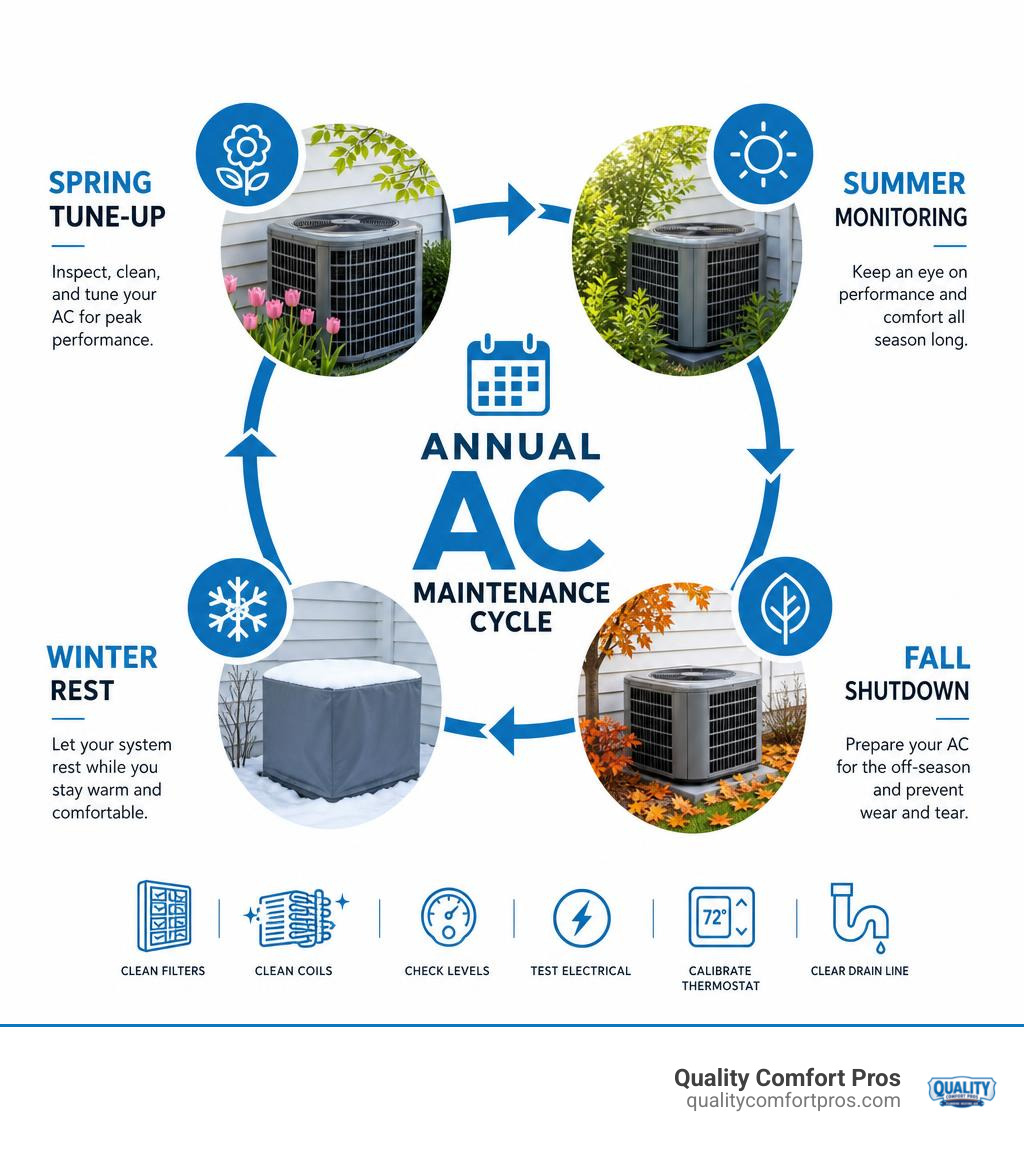
- What it includes: Coil cleaning, filter inspection, refrigerant check, electrical testing, thermostat calibration, and drain line clearing
- How often: Once a year for most homes, ideally in spring before heavy use begins
- Why it matters: Reduces energy bills, prevents breakdowns, and extends system life by several years
- Who should do it: A licensed HVAC technician handles the full tune-up; homeowners can safely change filters and clear debris around the outdoor unit
- What it costs: Pricing varies depending on system size, condition, and location, but is generally far less than an emergency repair
Think about the last time your air conditioner ran all day during a July heat wave in Northern Michigan. If it kept up without a hitch, there’s a good chance someone was taking care of it. If it struggled or stopped altogether, you already know how quickly an unmaintained system can turn a hot day into a miserable one.
The good news is that most AC breakdowns don’t happen without warning. Worn parts, dirty coils, clogged drains, and low refrigerant all show early signs before they cause a full failure. Regular maintenance is simply the process of catching those signs before they become expensive problems.
Skipping tune-ups doesn’t just risk a breakdown. It also quietly drives up your energy bills. Research shows that dirty coils and restricted airflow can reduce system efficiency by 15 to 30 percent, adding meaningful costs to your monthly electric bill over time. A well-maintained system runs less, lasts longer, and keeps your home more comfortable with less effort.
I’m JD Osman, owner of Quality Comfort Pros and a home services industry professional with over 20 years of experience in customer-focused operations and business leadership. My work with AC maintenance and servicing across Northern Michigan has shown me how consistent, preventive care is the single most effective way homeowners can protect their comfort systems and avoid costly surprises. In this guide, I’ll walk you through everything you need to know to keep your AC running right.
What AC Maintenance and Servicing Includes During a Professional Tune-Up
When a professional HVAC technician arrives at your home for a seasonal tune-up, they are not just there to swap out a filter and call it a day. A comprehensive, professional tune-up is a detailed, multi-step process designed to restore your cooling equipment to its peak operating condition.
For homeowners looking to understand the technical side of this process, the DOE air conditioner maintenance guidance highlights how regular service of filters, coils, and fins directly impacts efficiency. During a professional visit, our team carries out a series of deep cleaning, mechanical calibrations, and safety checks. This careful attention ensures that all-brand systems, regardless of their age or model, can handle the summer workload without unexpected failures. You can learn about professional AC maintenance to see how these individual steps come together to protect your home comfort.
The Core AC Maintenance and Servicing Checklist
A thorough professional checklist covers both the indoor and outdoor components of your system. Here is what a complete AC maintenance and servicing visit typically includes:
- Coil Cleaning: Technicians clean the outdoor condenser coil and inspect the indoor evaporator coil. Dirt and pollen build up on these coils, which acts as an insulating blanket, making it harder for the system to release heat.
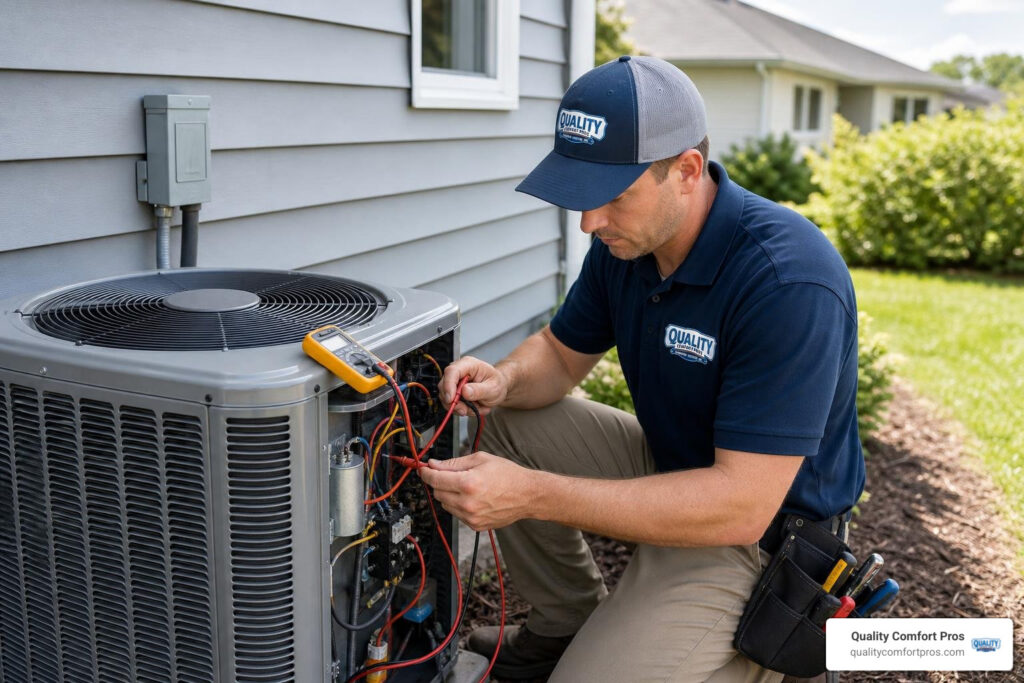
- Electrical Testing: This involves testing electrical connections, measuring voltage, and checking the wear on capacitors, contactors, and relays.
- Refrigerant Charge Check: We measure refrigerant pressure and temperature to ensure the system is charged exactly to manufacturer specifications.
- Thermostat Calibration: We verify that your thermostat communicates correctly with your cooling unit so that your home stays at the exact temperature you set.
- Condensate Drain Line Flushing: Algae, mold, and dust can easily clog the narrow drain line. Flushing this line prevents water damage to your ceilings and walls.
- Blower Motor and Airflow Testing: We check the blower wheel and motor, measuring the temperature split between the return and supply air to ensure optimal airflow.

What Technicians Look For That Homeowners Usually Miss
While a homeowner can easily spot a dirty filter, there are many subtle warning signs that only a trained eye will catch. For example, a weak capacitor can still start your compressor today, but it is highly likely to fail on the hottest afternoon of the summer. Technicians use specialized diagnostic tools to measure electrical resistance and detect microscopic refrigerant leaks that are otherwise invisible.
By identifying loose terminals, worn fan motors, or slight airflow restrictions early, we can recommend minor adjustments before they turn into major system failures. Regular professional checks also ensure your service history is properly documented, which is often a strict requirement to keep your manufacturer warranty valid.
How Often Homeowners Should Schedule AC Service
As a general rule, your air conditioner should receive professional maintenance at least once a year. For standard central air conditioning systems in Northern Michigan, scheduling this service in the spring is the ideal way to prepare for the upcoming summer heat.
Keeping a consistent annual schedule creates a reliable paper trail of maintenance records. If you ever need to file a warranty claim, having these records on hand proves that you took proper care of the equipment. If you want to stay ahead of the game, you can use this early spring AC start-up checklist to prepare your home for the warmer months.
Best Seasonal Timing for AC Maintenance
The absolute best time to schedule your cooling tune-up is during the mild weather of early spring. Booking your appointment before the first major heat wave of the year offers several key advantages:
- Better Availability: HVAC companies are incredibly busy once the summer heat arrives. Scheduling in early spring means you get your choice of appointment times.
- No Hot Days Without Air: Getting your system checked early ensures that any hidden issues are repaired before you actually need to run the system all day.
- Clearing Winter Debris: Winter winds in places like Gaylord, MI and Petoskey, MI can pack leaves, twigs, and dirt into your outdoor unit. Spring servicing clears out this debris before it can restrict summer airflow.
When Twice-a-Year Service Makes Sense
While once-a-year service is sufficient for many standard systems, there are several situations where biannual maintenance (once in the spring and once in the fall) is highly recommended:
- Heat Pumps and Ductless Mini-Splits: Because these systems provide both heating in our freezing winters and cooling in the summer, they work twice as hard and require service before each season.
- Older Equipment: Systems that are approaching the end of their expected lifespan benefit from closer monitoring to catch failing parts early.
- High-Dust or Pet-Friendly Homes: Homes with multiple pets or residents who suffer from severe seasonal allergies often need more frequent filter and coil checks.
- Vacation Properties: If you own a summer cabin in Charlevoix, MI or Boyne City, MI, a spring check ensures the home is ready for guests, while a fall visit secures the system for the winter. You can explore maintenance plan options to see how a structured plan can make managing these visits simple and stress-free.
Why Regular AC Maintenance Pays Off
Investing in regular AC maintenance and servicing is not just about avoiding a breakdown, it is also a highly effective way to save money. When your system is clean and properly calibrated, it does not have to work as hard to cool your home. This reduced strain translates directly into lower energy bills and a longer lifespan for your equipment.
Energy Efficiency and Utility Bill Benefits
A dirty air conditioner is an expensive air conditioner to run. When dust coats the evaporator coil or blocks the air filter, the system must run longer cycles to reach your desired indoor temperature. This extra runtime drives up your monthly utility bills.
By keeping the coils clean, clearing the drain lines, and ensuring the refrigerant charge is balanced, professional maintenance can improve your system’s operating efficiency by 15 to 30 percent. For many families, this translates to noticeable monthly savings on their electric bills. Coupling regular tune-ups with smart thermostat habits is one of the easiest ways to keep your cooling costs under control.
Lifespan, Reliability, and Repair Prevention
Air conditioners are a significant financial investment for any homeowner. While a neglected system in Northern Michigan might only last 10 to 12 years before requiring an expensive replacement, a well-maintained unit can easily operate reliably for 15 years or longer.
Regular tune-ups prevent premature compressor failure, which is often the most expensive component to replace. Catching a small issue, like a worn contactor or a tiny vibration in the fan blade, prevents that minor problem from cascade-failing other vital parts. If you suspect your system is already struggling, you can learn when repair may be needed to address the problem before it gets worse.
Comfort and Indoor Air Quality Benefits
Your air conditioning system does more than just lower the indoor temperature, it also plays a critical role in managing humidity and filtering the air you breathe. A system with restricted airflow or a dirty blower motor will struggle to pull moisture out of the air, leaving your home feeling sticky and warm even if the thermostat says otherwise.
Regular maintenance ensures that your system effectively filters out dust, pollen, and pet dander. Additionally, keeping the indoor drain pan clean prevents the growth of mold and mildew, ensuring that the air circulating through your home remains clean, fresh, and healthy for your family.
Safe DIY AC Maintenance Tasks Homeowners Can Do
While complex electrical testing and refrigerant handling must always be left to licensed professionals, there are several simple maintenance tasks that homeowners can safely perform to keep their systems running smoothly between scheduled tune-ups.
DIY AC Maintenance and Servicing Tasks to Handle Monthly
Taking a few minutes each month to check on your cooling system can prevent major headaches down the road. Here is a quick checklist of monthly tasks:
- Check the Air Filter: Pull the filter out and hold it up to a light source. If you cannot see light through it, it is time for a replacement.
- Inspect Return Grilles: Ensure that return vents are free of dust, pet hair, and furniture blockages.
- Clear the Outdoor Unit: Walk outside and make sure no weeds, tall grass, or outdoor toys are crowding the condenser unit.
- Listen for New Sounds: Pay attention to any sudden clicking, rattling, or squealing noises when the system starts up.
Outdoor Unit Care Without Damaging the System
Your outdoor condenser unit needs plenty of space to breathe. To ensure proper heat transfer, maintain at least a two-foot clear zone around the entire unit. Trim back any shrubs, flowers, or low-hanging tree branches that might block airflow.
If you notice grass clippings, cottonwood seeds, or leaves stuck to the metal fins of the outdoor unit, you can gently rinse them away using a standard garden hose. Always spray at a downward angle and avoid using a pressure washer, as the high pressure will instantly bend the delicate aluminum fins and permanently restrict airflow.
Filter Replacement Guidance for Better Airflow
Changing your air filter is the single most important DIY maintenance task you can perform. For standard one-inch filters, we recommend checking them every month and replacing them at least every two to three months. If you have pets, live in a high-dust area, or suffer from allergies, you may need to change them more frequently.
When buying replacement filters, pay close attention to the MERV (Minimum Efficiency Reporting Value) rating. While high-MERV filters catch smaller particles, they can also restrict airflow if your system’s blower motor is not designed to handle them. For most homes, a filter rated between MERV 8 and MERV 11 offers an ideal balance of filtration and airflow. For more expert advice, you can read these air conditioning maintenance secrets to optimize your indoor air quality.
Warning Signs Your AC Needs Professional Maintenance, Repair, or Replacement
Even with the best maintenance habits, mechanical systems will eventually experience wear and tear. Knowing how to spot the early warning signs of a problem can save you from a complete system breakdown during the hottest days of the year. If you notice any of these issues, you can schedule help for cooling concerns to get a technician out to your home quickly.
Maintenance vs. AC Repair: How to Tell the Difference
It is common to confuse maintenance with repair, but they serve two very different purposes. Maintenance is a proactive, preventive service performed on a working system to keep it running efficiently. Repair, on the other hand, is a reactive service performed to fix an active failure or a system that is no longer cooling.
| Feature | AC Maintenance and Servicing | AC Repair |
|---|---|---|
| Goal | Prevent future breakdowns and save energy | Fix an active problem or system failure |
| Timing | Scheduled annually (ideally in the spring) | Scheduled as soon as a problem is noticed |
| Typical Tasks | Cleaning coils, flushing drains, testing parts | Replacing failed motors, fixing leaks, replacing boards |
| System Status | System is currently running and cooling | System is broken, blowing warm air, or making noise |
If your system is overdue for a checkup, a repair-focused inspection can help you decide on the next steps.
Sounds, Smells, and Cooling Problems That Need Attention
Your air conditioner will usually tell you when something is wrong. Do not ignore these common warning signs:
- Strange Noises: Squealing, grinding, rattling, or loud clicking sounds often indicate a failing blower motor, loose fan blade, or a bad electrical contactor. If you hear something unusual, you can understand AC noises and when to call for professional diagnostic help.
- Unpleasant Odors: A musty smell usually points to mold growth in the drain pan or ductwork, while a burning odor indicates an electrical issue or an overheating motor.
- Weak or Warm Airflow: If the air coming out of your vents feels weak or warm, you could be dealing with a failed compressor, a refrigerant leak, or a severely clogged filter.
- Ice on the Lines: Finding ice on your indoor evaporator coil or the outdoor copper lines is a classic sign of restricted airflow or low refrigerant levels.
When Replacement Becomes the Smarter Conversation
No air conditioner lasts forever. If your system is more than 15 years old and requires frequent, costly repairs to get through the summer, continuing to patch it up may not make financial sense.
When faced with a major repair, such as a failed compressor or a leaking evaporator coil, we recommend comparing the repair cost against the price of a new, energy-efficient system. Modern cooling systems use far less electricity and come with comprehensive multi-year warranties, giving you long-term peace of mind. You can explore AC replacement options to find the best fit for your home and budget.
Costs, Maintenance Plans, and Choosing the Right HVAC Company
While some homeowners worry about the cost of professional servicing, routine maintenance is highly cost-effective when compared to the price of emergency repairs. To find the right fit for your home, you can view available tune-up options, maintenance plans, and full-service home comfort support from a trusted local team.
What Affects AC Maintenance Pricing
The price of a professional tune-up can vary depending on several factors. These typically include:
- System Age and Condition: Older units that have not been serviced in years may require extra cleaning time to remove heavy coil buildup.
- Number of Zones: Homes with multiple cooling zones or separate indoor air handlers will require additional inspection steps.
- Accessibility: Units located in tight crawlspaces, steep attics, or high rooftops can take longer to safely access and service.
- Filter and Parts Needs: While basic cleaning is covered in a standard tune-up, replacing specialty filters or worn electrical components will add to the overall service cost.
What to Look for in an HVAC Maintenance Plan
Many homeowners find that joining a structured maintenance plan is the easiest way to keep their heating and cooling systems in top shape. A high-quality plan should offer:
- Automated Reminders: We contact you when it is time to schedule your spring cooling and fall heating visits so you never forget.
- Priority Scheduling: If your system ever goes down during a heat wave, plan members get bumped to the front of the line.
- Repair Discounts: Many plans offer discounted rates on parts and labor if you ever need an unexpected repair.
- All-Brand Coverage: Ensure the plan covers your specific equipment, whether you have a standard central AC, a heat pump, or a ductless mini-split.
How to Choose a Reliable HVAC Company
Your heating and cooling system is too important to trust to just anyone. When searching for a local service provider in Northern Michigan, look for a company that is fully licensed, insured, and employs certified technicians who have experience working on all major equipment brands.
Choose a company with deep roots in the community, a strong reputation for clear, upfront communication, and positive customer reviews. A trustworthy technician will always explain their findings, provide a clear written estimate before performing any work, and never pressure you into buying services or equipment you do not need. If you want to see what a full-service home comfort team can do for you, you can explore available home comfort services to learn more about our commitment to quality.
Frequently Asked Questions About AC Maintenance and Servicing
How often should I schedule AC maintenance and servicing for my home?
You should schedule professional maintenance for your air conditioner once a year. For standard cooling units, spring is the best time to book this service. If you use a heat pump or ductless mini-split system for both heating and cooling, you should have it serviced twice a year, once in the spring and once in the fall.
What does professional AC maintenance include?
A professional tune-up includes a complete system inspection, cleaning of the indoor and outdoor coils, checking the refrigerant charge, testing all electrical connections, calibrating the thermostat, flushing the condensate drain line, and testing the system’s overall airflow and startup cycle.
Can AC maintenance lower my energy bills?
Yes. Cleaning dirty coils, replacing clogged filters, and optimizing system airflow reduces the strain on your air conditioner. This allows it to cool your home using 15 to 30 percent less electricity, which can lead to significant monthly savings on your utility bills.
How long does an AC tune-up usually take?
A standard professional AC tune-up typically takes between one and two hours. The exact time depends on the age of your system, how easy it is to access, and whether the coils require deep cleaning.
Is AC maintenance the same as AC repair?
No. AC maintenance is a preventive service performed on a working system to keep it running efficiently and prevent future breakdowns. AC repair is a reactive service scheduled to diagnose and fix an active problem, such as a system that won’t turn on or is blowing warm air.
What AC maintenance can I safely do myself?
Homeowners can safely replace air filters every two to three months, clear weeds and debris away from the outdoor unit, gently rinse the condenser coils with a garden hose, and ensure that indoor return grilles are not blocked by furniture.
What are signs my AC needs professional service?
Warning signs include weak or warm airflow, strange noises like grinding or squealing, musty or burning odors, water pooling around the indoor unit, ice forming on the refrigerant lines, or a sudden, unexplained jump in your monthly utility bills.
How much does AC maintenance typically cost?
The cost of an AC tune-up can vary based on several factors, including the size and age of your system, its overall condition, and whether you are enrolled in a preventative maintenance plan. Routine maintenance is generally highly affordable and saves you money by preventing major emergency repairs.
Do maintenance plans make sense for homeowners?
Yes. Maintenance plans offer excellent value by providing regular tune-ups, priority scheduling during busy seasons, automatic appointment reminders, and discounts on repairs, helping you protect your home comfort investment over the long term.
When should I replace my AC instead of repairing it?
You should consider replacing your system if it is more than 15 years old, breaks down frequently, uses outdated refrigerant, or requires a major repair, such as a compressor replacement, where the repair cost would be a significant percentage of the price of a new, highly efficient unit.
Conclusion
Taking care of your air conditioner with regular AC maintenance and servicing is the single best way to ensure your home stays cool, comfortable, and safe all summer long. By investing in a simple spring tune-up, you can enjoy lower monthly energy bills, prevent stressful summer breakdowns, and extend the life of your cooling system by several years.
Whether you live in Alba, MI, Charlevoix, MI, or right here in Gaylord, MI, our family-owned team is here to help you stay comfortable. Don’t wait for the first major heat wave of the summer to find out if your air conditioner is ready for the challenge. Contact Quality Comfort Pros today to schedule AC maintenance or protect your system with a maintenance plan to keep your home cool and comfortable all season long.