What a Kitchen Slab Leak Means for Your Home
A kitchen slab leak is one of the most damaging and easily overlooked plumbing problems a homeowner can face. Water silently escapes from pipes running beneath your home’s concrete foundation, often going unnoticed for weeks or even months before visible signs appear.
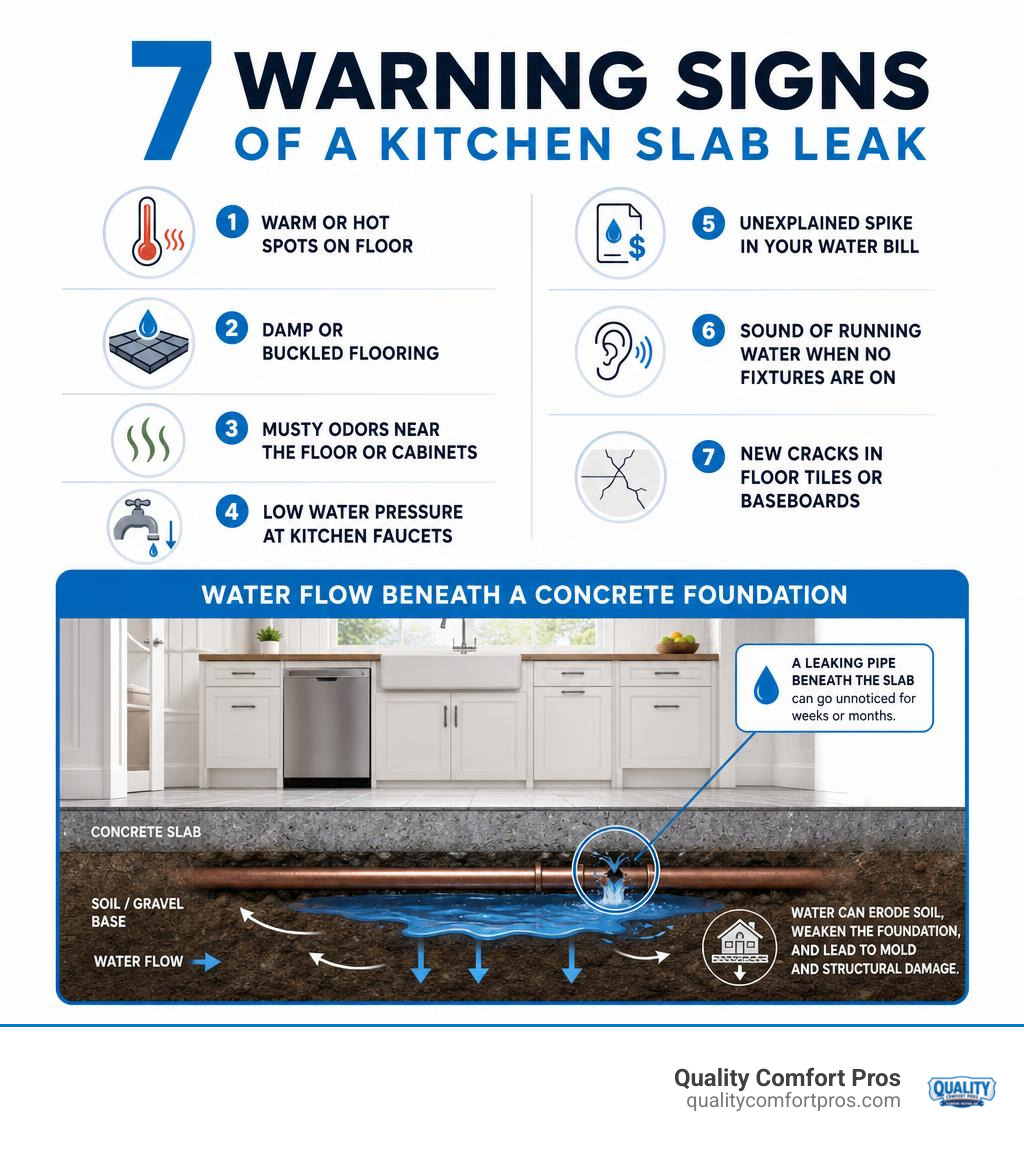
Here are the 7 warning signs of a kitchen slab leak:
- Warm or hot spots on your kitchen floor, especially along the path between your water heater and the kitchen
- Damp or buckled flooring where moisture pushing up through the slab warps hardwood, loosens tile, and soaks carpet
- Musty odors near the floor or cabinets, which is a sign of mold or mildew growing in hidden moisture
- Low water pressure at kitchen faucets because water escaping through a leak reduces flow throughout the system
- Unexplained spike in your water bill (the EPA estimates household leaks waste nearly 10,000 gallons of water annually)
- Sound of running water when no fixtures are on, especially audible at night near the kitchen floor
- New cracks in your floor tiles or baseboards as water saturating the soil beneath the slab can cause the foundation to shift
The consequences of ignoring these signs go well beyond a high water bill. Sustained moisture beneath a concrete slab can erode soil, destabilize the foundation, and create the conditions for serious mold growth inside your walls and cabinetry. According to the EPA, the average household uses around 64 gallons of water per day, and an active slab leak can push that number dramatically higher without any visible sign of where the water is going.
For Northern Michigan homeowners, the risk is real. Seasonal soil movement, aging pipe infrastructure, and hard water conditions all contribute to under-slab plumbing failures, particularly in kitchens where water demand is constant and supply lines are under steady pressure.
I’m JD Osman, and through my work at Quality Comfort Pros I’ve seen how a kitchen slab leak can quietly escalate from a minor warning sign into a costly structural emergency when homeowners don’t know what to look for. In this guide, I’ll walk you through everything you need to identify, confirm, and respond to a slab leak under your kitchen floor before it turns into a much bigger problem.
Understanding the Danger of a Kitchen Slab Leak
To understand why a kitchen slab leak is so dangerous, it helps to understand how modern homes are constructed. Most homes built on a slab foundation have their primary plumbing lines buried in the soil or gravel base directly beneath the concrete, or even embedded inside the concrete slab itself. These lines include both the pressurized freshwater supply lines (which bring hot and cold water to your kitchen sink, dishwasher, and refrigerator ice maker) and the gravity-fed sewer drain lines.
When a leak develops in a pressurized freshwater line, water does not just drip: it sprays out under continuous pressure. Because the concrete slab acts as a solid barrier, the escaping water has nowhere to go initially. It begins to saturate the soil beneath your kitchen. Over time, this water build-up creates hydrostatic pressure, which eventually forces the moisture upward through the porous concrete of your kitchen floor.
This is particularly problematic in the kitchen because of the dense concentration of expensive cabinetry, high-end appliances, and delicate flooring materials. A leak that occurs under a living room carpet might just cause a damp spot, but a leak under a kitchen can ruin custom hardwood, warp subflooring, and rot the bottom of your kitchen cabinets. To protect your home, you can learn more about leak detection and how keeping a close eye on your plumbing preserves your home’s structural integrity.
Common Causes of Under-Slab Plumbing Failures
Slab leaks do not happen without a reason. Beneath your kitchen floor, several physical and chemical processes are constantly at work, stressing your plumbing system. The most common causes of these failures include:
- Pipe Corrosion and Electrolysis: Many older homes in Northern Michigan utilize copper pipes for under-slab water lines. Over time, copper reacts chemically with the surrounding soil and minerals in the water. Electrolysis (a process where small electrical currents travel through the soil and degrade the metal) can cause copper pipes to develop tiny pinhole leaks.
- Shifting and Settling Soil: The ground beneath your home is not completely static. In Northern Michigan communities like Gaylord, MI and Grayling, MI, seasonal freeze-thaw cycles cause the ground to expand and contract. This movement puts mechanical stress on the concrete slab and the pipes buried beneath it, occasionally causing joints to crack or pipes to shear.
- High Water Pressure: While high water pressure makes for a great shower, it is incredibly hard on your pipes. Constant high pressure causes pipes to vibrate and rub against the rough concrete or gravel surrounding them, eventually wearing thin spots into the pipe walls.
- Poor Installation Practices: If pipes were kinked, bent too sharply, or left unprotected by plastic sleeves during the original construction of the home, they are far more likely to fail prematurely.
Understanding these underlying causes helps explain why certain homes are more vulnerable, particularly those built before the mid-1990s when copper was the industry standard for under-slab plumbing.
7 Warning Signs of a Kitchen Slab Leak
Because the plumbing is buried beneath inches of solid concrete, you cannot simply look under the sink to find a slab leak. Instead, you have to look for secondary clues.
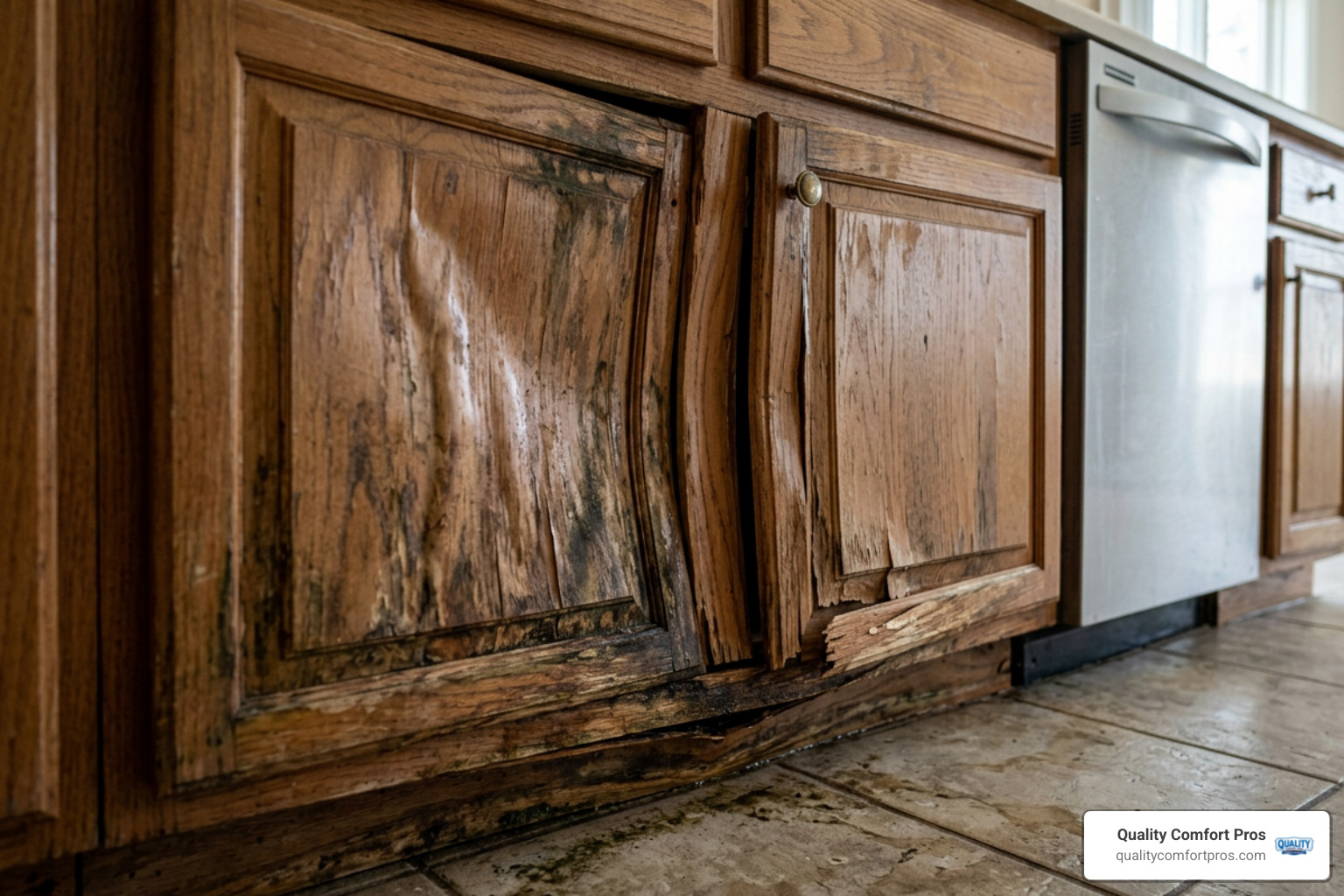
If you suspect an issue, keep a close eye out for these seven telltale signs:
- Warm Spots on the Floor: If you walk barefoot across your kitchen tile or laminate flooring and notice a distinct warm spot, this is a classic sign of a hot water line leak. The hot water saturates the concrete, which then transfers heat directly through your flooring.
- Damp Flooring or Ruined Finishes: Water will eventually find its way through the concrete. You might notice damp grout lines, cupping hardwood planks, or laminate flooring that starts to bubble and peel near the kitchen island or sink.
- Musty Odors: Persistent moisture underneath kitchen cabinets creates the perfect breeding ground for mold and mildew. If you open your under-sink cabinets and are greeted by a musty, earthy smell, water is pooling somewhere nearby.
- Low Water Pressure: If your kitchen faucet suddenly feels sluggish or fails to deliver its usual flow, water may be escaping from the supply line before it ever reaches the tap.
- Spikes in Water Utility Bills: A sudden, unexplained jump in your monthly water bill is often the very first sign of a hidden leak. Even a tiny pinhole leak can run 24 hours a day, wasting hundreds of gallons of water.
- The Sound of Running Water: In a quiet house, especially late at night, you might hear a faint hissing, rushing, or dripping sound coming from beneath the kitchen floor, even though every faucet in the house is tightly shut.
- Cracks in the Foundation or Baseboards: As water washes away the supporting soil beneath your slab, the concrete can settle unevenly. This movement often manifests as fresh hairline cracks in your kitchen floor tiles, grout, or drywall.
If you notice one or more of these signs, it is time to take action. You can consult our comprehensive guide to repairing leaks to understand the next steps in resolving the issue before structural damage worsens.
How to Confirm and Respond to a Suspected Leak
If you suspect you have a kitchen slab leak, do not panic. Taking a systematic approach will help you confirm the issue and prevent unnecessary damage to your home. Your immediate steps should include:
- Perform a Water Meter Test: This is the easiest way to confirm a leak is active.
- Locate the Main Shutoff Valve: Know how to turn off the water to your entire home in case the leak suddenly worsens.
- Document Everything: Take photos of damp flooring, warped cabinets, and keep copies of your recent water bills. This documentation is vital for insurance purposes.
- Call a Professional: Detecting the exact location of a slab leak requires specialized, non-invasive technology.
To help you understand what you can do on your own versus what requires professional assistance, consider this comparison table:
| Step / Task | DIY Capability | Professional Method | Why It Matters |
|---|---|---|---|
| Initial Confirmation | Yes (Water meter test & hot water isolation) | Pressure isolation testing | Confirms a leak exists without damaging walls or floors |
| Locating the Leak | No (Do not guess or dig blindly) | Acoustic listening, thermal imaging, tracer gas | Pinpoints the exact leak location within inches to minimize demolition |
| Accessing the Pipe | No (Dangerous and structurally risky) | Precision slab penetration or tunneling | Protects the structural integrity of your post-tension or standard slab |
| Repair & Restoration | No | Pipe rerouting, spot repair, or PEX-A repiping | Ensures a permanent, code-compliant fix that prevents future leaks |
For owners of older homes, hidden plumbing issues can be especially tricky to track down. Check out our expert tips for older homes to learn how aging materials impact your risk.
Step-by-Step DIY Verification
Before calling out a professional, you can perform a simple water meter test to confirm that water is actively escaping from your plumbing system:
- Step 1: Turn off every single water fixture inside and outside your home. Make sure the washing machine, dishwasher, and ice maker are not running.
- Step 2: Locate your water meter. This is usually located in your basement, utility closet, or in an outdoor pit near the street.
- Step 3: Look closely at the meter dial. Most digital and mechanical meters have a small, highly sensitive “leak indicator” triangle or wheel that spins even when a tiny amount of water is moving. If this dial is spinning while all your faucets are off, you have a leak.
- Step 4: To isolate whether the leak is on the hot or cold side, locate the cold water shutoff valve on top of your water heater and close it. Check the water meter again. If the meter stops moving, the leak is on your hot water line. If it keeps moving, the leak is on the cold water supply line.
Professional Kitchen Slab Leak Detection Methods
Once you have confirmed that a leak exists, a professional plumbing technician will use advanced, non-destructive tools to pinpoint its exact location.
At Quality Comfort Pros, we use a combination of high-tech methods to avoid tearing up your kitchen floor unnecessarily:
- Acoustic Leak Detection: We use highly sensitive ground microphones and acoustic sensors to listen for the specific sound frequency of pressurized water escaping from a pipe. This allows us to locate the leak within a few inches.
- Thermal Imaging: By using infrared cameras, we can see the heat signature of hot water leaking under the concrete. The camera reveals a glowing thermal plume beneath your tile or hardwood floor, showing us exactly where the hot water line has failed.
- Tracer Gas: If the leak is very small or the acoustic signals are muffled by dense flooring, we can drain the water line and introduce a safe, pressurized mixture of helium and nitrogen. We then use specialized gas detectors to find where the gas escapes through the floor.
- Video Camera Inspection: For drain-side leaks, we run a flexible, high-resolution sewer camera down the kitchen drain line to visually inspect the interior of the pipe for cracks, root intrusion, or collapsed sections.
To see how these advanced diagnostic tools fit into a complete repair plan, read our professional slab leak detection details to find out how we protect your home from unnecessary excavation.
Repair Options: Tunneling, Rerouting, and Repiping
Once the leak has been located, you have several repair options. The right choice depends on the age of your plumbing, the location of the leak, and your budget. For an illustrative look at how these decisions play out in real life, you can read this case study on kitchen slab restoration which highlights how expert detection saved a newly remodeled kitchen from devastating damage.
The four primary repair methods include:
- Spot Repair: This involves jackhammering a small, targeted hole in your kitchen floor to access and repair the broken section of pipe. While this is a direct fix, it can be highly disruptive to a finished kitchen and does not protect against future leaks in other parts of the aging pipe.
- Pipe Rerouting: Instead of breaking your concrete slab, the plumber abandons the damaged pipe under the floor entirely. A new line is run through your kitchen walls, cabinetry, or attic space. This is often the cleanest and most future-proof option.
- Epoxy Pipe Lining: In some cases, a specialized epoxy coating can be applied to the inside of the damaged pipe, sealing the leak from within. This is non-invasive but is not suitable for pipes with extensive structural damage.
- Whole-House Repipe: If your home is older and has experienced multiple slab leaks, a complete repipe using modern, flexible PEX-A piping is the best long-term investment.
When to Choose a Kitchen Slab Leak Reroute
For most homeowners, a pipe reroute is the preferred solution for a kitchen slab leak. Breaking up a kitchen floor means removing expensive tile, hardwood, or cabinetry, which can quickly turn a plumbing repair into a major remodeling project.
Rerouting allows you to preserve your beautiful kitchen. By running modern, flexible PEX-A lines through the walls or attic, we bypass the concrete slab entirely. PEX-A is highly resistant to corrosion, scale build-up, and chemical degradation, meaning you will never have to worry about a slab leak in that line again. Additionally, PEX-A can expand and contract safely, making it far more resilient during Northern Michigan’s freezing winters.
Prevention and Insurance Coverage Considerations
Preventing a slab leak is always preferable to repairing one. Homeowners can take several proactive steps to protect their plumbing:
- Install a Water Pressure Regulator: Ensure your home’s water pressure stays within a safe range (typically between 50 and 65 psi). High water pressure is a leading cause of pipe wear and joint failure.
- Use a Water Softener: Hard water contains high levels of minerals like calcium and magnesium, which can accelerate pipe corrosion. Installing a water softener protects your copper pipes from the inside out.
- Schedule Regular Plumbing Inspections: Having a professional inspect your plumbing system annually can help catch small issues before they turn into major emergencies.
When a leak does occur, many homeowners wonder if their insurance policy will cover the damage. While every policy is different, most standard homeowners insurance policies cover the “tear-out” costs (the labor required to access the pipe) and the “resulting water damage” (ruined flooring, drywall, and cabinetry). However, they rarely cover the cost of the actual plumbing repair itself (the physical pipe patch or new PEX line). It is crucial to document the damage thoroughly and contact your insurance provider as soon as you suspect a leak.
For more tips on how to safeguard your property, explore our guide on preventative plumbing strategies to keep your home’s systems running smoothly year-round.
Frequently Asked Questions About Kitchen Slab Leaks
How do I know if my kitchen floor has a slab leak?
You can identify a potential slab leak by walking barefoot across your kitchen floor to check for unusually warm spots, looking for damp grout lines, or listening for a faint hissing sound of running water when all your faucets are turned off.
Can a kitchen slab leak cause foundation damage?
Yes. Over time, pressurized water escaping from a pipe can wash away the supporting soil beneath your concrete foundation. This can cause the slab to settle unevenly, leading to structural cracks in your walls, ceilings, and floors.
How much does it cost to repair a slab leak under a kitchen?
Pricing can vary depending on several factors, including the location of the leak, the accessibility of your plumbing, and whether you choose a spot repair or a complete pipe reroute. A professional inspection is necessary to provide an accurate estimate.
Does homeowners insurance cover a kitchen slab leak?
Most standard policies will cover the cost of tearing out the floor to access the leak and repairing the resulting water damage to your kitchen. However, the cost of the actual pipe repair is typically the homeowner’s responsibility.
What is the difference between a supply line leak and a sewer leak under the slab?
Supply line leaks involve pressurized freshwater and usually cause warm floor spots, high water bills, and low water pressure. Sewer leaks involve non-pressurized wastewater and are typically identified by musty odors, slow drains, or cracks in the foundation without a spike in water bills.
How long does it take to fix a slab leak under a kitchen floor?
A standard spot repair or pipe reroute typically takes between one and two days to complete, depending on the complexity of the plumbing system and the layout of your home.
Can I ignore a small slab leak in the kitchen?
No. Even a tiny pinhole leak can waste hundreds of gallons of water daily, leading to mold growth, structural foundation damage, and extremely high utility bills. It is critical to address slab leaks as soon as they are detected.
Is it better to tunnel or reroute kitchen plumbing?
In most cases, rerouting pipes through your walls or attic is the superior choice because it avoids damaging your kitchen flooring and cabinetry, and it permanently moves your plumbing lines out from under the concrete slab.
How do professionals find a slab leak without tearing up the kitchen floor?
Plumbing professionals use non-invasive diagnostic tools such as electronic acoustic listening equipment, thermal imaging cameras, and tracer gas detection to locate the exact source of the leak within inches.
How can I prevent future slab leaks in my kitchen?
You can prevent future leaks by keeping your home’s water pressure regulated below 65 psi, installing a water softener to reduce mineral corrosion, and upgrading older copper pipes to modern, flexible PEX-A materials.
Conclusion
A kitchen slab leak is a serious plumbing issue that requires swift, professional intervention to protect your home’s foundation and interior. By recognizing the warning signs early and taking immediate action, you can avoid costly structural repairs and mold remediation.
At Quality Comfort Pros, we have spent 28 years providing reliable, expert, family-owned plumbing and home services to our neighbors throughout Gaylord, MI and Northern Michigan. Whether you are in Alba, MI, Petoskey, MI, Charlevoix, MI, or Boyne City, MI, our team is equipped with the advanced technology and experience needed to resolve your plumbing issues with minimal disruption to your home. If you suspect a leak under your kitchen floor, do not wait for the damage to spread. Contact us today to schedule a slab leak repair and restore your peace of mind.