Hi, I’m JD Osman, owner of Quality Comfort Pros, and I have more than 20 years of home-services experience across Northern Michigan. In this guide, I explain what Northern Michigan drain experts look for when a drain slows or backs up, the safe checks homeowners can make, and when to call our plumber. My goal is to help you recognize the difference between a simple fixture clog and a problem that needs professional equipment.
Common Drainage Challenges in Northern Michigan
Northern Michigan drain experts see how local soil, aging infrastructure, and sharp seasonal changes can turn a slow drain into a more disruptive plumbing problem. Northern Michigan homes often face a mix of sandy lakeshore soil, dense inland clay, mature trees, and long freeze-thaw cycles. Understanding those conditions helps homeowners know which basic checks are safe and when a plumber should take over.
The Battle of the Soils: Clay vs. Sand
Northern Michigan’s geology creates two very different drainage patterns. Dense clay absorbs water slowly, so heavy rain and snowmelt can collect near a foundation and increase pressure against basement walls. Sandy soil drains quickly at the surface, but water can still travel unpredictably below ground and create wet areas near buried lines.
Proper grading, working gutters, and well-directed downspouts help move water away from the home before it reaches the foundation. Homeowners can safely look for visible pooling, downspouts that discharge too close to the house, and leaks around accessible fixtures. For larger drainage concerns, Michigan EGLE guidance explains why managing runoff and groundwater matters for property and the surrounding environment.
The Deep Freeze and Spring Melt
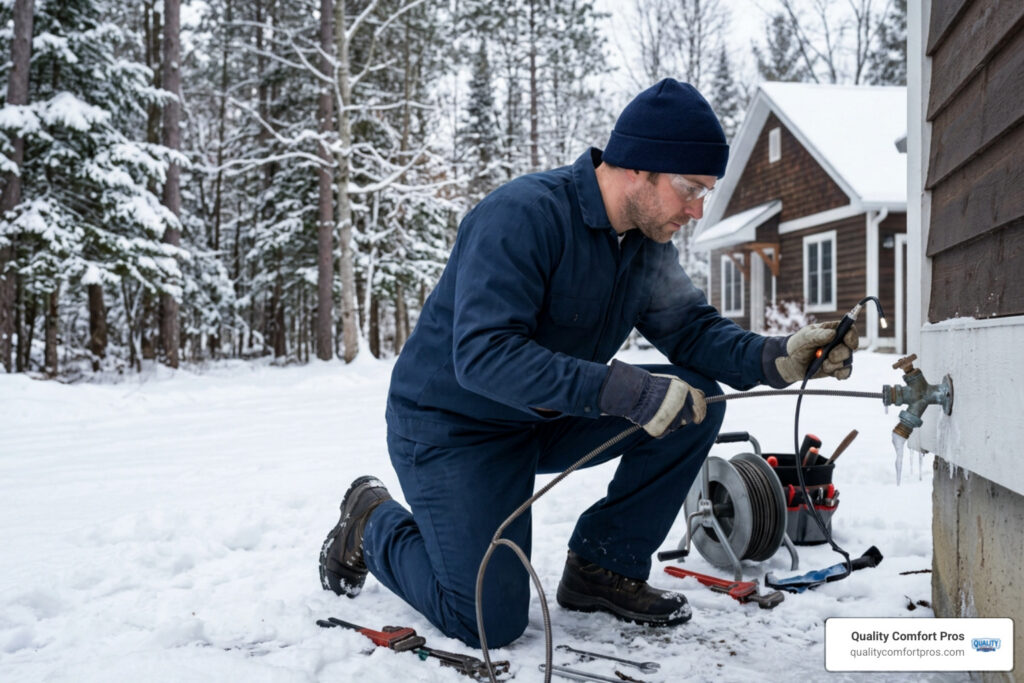
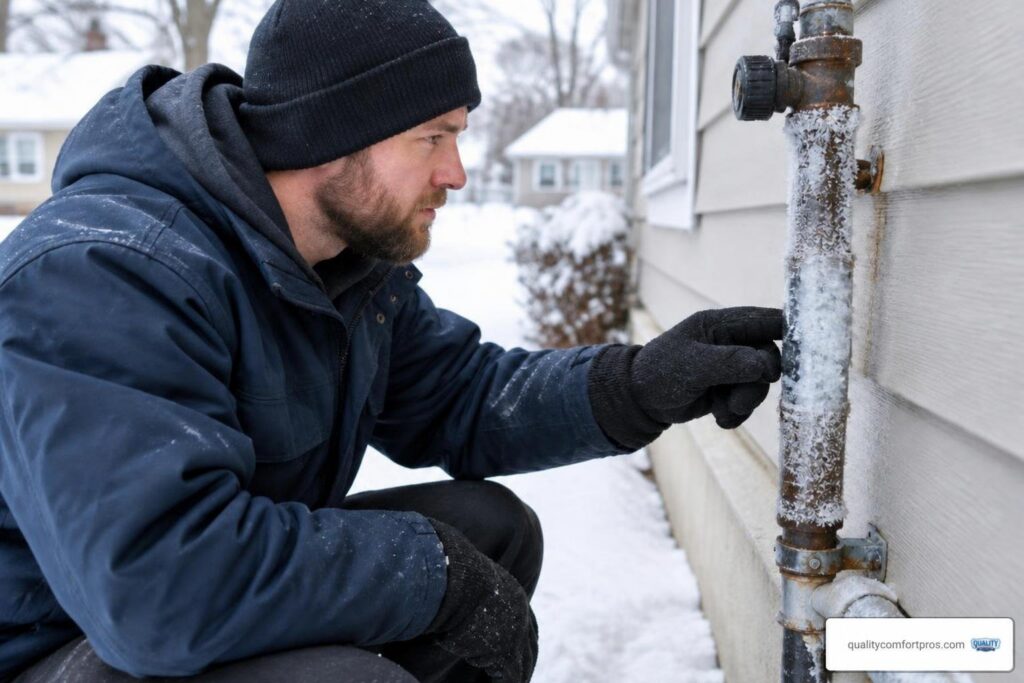
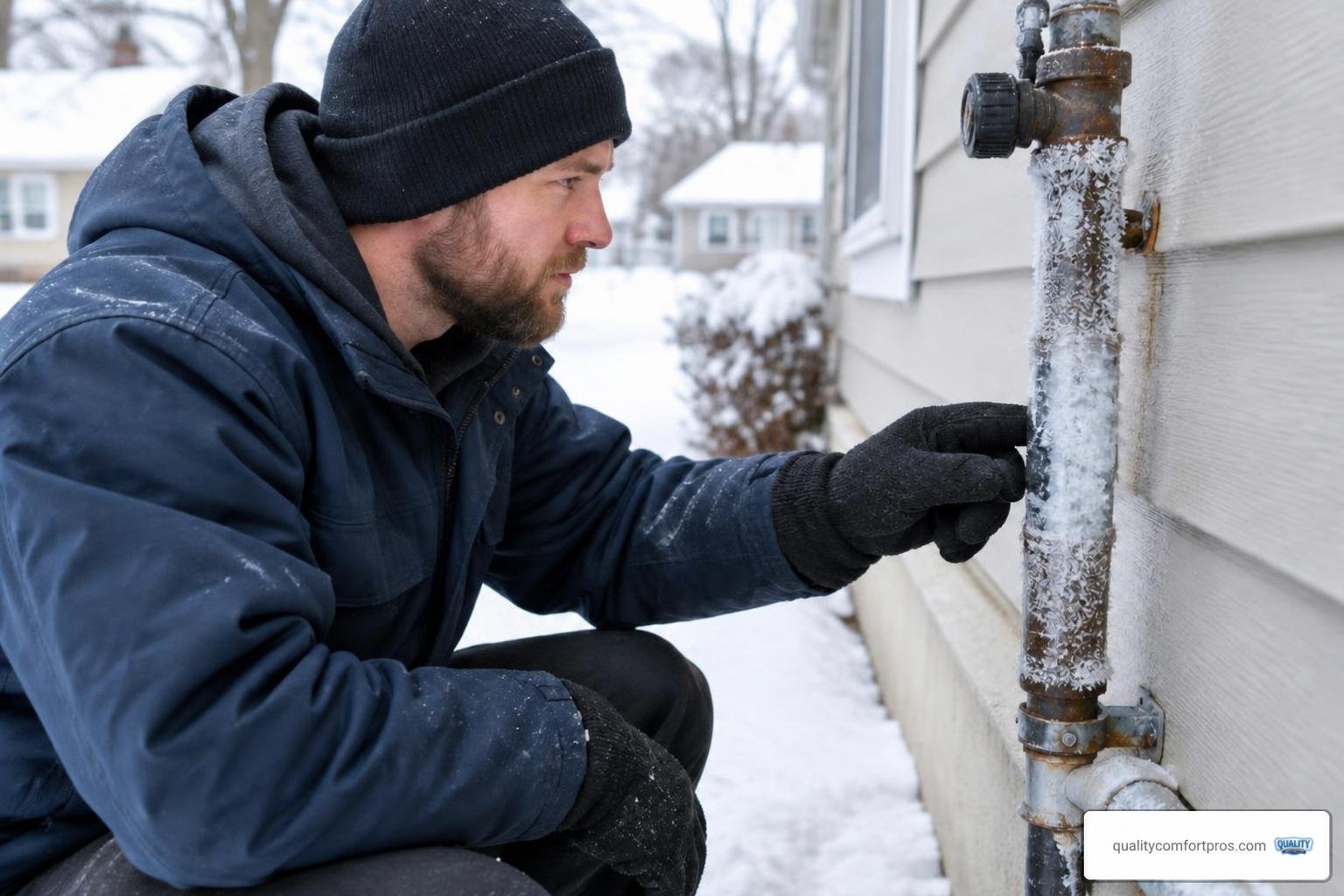
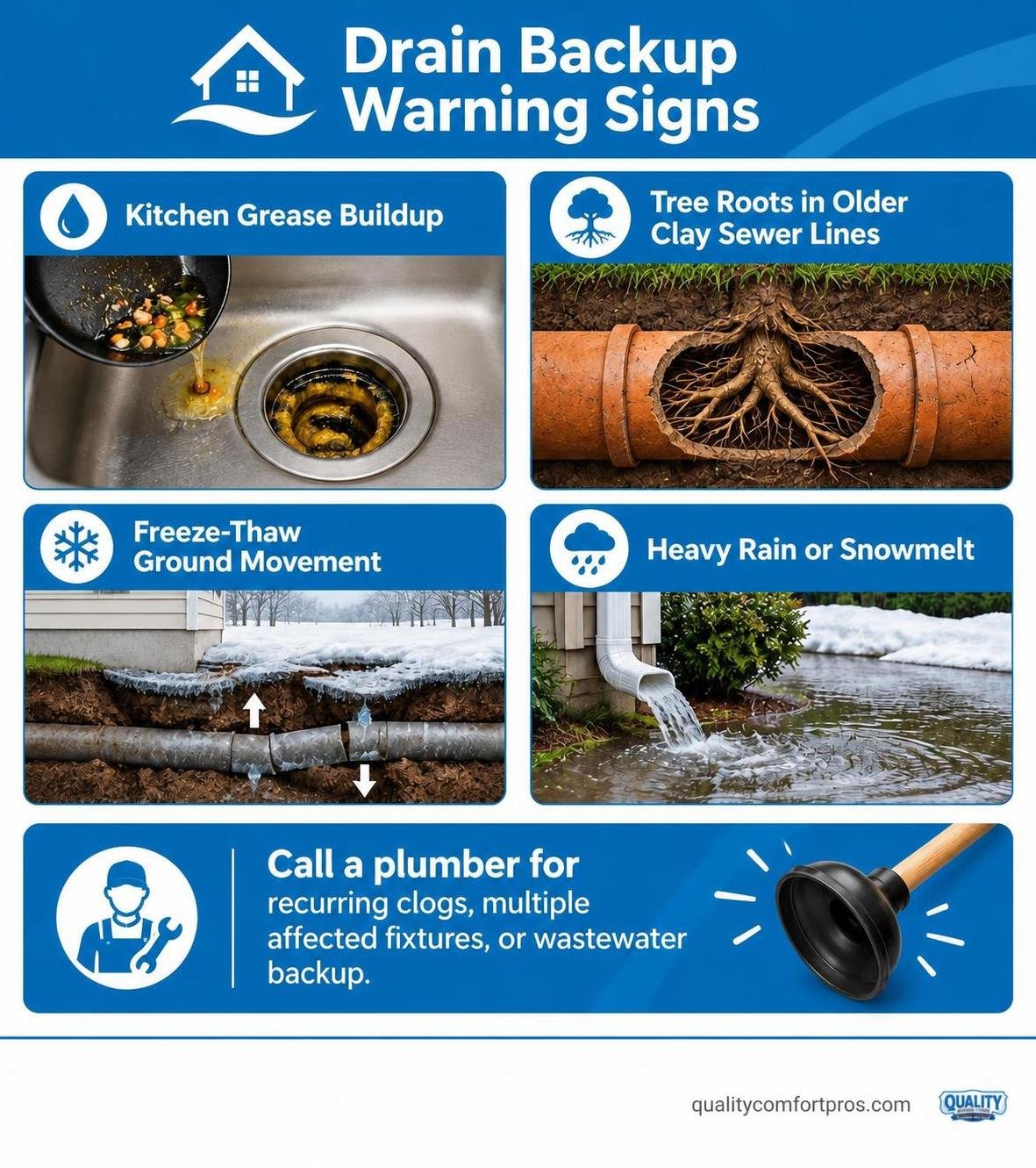
Winter temperatures can freeze shallow or poorly insulated plumbing, especially where a line passes through an exterior wall, crawl space, or unheated area. As frozen water expands, it can stress pipes and fittings, while repeated freeze-thaw cycles can shift soil around underground drain lines. Winter pipe guidance can help homeowners recognize early warning signs, but a burst, a frozen main line, or any pressurized repair is work for our plumber.
Spring melt adds another challenge because thawing ground and melting snow can send a large volume of water toward drains, sump systems, and low-lying foundations. A homeowner can confirm that the sump pump has power, check the main shut-off valve location, and watch for visible leaks, but sewer and main-line work requires professional equipment. When water repeatedly collects near a foundation or a drain backs up during wet weather, drainage service options can help identify the right next step.
Preventive Habits That Protect Drains
Simple routines can reduce buildup before it becomes a blockage. Keep grease, coffee grounds, food scraps, wipes, and hygiene products out of drains, use sink strainers where practical, and run water after routine kitchen use. For additional upkeep ideas, preventive plumbing tips can help homeowners spot patterns that deserve a professional visit before a complete backup occurs.
A homeowner should also know where the main shut-off valve is located and make sure it can be reached without moving stored items. That preparation is useful if an accessible supply line begins leaking, but it does not replace an inspection of hidden, sewer, or pressurized plumbing. If a drain problem keeps returning after safe, basic checks, our plumber can identify what is restricting the line.
Tree Roots and Older Drain Lines
Older Northern Michigan properties may have mature trees near buried sewer lines, and roots naturally seek the moisture that can escape through small pipe joints or cracks. Older clay lines are especially vulnerable because their segmented joints can separate as the ground shifts. Roots can enter those openings, catch debris, and gradually narrow the path for wastewater.
A slow drain in one kitchen or bathroom fixture may point to a nearby branch-line clog, while several fixtures draining slowly or wastewater appearing in a tub can signal a main-line issue. Homeowners can use a plunger on a single accessible fixture and stop using water if a backup appears, but they should not attempt to clear a sewer or main line. Our plumber uses the appropriate machine and inspection equipment to locate the restriction without guessing.
Essential Services Provided by Northern Michigan Drain Experts
When a drain stops working, the right response depends on where the restriction is located and what the symptoms show. A single slow kitchen sink often points to grease, food particles, or soap residue in a nearby branch line, while a main-line backup can affect more than one fixture and may bring wastewater into a tub or floor drain. Homeowners can use a plunger for a single fixture, check for visible leaks, and turn off a fixture shut-off or the main shut-off valve when necessary, but sewer, main-line, gas, electrical, and pressurized work is handled by our plumber.
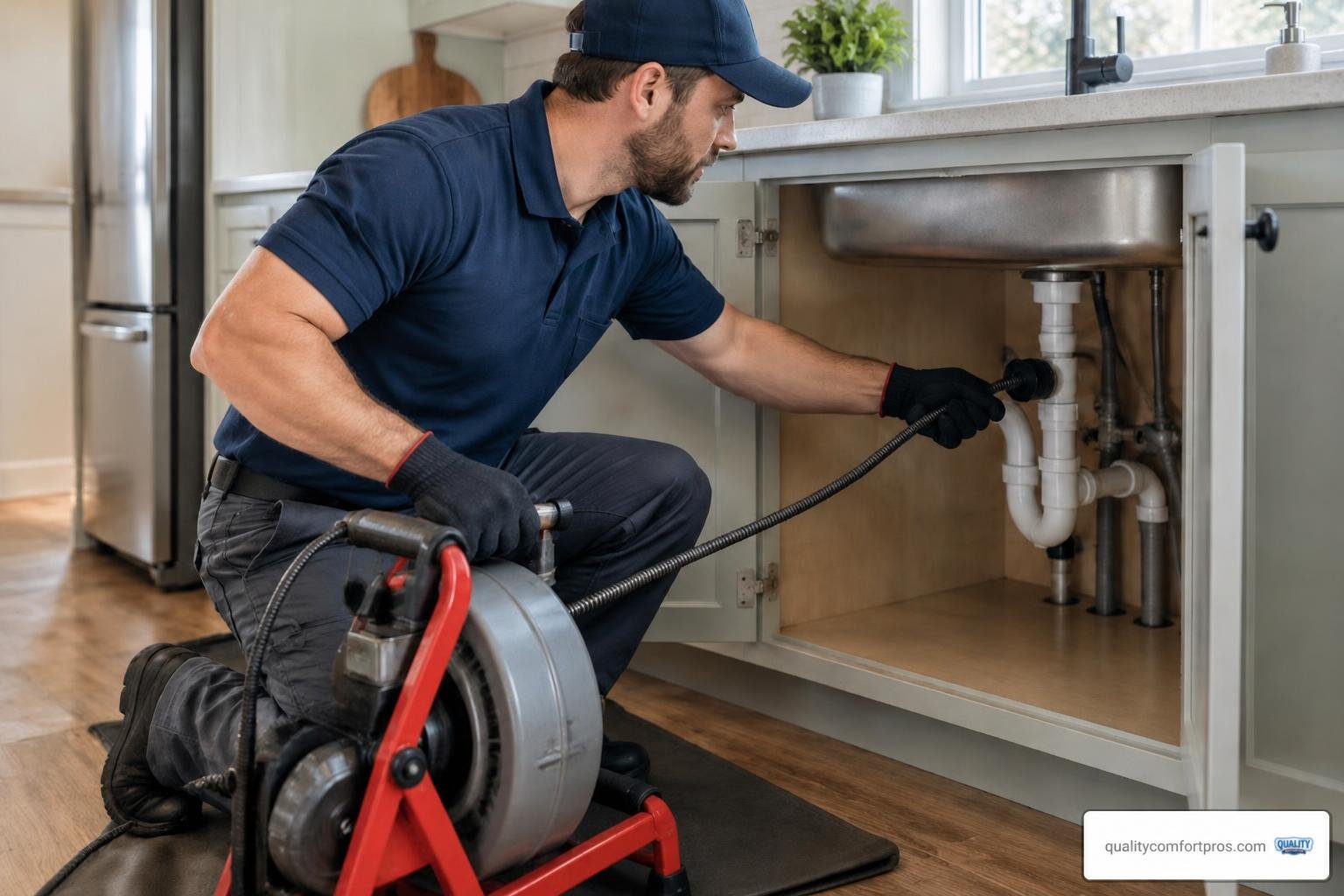
A professional drain cleaning visit begins with questions about the affected fixtures, how long the issue has been present, and whether water is backing up elsewhere. Our plumber then checks accessible plumbing, identifies the safest entry point, and uses the appropriate machine to clear the line. Liquid chemical products are not recommended because they can damage some pipes, create hazards for anyone opening the line, and rarely solve a deeper blockage.
Key services include:
- Professional drain cleaning: Mechanical cleaning removes buildup from the inside of a drain line and helps restore normal flow without relying on harsh chemicals.
- Emergency clog removal: A plumber clears stubborn restrictions caused by grease, food, hair, wipes, roots, or foreign objects and determines whether the clog is local or farther down the system.
- Targeted plumbing repairs: When a damaged fitting, corroded pipe, or failed connection is contributing to the problem, the repair can address the condition rather than repeatedly treating the symptom.
- Leak detection and repair: A plumber can locate hidden leaks and repair damaged plumbing components when water loss or moisture points to a problem beyond a simple clog.
A Recent Service Call in Gaylord
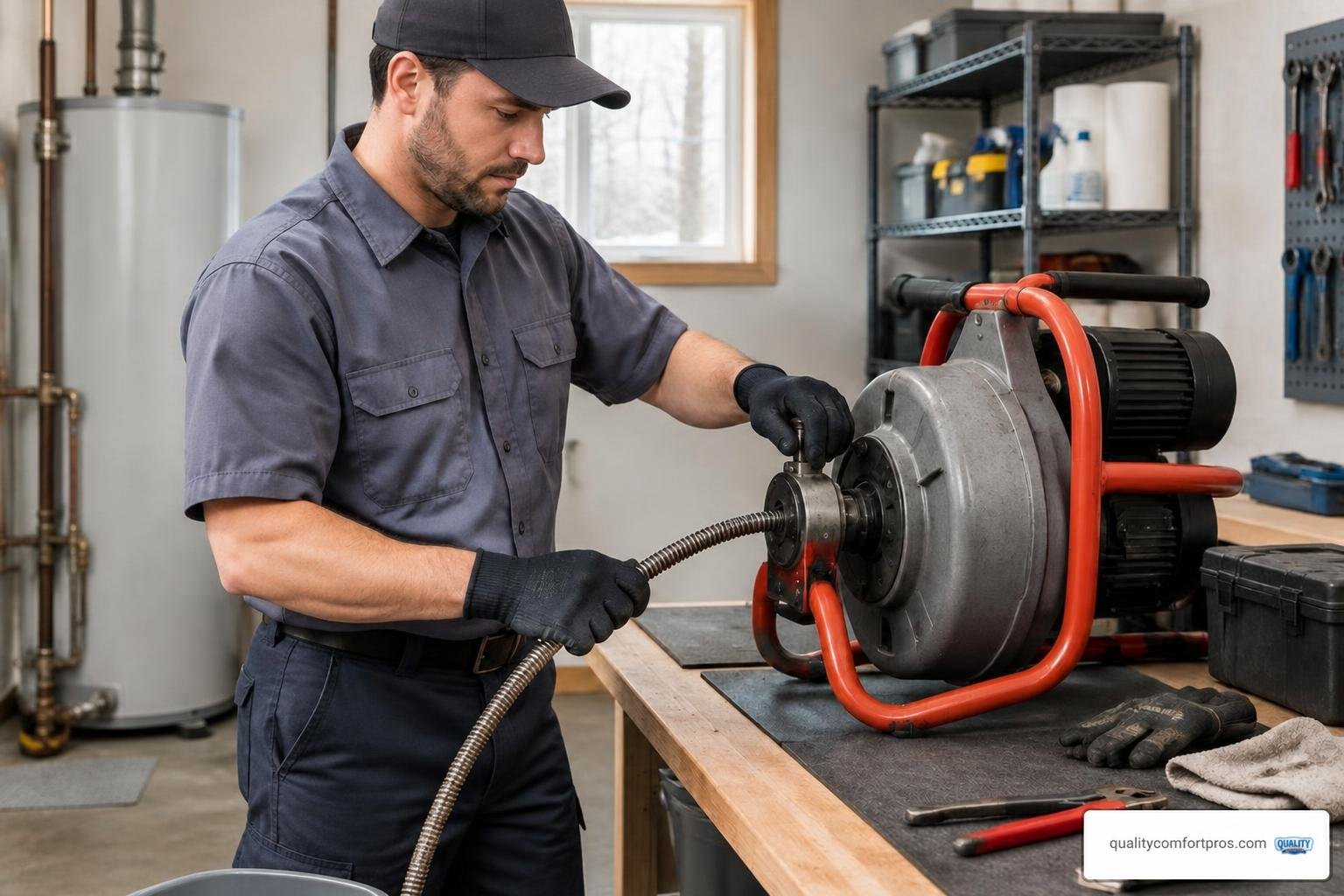
A homeowner in Gaylord called after a kitchen sink had drained slowly for several weeks and then stopped draining entirely. They had tried a store-bought drain cleaner twice without lasting improvement. Our plumber ran a drain machine through the kitchen line and found dense grease and food buildup roughly 15 feet from the fixture, just past the P-trap connection to the branch line.
The clog was cleared, the line was flushed, and full flow was confirmed. The sink has drained normally since. This kind of visit shows why a recurring kitchen-line problem deserves a mechanical cleaning rather than another chemical product.
Advanced Diagnostic Tools Used by Northern Michigan Drain Experts
Rather than relying only on surface symptoms, our plumber can use a camera to view the interior of the affected drain line. The live view may show root intrusion, cracks, separated joints, low areas where waste collects, or buildup narrowing the pipe. For homeowners, the visit starts with choosing a safe access point, then the camera is guided through the line while the findings are explained as they appear. Sharing which drain first showed symptoms, whether backups return, when the problem began, and whether the kitchen sink, tub, toilet, or floor drain is affected gives our plumber useful context for identifying a cleanable blockage or a condition that needs further planning, and it gives homeowners a clearer explanation of why a plunger may not resolve a recurring issue affecting several fixtures.
Leak detection services can also help locate water escaping behind walls or beneath slabs when there is evidence of a hidden plumbing issue. Our plumber may use acoustic equipment, thermal imaging, or electronic line-location tools depending on the situation. These tasks involve pressurized plumbing and specialized equipment, so they should not be attempted as homeowner repairs.
Emergency Response and Water Management
Water from a burst pipe, backed-up toilet, or floor drain can quickly damage flooring, drywall, and stored belongings. Before help arrives, avoid running water, turn off a nearby fixture valve when it is safe, or shut off water at the main valve if an active leak is spreading. Clear items from beneath the sink or away from the affected drain, move cleaning products, paper goods, and valuables out of a damp cabinet or away from standing water, note which fixtures are involved and when the problem began, and keep a clear path to the affected fixture. Do not open pipes or attempt to clear a main line, because diagnosing and repairing sewer, main-line, electrical, or pressurized problems remains work for our plumber.
When a Drain Problem May Be More Urgent
A sudden loss of water pressure, a visible pipe leak that continues after the fixture shut-off is closed, or water spreading near electrical equipment needs a prompt call to a professional. Homeowners should avoid touching electrical components, opening pressurized pipes, or attempting repairs on gas lines. Leaky pipe advice can help explain why limiting water damage early matters. The EPA notes that household leaks waste water and small leaks left alone add up, so finding and fixing them early matters.
If wastewater is coming back through a drain, stop running water in the home until our plumber can assess the condition. A main-line backup can worsen quickly when dishwashers, washing machines, showers, or toilets continue to discharge into the system. Clear information about the affected fixtures and the timing of the problem helps the plumber arrive prepared.
Water around a foundation can also contribute to drain and sump concerns. Interior perimeter drains, sump pumps, downspout extensions, and grading may be part of a solution, depending on how water is reaching the home. A professional evaluation helps identify whether the issue is a plumbing blockage, a drainage-path problem, or a combination of both.
Northern Michigan Drain Questions Answered
Why does my kitchen sink drain slowly when other fixtures seem normal?
A slow kitchen sink usually means grease, food particles, or soap residue has collected in the branch line serving that fixture. A homeowner can try a plunger and check the visible trap area for leaks, but repeated slowdowns or standing water call for our plumber to clear the line safely.
How can I tell whether I have a main-line backup?
A main-line backup can affect more than one fixture, such as a toilet, tub, shower, or floor drain, especially when another fixture is used. Stop using water if wastewater appears where it should not, and have our plumber evaluate the sewer or main line.
Why should I avoid caustic products in a clogged drain?
Liquid caustic products are not recommended because they can damage certain pipes, create a safety risk, and leave a problem unresolved deeper in the line. A plunger may be appropriate for a simple fixture clog, while persistent clogs need professional mechanical cleaning.
What should I do if a drain backs up after heavy rain or snowmelt?
Watch for water around the foundation, check accessible gutters and downspouts, and avoid sending more water into the affected drain. If a basement drain, sump area, or multiple fixtures are involved, our plumber can determine whether the concern is plumbing, drainage, or both.
Can tree roots clog sewer lines in Northern Michigan?
Yes, roots can enter small cracks or separated joints in older underground lines and then trap toilet paper and other debris. Our plumber can use a camera inspection to confirm the condition and recommend the appropriate cleaning or repair path.
What does a sewer camera inspection show?
A sewer camera can show root intrusion, buildup, broken sections, separated joints, and low spots where waste collects. It helps our plumber identify the location and type of problem before choosing the right equipment or repair.
Why do drains act up after a Northern Michigan winter?
Freeze-thaw cycles can shift the soil around buried lines, stress weak connections, and expose existing cracks. Frozen or burst pipes, pressurized repairs, and main-line issues require our plumber, while homeowners can safely check for visible leaks and know where the main shut-off valve is located.
How often should I schedule professional drain cleaning?
The right timing depends on the age of the plumbing, the number of people in the home, and whether there is a history of recurring clogs. A home with frequent slow drains, mature trees near sewer lines, or regular grease buildup may benefit from an evaluation before a complete backup occurs.
What happens during a professional drain cleaning appointment?
Our plumber asks about the symptoms, checks accessible areas, chooses a safe access point, and uses the correct machine for the affected line. If the symptoms suggest a damaged or obstructed sewer line, a camera inspection may be recommended to see what is happening inside the pipe.
When should I call a plumber instead of trying to clear a drain myself?
Call our plumber when a clog returns, several fixtures are affected, wastewater backs up, or there is a suspected sewer or main-line problem. Homeowner checks should stay limited to a plunger, visible leaks, accessible fixture shut-offs, and the main shut-off valve.
Who to Call When a Drain Backs Up
When a drain problem develops, early action can prevent a single slow fixture from becoming a disruptive backup. Northern Michigan homes face extra pressure from changing soil conditions, mature trees, older drain materials, and hard winter weather. Safe homeowner checks can help identify the symptoms, while work on sewer lines, main lines, gas lines, electrical components, and pressurized plumbing belongs with our plumber.
Quality Comfort Pros has been serving Northern Michigan since 1997. The team can assess recurring clogs, camera findings, visible leaks, and drainage symptoms with a focus on the condition causing the problem. Clear recommendations help homeowners understand what needs attention now and what may be worth monitoring.
Do not wait for a small drain concern to become a larger water problem. Contact our plumber at Quality Comfort Pros for help with drain cleaning, clogs, and plumbing issues in Northern Michigan. The team is ready to help keep drains clear and homes protected through every season.