Generator Maintenance Keeps Your Backup Power Ready
Generator maintenance is the routine care that helps a standby system start, carry essential home loads, and operate safely during an outage. Start with a simple routine:
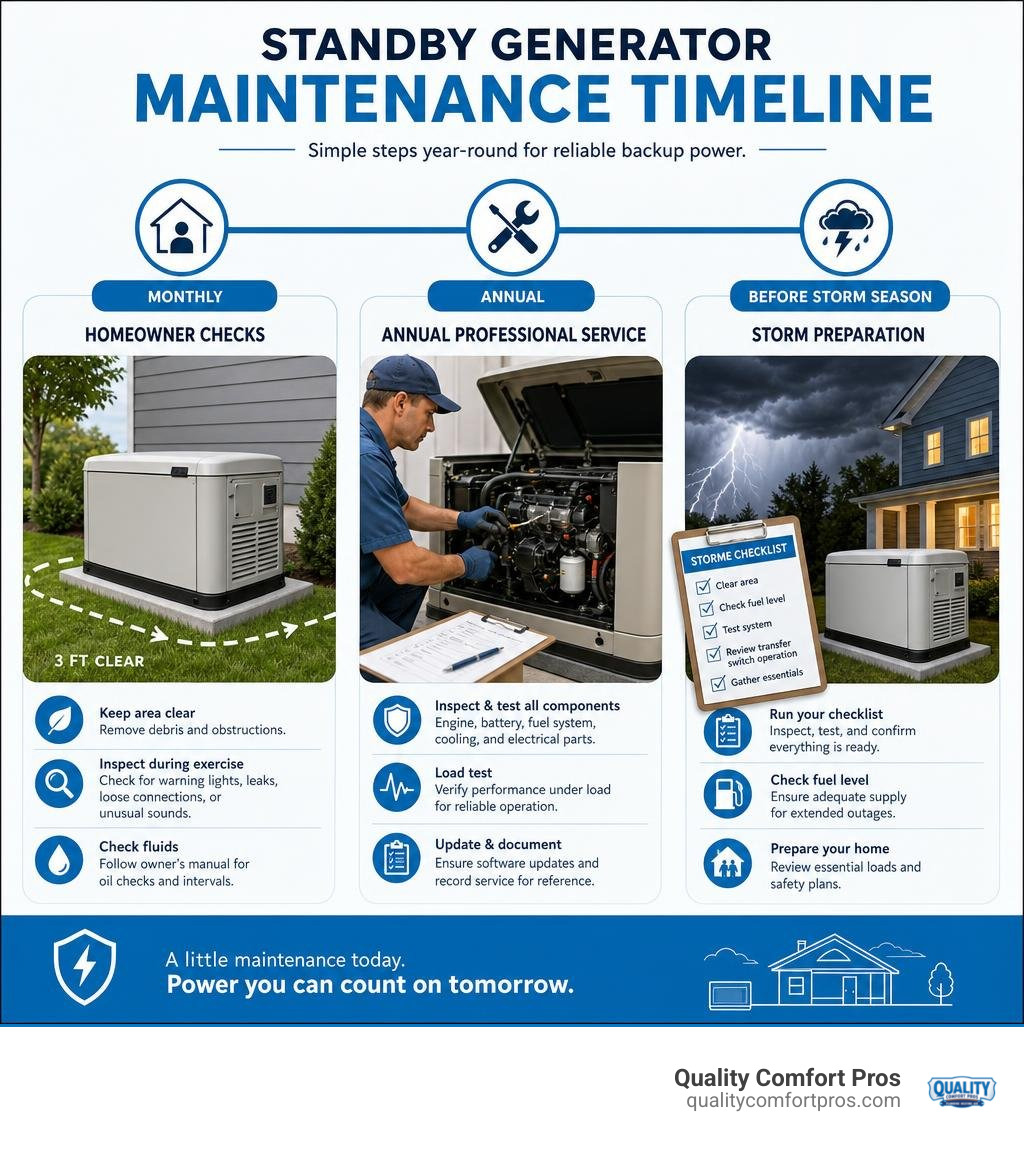
- Keep at least 3 feet of clear space around the enclosure.
- Remove leaves, grass, snow, and other debris that can restrict airflow.
- Check for warning lights, leaks, loose connections, or unusual sounds during the unit’s scheduled exercise cycle.
- Follow the owner’s manual for oil checks and service intervals.
- Schedule professional service at least once a year, and sooner after heavy use or roughly 100 to 200 operating hours.
For Northern Michigan homeowners, preventive care matters most before storm season and winter weather arrive. A generator can sit quietly for months, but its battery, fuel system, engine fluids, cooling components, electrical connections, and automatic transfer switch still need attention. Routine inspections catch small issues before they turn into a no-start situation when the grid goes down.
This guide explains what you can safely check at home, what a qualified technician should handle, why load testing matters, and how to adjust your maintenance schedule for moisture, debris, temperature swings, and extended outages.
JD Osman brings more than 20 years of experience in customer-focused operations and practical maintenance planning. At Quality Comfort Pros, the focus is on making generator maintenance easier to understand for homeowners. That practical guidance helps protect comfort, safety, and power reliability year-round.
Key Components and How Generator Maintenance Protects Them
A residential standby power system is an intricate electro-mechanical setup. It combines an internal combustion engine, a power-generating alternator, sensitive digital controls, and a high-voltage electrical distribution switch. When the utility grid drops offline, these separate assemblies must synchronize seamlessly within seconds to restore electricity to your home.
Without routine maintenance, small points of physical deterioration quickly cascade into complete system failure. Regular upkeep protects the core assemblies responsible for keeping your lights on, preserving internal components against friction, corrosion, electrical arcing, and thermal stress. Investing in consistent care unlocks the full generator maintenance benefits, turning an emergency power system into a dependable safeguard.
Essential Mechanical and Electrical Parts
Understanding how your standby unit operates helps highlight why each maintenance task is critical. The main systems include:
- Reciprocating Engine and Oil Sump: The mechanical heartbeat of the system. The engine burns natural gas, propane, or diesel to produce rotational mechanical energy. The oil sump lubricates moving metal parts like pistons, crankshafts, and connecting rods. Over time, motor oil degrades, losing its viscosity and collecting combustion byproducts that cause friction and thermal breakdown.
- Cooling Assemblies: Air-cooled units rely on cooling fins, intake louvers, and engine fans to circulate air, while larger liquid-cooled models use a radiator core, water pump, thermostat, and coolant hoses. A clogged intake or degraded coolant leads to rapid engine overheating, prompting emergency shutdowns during heavy electrical loads.
- Fuel Delivery System: This network includes shut-off solenoids, flexible fuel lines, primary and secondary pressure regulators, and fuel injectors or carburetors. Natural gas and liquid propane lines require leak-free seals, while diesel configurations demand clean fuel filters and water separators to prevent injector clogging.
- Alternator and Voltage Regulation: The alternator converts engine rotation into clean, household-grade alternating current (AC) power. An automatic voltage regulator (AVR) keeps electrical output steady at standard voltage and frequency (typically 120/240V at 60 Hz), protecting sensitive household appliances, HVAC systems, and computers from damaging surges.
- Automatic Transfer Switch (ATS): Mounted next to your main electrical panel, the ATS detects grid power loss, commands the generator to start, and transfers your household electrical circuits to backup power. Routine servicing ensures internal contactors operate smoothly without dangerous arcing, pitting, or mechanical sticking.
Ensuring every mechanical and electrical part functions properly protects your home and family, reinforcing the need for overall winter generator safety or severe weather events.
Battery Care and Electrical System Health
The starting battery is the single most common point of failure in standby generator systems. Just like an automobile, an engine cannot turn over without strong electrical current from its 12-volt starting battery.
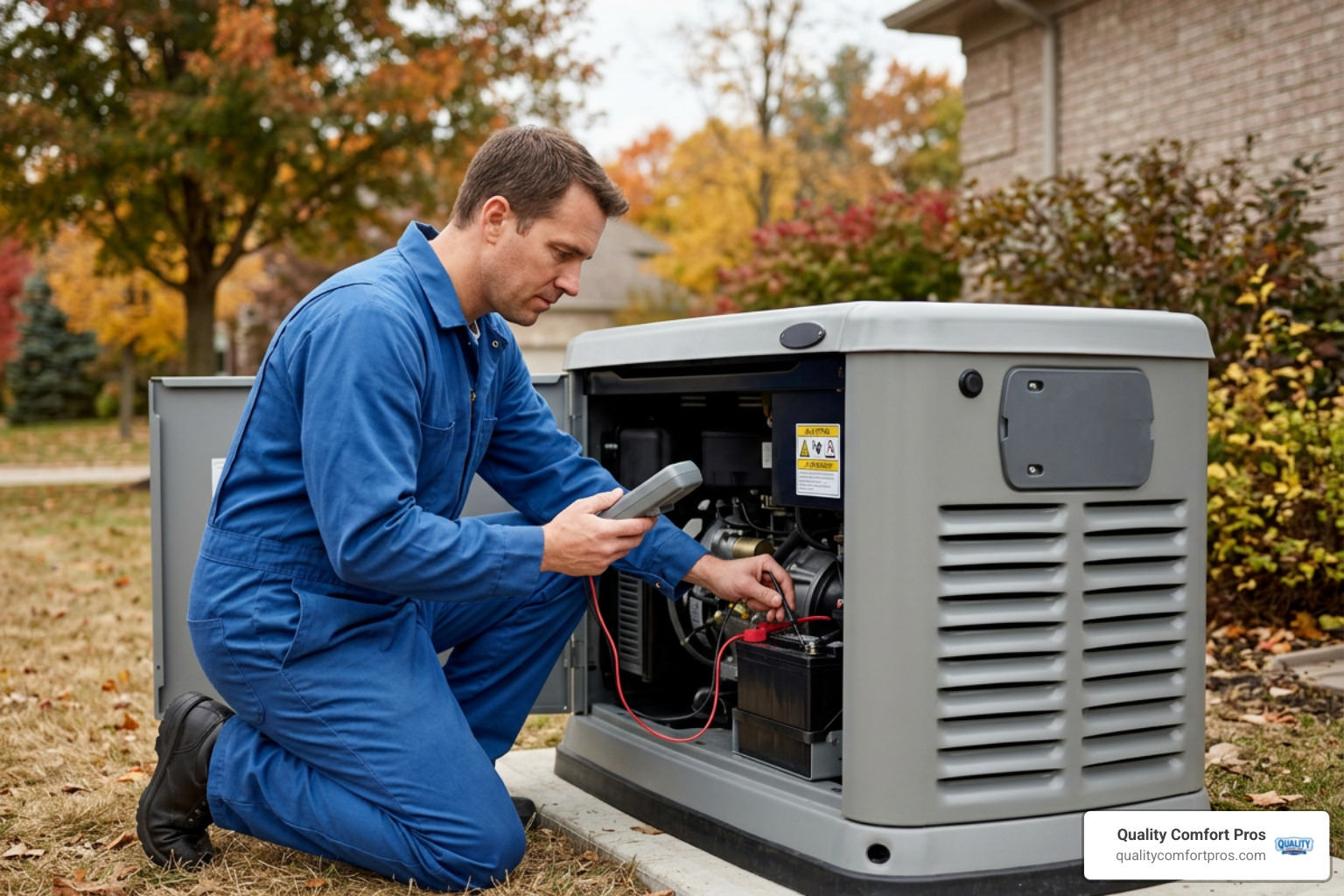
Standby units use an integrated trickle charger powered by utility power to maintain battery readiness. However, continuous float charging combined with Northern Michigan temperature swings causes lead-acid batteries to degrade over time. Common battery problems include:
- Terminal Corrosion: Acid vapors vent during float charging, creating white or bluish lead sulfate crusts on terminals that restrict starter motor cranking current.
- Electrolyte Evaporation: High summer temperatures can dry out internal cells in non-sealed batteries, permanently reducing starting capacity.
- Plate Sulfation: Generators left idle or subjected to minor voltage drops develop hardened sulfate crystals on lead plates, preventing the battery from holding a full charge.
- Control Panel Power Draw: Modern digital control panels and wireless monitoring modules continuously draw small amounts of direct current (DC) power. A weak battery can cause false controller reboots and phantom error codes.
During professional service, technicians perform precision conductance tests and direct load tests to evaluate internal battery resistance. Technicians also clean connections, coat terminals with anti-corrosion compound, and ensure the onboard charger maintains correct float voltage without overcharging.
DIY Upkeep vs. Professional Service Schedules
Keeping your generator dependable requires a balance between routine homeowner care and skilled professional service. While homeowners can safely complete visual inspections and keep the unit clear, specialized tasks such as valve lash adjustments, electrical load testing, and transfer switch maintenance demand our experienced technicians.
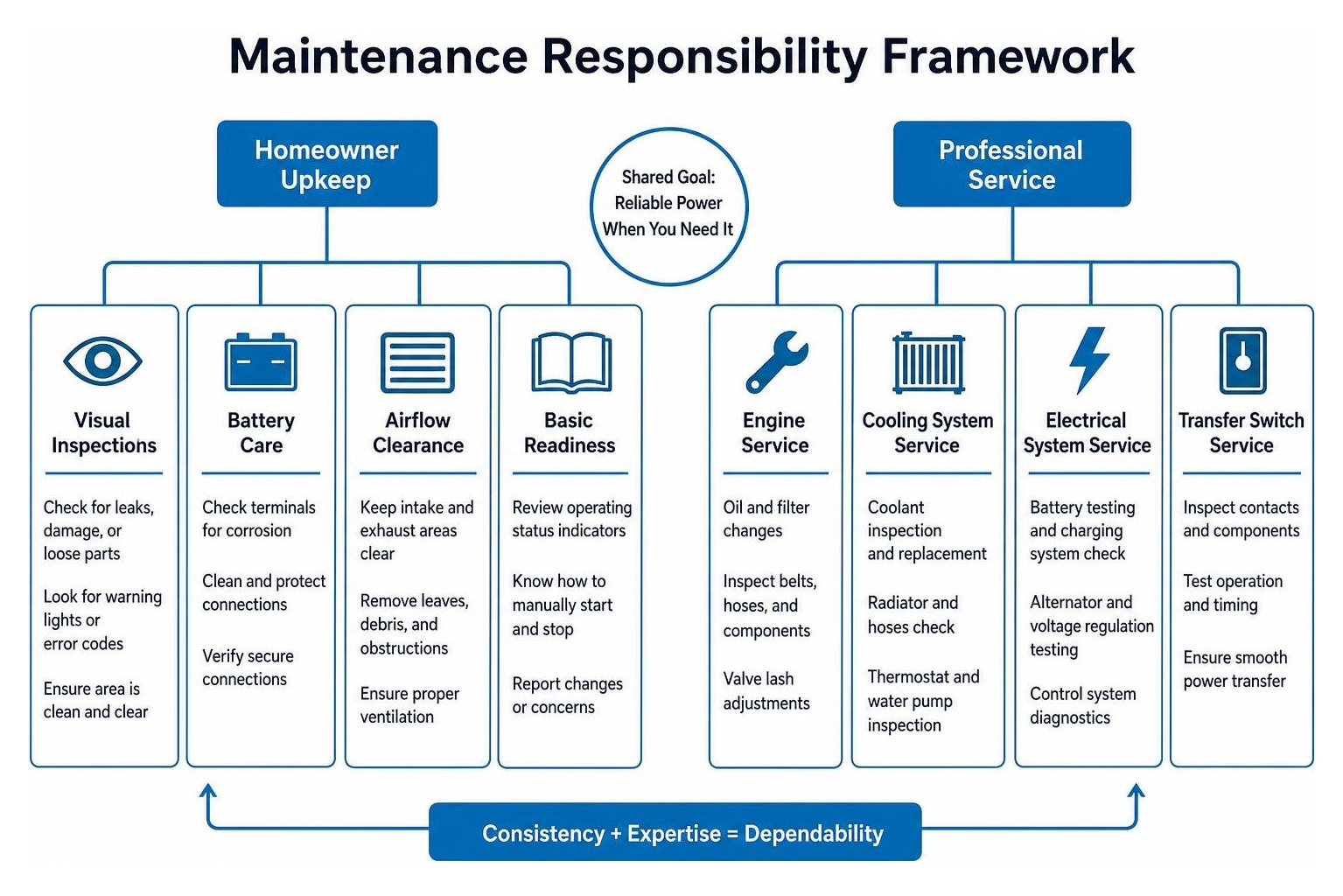
Homeowners in areas like Gaylord, MI, Petoskey, MI, and Charlevoix, MI can partner with local professionals for seasonal checkups by exploring dedicated Gaylord generator installation tailored to local weather challenges.
A Recent Service Call in Gaylord
A Gaylord homeowner called after a third extended winter outage in two years, when their furnace shut down, they lost hot water, and they had to leave home until power returned. Quality Comfort Pros assessed the electrical panel, calculated the load for essential systems, and installed a whole-home standby generator with an automatic transfer switch. During the next storm outage, the generator started in seconds and ran the furnace, water heater, refrigerator, and lights without interruption.
Basic Homeowner Inspection Tasks
Homeowners can perform simple, safe maintenance tasks to catch warning signs early without using specialized mechanical tools:
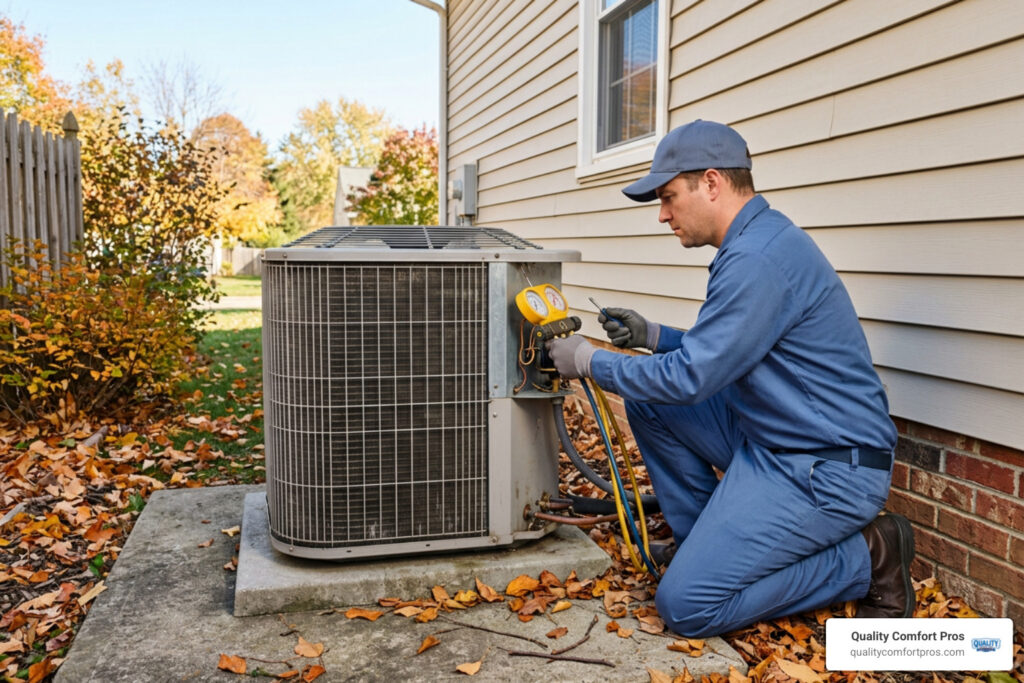
- Maintain the 3-Foot Clearance Perimeter: Ensure a 3-foot buffer zone around the entire generator cabinet. Trim back shrubs, tall grass, weeds, and tree branches. In winter, shovel snowbanks away from the unit to maintain proper ventilation.
- Keep the Enclosure Clean: Clear leaves, twigs, dirt, and spiderwebs from external airflow intake and exhaust louvers. Inspect the base pad for rodent burrowing or insect nesting.
- Check Fluid Levels (Safe Mode Only): When the unit is cool and turned off, unlatch the hood and check the oil level dipstick. Verify the oil level sits between the crosshatched indicators. Never add oil while the engine is running.
- Listen to Weekly Exercise Cycles: Most standby generators automatically run a 5- to 15-minute self-test once a week. Listen to this run cycle; smooth engine operation is normal, while sputtering, hunting for idle speed, or excessive smoke warrants attention.
- Monitor the Control Panel Status: Look through the viewing window for a solid green status light. If a yellow warning or red fault light appears, write down the specific fault code shown on the LCD screen.
Safety Warning: Never attempt to service the high-voltage electrical compartments, fuel lines, or internal engine valves yourself. Always switch the generator control panel to the “OFF” position and follow proper safety precautions before opening any access panels.
Professional Generator Maintenance Checklists
Our experienced technicians follow manufacturer guidance and safe service practices when inspecting mechanical and electrical components. Portable generators must never run indoors, in a garage, or near windows and doors because carbon monoxide can enter the home. Review CDC carbon monoxide guidance for essential safety information. Ready.gov’s power outage guidance advises installing carbon monoxide detectors with battery backup in central locations on every level of the home and running a generator only outdoors, at least 20 feet away from windows.
| System Area | Homeowner Routine Check (Monthly) | Professional Service Task (Annual / 100-200 Hrs) |
|---|---|---|
| Engine Lubrication | Check dipstick oil level; inspect for exterior leaks | Drain oil; replace OEM oil filter; analyze oil for wear metals |
| Air Intake & Exhaust | Clear leaves, twigs, and snow from intake louvers | Replace paper/foam air filter element; inspect exhaust baffles |
| Starting & Battery | Inspect terminals for heavy visible crusting | Perform battery conductance and load test; clean and seal terminals |
| Ignition & Valves | Note irregular engine misfires during exercise | Inspect, gap, or replace spark plugs; adjust engine valve lash |
| Fuel Delivery | Verify manual gas shut-off valve is fully open | Test gas supply static and dynamic pressure; clean fuel solenoids |
| Electrical Output | Check that external green status light is illuminated | Calibrate voltage and frequency; test rotor/stator insulation resistance |
| Transfer Switch | Confirm utility sensing light is functioning | Inspect and torque mechanical lugs; clean contactor arc chutes |
The Critical Role of Load Testing and Seasonal Preparation
Regular exercise cycles run the engine at light or no electrical load. While this circulates oil and tests starting circuits, it does not simulate the heavy electrical demand of powering a home. Full-load testing and rigorous seasonal preparation are essential steps that protect standby power equipment from unexpected failures during severe weather.
When planning backup power investments, homeowners can review Michigan storm generators to understand how load management and storm readiness work together.
How Home Generator Load Testing Works
Load testing confirms that a home standby or portable generator can support the essential equipment it is intended to power. Our technicians assess the electrical panel, review the planned loads, and confirm that the generator, transfer equipment, and connected circuits respond properly. This approach focuses on practical home performance rather than commercial equipment rental.
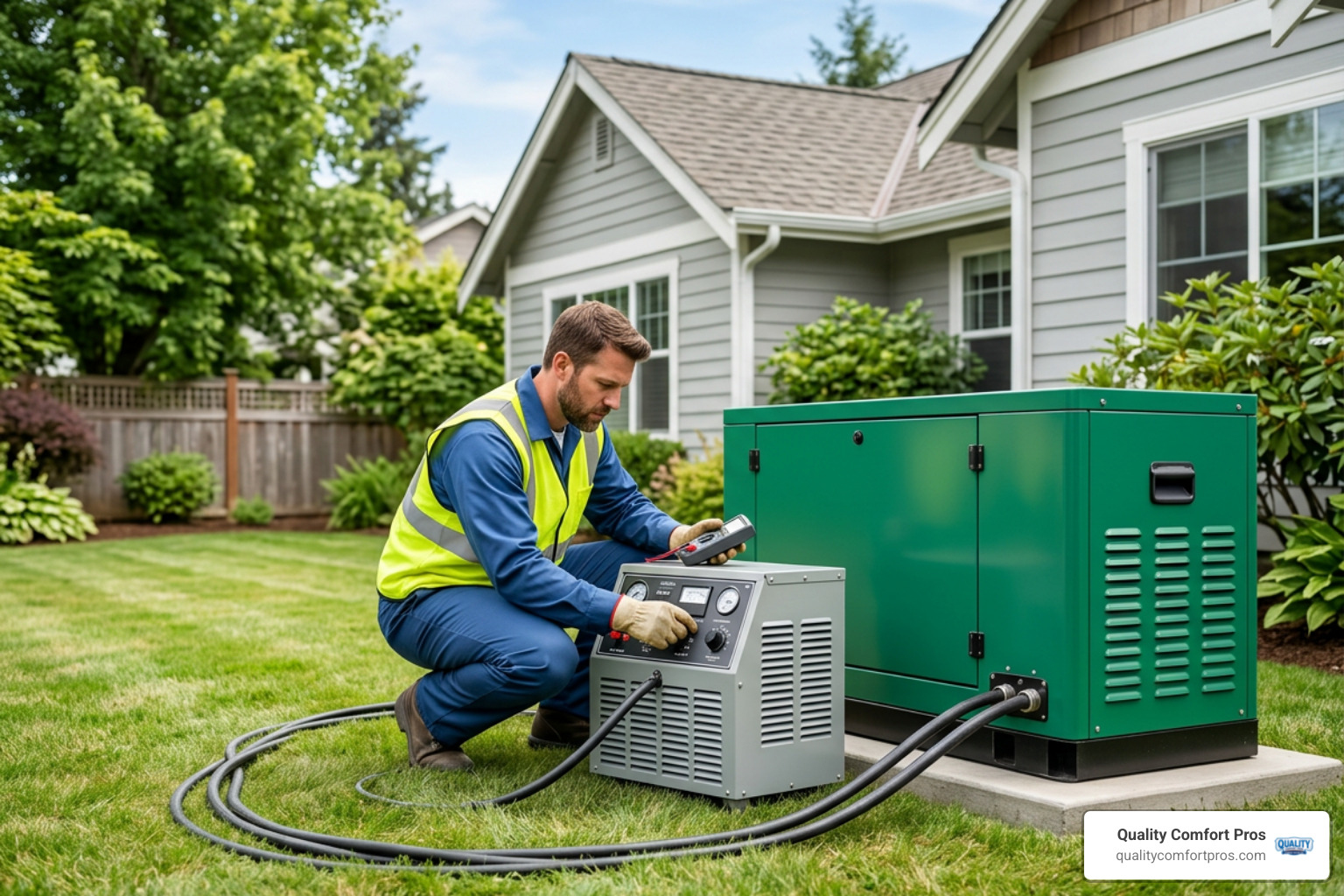
During a service visit, technicians look for signs that the generator is not starting, transferring power, or maintaining stable operation as expected. They also check the battery, controls, fuel supply, and cooling components that support dependable performance. Addressing these issues before a storm can help prevent a disruption when backup power matters most.
- Confirming the generator starts and runs smoothly.
- Verifying that the automatic transfer switch responds correctly on a standby system.
- Checking that the essential circuits selected for backup receive power as planned.
- Reviewing the battery, fuel supply, and control-panel status for warning signs.
For a home standby system, technicians can test the equipment through its automatic transfer switch while confirming that the selected household circuits operate as intended. For portable generators, testing focuses on safe startup, stable operation, and the equipment the unit is designed to support. The results help identify service needs before an outage exposes a problem.
Preparing Standby Systems for Severe Weather
Preparing a standby generator for severe weather involves simple adjustments based on the season:
- Winter and Cold-Weather Setup:
- Install a cold-weather kit, including a thermostatically controlled oil pan warmer and battery heating blanket, to ensure reliable sub-zero starts.
- Switch to manufacturer-recommended 5W-30 fully synthetic motor oil to provide immediate lubrication during cold startup.
- Keep exhaust terminals and fresh-air intake hoods completely clear of blowing, drifting snow.
- Summer and Storm Season Setup:
- Clean cooling radiator fins and louver panels to maximize heat dissipation during high ambient temperatures.
- Clear fallen leaves, brush, and overhanging tree branches that could damage the unit during heavy thunderstorms.
- Inspect rubber weather seals on access doors to keep driving rain and moisture away from delicate digital controls.
Long-Term Cost Savings and Risk Prevention
Routine generator maintenance is an essential investment that protects your equipment, avoids emergency repair fees, and extends the operational life of your backup power system.
Avoiding Costly Emergency Repairs and Downtime
The cost of deferred maintenance surfaces when the utility grid fails during severe weather. Finding an emergency repair technician during a widespread power outage is stressful, and emergency service surcharges add up quickly.
Neglecting routine service often leads to major mechanical breakdowns, such as:
- Total Engine Seizure: Low or degraded engine oil can cause connecting rods to seize against the crankshaft, requiring a complete engine replacement.
- Starter Motor Burnout: A corroded battery connection causes low voltage, forcing the starter motor to draw excessive current until its internal windings burn out.
- Fuel Solenoid Failure: Old or varnished fuel components can gum up internal needle valves, leaving the engine starved for fuel during an outage.
- Alternator Winding Short-Circuits: Moisture and dirt buildup on alternator windings can break down insulation, resulting in expensive electrical repairs.
Routine care helps prevent these failure points and supports more predictable ownership. Homeowners considering a standby system can read home generator installation for a practical overview of what to expect. Regular service also helps keep the system ready for the next outage.
Extending Operational Lifespan Through Generator Maintenance
Standby generators are built to deliver reliable power for 20 to 30 years when properly maintained. Proactive care ensures your equipment reaches its maximum lifespan by controlling friction, heat, and electrical wear.
By following the maintenance schedule in your owner’s manual, changing fluids on time, and keeping electrical connections properly torqued, you protect your system and keep manufacturer warranties valid.
When you need dependable service, scheduling generator maintenance service with our experienced technicians helps keep your system ready for an outage.
Frequently Asked Questions About Home Backup Power
Why is annual standby system servicing important for reliability and cost savings?
Annual servicing catches mechanical wear, electrical resistance, and fluid breakdown before they cause a complete startup failure during a blackout. Proactive care costs significantly less than emergency mechanical repairs, protects manufacturer warranties, and ensures maximum fuel efficiency.
How often should a home standby unit be serviced by a professional?
A home standby generator should receive comprehensive professional service at least once a year. If your area experiences frequent, prolonged outages, schedule service every 100 to 200 hours of actual runtime to replace oil, filters, and spark plugs.
What basic upkeep tasks can homeowners perform themselves?
Homeowners can clear leaves, brush, and snow within a 3-foot perimeter around the enclosure, wipe dust from intake louvers, check the engine oil dipstick when the unit is off, and verify the external status light shows a normal green indicator.
What are the risks of skipping routine system upkeep?
Skipping maintenance can lead to dead starting batteries, varnished fuel systems, low oil engine seizure, cooling fan failures, and stuck transfer switch contactors. These problems often cause the unit to fail when the utility grid drops offline.
How do environmental factors like humidity or debris affect service intervals?
High humidity accelerates electrical terminal corrosion, moisture accumulation in oil sumps, and rust on enclosure panels. Airborne dust, pollen, and tree debris clog air filters rapidly, requiring semi-annual inspections instead of annual checkups.
What does a typical professional service visit include?
A standard professional visit includes an engine oil and filter change, air filter replacement, spark plug inspection or replacement, battery load and charging test, valve lash adjustment, fuel line pressure verification, control panel diagnostics, and an operational test of the automatic transfer switch.
How can you prepare your backup power system for storm season or extended outages?
Before storm season, inspect the air intake and exhaust vents, verify the starting battery charge, check oil levels, ensure manual fuel shut-off valves are accessible, and run a manual start test to confirm the generator and transfer switch operate smoothly.
What does load testing check on a home generator?
Load testing helps verify that a home standby generator starts, transfers power, and supports the essential circuits selected for backup. For portable generators, the test focuses on safe startup, stable operation, and the equipment the unit is intended to power. A technician can use the results to identify battery, fuel, control, or transfer-switch concerns before an outage.
How does regular upkeep help extend the operational lifespan of a standby unit?
Consistent fluid changes, valve adjustments, and electrical cleaning minimize internal engine friction, prevent thermal overheating, and protect sensitive alternator windings from breakdown. This regular care helps quality standby generators operate reliably for 20 to 30 years.
How do I know when my standby unit requires urgent repair rather than routine service?
Urgent repair is needed if the generator fails to crank during its weekly exercise, produces blue or thick black exhaust smoke, emits grinding or knocking sounds, leaks oil or fuel on the concrete pad, or displays a red fault light on its digital control screen.
Conclusion
A home standby generator provides reliable security, comfort, and safety during severe weather and unexpected grid failures. However, true power reliability depends on consistent maintenance. Simple homeowner tasks like clearing snow and leaves, checking fluid levels, and monitoring error codes work hand-in-hand with professional checkups, valve adjustments, and load testing to keep your system ready for any outage.
For homeowners throughout Gaylord, MI and Northern Michigan, Quality Comfort Pros delivers reliable, family-owned home service solutions serving Northern Michigan since 1997. Our experienced technicians service home standby and portable generators to help keep backup power systems ready whenever storm clouds gather. If you are planning an upgrade or need help structuring your maintenance schedule, contact our team for practical guidance tailored to your home.