What You Need to Know About Air Conditioning System Maintenance
Air conditioning system maintenance is the regular cleaning, inspection, and servicing of your AC to keep it running efficiently and reliably. Here’s a quick overview of what it involves:
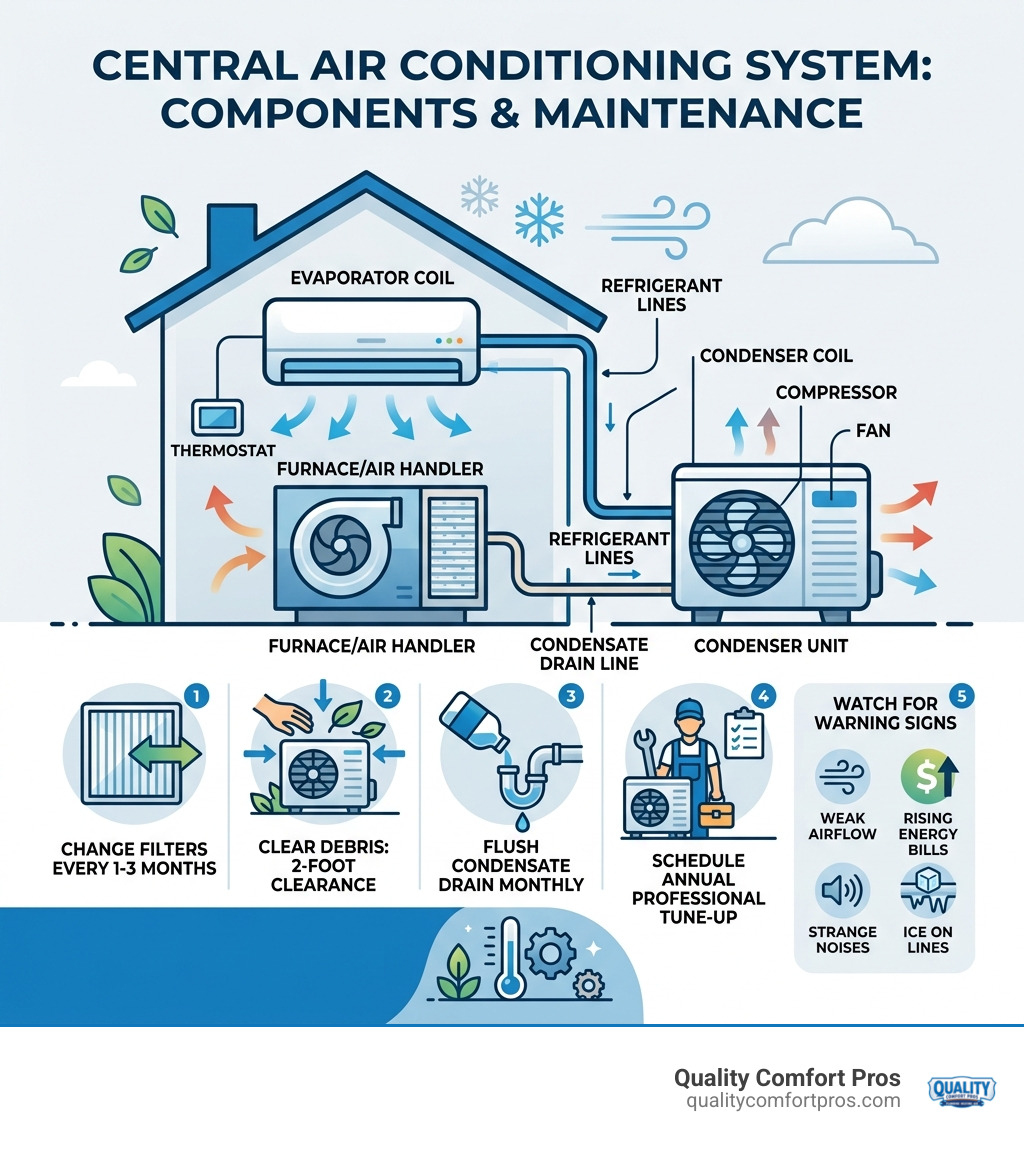
- Change filters every 1-3 months during the cooling season
- Clear debris from around the outdoor condenser unit (keep a 2-foot clearance)
- Flush the condensate drain line monthly to prevent clogs and water damage
- Schedule a professional tune-up once a year, ideally in early spring
- Watch for warning signs like weak airflow, rising energy bills, strange noises, or ice on the lines
Most homeowners don’t think about their AC until something goes wrong — and by then, the repair bill is already climbing. Heating and cooling account for roughly 43% of a home’s energy use, making your air conditioner one of the most expensive systems in your house to run and repair. The good news? An estimated 8 out of 10 AC failures could be prevented with simple, consistent maintenance.
Whether you’re dealing with a brutal Northern Michigan summer or just trying to keep your energy bills in check, staying on top of your AC is one of the smartest things you can do as a homeowner.
I’m JD Osman, and through my work at Quality Comfort Pros, I’ve seen how proper air conditioning system maintenance separates systems that last 15-20 years from those that burn out in half the time. In this guide, I’ll walk you through everything you need to know — from simple DIY tasks to what a professional tune-up actually covers.
The Importance of Regular Air Conditioning System Maintenance
When we talk about maintaining your cooling system, we aren’t just looking for things to do on a Saturday morning. We are talking about protecting one of your home’s most significant investments. Statistics show that heating and cooling can actually account for up to 52% of annual home energy consumption depending on your usage habits. By staying proactive, you are directly impacting your monthly budget.
System Longevity and Energy Efficiency
A clean AC is an efficient AC. When your system is bogged down by dust and debris, it has to work twice as hard to move the same amount of cool air. This extra strain leads to “mechanical fatigue,” which is a fancy way of saying your parts wear out much faster than they should. According to the Department of Energy, simply replacing a dirty filter or clearing restricted airflow can reduce your system’s energy use by 20% to 50%.
Think of it like an oil change for your car. You wouldn’t expect a truck to last 200,000 miles without fresh oil; similarly, you shouldn’t expect an air conditioner to hit the 20-year mark without regular cooling services. Systems that receive annual care typically last 15–20 years, whereas neglected units often fail around the 10-year mark.
Indoor Air Quality (IAQ)
Maintenance isn’t just about the machine; it’s about the people living inside the home. Research indicates that indoor air can be 2 to 5 times more polluted than outdoor air. Since Americans spend roughly 90% of their time indoors, the quality of the air circulating through your vents matters. A well-maintained system filters out pollen, dust, and pet dander effectively. If your coils are damp and dirty, they can even become a breeding ground for mold, which then gets blown into your living room every time the cycle starts.
Homeowner’s Guide to DIY Upkeep
You don’t need a van full of tools to keep your system happy. There are several high-impact tasks you can handle yourself that will significantly improve your home’s comfort and efficiency.
DIY Air Conditioning System Maintenance: Filters and Coils
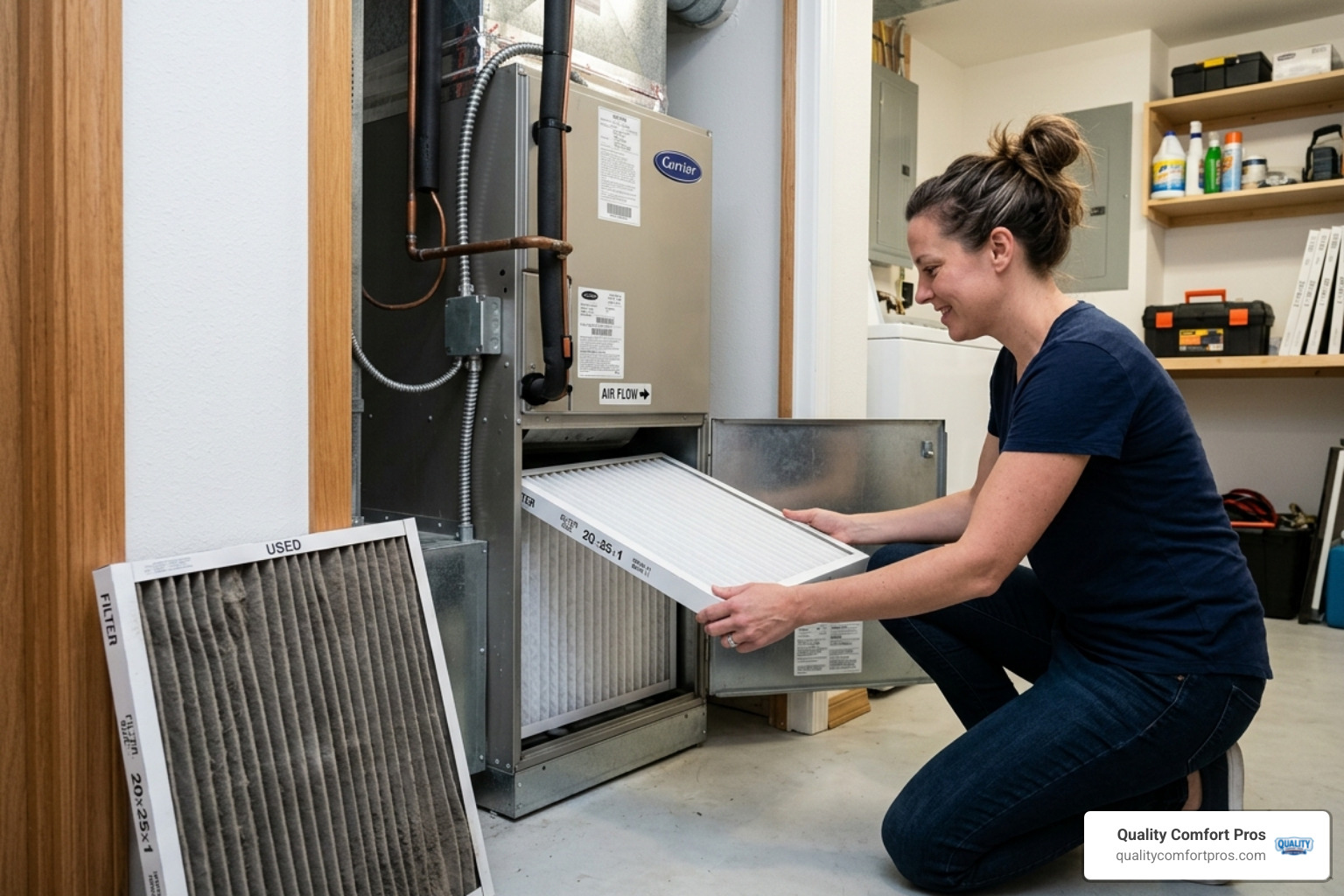
If you only do one AC maintenance task yourself, make it checking the air filter. In central systems, the filter is usually found at the return duct or behind a return grille on a wall or ceiling. If you have a ductless unit, this guide to getting your mini-split ready for spring can help you find and clean the washable mesh filters.
- Frequency: Check your filters every month. If you have pets, live in a dusty area like Vanderbilt or Mancelona, or have family members with allergies, you may need to replace them every 30 days. At a minimum, change them every 3 months.
- MERV Ratings: Most residential systems thrive with a MERV rating between 8 and 11. This provides a great balance of filtration without “choking” the airflow of your system.
- Evaporator Coils: While a deep clean is best left to us, you can inspect your indoor evaporator coil for visible dust. If it’s lightly soiled, a no-rinse foaming cleaner can be applied to the fins. As the AC runs, the condensation will wash the cleaner and the dirt down into the drain pan. For more intensive care, see our guide on AC Maintenance.
If you use a ductless system, Ductless Mini-Split Maintenance involves gently wiping down the indoor unit and ensuring the small plastic filters are rinsed and dried before being reinserted.
Maintaining the Outdoor Condenser Unit
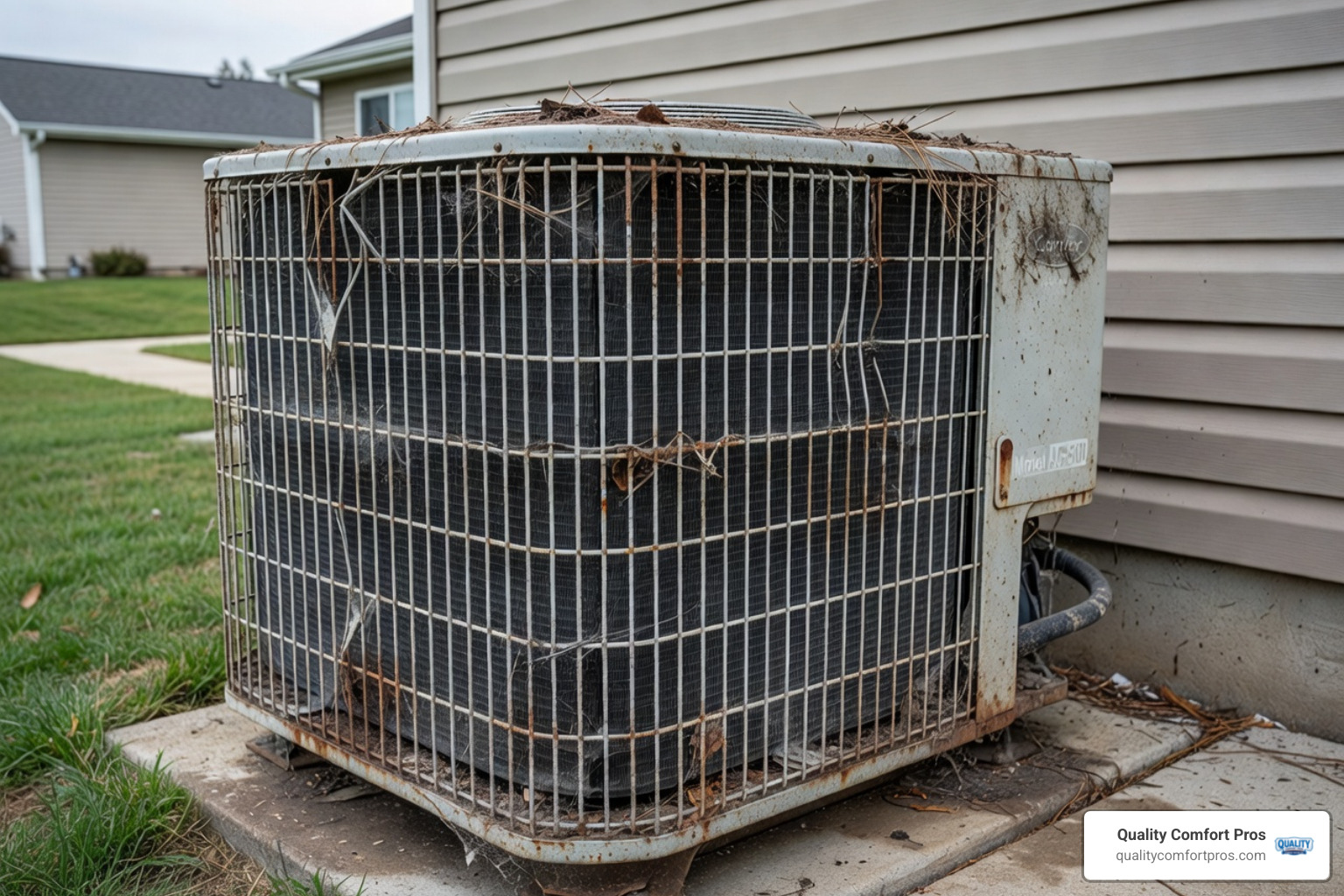
The outdoor unit (the “condenser”) is a magnet for Northern Michigan cottonwood seeds, grass clippings, and falling leaves.
- Give it room to breathe: Keep about 2 feet of open space around your outdoor condenser. Trim back shrubs, weeds, and tall grass so heat can escape the way it should.
- Rinse coils the safe way: Turn off power at the disconnect first, then gently rinse the condenser coils with a garden hose. Use low pressure and spray downward, since strong water pressure can flatten the aluminum fins.
- Fix bent fins carefully: If the thin metal fins look bent, a fin comb can help straighten them. Damaged fins restrict airflow and can make your system work harder. For more simple seasonal prep steps, see our spring AC start-up checklist.
Professional Tune-Ups and Warranty Requirements
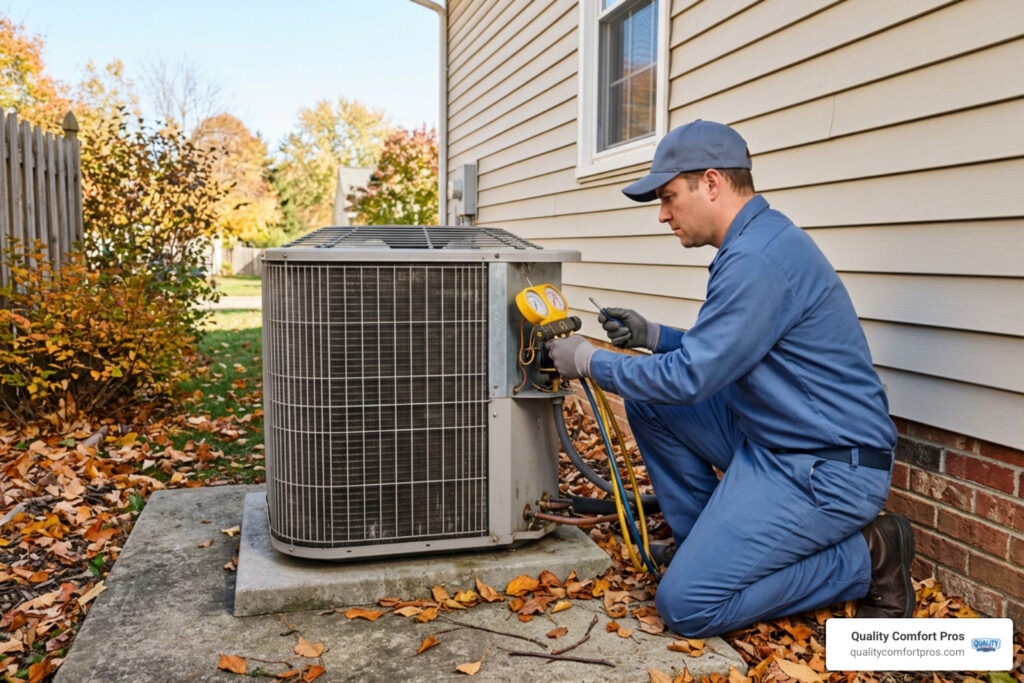
While DIY tasks are great for day-to-day efficiency, there are things a professional technician can see that the naked eye cannot. We use specialized meters to test electrical “health” and gauges to check the “blood pressure” (refrigerant levels) of your system.
When to Schedule Professional Air Conditioning System Maintenance
Timing is everything. We highly recommend scheduling your professional air conditioning system maintenance in March or April.
Why then?
- Technician Availability: Once the first 85-degree day hits in June, our phones ring off the hook with emergency repairs. Scheduling in early spring ensures you get a convenient appointment time.
- Special Pricing: Many HVAC companies offer “pre-season” specials to keep their crews busy before the summer rush.
- Reliability: If we find a failing capacitor or a small refrigerant leak in April, we can fix it for a fraction of the cost before it causes a total system shutdown on the hottest day of the year.
What a Professional Tune-Up Includes
A professional visit usually takes 1 to 2 hours. It is a comprehensive “physical” for your HVAC system.
| Task Category | DIY Homeowner | Professional Technician |
|---|---|---|
| Filter Replacement | Yes | Included |
| Debris Removal | Yes | Included |
| Check Refrigerant Levels | No | Yes (EPA Certified) |
| Lubricate Moving Parts | No | Yes |
| Test Safety Controls | No | Yes |
| Calibrate Thermostat | No | Yes |
| Clean Condensate Drain | Basic Flush | Deep Clean/Vacuum |
| Inspect Ductwork | No | Yes |
A pro will also check the “draw” of your blower motor. If a motor is pulling too many amps, it’s a sign that it’s about to fail. Catching this early prevents you from needing an emergency AC Repair or a premature AC Replacement. If you are building a new home or upgrading an old one, we also handle AC Installation for all major brands.
Troubleshooting and Seasonal Preparation
Sometimes, even with the best maintenance, things go sideways. Knowing how to spot a problem early can save you from a “no-cool” emergency.
Recognizing Signs Your AC Needs Service
Your air conditioner will usually try to tell you it’s struggling before it finally gives up. Keep an ear (and nose) out for these red flags:
-
Weak Airflow: If the air from your vents feels unusually light, the problem could be a dirty filter, a blower issue, or leaking ductwork.
-
Strange Noises: Squealing, banging, or grinding usually mean something is wrong. If you want help decoding those sounds, take a look at this guide to common AC noises.
-
Musty Odors: A damp, musty smell often points to mold, bacteria buildup on the evaporator coil, or a clogged condensate drain. If this is happening with a ductless system, it may be time to schedule mini-split repair.
-
Ice Formation: If you spot ice on the refrigerant lines or indoor coil, shut the system off right away. Restricted airflow or low refrigerant are common causes, and letting it run can seriously damage the compressor.
-
Rising Bills: If your cooling costs climb even though your habits have not changed, your AC may be working harder than it should because of an underlying mechanical problem.
If you encounter these issues, it’s time to ask, who should I call if AC is not working? (Hint: We’re here to help!)
Preparing Your System for Winter
In Northern Michigan locations like Boyne City, Charlevoix, and East Jordan, winter is serious business. Preparing your AC for the snow is vital.
- Central AC: You can cover the top of your outdoor unit to keep out falling ice and debris, but avoid wrapping it tightly in plastic, which can trap moisture and cause rust.
- Heat Pumps: Never cover a heat pump in the winter. Heat pumps provide heat for your home during the cold months and need to breathe to function.
- Window Units: These should be removed and stored indoors to prevent drafts and protect the seals.
- Inspection: If your system is over 15 years old and struggled through the summer, winter is the perfect time to look into Northern Michigan AC Replacement options so you’re ready for next spring.
Frequently Asked Questions about AC Maintenance
How much does professional AC maintenance cost?
On average, a professional AC tune-up in the Gaylord area ranges from $65 to $200. While this might seem like an extra expense, consider that the average emergency repair starts at $300 and can easily climb over $1,000 for a compressor or motor replacement. Maintenance is essentially “insurance” for your comfort.
How long does a standard AC maintenance visit take?
A thorough inspection typically takes 1 to 2 hours. If a technician is in and out in 15 minutes, they likely haven’t cleaned the coils or checked the electrical components properly. At Quality Comfort Pros, we take the time to ensure every connection is tight and every component is within manufacturer specs.
Is annual maintenance required for my warranty?
Yes. This is the “fine print” most homeowners miss. Most major manufacturers (and extended warranty providers) require proof of annual air conditioning system maintenance by a licensed contractor to keep the warranty valid. If your compressor fails in year five but you haven’t had the system serviced, the manufacturer may deny your claim, leaving you to pay for the part out of pocket. Keep your service records in a safe place!
Conclusion
Taking care of your air conditioner doesn’t have to be a headache. By handling simple DIY tasks like filter changes and debris removal, and partnering with a professional for an annual spring tune-up, you can enjoy lower bills, better air quality, and a system that lasts for decades.
At Quality Comfort Pros, we’ve spent the last 28 years providing reliable, expert, family-owned solutions to our neighbors in Gaylord, Grayling, Petoskey, and throughout Northern Michigan. We work on all brands and models, ensuring that no matter what system you have, you stay cool when the humidity hits.
Don’t wait for the first heatwave to find out your AC is struggling. Schedule your seasonal tune-up with our Maintenance Plans today and rest easy knowing your home’s comfort is in expert hands. Whether you’re in Atlanta, MI or Bellaire, we’re just a phone call away!