The Difference Between Heat Pump and AC Unit: What Every Northern Michigan Homeowner Should Know
The difference between heat pump and AC unit comes down to one key capability: heating. Here’s the short version:
| Feature | Heat Pump | Air Conditioner |
|---|---|---|
| Cools your home | Yes | Yes |
| Heats your home | Yes | No |
| Works as a standalone system | Yes | No (needs a furnace) |
| Uses a reversing valve | Yes | No |
| Efficiency in mild climates | Very high | High (cooling only) |
| Best for cold climates | Yes (with cold-climate models) | Paired with furnace |
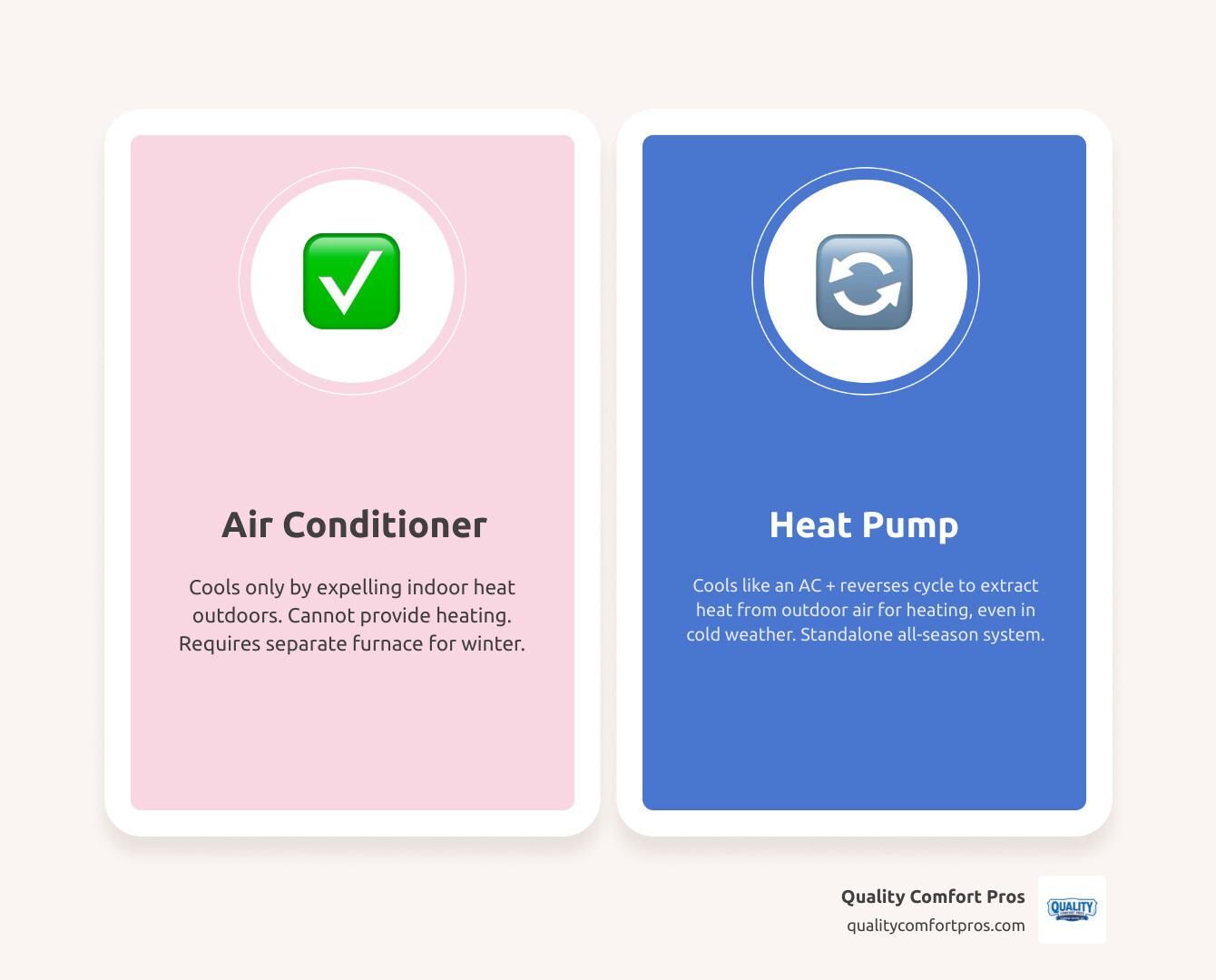
Both systems use the same refrigeration cycle to cool your home. The difference is that a heat pump can reverse that process to pull heat from outside air and move it indoors — even in cold weather. An air conditioner can only move heat in one direction: out of your home.
For Northern Michigan homeowners dealing with brutal winters in Gaylord and surrounding areas, this distinction matters a lot. Choosing the wrong system can mean higher bills, cold rooms, and a furnace working overtime.
I’m JD Osman, and with over 20 years of experience in business strategy and customer-focused solutions — now applied directly to home comfort services at Quality Comfort Pros — I’ve helped countless homeowners understand the difference between heat pump and AC unit and make the right call for their climate and budget. Let’s break it all down so you can make a confident, informed decision.
The Core Difference Between Heat Pump and AC Unit
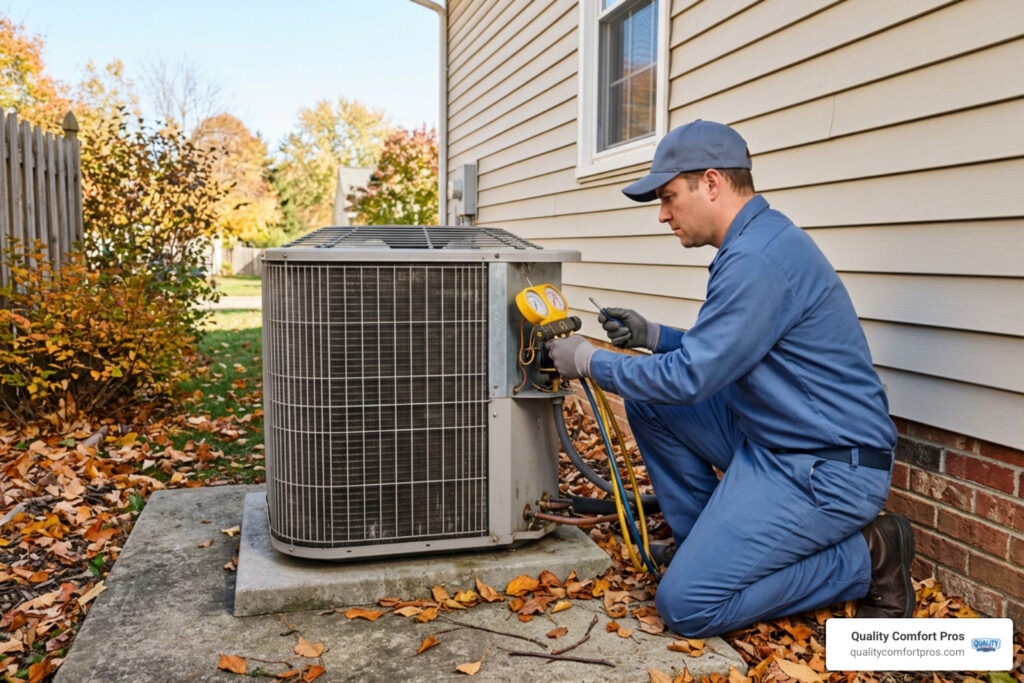
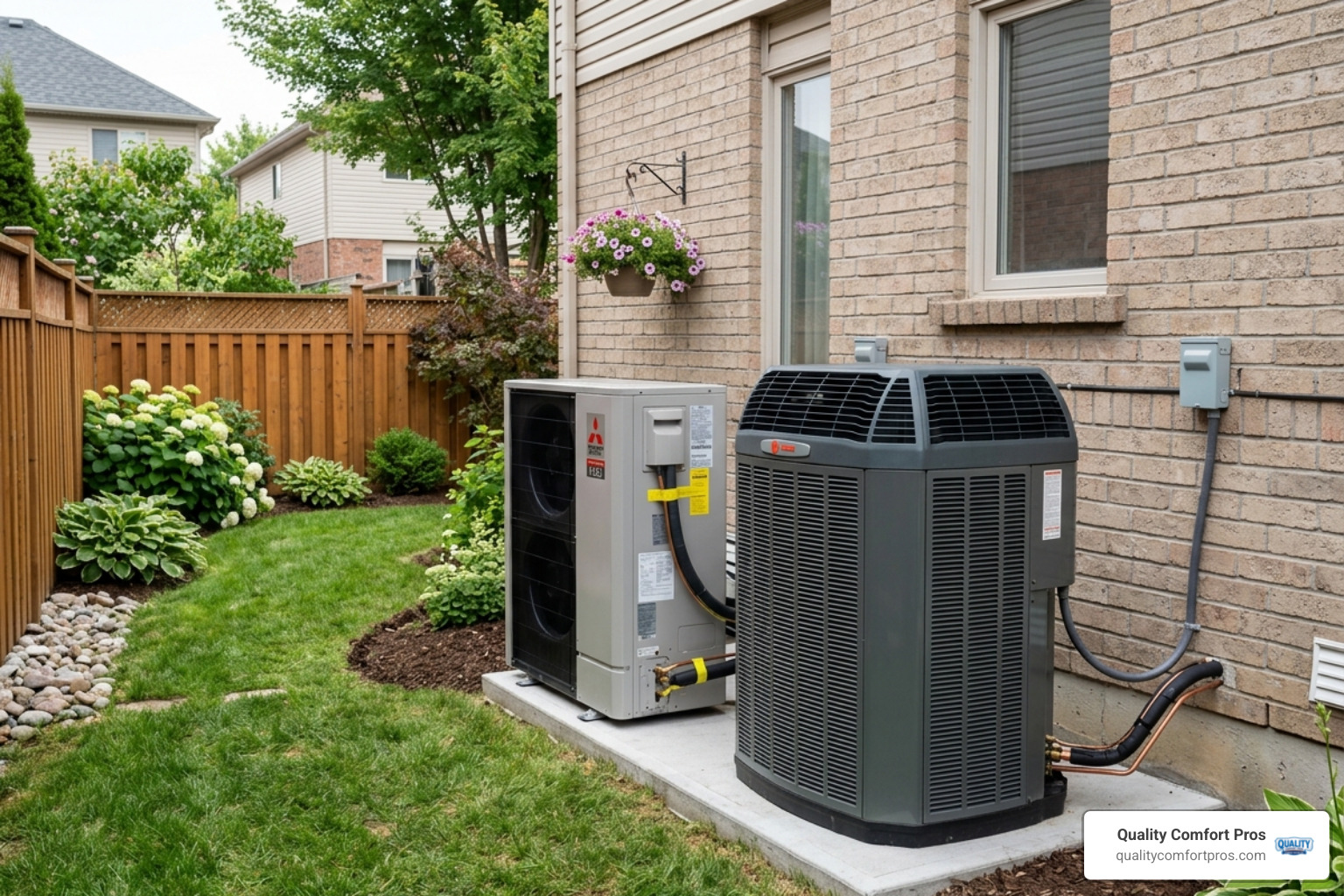
If you were to stand in front of two outdoor HVAC units—one a standard central air conditioner and the other a heat pump—you likely wouldn’t be able to tell them apart. They look like the same metal box with a large fan on top. However, the internal “brain” of these machines is where the magic happens.
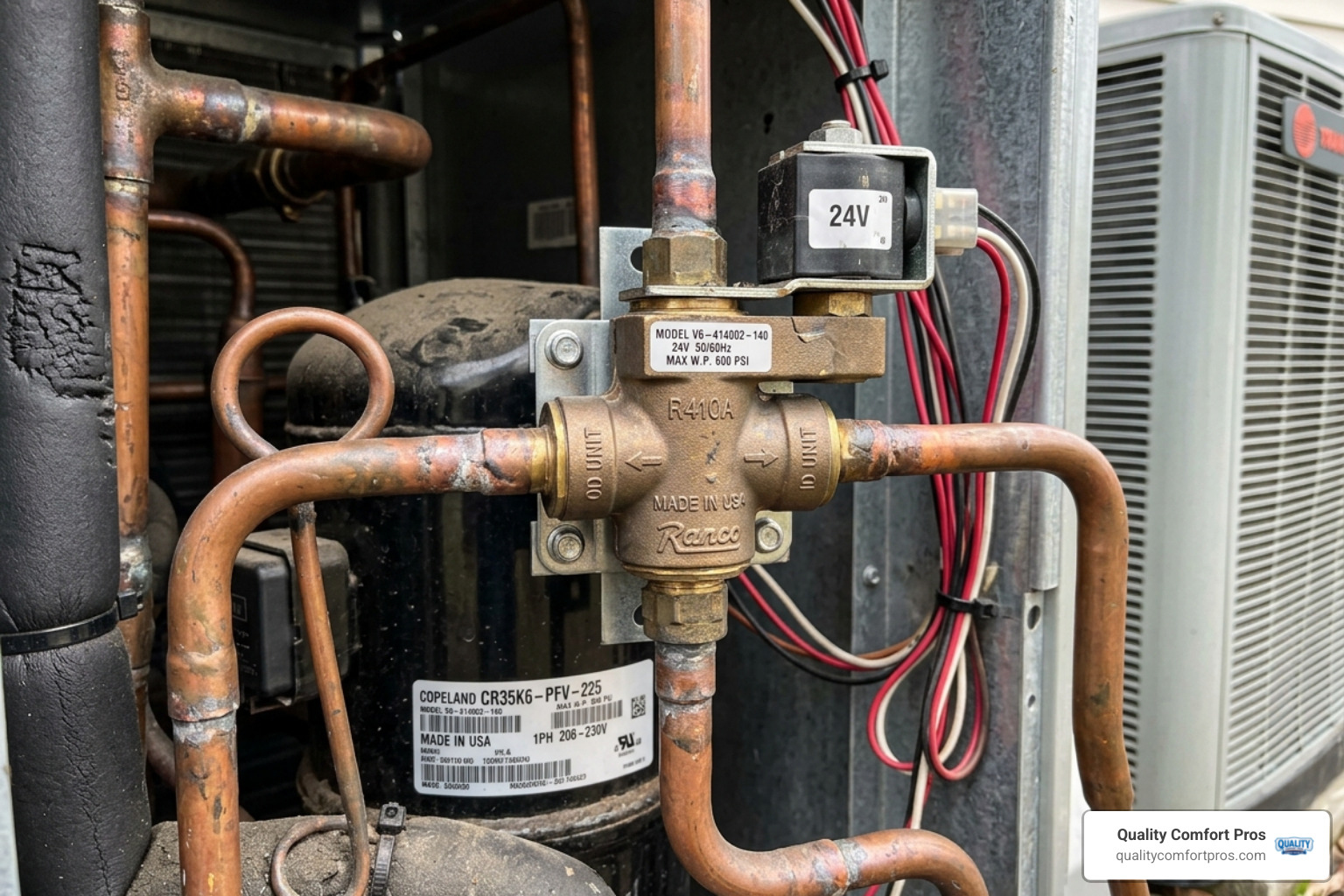
The fundamental difference between heat pump and AC unit is a small but mighty component called the reversing valve. This valve acts like a traffic controller for the refrigerant inside the system. In a standard air conditioner, the refrigerant only flows in one direction, moving heat from inside your home to the outdoors. A heat pump, however, can flip the script. By switching the direction of the refrigerant flow, it can extract heat from the outdoor air (even when it feels cold to us!) and pump it into your living room.
Think of an air conditioner as a one-way street and a heat pump as a reversible highway. This versatility allows a heat pump to serve as a year-round comfort solution, whereas an AC unit is strictly a “summer-only” appliance that requires a partner—usually a gas or propane furnace—to handle the Northern Michigan winters.
If you’re thinking about upgrading, this mechanical difference matters. Exploring heat pump replacement can help you understand how these reversible systems fit into modern homes. As industry guidance from Goodman explains, what makes a heat pump different is its ability to both heat and cool from a single outdoor unit.
Understanding the difference between heat pump and ac unit in cooling
When the mercury rises in Gaylord or Petoskey, both systems behave almost identically. They use a closed-loop refrigeration cycle involving an indoor evaporator coil and an outdoor condenser coil.
The process works like this:
- The indoor unit’s fan pulls warm, humid air from your home across the cold evaporator coil.
- The refrigerant inside the coil absorbs the heat from the air.
- As the air cools, moisture condenses on the coil (dehumidifying your home) and is drained away.
- The now-warm refrigerant travels to the outdoor unit, where the compressor and condenser coil release that heat into the outside air.
In cooling mode, there is very little difference between heat pump and AC unit performance. Both can deliver strong cooling and effective humidity control. If you’re comparing options for summer comfort, AC installation can help you understand which high-efficiency systems may be the best fit for your home’s layout.
How heat pumps provide heat while ACs cannot
This is where the heat pump earns its keep. When you switch your thermostat to “Heat,” the reversing valve engages. Instead of the outdoor unit acting as a heat exhaust, it becomes a heat collector.
It might seem impossible to find “heat” in 30°F Michigan air, but scientifically, heat exists in the air down to absolute zero (-459°F). Modern heat pumps are incredibly efficient at extracting this ambient thermal energy. The refrigerant gets very cold—much colder than the outside air—allowing it to absorb heat from the environment. That heat is then compressed (which raises its temperature significantly) and moved indoors to warm your home.
Because they move heat instead of creating it through combustion, like a furnace, or electric resistance, like a space heater, heat pumps can be remarkably efficient. This all-electric approach is often more cost-effective than traditional heating methods when the home, climate, and system setup are a good match.
Energy Efficiency and Performance Metrics
When comparing these systems, we look at two primary “report card” grades: SEER2 and HSPF2.
- SEER2 (Seasonal Energy Efficiency Ratio): This measures cooling efficiency. Both ACs and heat pumps carry this rating. Ratings generally range from 13.4 to over 30. The higher the number, the less electricity it uses to cool your home.
- HSPF2 (Heating Seasonal Performance Factor): This is unique to heat pumps and measures heating efficiency.
One of the most staggering statistics in the HVAC world is that a well-maintained air-source heat pump can deliver three times the heat energy as the electric power it consumes. That is a 300% to 400% efficiency rating! In comparison, even the best high-efficiency gas furnaces max out at around 98% efficiency.
Some homeowners in Northern Michigan have seen noticeable energy savings after upgrading from older heating equipment to a modern heat pump. In many cases, heat pumps can cut heating energy use substantially while still delivering reliable comfort. To help protect that efficiency over time, routine service matters. Regular heat pump maintenance can keep the system running at its best and support the high-performance operation heat pumps are known for.
The financial difference between heat pump and ac unit
Let’s talk dollars and cents. Historically, the upfront cost of a heat pump was notably higher than an AC unit. However, that gap is closing rapidly due to massive federal and state incentives.
- Upfront Costs: A standard central AC unit might cost between $3,000 and $10,000 to install. A heat pump often ranges from $4,000 to $15,000.
- Tax Credits: Under the Inflation Reduction Act, homeowners can claim a federal tax credit of up to $2,000 for installing an ENERGY STAR certified heat pump.
- Rebates: Depending on your household income and location (like Atlanta, MI or Bellaire), you may be eligible for rebates up to $8,000 for a new heat pump installation.
- Operating Savings: The average U.S. home can save between $370 and $1,000 a year by switching to a heat pump over natural gas or electric resistance heating.
While an AC unit might need a repair more often if it’s an older model struggling with modern heat, the long-term ROI of a heat pump often makes it the smarter financial play for those looking to stay in their homes for 5+ years.
Choosing the Right System for Northern Michigan Climates
In Northern Michigan, we don’t just have “winters”—we have winters. From Boyne City to Vanderbilt, we deal with sub-zero temperatures that can make older heat pump technology struggle.
In the past, heat pumps were only recommended for the South. But technology has changed. Modern “cold-climate” heat pumps are designed to operate efficiently down to -15°F or even -22°F. These units use variable-speed inverter compressors and built-in basepan heaters to prevent ice buildup, making them a viable option for our region.
However, for maximum peace of mind during a January blizzard in Gaylord, many of our customers opt for a Hybrid System (also known as Dual-Fuel).
When a dual-fuel hybrid system is the best option
A dual-fuel system is the “best of both worlds” for Northern Michigan. It pairs an electric heat pump with a high-efficiency gas or propane furnace.
- How it works: When temperatures are above 35°F, the heat pump handles the heating duties with incredible efficiency.
- The switch: When the temperature drops into the extreme negatives where the heat pump’s efficiency begins to dip, the system automatically switches to the gas furnace.
This setup helps your home use the most practical heat source available without giving up comfort. If you are weighing an upgrade, HVAC repair or full system replacement can help you compare the cost of keeping an aging furnace with moving to a hybrid system. Quality Comfort Pros installs and services these smart-switching systems to keep homes comfortable through Northern Michigan winters.
Installation and Maintenance Requirements
Whether you choose a heat pump or an AC, regular maintenance is the secret to a long lifespan (usually 15-20 years for ACs, and 12-15 for heat pumps since they work year-round).
Because a heat pump works during both the summer and winter, we recommend bi-annual service.
- Spring: Check the cooling performance, clean the coils, and ensure the condensate drain is clear.
- Fall: Inspect the reversing valve, check the defrost cycle, and test the auxiliary heat strips.
Standard AC units usually need a yearly tune-up before summer. No matter which system you have, changing the filter about every 90 days helps maintain airflow and efficiency. Homeowners in Petoskey or Charlevoix can explore AC maintenance to help prevent breakdowns when cooling matters most.
Frequently Asked Questions about Heat Pumps and ACs
Can a heat pump replace my existing AC and furnace?
Yes! A heat pump can act as a whole-home solution. If you currently have a central AC and a furnace, a ducted heat pump can often use your existing ductwork. However, it is crucial to have a professional perform a “Manual J” load calculation to ensure the new system is sized correctly for your home’s square footage and insulation levels.
Do heat pumps work in extreme Northern Michigan cold?
Modern inverter-driven heat pumps are much more capable than the models of 20 years ago. Some high-end models can maintain 100% of their heating capacity at 5°F and continue to provide heat down to -22°F. While they may eventually need backup electric heat strips or a furnace during the absolute coldest nights in Grayling, they are far more capable than most people realize.
Is a heat pump more expensive to maintain than an AC?
In most homes, maintenance is very similar for both systems: coil cleaning, refrigerant checks, filter changes, and electrical inspections. The main difference is that a heat pump usually works in both summer and winter, so it often benefits from twice-yearly service instead of a single annual visit. That can make routine upkeep a bit more frequent than with an AC-only system. Still, many homeowners find the added maintenance is balanced out by lower energy use over time. If your system starts acting up, heat pump repair can help you understand the next steps.
Conclusion
Deciding on the difference between heat pump and AC unit isn’t just about cooling; it’s about how you want to manage your home’s energy for the next two decades. For many in Northern Michigan, the heat pump—especially when paired with a furnace in a dual-fuel setup—offers the ultimate combination of efficiency, environmental friendliness, and comfort.
At Quality Comfort Pros, we’ve spent 28 years serving our neighbors in Gaylord, Petoskey, Charlevoix, and throughout Northern Michigan. As a family-owned business, we pride ourselves on providing expert, reliable solutions for all brands of HVAC equipment. Whether you need a simple AC tune-up or a full heat pump installation to take advantage of those $2,000 tax credits, we’re here to help.
Ready to see which system is right for your home? Schedule your free in-home estimate today and let our expert team find the perfect comfort solution for your family. From Alba to Walloon Lake, we’ve got you covered.