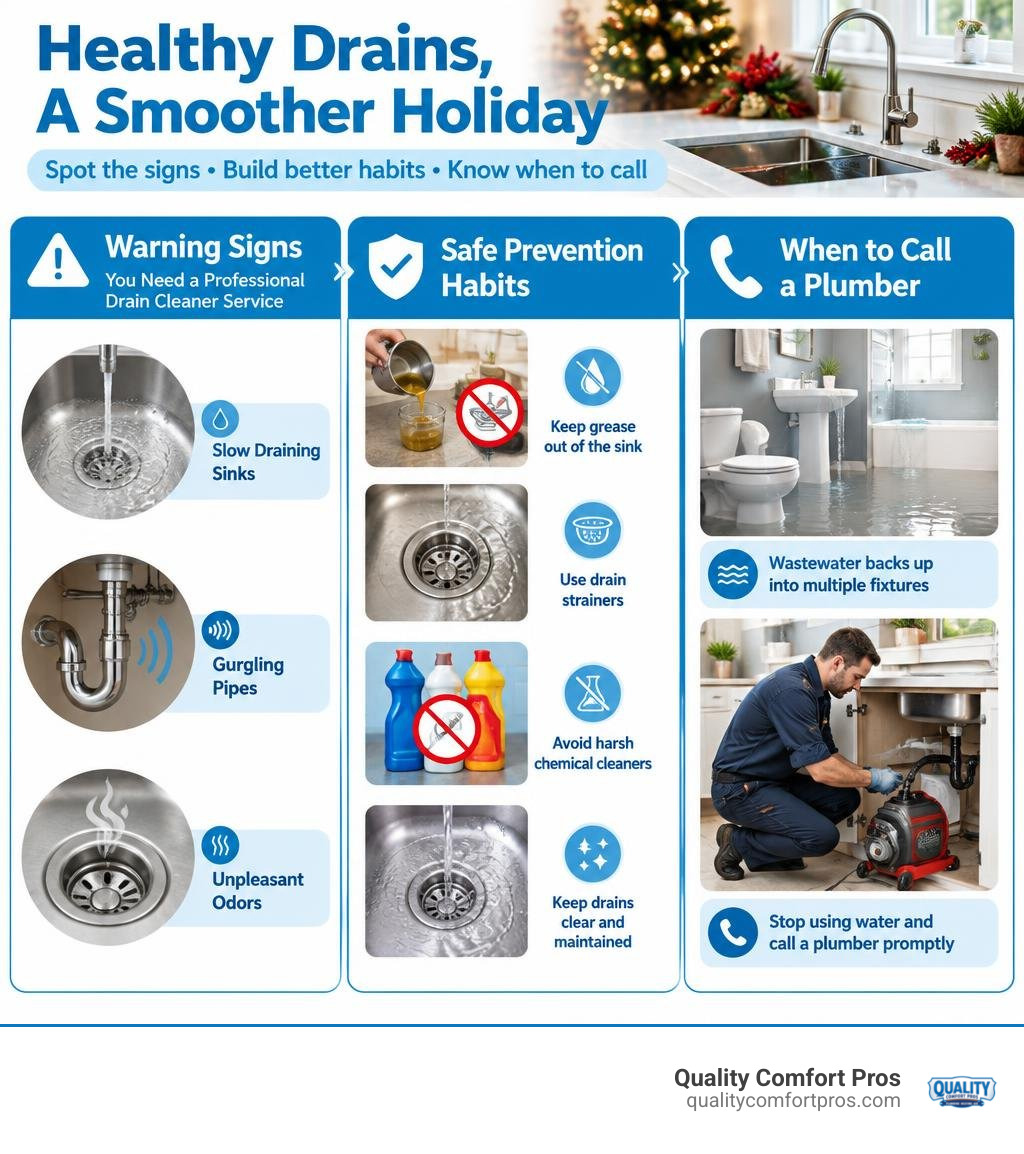
A drain cleaner service can help Northern Michigan homeowners prevent a kitchen or bathroom backup before holiday guests arrive. Extra cooking, showers, laundry, and dishwashing send more food waste, grease, and water through household drains. Simple habits reduce strain, while early warning signs make it easier to schedule help before visitors fill the house.
A drain cleaner service before the holidays catches the slow drains that seemed manageable during quieter weeks. Turkey grease, gravy, potato peels, and heavy cleanup can build trouble quickly inside kitchen lines. When water begins draining slowly, homeowners should focus on safe steps and leave clearing work to our team.
I’m JD Osman, owner of Quality Comfort Pros, with more than 20 years of experience in home services across Northern Michigan. In this guide to drain cleaner service before the holidays, I will walk you through the habits that keep a busy kitchen flowing, the signs that a drain is about to back up, and what our plumber does when it happens with guests in the house.
Why Holiday Cooking Is Hard on Northern Michigan Drains
Holiday cooking creates more grease, starch, scraps, and rinse water than an ordinary weekday kitchen routine. Warm turkey grease and gravy can cool inside pipes, where they cling to drain walls. Potato peels, rice, and fibrous food scraps can collect in traps or disposal areas.
Bathrooms also work harder when relatives stay overnight and laundry loads increase between meals. Older drain lines in Gaylord homes may have narrowed gradually after decades of regular household use. Seasonal cottages opened for a holiday week can reveal slow fixtures after long periods without activity.
A sink that empties slowly is not an invitation to use harsh chemical products. Homeowners can stop adding waste, keep water use reasonable, and note which fixture shows trouble. Our team can clear the blockage safely and explain practical habits for the rest of the visit.
Kitchen Habits That Keep the Drain Flowing
Safe kitchen habits protect drains during busy holiday weeks without requiring homeowners to tackle a clog themselves. Start with simple disposal routines before cooking begins, then repeat them during cleanup. Those small choices keep grease and scraps from collecting where water flow is already restricted.
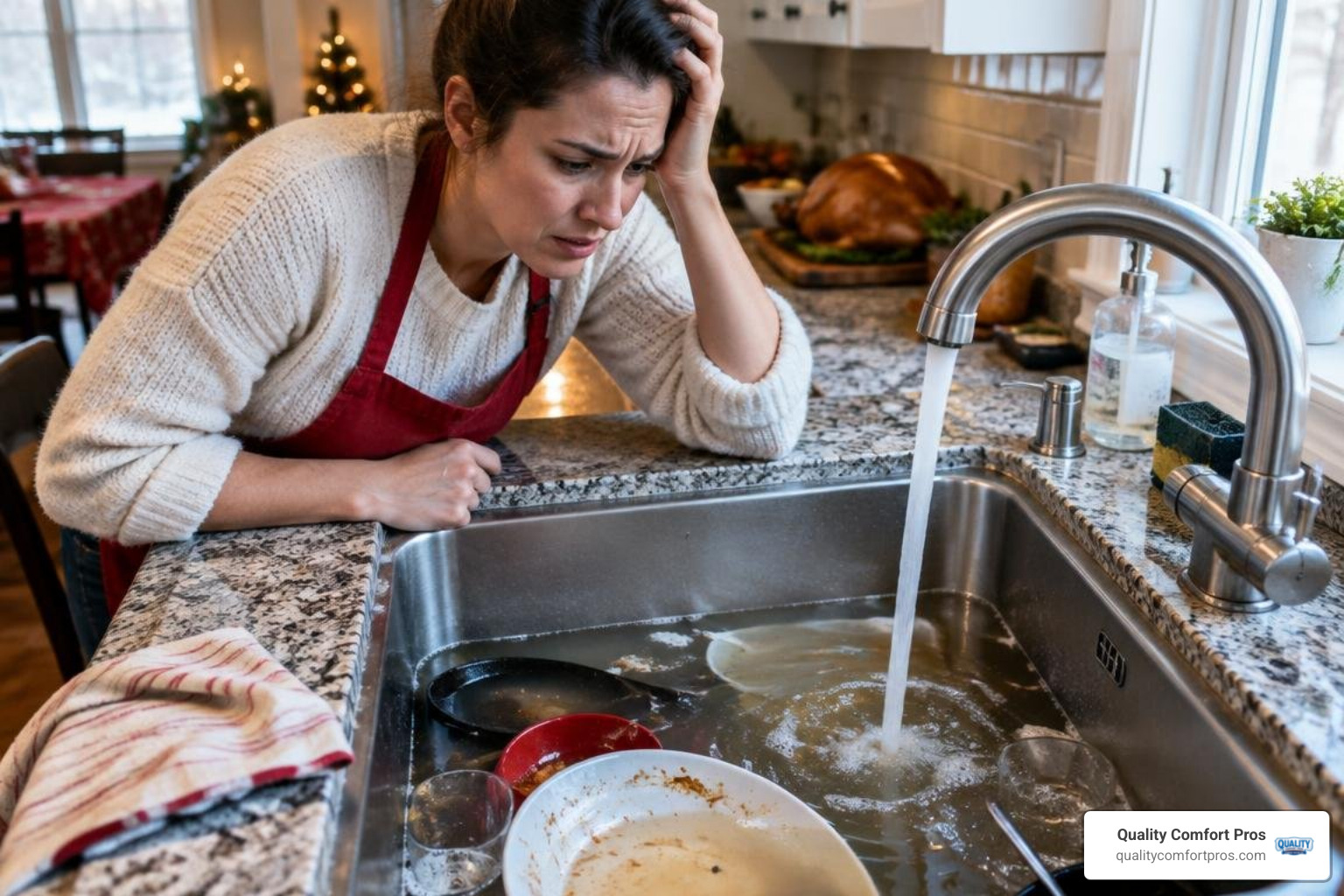
Grease Goes in a Can, Never Down the Sink
Pour warm grease, gravy, and cooking oil into a heat-safe can or container instead of the sink. Let the material cool, seal the container, and place it with household trash. Even warm liquids can thicken as they travel through colder pipes beneath the kitchen.
The EPA drain guidance lists cooking grease or oil, wet wipes, coffee grounds, paper towels and cat litter among the things that should never go down a drain, and notes that everything you pour down the sink ends up in your drain or septic system. Keep food waste out of every household drain, including bathroom and laundry fixtures. This habit matters for homes connected to municipal sewer systems and cottages with private septic systems.
Scrape Plates Into the Trash
Scrape plates, roasting pans, and serving dishes into the trash before rinsing them in the sink. Use a paper towel to collect greasy residue from cookware before washing. These steps limit the food particles that can settle in a slow kitchen line.
If water lingers after cleanup, pause dishwashing rather than forcing more material through the drain. Review these slow or clogged drain warning signs and arrange service before guests arrive. A prompt visit gives our team time to clear the line without disrupting holiday plans.
Run Cold Water With the Disposal and Give It a Rest
Run cold water while the disposal operates, then let water continue briefly after the grinding stops. Feed scraps gradually instead of packing the chamber with peels, rice, or stringy leftovers. When the disposal sounds strained, turn it off and use the trash for remaining waste.
Avoid reaching into the disposal or using objects to force material through its opening. Homeowners can safely stop using the sink and wait for our team when water backs up. This approach prevents injuries and avoids pushing debris deeper into the connected drain line.
Hair Catchers and a Bathroom Routine for Guests
Place simple hair catchers in shower and bathroom sink drains before overnight guests arrive. Encourage visitors to discard wipes, paper towels, and hygiene items in wastebaskets instead of toilets. A short bathroom routine helps reduce the buildup that can slow several fixtures at once.
Check that tubs, sinks, and toilets drain normally before the house becomes busy. If a toilet needs repeated flushing or a shower drain starts pooling, reduce water use. We can identify the affected line and restore drainage with the appropriate mechanical equipment.
Drain Cleaner Service: Signs to Book Before Guests Arrive
A drain cleaning service can address warning signs before a holiday gathering. Gurgling when the dishwasher runs can suggest that air and water are struggling in the same line. Odors from a floor drain may also indicate trapped debris or a dry drain trap.
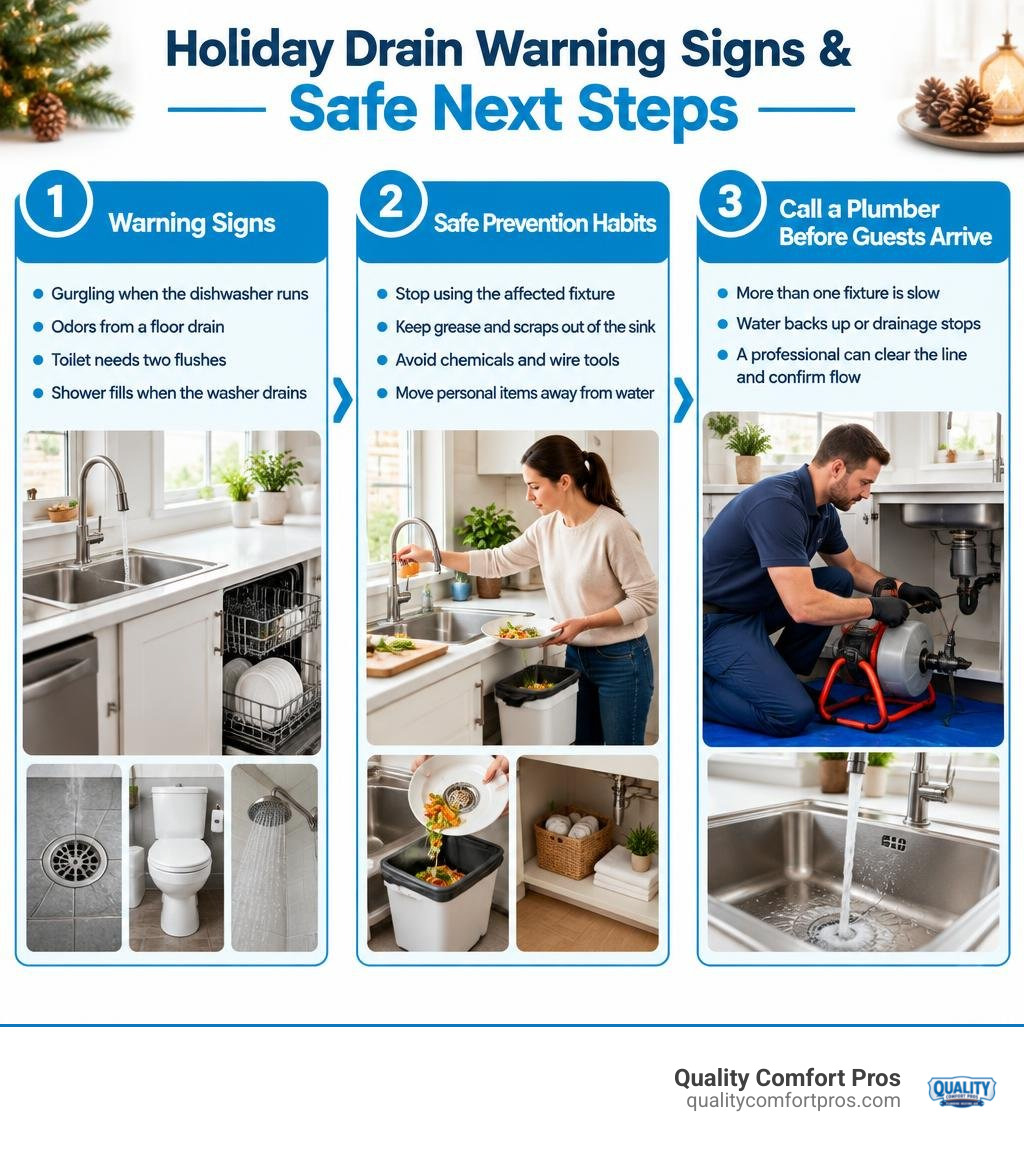
Watch for a toilet that needs two flushes or a shower that fills when the washer drains. Those symptoms can point to a restriction affecting more than one fixture. Avoid experimenting with chemicals or wire tools, because they can damage pipes or create a harder cleanup.
What Our Plumber Does on a Pre-Holiday Drain Visit
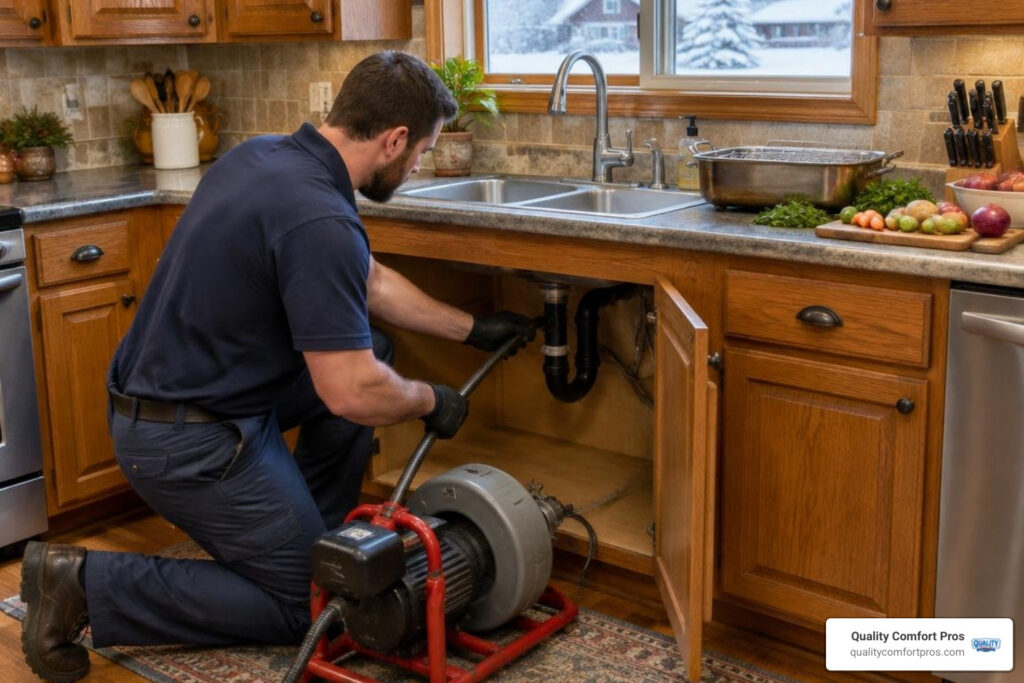
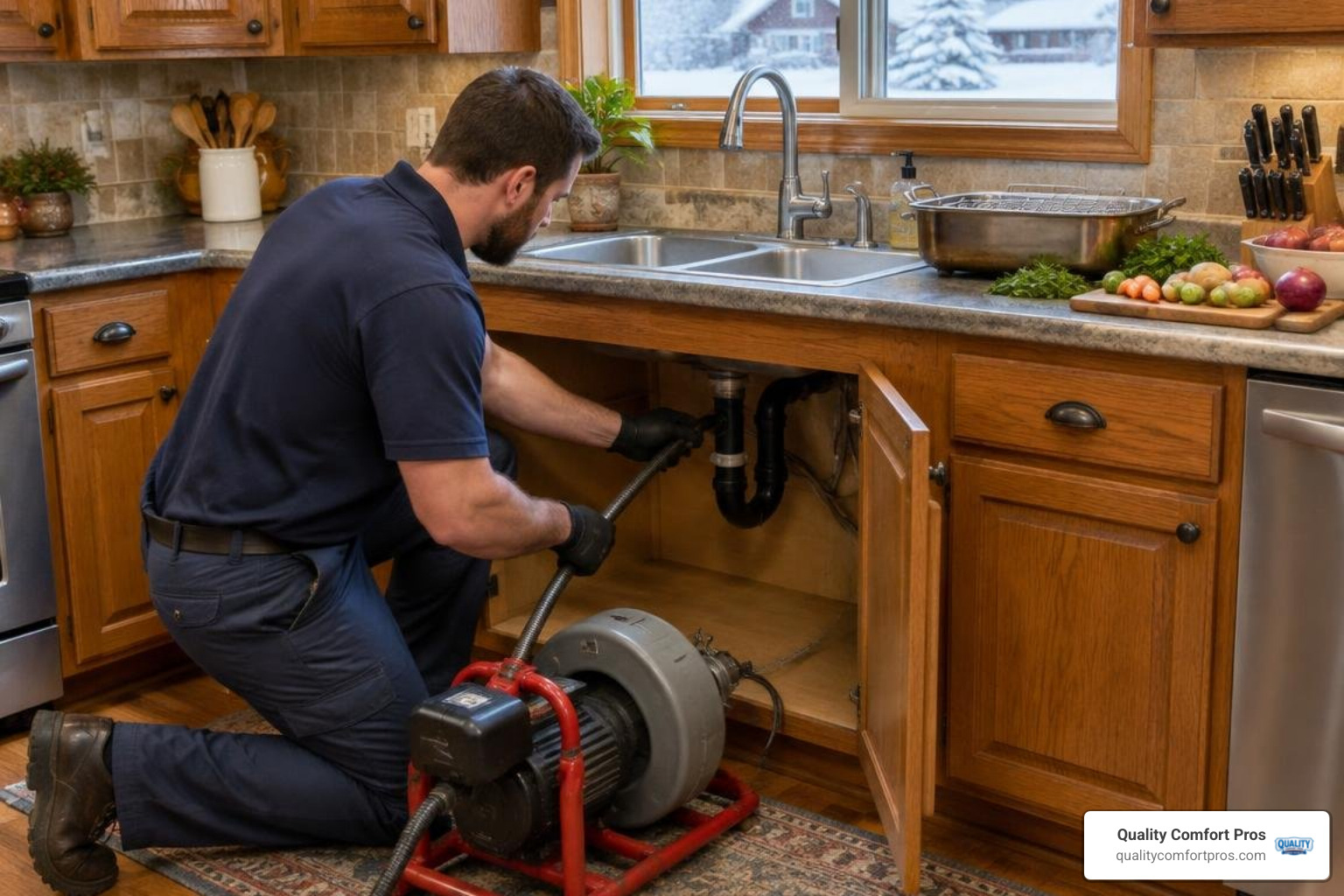
Our plumber begins by listening to the household symptoms and confirming which fixtures are affected. For a kitchen-line blockage, the plumber may use a drain machine or hydro jetting. These methods remove buildup from the line while protecting the surrounding kitchen and bathroom areas.
When more than one fixture is slow, our plumber checks the main drain line for a shared restriction. After clearing, the plumber confirms drainage at the affected fixtures and explains what to watch for. Homeowners receive straightforward guidance about safe daily habits before guests begin arriving.
What Homeowners Should Do Before Help Arrives
Before our plumber arrives, stop using the affected fixture and keep nearby guests informed. Move personal items away from the area if water has started collecting. Do not pour store-bought chemical cleaner into a slow or backed-up drain.
For a stubborn kitchen or bathroom blockage, drain clog removal restores flow without asking homeowners to take unnecessary risks. The work stays focused on the drain issue rather than unrelated outdoor drainage systems. That helps the household prepare for holiday meals, showers, and cleanup with fewer surprises.
If a Drain Backs Up With a House Full of Guests
A drain backup during a party calls for calm, safe decisions rather than quick chemical fixes. Stop using the affected sink, toilet, shower, or appliance as soon as water rises. Ask guests to use a different bathroom or pause cleanup until our plumber can respond.
Keep people and pets away from standing water, especially if wastewater may be present. Mop up small, clean-water spills carefully, then dry the area as completely as possible. Do not use store-bought chemical drain cleaner, because it can splash or react when we begin clearing.
The CDC mold guidance advises cleaning up and drying out your home fully and quickly, within 24 to 48 hours, because mold will grow where there is moisture. Use towels, fans, and safe ventilation after the water source has been stopped. For a significant backup, avoid direct contact and wait for professional advice.
When to Call for Prompt Help
Call for service when water backs up repeatedly, several fixtures drain slowly, or a toilet overflows. Describe what happened, which fixtures were involved, and whether wastewater reached floors or belongings. This helps our plumber bring appropriate drain-clearing equipment and plan a safe arrival.
Review these emergency plumbing steps while keeping water use limited around the affected area. Our plumber clears the restriction, checks that flow returns at the affected fixtures, and shares safe next steps. Guests can return to normal routines only after the backup has stopped and the area is dry.
Protect the Rest of the Home
Close nearby doors if needed and move rugs, towels, or stored items away from water. Do not run the dishwasher, washing machine, or other fixtures that feed the same drainage system. Reducing water use prevents a small backup from spreading into additional rooms.
After service, watch for renewed gurgling, slow drainage, or odors during the next busy cleanup period. Report those signs promptly instead of testing the drain with more water or chemicals. A cautious response keeps holiday hosting safer and reduces disruption for everyone inside the home.
Preventive Maintenance: How to Keep Drains Flowing Year-Round
Holiday preparation works best when homeowners begin with ordinary habits rather than emergency measures. Keep grease, scraps, wipes, and paper products out of every household drain. Then pay attention to changes in speed, sounds, and odors before a gathering fills the home.
A Simple Pre-Guest Drain Routine
Test kitchen and bathroom fixtures several days before guests arrive for the holiday weekend. Run normal amounts of water, then notice whether sinks empty smoothly without gurgling. Flush each toilet once and check that showers and tubs drain without pooling.
Clean hair catchers, empty disposal areas safely, and place wastebaskets where visitors can easily reach them. Keep grease containers and food-scrap bins ready before large meals begin. These habits make cleanup easier without asking guests to memorize complicated plumbing rules.
Opening a Seasonal Cottage for the Holidays
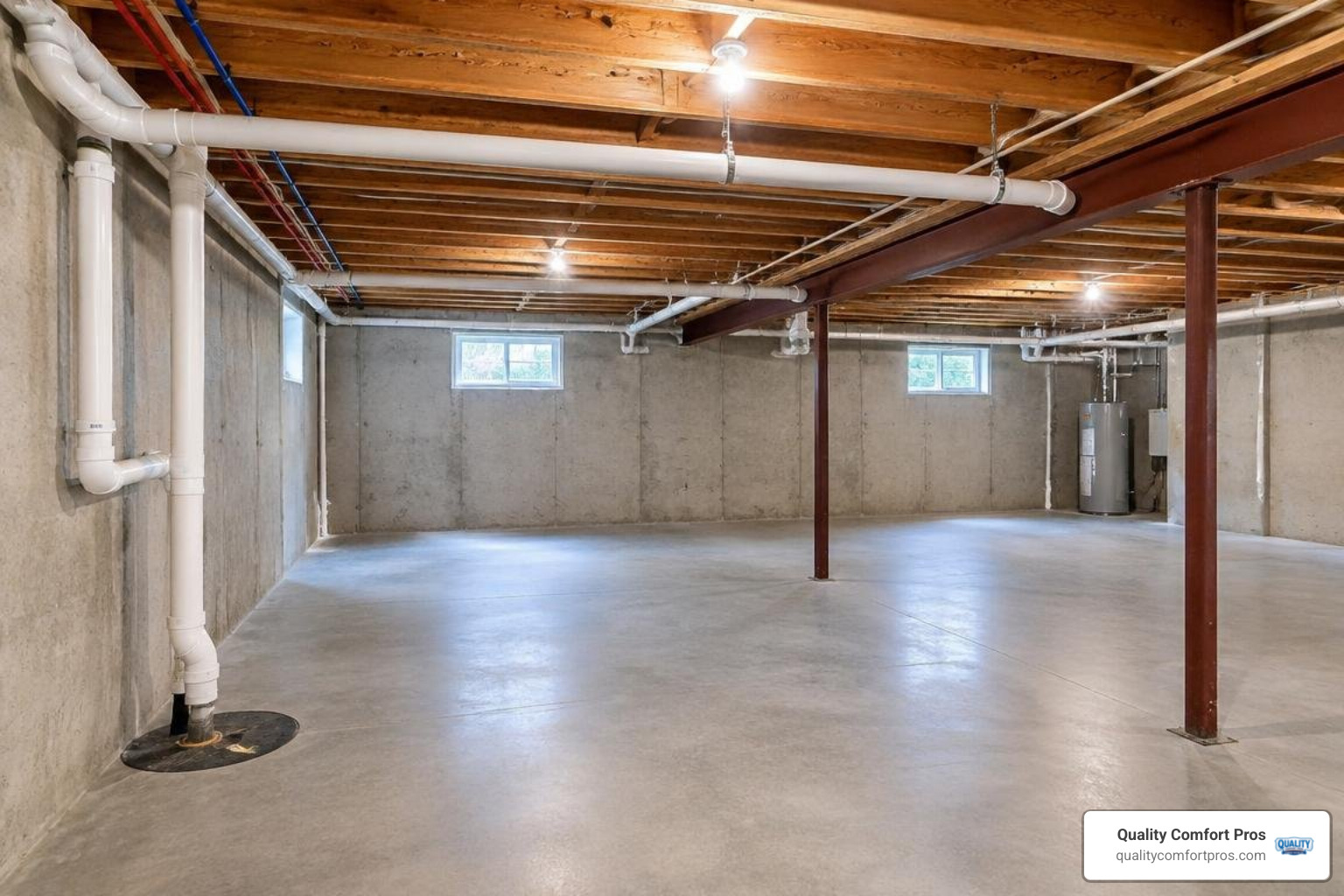
Before opening a seasonal cottage for a holiday visit, run water at every sink, tub, shower, and toilet. Water in each trap helps block sewer odors that can enter after a long vacancy. Check the basement floor drain for standing water, slow drainage, or unusual smells before guests arrive.
Pay attention to changes after the first round of water use rather than assuming fixtures are ready. A drain that gurgles or slows after the cottage warms up may need attention before the weekend becomes busy. Our team can help identify next steps when symptoms persist.
Check the Laundry Standpipe and Leave Guest Notes
Before guests arrive, check the laundry standpipe and basement floor drain during a normal washer cycle. Look for water that rises, drains slowly, or collects near the standpipe connection. Place a wastebasket where visitors can find it, and share a quick reminder about wipes and paper towels.
Keep a short note near the bathroom if guests are unfamiliar with the home’s plumbing layout. Mention which fixtures should not receive wipes, hygiene products, paper towels, or food waste. Small reminders can prevent accidental misuse during a crowded holiday weekend.
When to Call for Emergency Drain Cleaner Service
When requesting emergency drain cleaner service, describe the affected fixtures and when the problem first appeared. Note whether water reached the floor, whether several drains are involved, and whether a washer or dishwasher triggered the backup. Those details help our team prepare for the visit and focus on the correct area.
Keep pets and guests away from wet areas while waiting for help, especially when wastewater may be present. Avoid testing the system by running additional water through nearby fixtures. Clear details and limited water use help the service visit proceed safely.
Frequently Asked Questions About Holiday Drain Problems
Can I pour cooled turkey grease down the drain?
No. Turkey grease can harden inside cooler pipes and catch food particles during holiday cleanup. Collect it in a container, let it cool, and discard it with household trash.
What should never go in a garbage disposal?
Avoid grease, coffee grounds, rice, potato peels, fibrous scraps, and large food portions. Scrape dishes into the trash first, then use the disposal only for small remaining bits.
Why does my kitchen sink gurgle when the dishwasher runs?
Gurgling can happen when water and air struggle to pass a partial blockage. Stop adding water if the sound continues, then schedule service before guests arrive.
Is a store-bought drain cleaner safe before guests arrive?
Store-bought chemical cleaners can damage pipes, splash during use, and complicate professional clearing. Use safe habits instead, then call our plumber when a drain remains slow.
How far ahead of Thanksgiving should I book a drain cleaning?
Book when you first notice repeated slow drainage, odors, gurgling, or toilet flushing problems. Earlier scheduling provides more flexibility before cooking, hosting, and cleanup become busy.
Why do drains back up when the house is full of people?
More showers, laundry, dishwashing, and toilet use send extra water through the same household lines. A partial blockage can become noticeable when that added flow cannot move through easily.
What should I do if a toilet overflows during a party?
Stop flushing, close the toilet lid if possible, and keep guests away from the area. Avoid using nearby fixtures, clean safe spills carefully, and call for prompt help.
Can hydro jetting damage older pipes?
Our plumber selects the clearing method based on the drain problem and pipe condition. Hydro jetting can be effective when used appropriately, while other situations may need mechanical clearing.
Does the same advice apply to a cottage on a septic system?
Safe habits such as keeping grease, wipes, and food scraps out of drains still apply. Quality Comfort Pros does not provide septic tank service, so homeowners should contact a qualified septic provider for septic-system concerns.
When should I call Quality Comfort Pros?
Call Quality Comfort Pros when a drain repeatedly slows, gurgles, smells unusual, or backs up. Call sooner when several fixtures are affected or guests are already using the home.
Conclusion
Quality Comfort Pros has been serving Northern Michigan since 1997, helping local homeowners prepare for busy holiday gatherings. Safe kitchen habits, early warning signs, and limited water use can prevent a holiday drain problem from getting worse. When a backup begins, stop using affected fixtures and let our plumber handle the clearing. Planning early gives households more confidence during meal preparation, overnight visits, and post-dinner cleanup.
For help before guests arrive or during an active backup, contact our team. A quick call lets homeowners explain the symptoms and receive clear next steps.
Quality Comfort Pros, 1641 S Otsego Ave, Gaylord, MI 49735