I am JD Osman, owner of Quality Comfort Pros, with more than 20 years in Northern Michigan home services. In this guide to emergency plumbing, I will walk you through how to recognize a real plumbing emergency and when an issue can wait. I will also explain what a homeowner can safely do before help arrives and what our plumber handles.
Key Situations Requiring Immediate Emergency Plumbing
Emergency plumbing is essential when water, sewage, or gas-related trouble creates a household safety concern. Fast professional response can reduce damage to belongings, home systems, and occupied spaces. Homeowners may locate an accessible main shut-off valve and check whether water continues entering the home. However, our plumber handles dangerous failures and any repairs involving pressurized plumbing.
Burst pipes, uncontrolled leaks, sewage backups, and sudden water loss during freezing weather require prompt attention. Moisture can spread behind walls, beneath flooring, and through cabinets before obvious damage appears. Therefore, calling for pipe repair promptly can limit exposure and support a focused repair.
What Qualifies as an Urgent Emergency Plumbing Issue?
A minor, contained drip may wait for routine service, but certain warning signs require faster action. Flowing water, indoor sewage, and suspected gas problems can quickly become serious household hazards. If gas is suspected, leave immediately and call 911 or the utility from outside the home.
Several situations call for prompt service. Each can worsen quickly if water spreads or contamination reaches occupied rooms. In most cases, call for professional help after taking only safe, accessible steps.
- Active flooding from a ruptured supply line, failed water heater connection, or broken fixture.
- Raw sewage emerging from drains, toilets, bathtubs, or sinks inside the home.
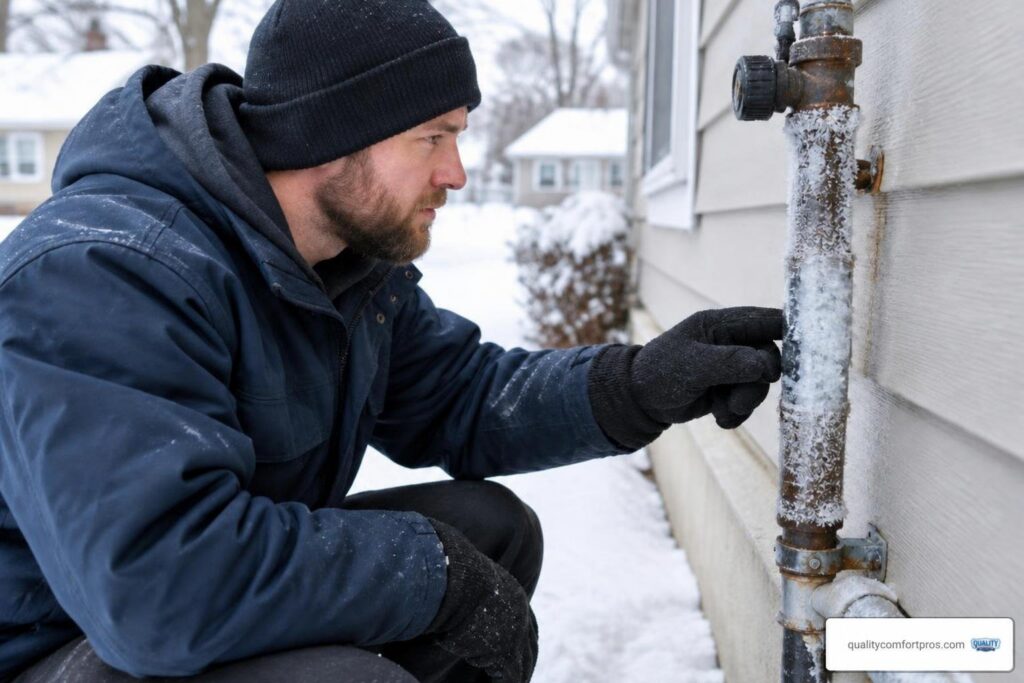
- No running water during freezing weather, which may indicate a frozen line.
- A sump pump that fails while water is rising in the basement.
- Water near outlets, appliances, or electrical panels, where homeowners should avoid contact.
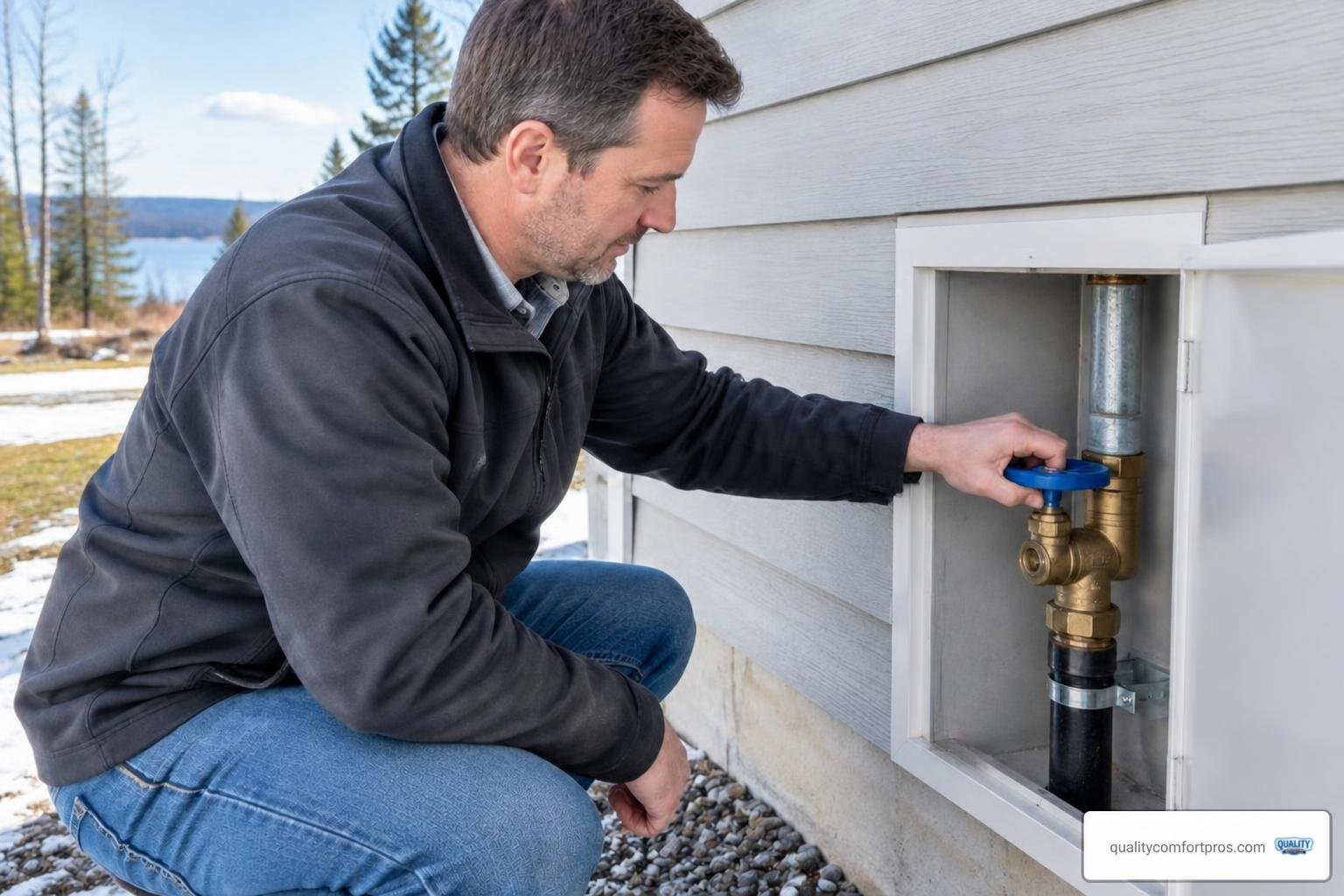
When conditions are safe, homeowners can close the accessible main valve or a fixture shut-off valve. However, they should not work on sewer lines, gas connections, gas water heaters, electrical components, or pressurized piping. Our plumber secures those hazards, finds the source, and completes the appropriate repair.
Preventing Water Damage and Contamination
Hidden moisture can travel through drywall, flooring, cabinets, and insulation before its full extent is apparent. The EPA mold guidance advises drying water-damaged areas and items within 24 to 48 hours to prevent mold growth. As a result, acting early can protect materials that might otherwise need extensive removal or replacement.
Using modern leak detection equipment, our plumber can locate concealed moisture while minimizing unnecessary openings. Once the source is isolated, work can focus on the damaged fixture, connection, or pipe. This process clarifies what failed and can help homeowners understand how to reduce repeat problems.
Homeowners can record where water first appears, which rooms are affected, and whether fixtures still operate. That information gives our plumber useful inspection context without requiring unsafe homeowner investigation. If the area is dry and safe, opening cabinet doors may improve airflow around nearby plumbing.
Essential Actions to Take While Waiting for Help to Arrive
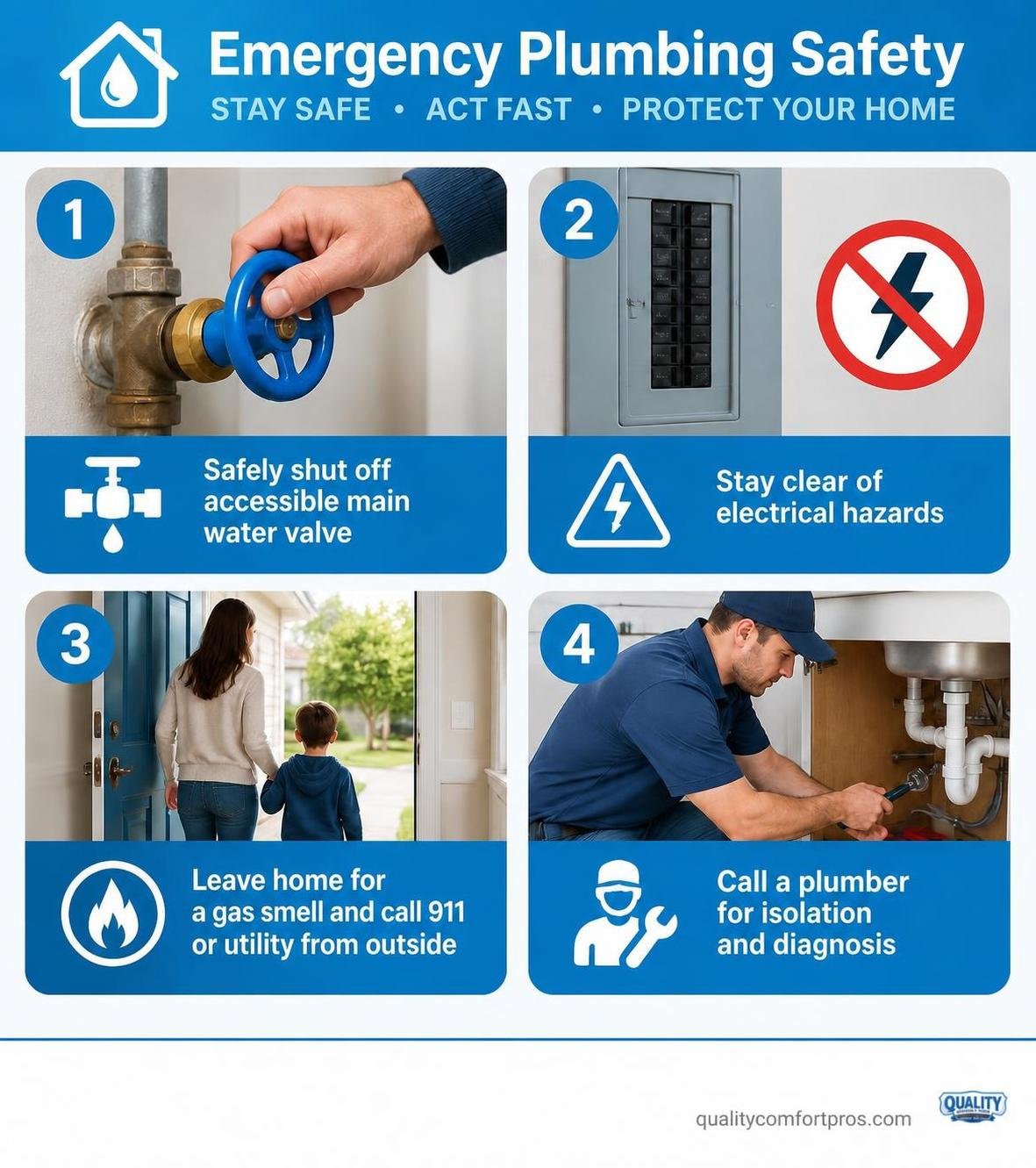
The first few minutes of a plumbing emergency often determine the level of risk and cleanup required. Move people and pets away, then close an accessible main valve when doing so is safe. Towels or containers belong only on dry flooring away from electrical concerns. Once that is done, take photos from a safe distance, note the affected fixtures, and contact professional help.
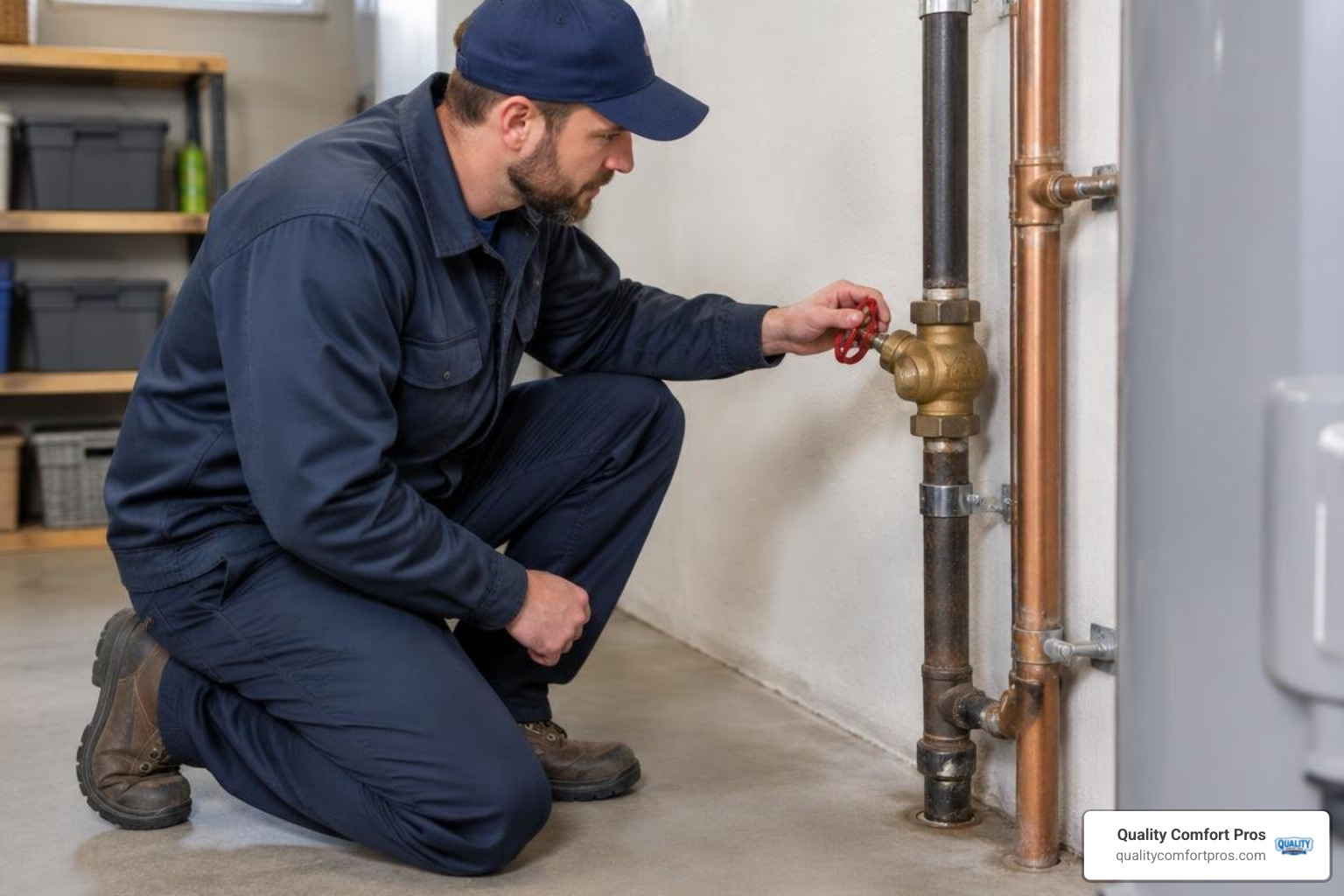
- Stop incoming water safely: Close an accessible main valve when a supply line leaks. A fixture shut-off may also help when it clearly controls the leaking sink or toilet. However, leave a damaged valve alone and wait for our plumber.
- Avoid electrical exposure: Stay out of standing water near outlets, appliances, or an electrical panel. Turn off a breaker only from dry ground when the panel is safely reachable. Otherwise, keep the area clear and wait for qualified help.
- Protect people and possessions: Keep children and pets out of the affected area. Move belongings only along a dry path when they can be handled without risk. In most cases, preventing injury matters more than saving belongings.
- Record what is visible: Photograph the source, water level, and affected materials from a safe distance. These details can explain the problem and support an insurance claim. Do not enter an unsafe room simply to collect more documentation.
- Leave high-risk repairs to professionals: Avoid chemical products for serious backups and never work on gas, sewer, or pressurized lines. Those actions can increase damage or create additional hazards. Our plumber handles isolation and explains the recommended response.
After the water is off, open nearby cabinet doors only if surrounding surfaces are dry and safe. This can allow warm indoor air to reach piping beneath sinks during cold weather. However, do not tighten fittings or remove access panels while pressure may remain. Keep a clear route for the technician and stay out of rooms with standing water.
| Emergency Situation | Safe Homeowner Step | What Our Plumber Does | Action to Avoid |
|---|---|---|---|
| Burst supply pipe | Shut off the main water valve if it is accessible. | Isolates the damaged line and repairs the pressurized connection. | Do not touch wet outlets or switches. |
| Sewage backup | Stop using water fixtures and keep people away. | Locates the blockage and restores safe drainage. | Do not use chemical drain products. |
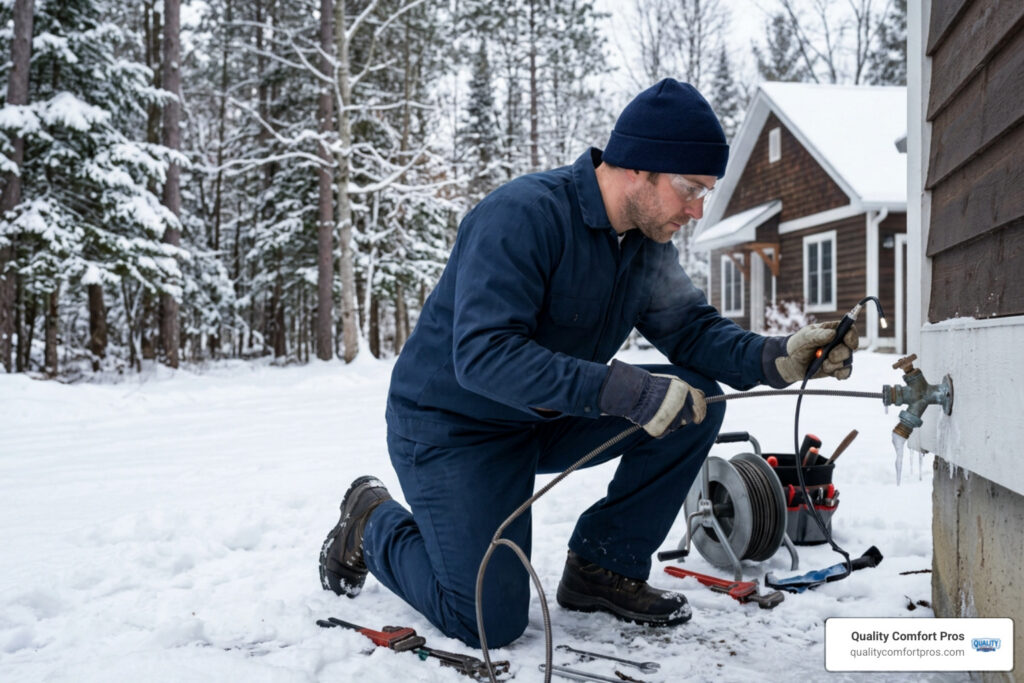
| Frozen pipe concern | Keep the home heated and open a nearby faucet if water flow slows. | Checks the line condition and repairs damage safely. | Do not use open flames or heating torches. |
| Failing sump pump | Confirm the cord and outlet are dry before checking power. | Evaluates the pump, discharge path, and related plumbing. | Do not enter deep water near cords. |
For a contained drip, place a bucket beneath the leak only when the surrounding area is dry. Leave supply connections, access panels, and water-heater piping untouched until professional help arrives. Attempting those repairs can worsen the failure or introduce a new safety hazard.
What Our Plumber Checks First on an Emergency Call
Our plumber first identifies any immediate danger and determines whether the water supply must be shut off. If there is a gas smell, homeowners should already be outside after calling 911 or the utility. After the scene is secure, our plumber examines the affected fixture, visible connections, and nearby water paths. This separates a contained fixture issue from a failure that may affect multiple parts of the home.
Next, our plumber secures the source without asking homeowners to touch sewer lines or pressurized parts. The diagnostic process follows the water path through valves, fittings, drain connections, and water-heater piping. Moisture checks around floors, walls, and cabinets can uncover travel beyond the visible leak. Therefore, the findings show whether a targeted repair is appropriate or additional work is necessary.
After the source is controlled, our plumber checks framing, insulation, and concealed cabinet areas for moisture exposure. This helps distinguish the immediate plumbing repair from conditions that may need later attention. Pressure testing then confirms that the repaired connection remains stable after water service resumes. Homeowners receive practical next steps without handling unsafe systems themselves.
Once repairs are complete, our plumber checks the area for continuing moisture or water movement. Homeowners receive a clear explanation of the failure and the work performed. When appropriate, emergency plumbing services can also include guidance for avoiding similar problems.
The inspection also considers whether water moved beyond the original source. Staining, damp materials, and recurring moisture can point to a connection needing closer evaluation. As a result, the repair addresses the underlying cause rather than only the visible symptom.
A Recent Service Call in Gaylord
In Gaylord, a homeowner found water damage on the floor and back panel inside a kitchen-sink cabinet. Although no drip was visible, our plumber traced the problem to a corroded compression fitting. Months of slow seepage had occurred at the compression fitting on the faucet’s cold supply line.
Our plumber replaced the corroded fitting and the affected portion of the supply line. The connection was pressure-tested, and no additional weeping was found. The work was completed in less than an hour.
Proactive Protection Through Maintenance Plans and Upgrades
Emergency repairs resolve the immediate issue, while routine care can lower the chance of another surprise. Northern Michigan cold can freeze water in supply lines located within crawl spaces and other unheated areas. As water freezes, it expands against pipe walls and places stress on weak connections before temperatures rise again. Regular inspections can identify corrosion, slow leaks, worn valves, and water-heater concerns before they affect living areas.
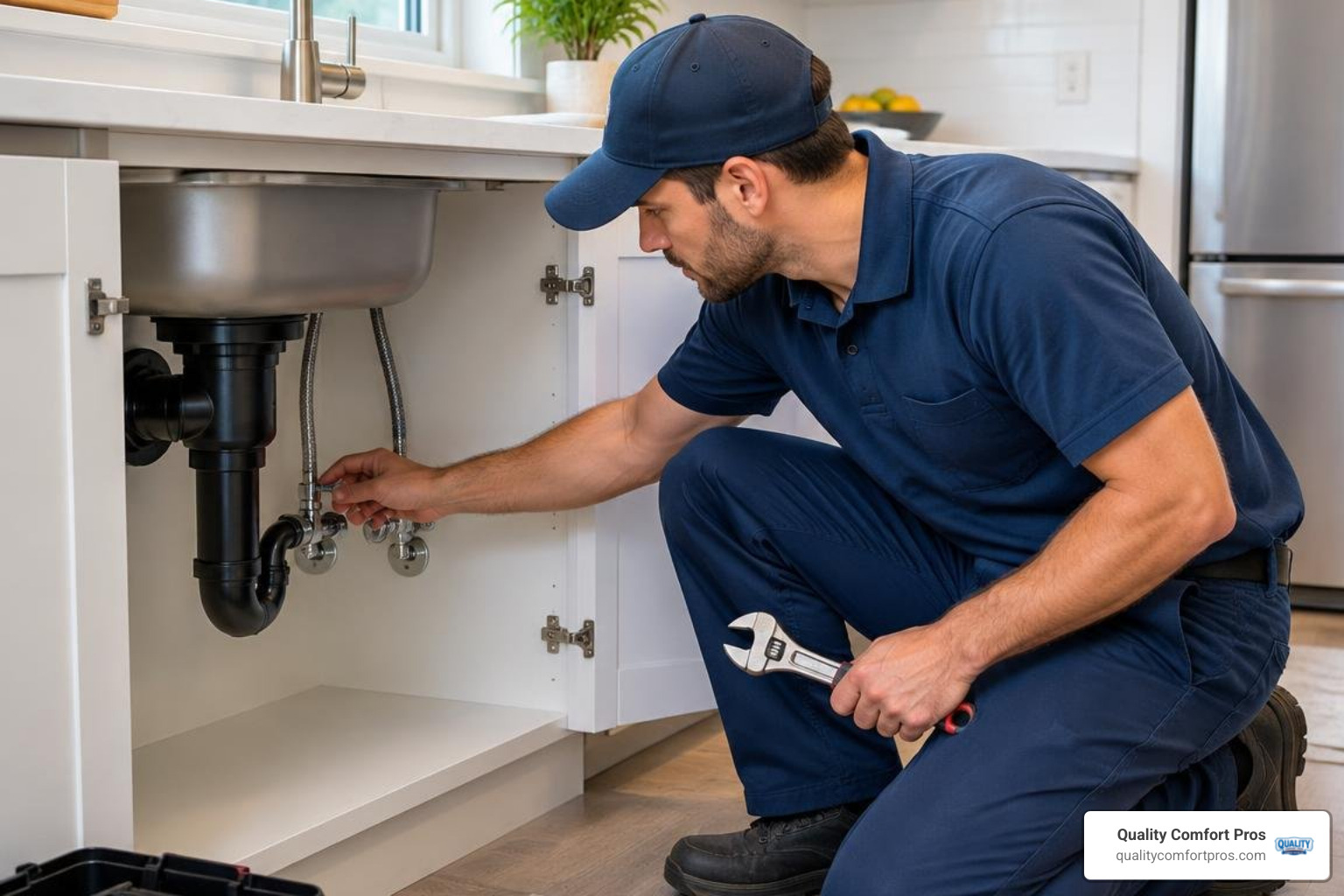
Homeowners may test accessible fixture shut-offs and make notes for a future service visit. Gas water heaters, main lines, electrical connections, and pressurized plumbing should remain the responsibility of our plumber. Those observations can give our plumber a useful starting point for a faster diagnosis.
According to EPA leak facts, household leaks waste nearly 1 trillion gallons of water nationwide every year. Updated fixtures and automatic shut-off options can support more dependable water use at home. Therefore, seasonal attention to plumbing components can protect comfort, efficiency, and the home’s condition.
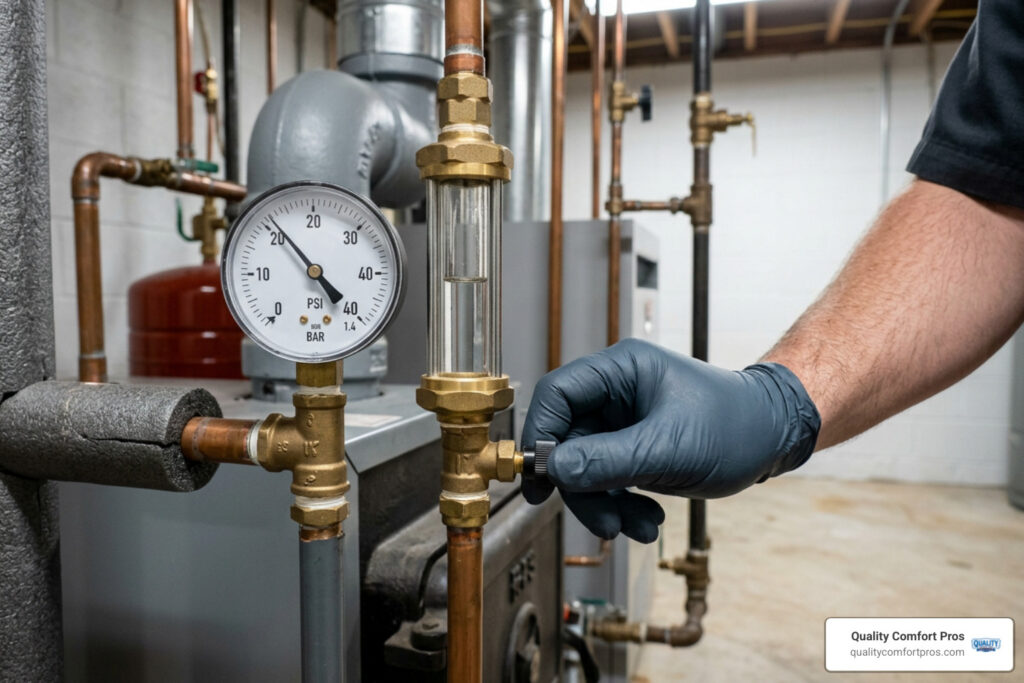
A maintenance visit can confirm that accessible shut-off valves will operate when they are needed. Our plumber inspects exposed piping, supply connections, drain performance, and water-heater components for early warning signs. Corrosion, loose fittings, aging valves, and small leaks can often be corrected before an urgent failure develops. This allows homeowners to plan repairs before water damage disrupts daily routines.
During maintenance, our plumber tests visible shut-offs and evaluates signs of restricted drainage. Unusual water pressure, damp surfaces, and recurring clogs can reveal a developing failure. In crawl spaces, pipe protection and exposed insulation deserve attention before sustained freezing weather arrives. Early maintenance of those areas can help prevent water damage from an unexpected plumbing emergency.
Between service visits, preventive plumbing practices can help homeowners recognize early warning signs safely. Slow drains, dripping fixtures, and damp areas should be noted before the condition worsens. In most cases, early attention helps avoid a more disruptive emergency later.
Frequently Asked Questions
When does a household plumbing issue become an emergency?
A household plumbing emergency may involve uncontrolled water, sewage indoors, or a gas or electrical safety concern. A small contained drip can sometimes wait, but spreading damage or contamination calls for faster action. However, professional guidance is the safer choice when the source or risk is unclear.
What are the first safe steps after a pipe bursts?
Move away from wet electrical equipment and close the accessible main valve if conditions are safe. Identify the affected area from dry ground, then contact our plumber for isolation and repair. Once that is done, keep people away from the area until the hazard is controlled.
Is an accessible fixture shut-off enough for a leak?
An accessible fixture shut-off can help when the leak clearly comes from one sink or toilet. Switch to the main shut-off and call our plumber when water continues running or the source cannot be identified. Do not depend on a fixture valve that is damaged or difficult to reach.
What is the safe response to a gas smell near plumbing equipment?
Leave the home immediately without using switches, appliances, or phones indoors. From outdoors, contact 911 or the utility and leave the situation to trained responders and our plumber. Do not return until responders confirm that it is safe to do so.
Are chemical cleaners safe for a sewage backup?
Chemical cleaners can add hazards and may not resolve a serious sewage blockage. Stop using fixtures, keep occupants clear, and have our plumber assess the sewer-related issue. As a result, professional assessment is the safer response to contamination and drainage problems.
Why might there be water under a sink without a visible drip?
Some slow leaks appear only when a faucet runs or pressure changes within a supply connection. Our plumber can trace the source by examining the cabinet, fittings, and surrounding plumbing. Noting when the moisture appears can help identify the failing component.
What can homeowners safely check near a wet appliance?
Do not approach standing water or touch nearby appliances, outlets, or electrical parts. A breaker may be turned off only when the panel is safely reachable from dry ground. Therefore, wait for qualified help if the surrounding area is wet or unsafe.
Can frozen pipes turn into an emergency?
Frozen pipes may restrict water flow and can rupture as temperatures change. Keep the home heated, avoid open flames, and contact our plumber when pipe damage is suspected. Once that is done, watch for leaks as temperatures rise and water begins moving again.
How soon can emergency plumbing help arrive?
Arrival time depends on the location, weather, and severity of the plumbing problem. Quality Comfort Pros delivers 24/7 emergency plumbing service to homeowners across Gaylord, MI, and Northern Michigan. In most cases, immediate safety hazards and local conditions shape the response.
How can homeowners help prevent another plumbing emergency?
Pay attention to slow drainage, recurring dampness, falling water pressure, and changes near valves or fixtures. With routine service, our plumber can resolve emerging issues before they disrupt the home. Therefore, noting these changes early makes it easier to arrange service promptly.
Conclusion
A plumbing emergency can feel overwhelming, yet calm and safe action can reduce damage while help is on the way. Safe homeowner actions are limited to accessible shut-offs and protecting household members, not gas, sewer, electrical, or pressurized work. Our plumber performs the diagnosis and repair tasks that require professional tools and experience.
Understanding the limits of safe homeowner checks makes a stressful situation easier to manage. An accessible main shut-off, fixture shut-off, thermostat, or breaker is useful only when conditions are dry and safe. Avoid those checks when water covers the floor or electrical equipment is nearby. Once that is done, our plumber provides the professional response for everything beyond those basic steps.
Homeowners in Gaylord, MI, and Northern Michigan have relied on Quality Comfort Pros since 1997. The team supports dependable home comfort with plumbing, heating, cooling, water-heater, drain, and generator services. For urgent homeowner needs, contact our plumbing team for prompt, homeowner-focused support.