Critical Warning Signs That Require Emergency Heater Repair
Emergency heater repair becomes important when a furnace stops producing dependable heat or shows a serious safety warning. In Gaylord and Northern Michigan, a small change in performance can become urgent when outdoor temperatures remain low. Watch for repeated starts and stops, unusual noises, burning smells, yellow flames, or cold air coming from supply vents.
I’m JD Osman, owner of Quality Comfort Pros, with more than 20 years of experience in home services across Northern Michigan. This guide to emergency heater repair explains which checks are safe for homeowners and which situations call for immediate help. It also clarifies when our technician should handle the concern instead of attempting a repair at home.
Short cycling can point to a problem that needs professional diagnosis, especially when the home never reaches a comfortable temperature. Rattling, scraping, or booming sounds also deserve attention because they can involve moving parts, ignition, or burner operation. A burning odor that does not fade after normal seasonal dust clears, yellow flames, and persistent cold air from vents are additional warning signs.
For common early symptoms, winter furnace warning signs can help homeowners recognize when normal operation has changed. A separate overview of why furnaces stop working explains several causes of a no-heat situation. These resources support awareness, but gas, electrical, ignition, burner, and sealed-part concerns are work our technician does.
Gas Smells and Carbon Monoxide Alarms
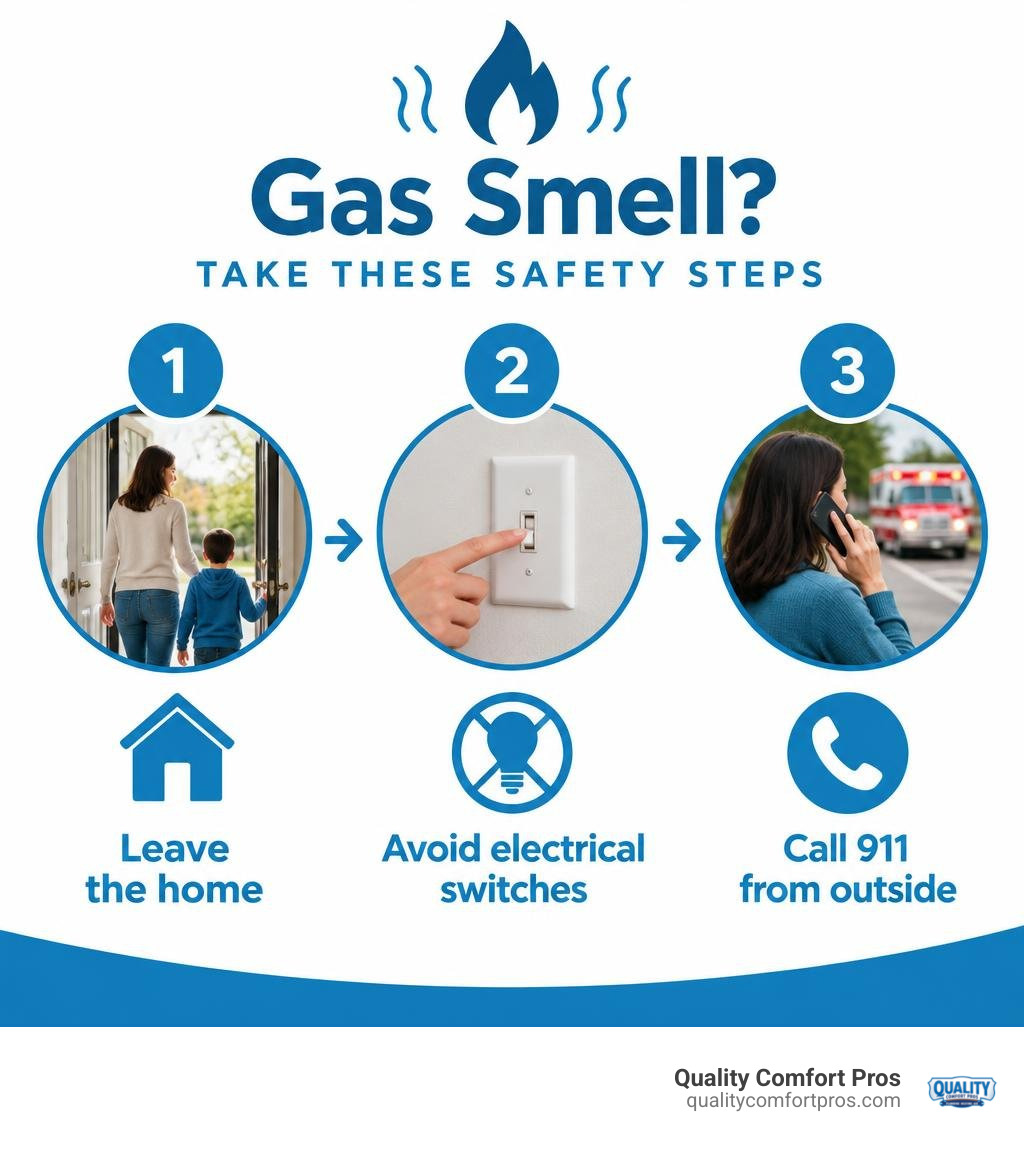
A gas smell requires immediate action because occupants should not remain inside to investigate the source. Leave the home, avoid switches or appliances, and call 911 or the gas utility from outside. Do not return until emergency responders or the gas utility says it is safe.
If you smell gas:
- Leave the home immediately.
- Avoid lights, switches, flames, and appliances.
- Call 911 or the gas utility from outside.
A carbon monoxide alarm is a separate emergency that calls for fresh air without delay. Get everyone outside, then call 911 from a safe location. Do not silence the alarm and continue using the heating system before the cause is investigated.
If a carbon monoxide alarm sounds:
- Get everyone outside into fresh air.
- Call 911 from outside.
- Wait for emergency responders before reentering.
The EPA carbon monoxide guidance lists back-drafting from furnaces and worn or poorly adjusted combustion devices among indoor carbon monoxide sources. It recommends having a trained professional inspect, clean, and tune up the central heating system every year. That inspection and any work involving combustion equipment are services our technician performs.
Total Heat Loss in Freezing Weather
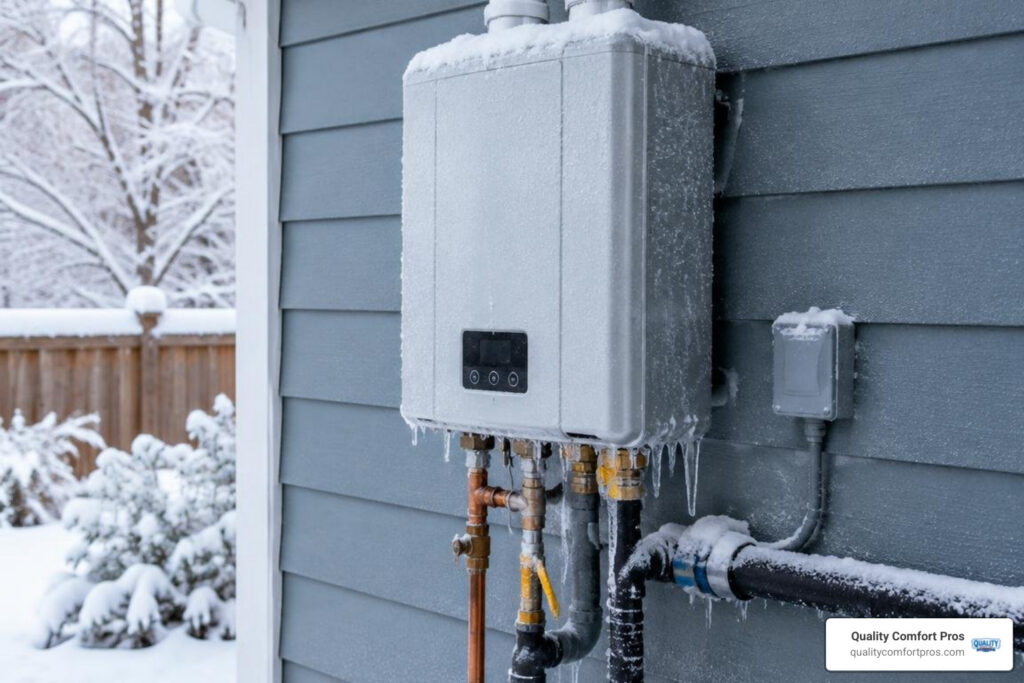
Total heat loss during freezing weather needs prompt attention because indoor temperatures can fall quickly. Cold rooms can make daily life uncomfortable and may increase the risk of frozen pipes in vulnerable areas. Homeowners can complete only the safe checks described below, then contact a technician when heat does not return.
Safe Checks Before You Call a Technician
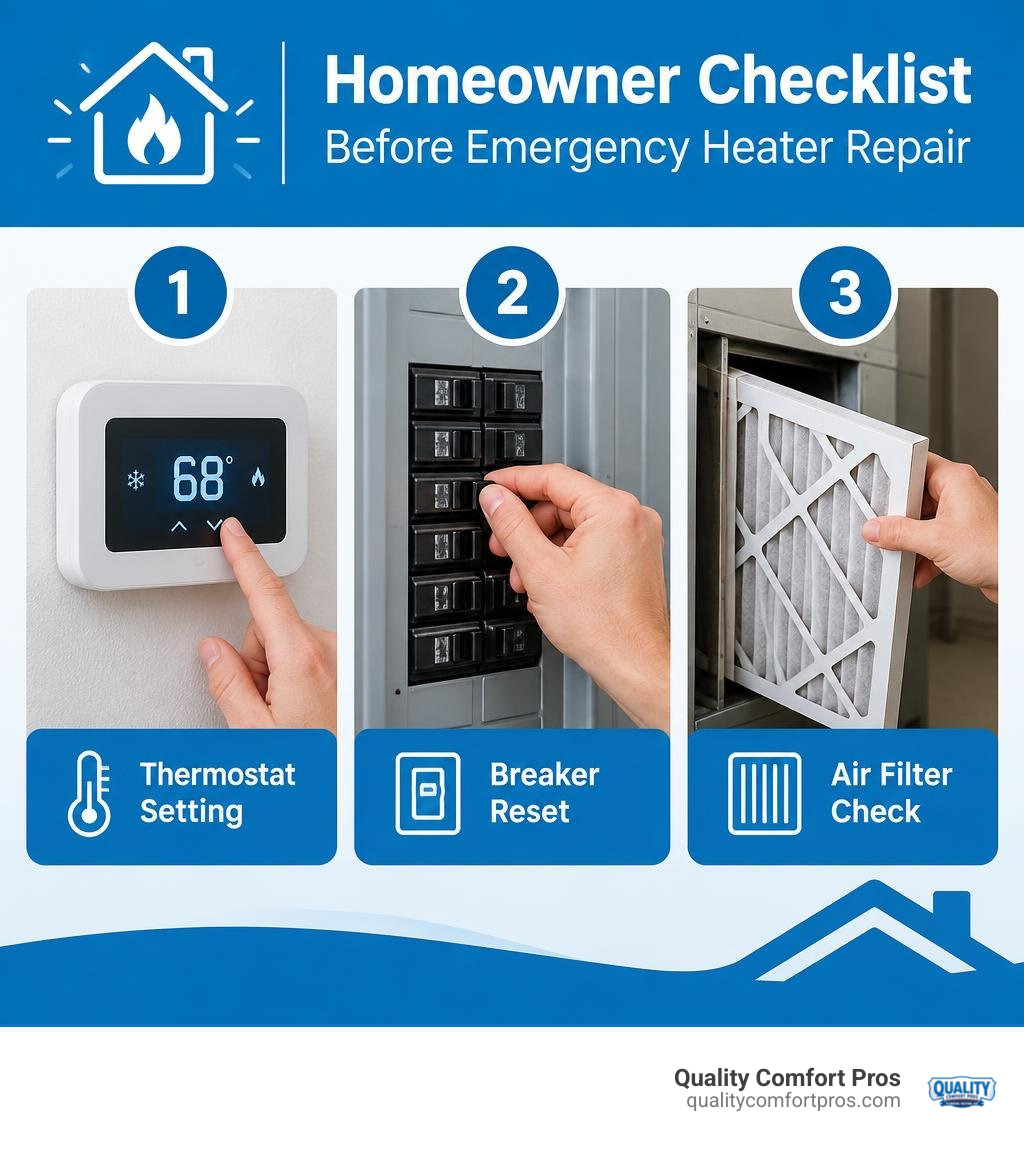
A safe check can sometimes identify a simple interruption without opening the furnace or touching technical components. Start with the thermostat, then look at the breaker, furnace power switch, access door, air filter, and exterior vents. If the furnace still will not heat, do not work on gas, electrical, ignition, burners, or sealed parts because our technician does this.
| Safe check | What to look for |
|---|---|
| Thermostat | Confirm it is set to heat and the requested temperature is above the room temperature. |
| Breaker | Check whether the heating breaker has tripped and reset it once if needed. |
| Furnace power switch | Make sure the nearby switch is on. |
| Access door | Confirm the access door is fully closed. |
| Air filter | Replace a visibly clogged filter with the correct type. |
| Exterior vents | Clear snow or other obstructions from the outside vent area. |
These checks are limited to controls and accessible areas that homeowners can inspect safely. Do not remove furnace panels beyond the normal access door, disconnect wiring, or attempt to relight or repair internal components. A furnace repair service can diagnose problems with airflow, ignition, gas, electrical equipment, burners, and safety controls.
Keeping the Home Warm Safely While You Wait
Keep interior doors open when practical so warmth can move between occupied rooms. Close curtains after dark to reduce drafts, but keep supply vents open and clear. Dress in layers and stay together in the warmest safe part of the home while waiting for service.
Use a space heater only if it has an automatic shutoff and can be plugged directly into a wall outlet. Keep it well away from anything that can burn, never leave it unattended, and do not use an extension cord. Never use an oven, grill, or generator indoors for heat because those devices create serious fire and carbon monoxide hazards.
What Happens During an Emergency Heater Repair Visit
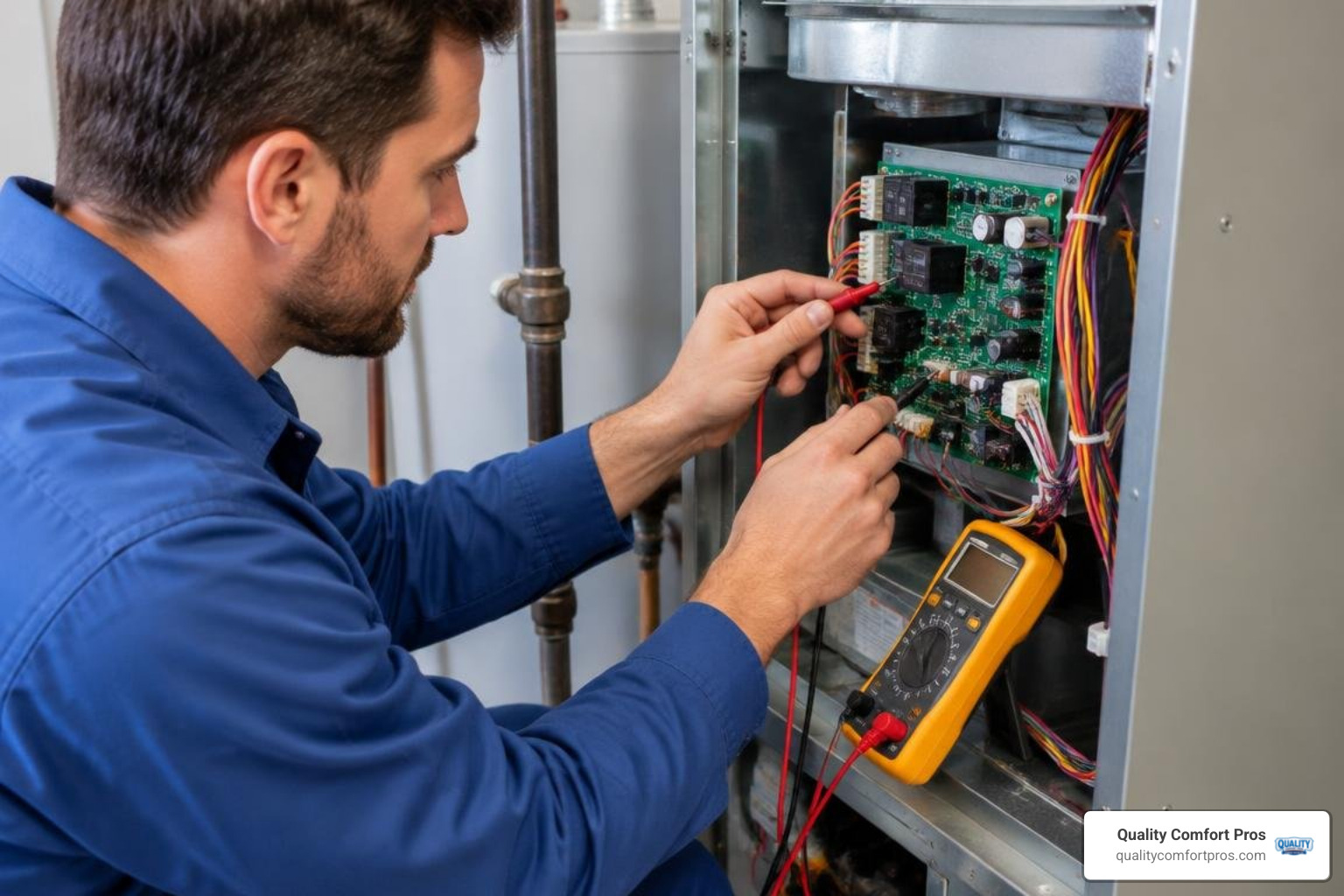
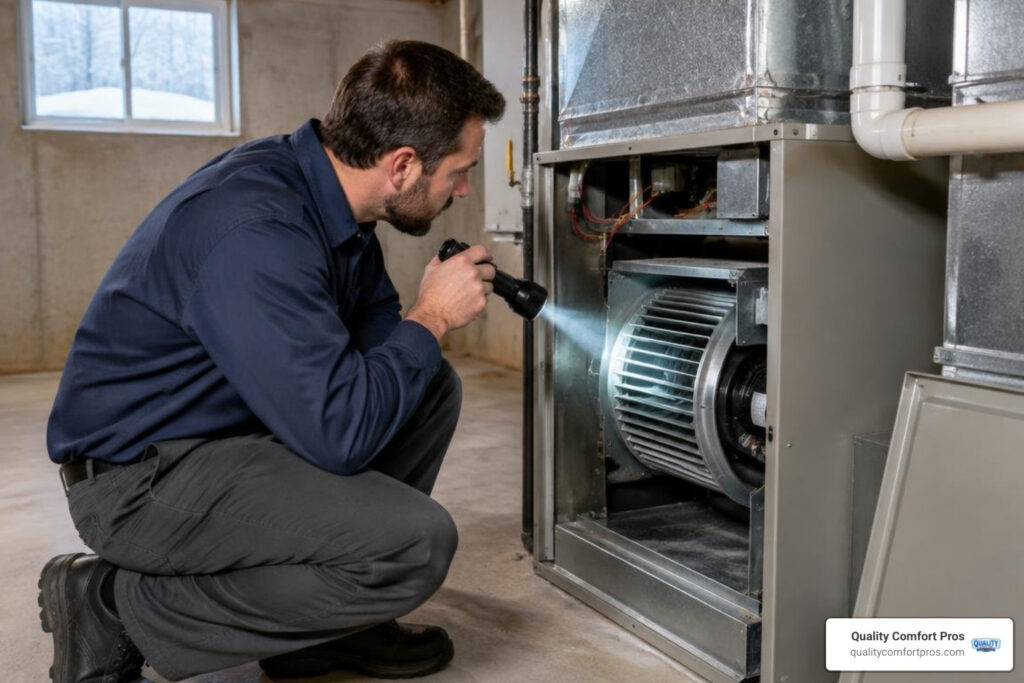
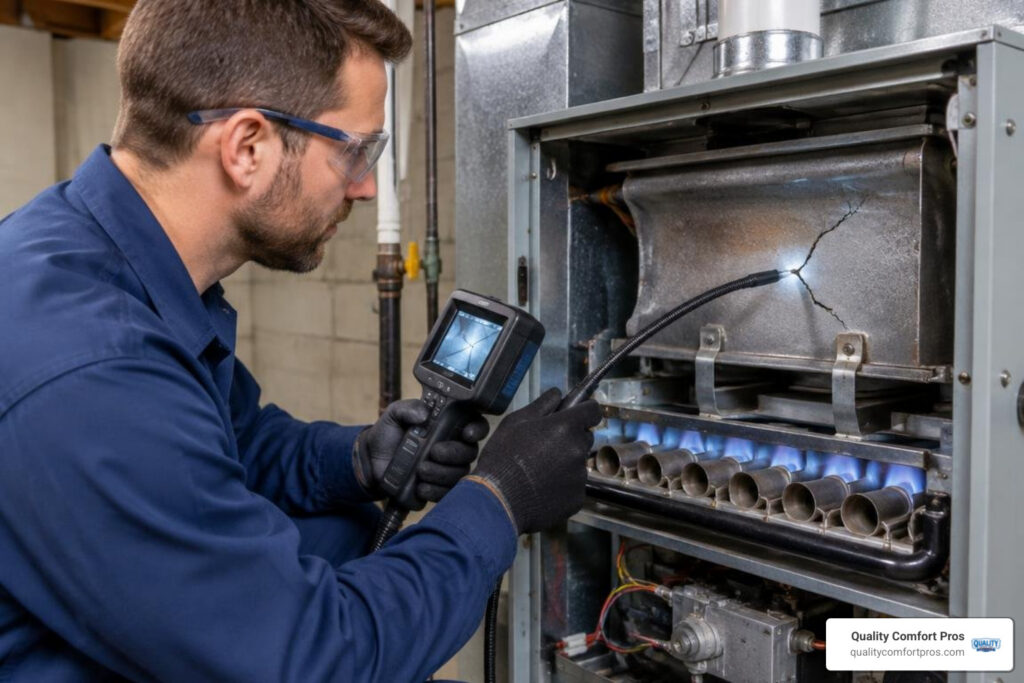
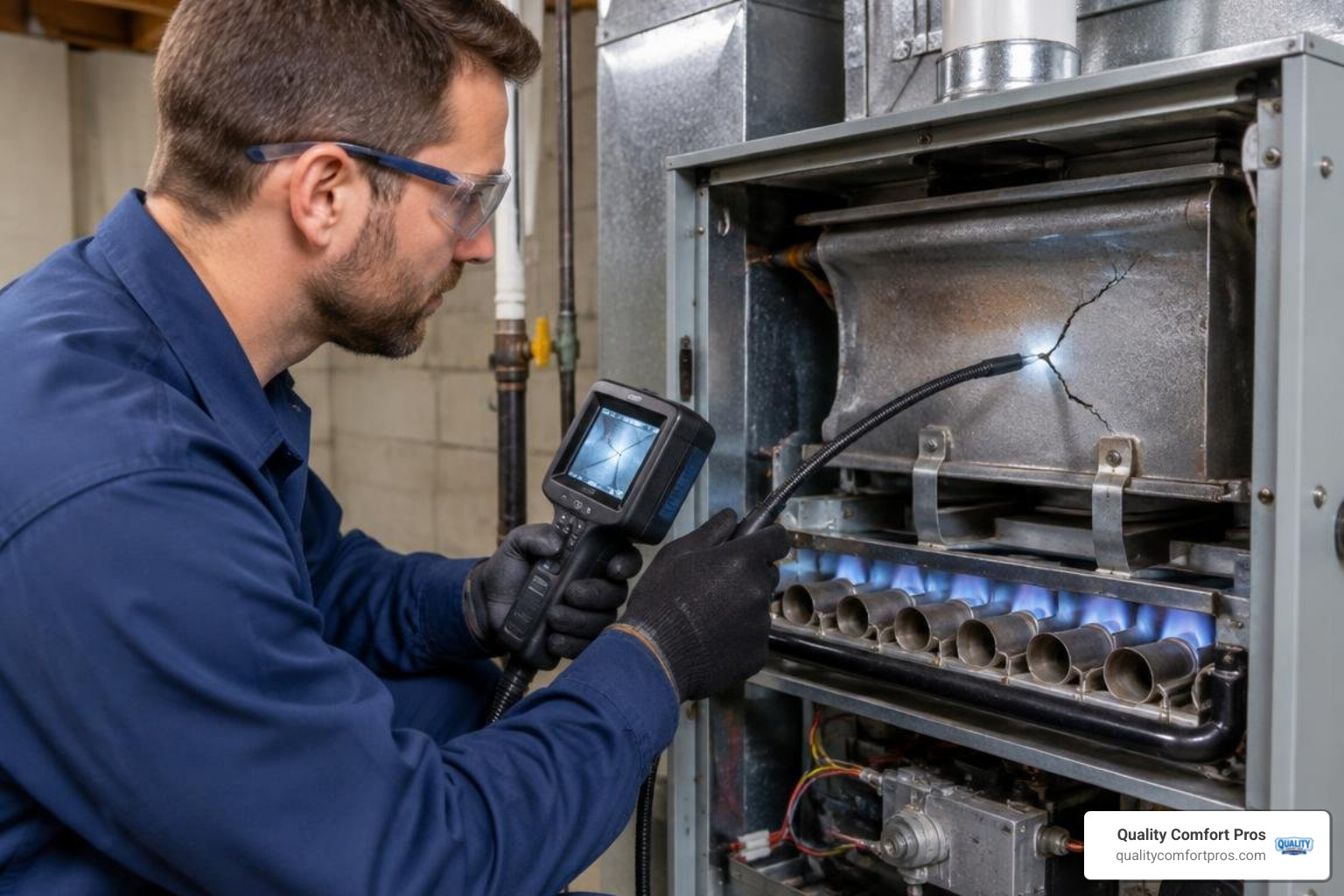
Our technician begins with a safety assessment and reviews the symptoms homeowners have noticed. The visit can include watching the ignition sequence, testing electrical parts and safety controls, and checking airflow and the heat exchanger. After identifying the concern, our technician explains the recommended repair before work begins.
A Recent Service Call in Petoskey
A Petoskey homeowner lost heat entirely during a stretch of subzero temperatures. Our technician found a failed ignitor, replaced it, and confirmed the furnace was cycling correctly before leaving. The home was back to a comfortable temperature within the hour.
This furnace repair in Petoskey example shows why a no-heat call needs a careful diagnosis rather than trial-and-error repairs. The facts of each service visit differ, but safe restoration of dependable heat remains the goal. When ignition or internal equipment is involved, our technician does this work.
Why Northern Michigan Winters Put Extra Stress on Furnaces
Furnaces in the Petoskey area often run from before Halloween well into April against sustained cold and wind off the bay. That extended runtime asks more of the system than heating equipment in warmer regions may experience. When a furnace cycles through long stretches of cold weather, small developing issues can become a no-heat call.
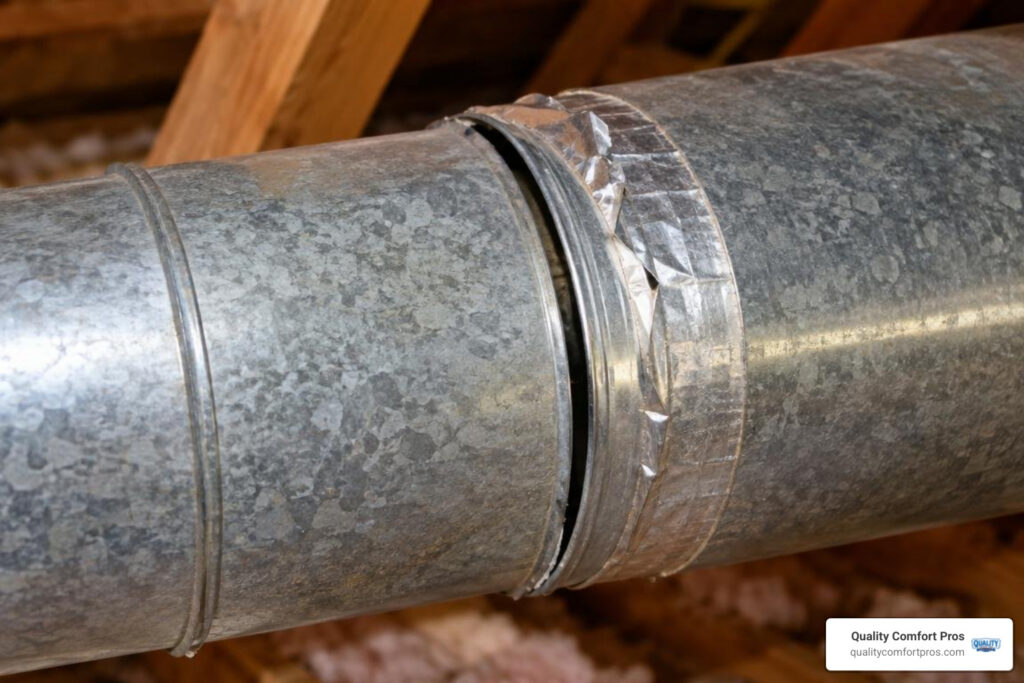
The long runtime can wear ignitors, blower motors, and heat exchangers as the heating system works to keep up with indoor comfort needs. The local issues seen most often include ignitor failures in aging furnaces and leaky or undersized ductwork. Either concern can make rooms feel unevenly heated or leave the furnace unable to provide dependable warmth.
Historic homes and seasonal cottages, including properties in Bay View, may still have original ductwork that was never sized for a modern furnace. Airflow problems can become more noticeable when the furnace must run regularly through severe weather. A technician can evaluate the heating system and ductwork without homeowners attempting adjustments to internal equipment.
Cottages that sit closed for part of the winter need a furnace that starts reliably when owners return. That is why fall tune-ups are especially valuable for seasonal properties before cold weather places more demand on the system. Older homes in outlying areas such as Johannesburg, Vanderbilt, and Frederic may also have furnaces and ductwork that have not been updated in decades.
These Northern Michigan conditions are the reason small wear can turn into an emergency heater repair no-heat call. Paying attention to unusual operation and arranging service before a complete shutdown can reduce uncertainty during cold weather. When the system involves ignition, airflow restrictions, or internal components, our technician does the diagnostic and repair work.
When a Repair Makes Sense and When It Does Not
The right next step depends on the furnace’s condition, repair history, comfort problems, and the safety of the heat exchanger. A technician considers whether the current issue is isolated or part of a broader pattern affecting dependable heating. The goal is a clear recommendation based on the equipment’s actual operation and the home’s needs.
A heat exchanger concern needs careful professional evaluation because it relates to safe combustion and airflow. Persistent comfort problems can also point to ductwork, controls, or equipment performance that requires a more complete assessment. Homeowners should share what they have observed, including sounds, odors, and changes in heating behavior.
ENERGY STAR furnace guidance notes that certified gas furnaces in the northern half of the country can be up to 18 percent more energy efficient than baseline models. That information can be useful when discussing heating performance with a technician. It does not replace an in-home evaluation of the furnace, ductwork, and safety concerns.
Proactive Maintenance Helps Prevent Heating Emergencies
Preventive service gives a technician an opportunity to spot developing concerns before cold weather makes them more disruptive. A furnace maintenance visit can include a professional review of heating performance, safety controls, airflow, and combustion-related components. Homeowners can then make informed plans instead of waiting for a sudden loss of heat.
Reliable maintenance is particularly helpful for homes that have long heating seasons, seasonal occupancy, or uneven comfort from room to room. It also gives homeowners a chance to describe changes they have noticed before the furnace stops working. Any internal testing or adjustment remains work our technician does.
For practical seasonal preparation, seasonal HVAC preparation outlines steps that help homeowners prepare the home and accessible equipment areas. Clearing exterior vents, checking filters, and confirming thermostat settings are useful safe tasks before cold weather arrives. A maintenance appointment provides professional help for the parts of the system that should not be handled at home.
Frequently Asked Questions About Heating Emergencies
What is considered an emergency heating repair?
An emergency heating repair involves a safety concern, a complete loss of heat during cold weather, or furnace behavior that could worsen quickly. Gas odors, a carbon monoxide alarm, unusual flames, and persistent burning smells require prompt action. When unsure, homeowners should treat the situation cautiously and contact a technician.
What should I do immediately if I smell gas near my furnace?
Leave the home right away and avoid touching switches, appliances, or anything that could create a spark. Call 911 or the gas utility from outside after everyone is safely away from the building. Do not return until emergency responders or the gas utility says it is safe.
What should I do if my carbon monoxide alarm goes off?
Get everyone outside into fresh air immediately and call 911 from a safe location. Do not assume the alarm is a nuisance or silence it before the cause is evaluated. Emergency responders can advise when it is safe to reenter.
Why is my furnace blowing cold air instead of warm air?
Cold air can result from a thermostat setting, a dirty filter, an airflow problem, or an internal furnace concern. Homeowners can safely check the thermostat, filter, power switch, access door, breaker, and exterior vents. If heat does not return, a technician should diagnose the system.
Why does my furnace turn on and off every few minutes?
Repeated short cycling can happen when the furnace cannot complete a normal heating cycle. Airflow restrictions, control concerns, or internal component problems may contribute. A technician can identify the cause without homeowners opening or adjusting technical parts.
Can a dirty air filter shut down my furnace?
A heavily clogged filter can restrict airflow and contribute to overheating or reduced heating performance. Replacing an accessible filter with the correct type is a safe homeowner check. If the furnace still does not operate normally, contact a technician.
How can I keep my home warm safely while waiting for repairs?
Stay in the warmest safe rooms, keep interior doors open when practical, and close curtains after dark. A space heater with automatic shutoff can be used in a clear area when plugged directly into a wall outlet and watched closely. Never use an oven, grill, or generator indoors for heat.
Should I reset my furnace more than once if it will not start?
Avoid repeated resets because they can hide a problem that needs professional attention. Check the accessible controls listed in this guide, then stop if the furnace still will not start. A technician can investigate the ignition, electrical, or safety-control concern.
What information should I have ready when I call for emergency service?
Describe whether the furnace is producing heat, making unusual sounds, showing an alarm, or cycling repeatedly. Share the safe checks already completed and mention any gas odor or carbon monoxide alarm. Clear details help the technician prepare for the visit.
How often should a furnace be serviced in Northern Michigan?
Regular professional maintenance helps prepare a furnace for Northern Michigan’s demanding heating season. It is especially useful before extended cold weather and for homes with seasonal use or older ductwork. A technician can recommend an appropriate maintenance plan based on the home’s equipment and conditions.
Conclusion
Quality Comfort Pros has been serving Northern Michigan since 1997. When a furnace stops heating, use only safe checks and leave gas or carbon monoxide emergencies to responders and qualified technicians. Contact our team for help with an emergency heating concern or a professional evaluation of your system.
Quality Comfort Pros, 1641 S Otsego Ave, Gaylord, MI 49735