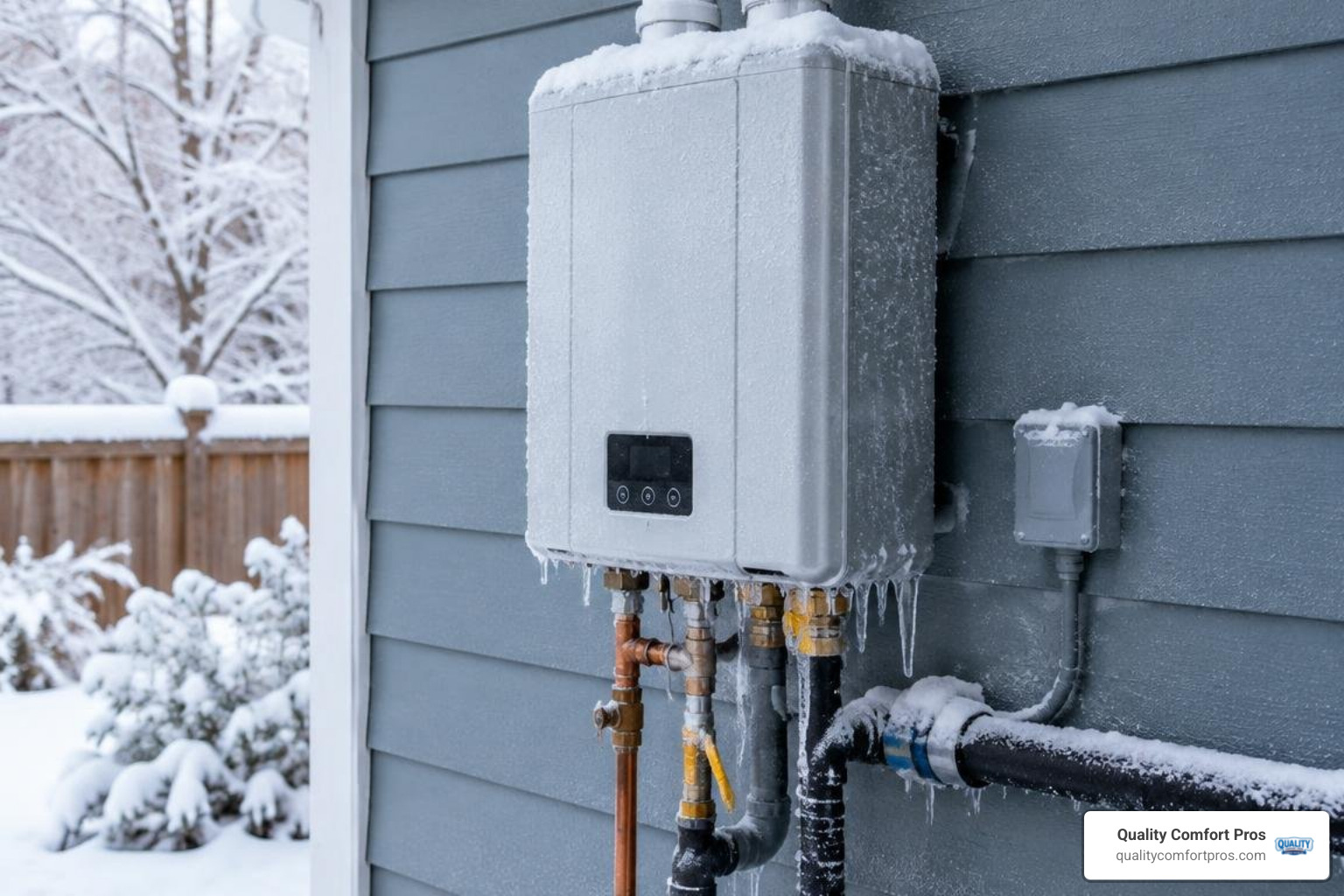
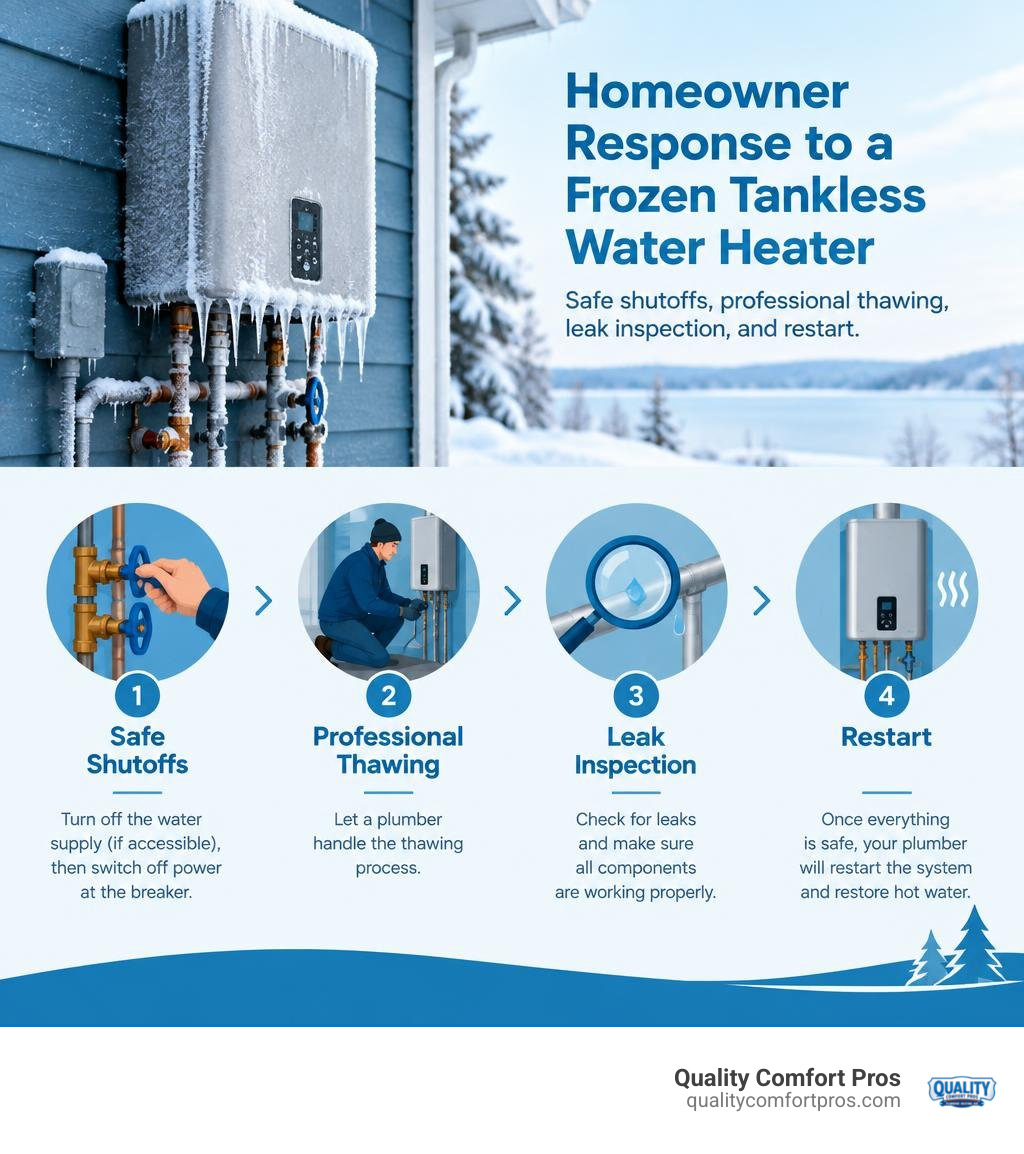
If you find your tankless water heater frozen, shut off its water supply if the valves are safely accessible, then switch off power at the breaker. Do not apply heat or open the cover; our plumber should handle thawing, inspection, and restart. If you smell gas, leave the house and call 911 or your gas utility from outside.
I’m JD Osman, owner of Quality Comfort Pros, with more than 20 years of experience in home services across Northern Michigan. In this guide to a tankless water heater frozen by winter cold, I will walk you through why it happens, what is safe to do right away, and how our plumber restores hot water.
Why a Tankless Water Heater Freezes in Northern Michigan
Northern Michigan winters bring prolonged subzero temperatures, sharp wind chills, and heavy lake-effect snowfall. These winter conditions can strain modern high-efficiency plumbing equipment. When outdoor temperatures plunge in communities like Petoskey, MI and Gaylord, MI, mechanical rooms and utility spaces cool down rapidly. A sudden Arctic blast can quickly cause an unexpected freeze inside household water lines.
Understanding how your system reacts to intense winter weather helps you protect your home. Tankless equipment operates without a large reserve of standing hot water. As a result, heat escapes quickly whenever water stops moving through the system. During deep winter cold snaps, vulnerable points inside and outside the cabinet can drop below thirty-two degrees Fahrenheit. A brief interruption in heat or airflow can therefore create a serious freeze risk before homeowners notice a problem.
Where the Unit Is Most Vulnerable
The primary mechanical vulnerability of on-demand units lies in their small internal passages. Water travels through very narrow copper or stainless steel passages within the primary heat exchanger. Because these internal waterways contain only small amounts of water, ice crystals form much faster than they would inside a massive storage vessel.
External plumbing connections also represent significant thermal weak points. Uninsulated cold water inlet lines, shutoff valves, and brass filtration screens lose heat rapidly to surrounding air. If incoming supply lines drop below freezing, water flow halts immediately before the burner can even activate. Condensate drain lines can also freeze solid when exposed to cold outdoor drafts, creating internal pressure backups.
Outages, Garages and Seasonal Cottages
Installation location is an important factor in seasonal vulnerability across our service area. Units located in unheated garages, crawl spaces, or exterior utility rooms face direct exposure to winter drafts. Even in finished basements, cold air infiltration along exterior rim joists can chill nearby plumbing fixtures. Seasonal cottages around Petoskey, MI and Gaylord, MI face heightened freeze threats when left unoccupied during severe weather.
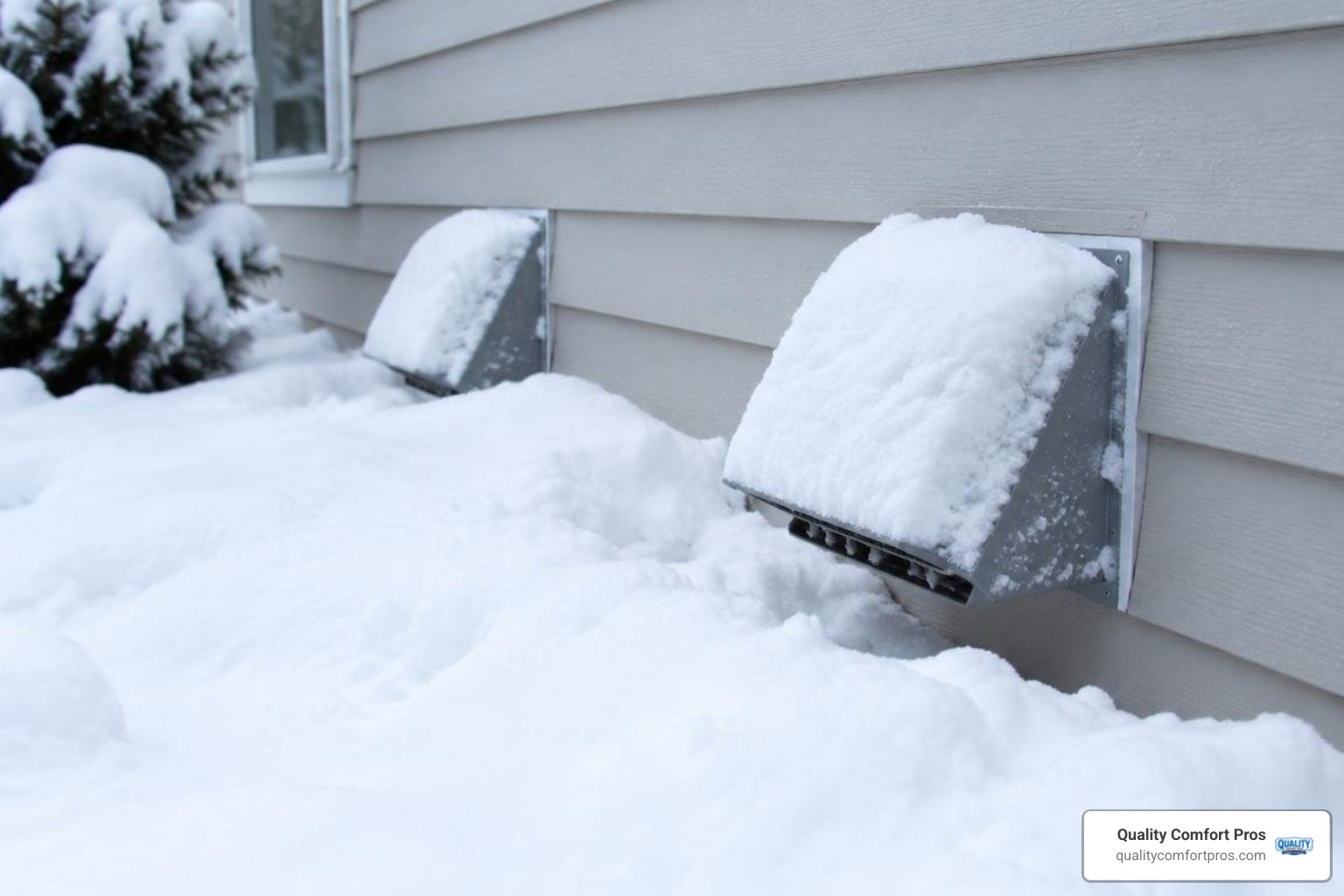
Power disruptions during winter storms create another risk. Modern on-demand heaters use built-in electric freeze-protection heaters to keep internal components above freezing. When winter storms knock out grid electricity, these internal safety devices deactivate completely. Furthermore, heavy snow drifts can bury outside intake and exhaust terminals, causing cold outdoor air to backdraft directly into the heat exchanger.
Tankless Water Heater Frozen: Warning Signs
Recognizing early warning signs prevents minor ice blockages from turning into split plumbing lines or extensive indoor water damage. When water turns to solid ice, it expands with enough pressure to damage pipes and fittings. Spotting freeze indicators early allows you to take safe precautions before mechanical assemblies rupture. Early action also gives our team a clearer starting point when inspecting the unit and nearby connections.
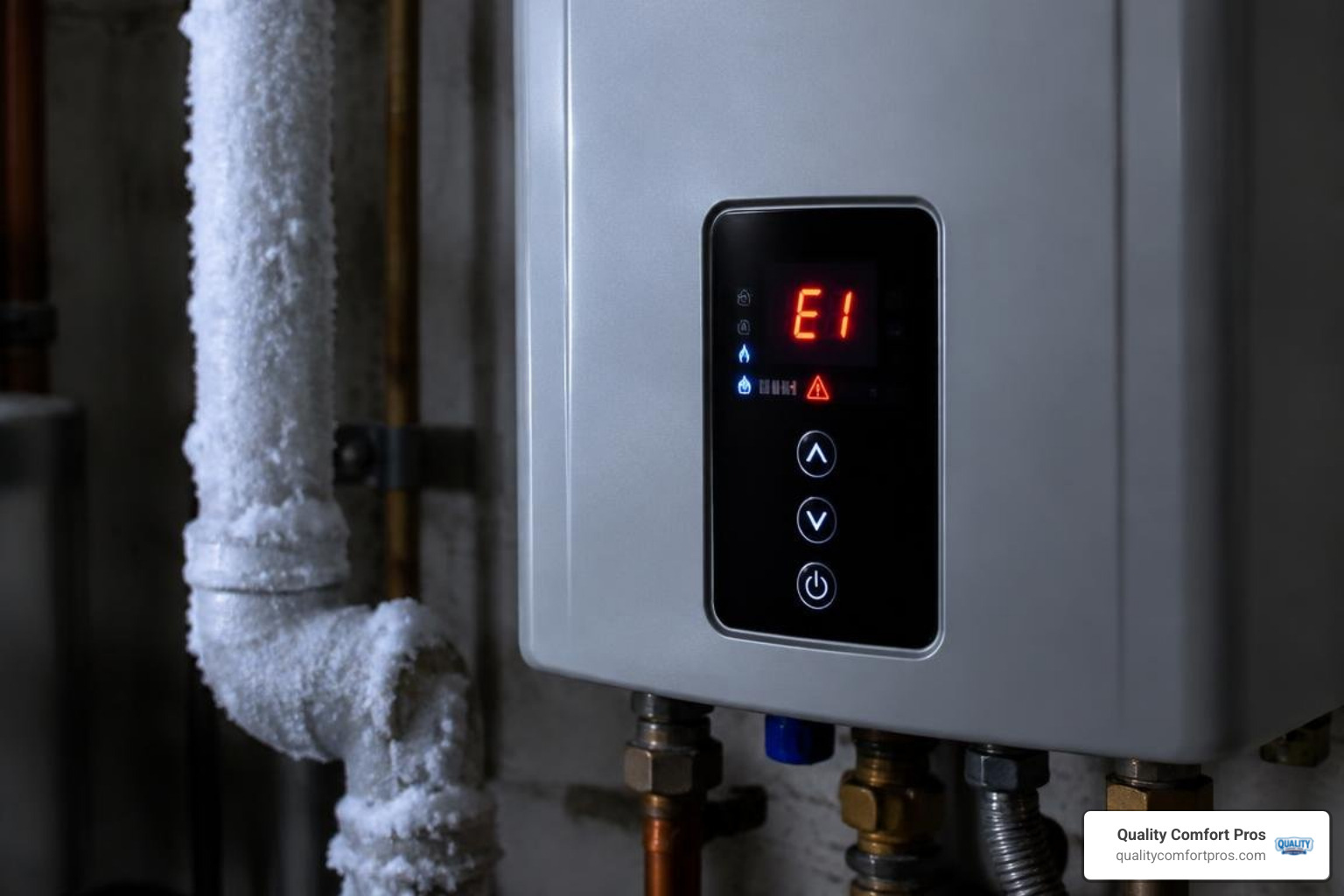
Watch for these specific operational warnings during freezing weather. A single symptom may point to a minor restriction, but several signs together warrant prompt service. Avoid restarting the unit repeatedly while you assess the situation.
- Zero hot water flow or low trickle: You open a hot water tap, but nothing comes out, or only a weak trickle flows while cold water taps run normally.
- Ignition failure error codes: The digital control panel displays an active fault code related to water flow blockage, freeze warning sensors, or ignition failure.
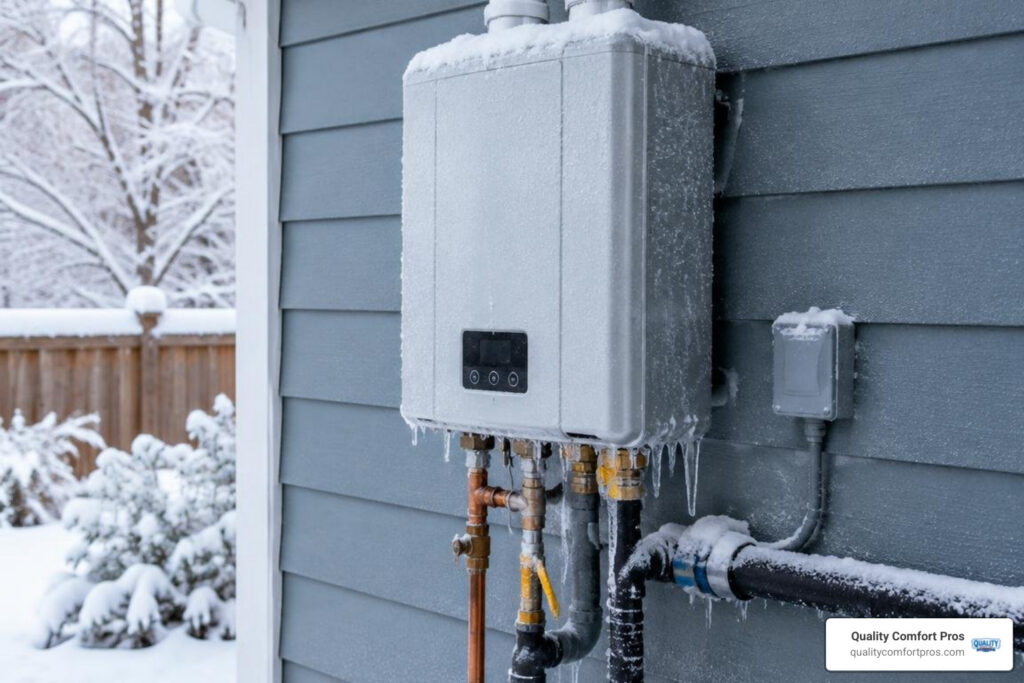
- Frost on external piping: You observe visible frost, condensation, or ice crystals forming along the cold water inlet or hot water outlet lines beneath the cabinet.
- Short-cycling burner: The unit attempts to ignite, fires for a few seconds, and then shuts down abruptly because internal sensors detect zero flow.
- Moisture around the cabinet: Water drips from the bottom of the casing, pools near valves, or puddles beneath the unit as surrounding temperatures begin to rise.
Safe Steps Before You Call
If you suspect an ice blockage inside your system, taking prompt and safe precautions protects your property from water damage. Do not attempt any DIY thawing procedures using open flames, heat guns, space heaters, or hair dryers. Rapid, uneven heating can warp delicate internal components or rupture pressurized copper tubing. Never disassemble the cabinet, manipulate electrical harnesses, or remove internal access panels.
Follow these safe homeowner steps right away. Move carefully around the unit if floors are wet or ice is present nearby. These steps help limit pressure and reduce the chance of further damage while you wait for service.
- Shut off the water supply: Turn the cold water isolation valve handle perpendicular to the line to cut water flow to the unit.
- Switch off electrical power: Turn off the dedicated electrical breaker in your main service panel to prevent dry-firing or electrical shorting.
- Close the fuel valve safely: If you know the exact location of the gas shutoff valve and can reach it safely, turn it off.
- Relieve internal line pressure: Open a hot water faucet inside your home slightly to vent trapped hydraulic pressure from the distribution lines.
If you smell natural gas or propane near the unit, evacuate your home immediately without operating electrical switches. Call 911 or your local gas utility from a safe location outside. Once your home is secure, follow standard emergency plumbing steps to prevent secondary property damage. Then, reach out to Quality Comfort Pros for professional tankless water heater repair to restore your hot water safely.
What Our Plumber Does on a Frozen Tankless Call
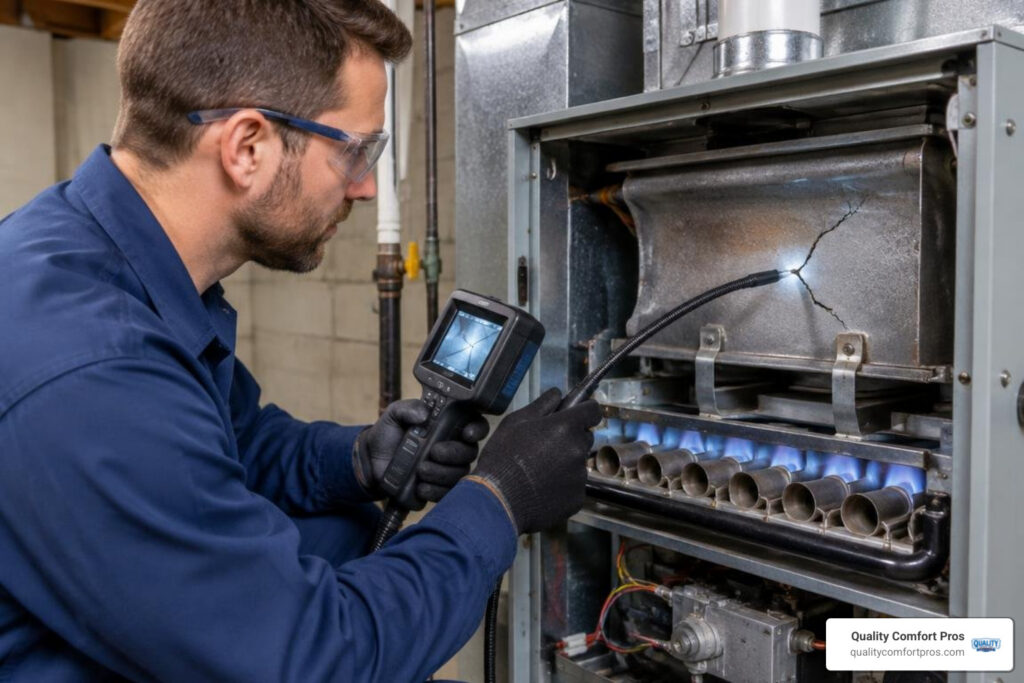
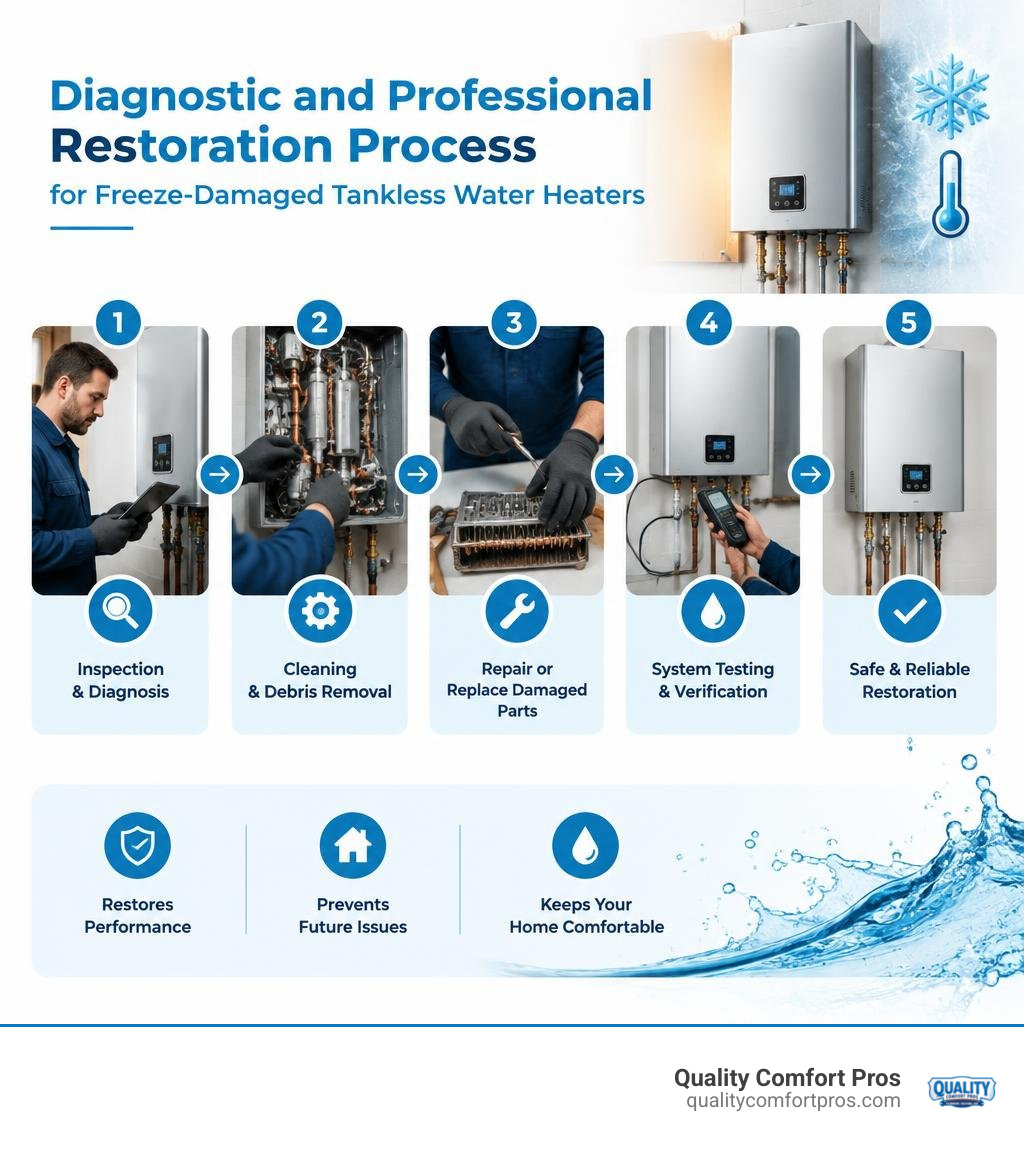
When our team arrives, we follow a careful diagnostic and recovery process. The goal is to restore hot water safely while checking that no internal parts have ruptured. We locate the frozen area and inspect the unit before beginning recovery.
Our team manages every stage of the recovery process. This careful sequence helps identify hidden damage before the unit returns to regular operation. It also reduces the risk of a leak appearing after service is complete.
- Thermal freeze localization: We inspect the internal flow sensor, bypass valves, external connections, and heat exchanger for signs of freezing or damage.
- Controlled thawing protocols: Our team uses gentle, even warming methods to bring frozen waterways back above freezing without stressing thin-walled tubing.
- Component crack inspection: We carefully inspect internal tubing, brass fittings, and O-ring seals for signs of stress cracks or distortion.
- Condensate and vent clearance: We clear ice blockages from the condensate drain trap and remove drifting snow from intake and exhaust terminations.
- Systematic utility restoration: We restore electrical power, fuel delivery, and water supply only after the unit is ready for a safe restart.
- Hydrostatic testing: We run full-pressure water tests to confirm there is no sign of a water heater leaking inside the cabinet or along the supply connections.
Repair or Replace After Freeze Damage
After thawing the equipment, our team conducts a thorough evaluation of all internal components. Minor freeze events often affect only external plumbing adapters or isolation valves. In those scenarios, straightforward component replacement gets your system operating smoothly again. We also check surrounding connections to confirm the freeze did not affect adjacent parts.
However, severe subzero freezes can split the internal heat exchanger coils or fracture internal composite flow blocks. Replacing an entire heat exchanger assembly requires extensive labor and comprehensive disassembly. If your equipment has experienced repeated freezing cycles in the same location or shows widespread metal fatigue, a full unit replacement may provide more reliable operation. Our team explains the condition of the equipment and the practical repair path after a complete inspection.
| Evaluation Factor | Repair Viable | Replacement Advised |
|---|---|---|
| Damage Location | External valves, brass nipples, drain lines | Internal heat exchanger, flow servo, composite casing |
| Freeze History | First isolated freeze event | Repeated seasonal freeze occurrences |
| Equipment Condition | Excellent operational condition | Advanced age with extensive mineral scale build-up |
| Structural Integrity | All internal seals and copper tubing intact | Multiple hairline fractures and warped casing |
ENERGY STAR explains that by heating water only when it is needed, certified gas tankless water heaters cut water heating expenses while providing continuous hot water. You can explore these high-efficiency heating standards through ENERGY STAR tankless resources. If our inspection reveals extensive internal structural ruptures, our team will help you safely replace after a freeze to help restore reliable home comfort after a winter freeze.
Preventing the Next Freeze
Preventing future freeze events requires a combination of proper insulation, continuous electrical power, and regular maintenance. Even in extreme Northern Michigan cold snaps, proactive winter preparation helps protect your water heating equipment. Checking the surrounding space before severe weather arrives can reveal drafts, missing insulation, or snow buildup that needs attention.
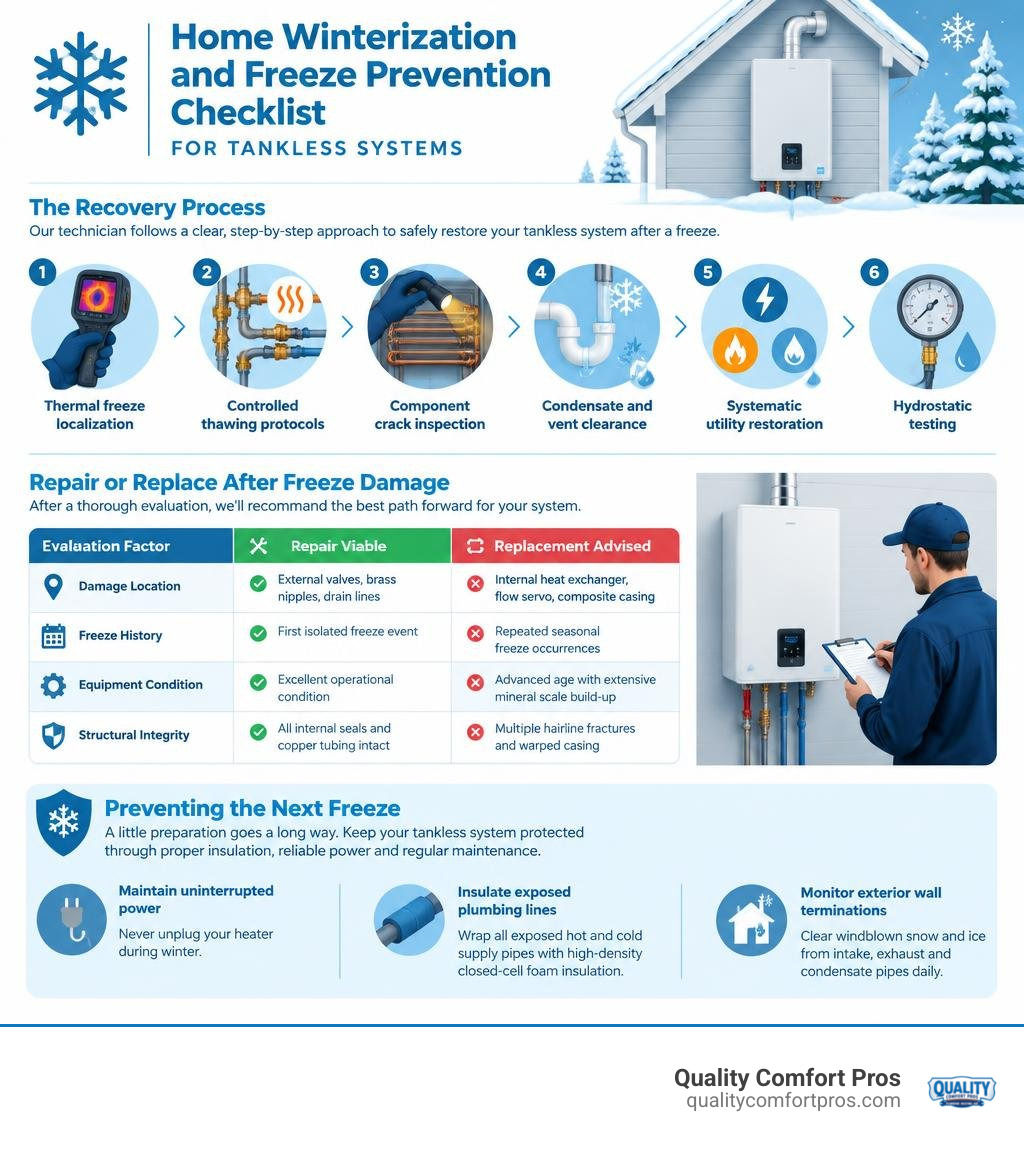
Implement these essential winter precautions. Each measure supports the unit’s built-in freeze protection and reduces exposure to cold air. Schedule service before a severe weather pattern makes access more difficult.
- Maintain uninterrupted power: Keep the unit powered during normal winter use so its built-in electric freeze-protection heaters can work. Switch off the breaker only when the unit is already frozen, and leave it off until our plumber arrives.
- Insulate exposed plumbing lines: Wrap all exposed hot and cold supply pipes with high-density closed-cell foam insulation and weatherproof overwrap.
- Monitor exterior wall terminations: Clear windblown snow and ice build-up away from your intake, exhaust, and condensate discharge pipes daily.
- Establish backup electrical power: Keep a generator ready for severe winter outages so your home maintains heating and internal freeze protection.
- Schedule professional seasonal shutdowns: If you own an unoccupied cottage, schedule comprehensive draining before winter temperatures arrive.
Ready.gov recommends installing carbon monoxide detectors with battery backup in central locations on every level of your home and using a generator only outdoors and away from windows. Learn more about severe weather backup planning at Ready.gov power outages. To safeguard seasonal cottages or primary residences around Gaylord, MI, schedule our professional winterization services before deep winter arrives. Routine seasonal inspections and comprehensive tankless maintenance keep your heating equipment running efficiently all winter long.
Frequently Asked Questions About Frozen Tankless Water Heaters
Why do tankless water heaters freeze more easily than tank heaters?
Tankless units lack a large reservoir of standing hot water that naturally radiates heat to surrounding components. Their narrow internal heat exchanger waterways hold very little water, allowing ice crystals to form quickly during cold snaps.
What are the first signs my tankless water heater is frozen?
The most common initial sign is a complete loss of water flow or only a weak trickle when opening hot taps. You may also notice ignition fault codes on the digital display or visible frost on the inlet lines.
What should I do first if I think my unit is frozen?
Shut off the cold water supply valve to the unit if you can safely reach it, and switch off power at the breaker panel. Open an indoor hot water tap slightly to relieve internal pressure, and contact our team immediately for service.
Should I try to thaw the unit myself?
You should never attempt DIY thawing using open flames, heat guns, space heaters, or hair dryers. Uncontrolled heating can warp delicate sensors, split internal copper tubing, or create dangerous steam pressure pockets inside the heat exchanger.
Does built-in freeze protection work during a power outage?
Built-in electric freeze-protection heaters rely entirely on continuous electrical power from your home. If a winter blizzard knocks out grid power, these internal heating devices deactivate and leave your system vulnerable to freezing.
Can a frozen tankless water heater be repaired?
If freezing was limited to external piping, brass valves, or replaceable fittings, we can usually repair the damaged sections. However, if the internal heat exchanger split from ice expansion, complete equipment replacement is generally recommended.
Will a dripping faucet keep my tankless unit from freezing?
Leaving a dripping faucet open is not a reliable method to prevent a tankless system from freezing. A low trickle does not produce enough flow to activate the burner, so we recommend proper insulation and electrical freeze protection instead.
Can an indoor tankless unit freeze in a garage or basement?
Yes, unheated garages, crawl spaces, and exterior utility rooms frequently experience freezing temperatures during Northern Michigan cold snaps. Cold outdoor air can also backdraft through exhaust vents directly into the unit during strong winter windstorms.
How should I prepare a seasonal cottage’s tankless heater for winter?
Seasonal properties must have their water supply shut off and all internal water completely evacuated. Draining and winterizing a cottage’s tankless unit should always be handled by our team using compressed air and dedicated isolation valves.
When should I call Quality Comfort Pros?
Call Quality Comfort Pros immediately if you experience zero hot water flow during freezing weather, notice error codes, or spot leaks. We will safely thaw the equipment, inspect for internal fractures, and restore your hot water supply.
Conclusion
Quality Comfort Pros has been serving Northern Michigan since 1997. We take pride in delivering dependable plumbing, heating, and cooling solutions to our neighbors across Gaylord, MI, Petoskey, MI, and surrounding communities. When extreme winter weather threatens your home, our experienced team responds as quickly as conditions allow to protect your mechanical systems. We focus on safe, practical service that helps homeowners regain reliable hot water after a freeze.
Do not let subzero temperatures leave your family without reliable hot water this winter. If you suspect an ice blockage or want to schedule seasonal plumbing care, contact our team today to book a service visit. Prompt professional attention can help identify damage before it leads to a larger plumbing problem.
Quality Comfort Pros, 1641 S Otsego Ave, Gaylord, MI 49735