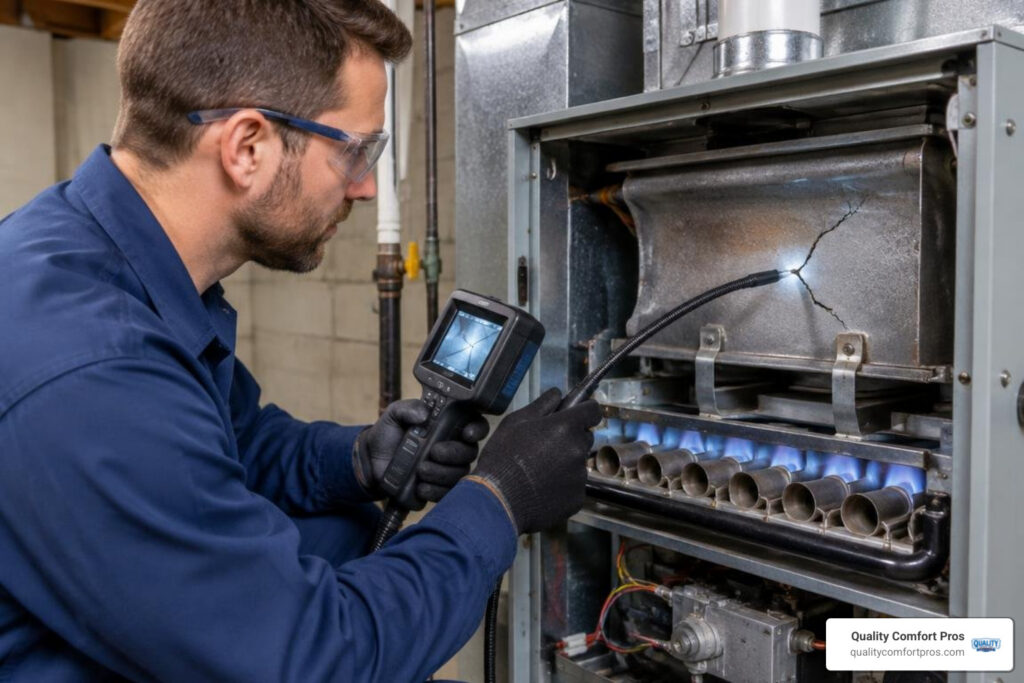
Air duct sealing begins with safe observation, not work inside the duct system. Compare airflow between rooms, check that return grilles remain clear, and replace a loaded filter. Leave attic entry, insulation removal, airflow measurements, and joint sealing to our team.
I’m JD Osman, owner of Quality Comfort Pros, with more than 20 years of experience in home services across Northern Michigan. In this guide to air duct sealing, I will walk you through where Northern Michigan homes lose heated air, the signs you can notice yourself, and what our technician does to find and seal the leaks.
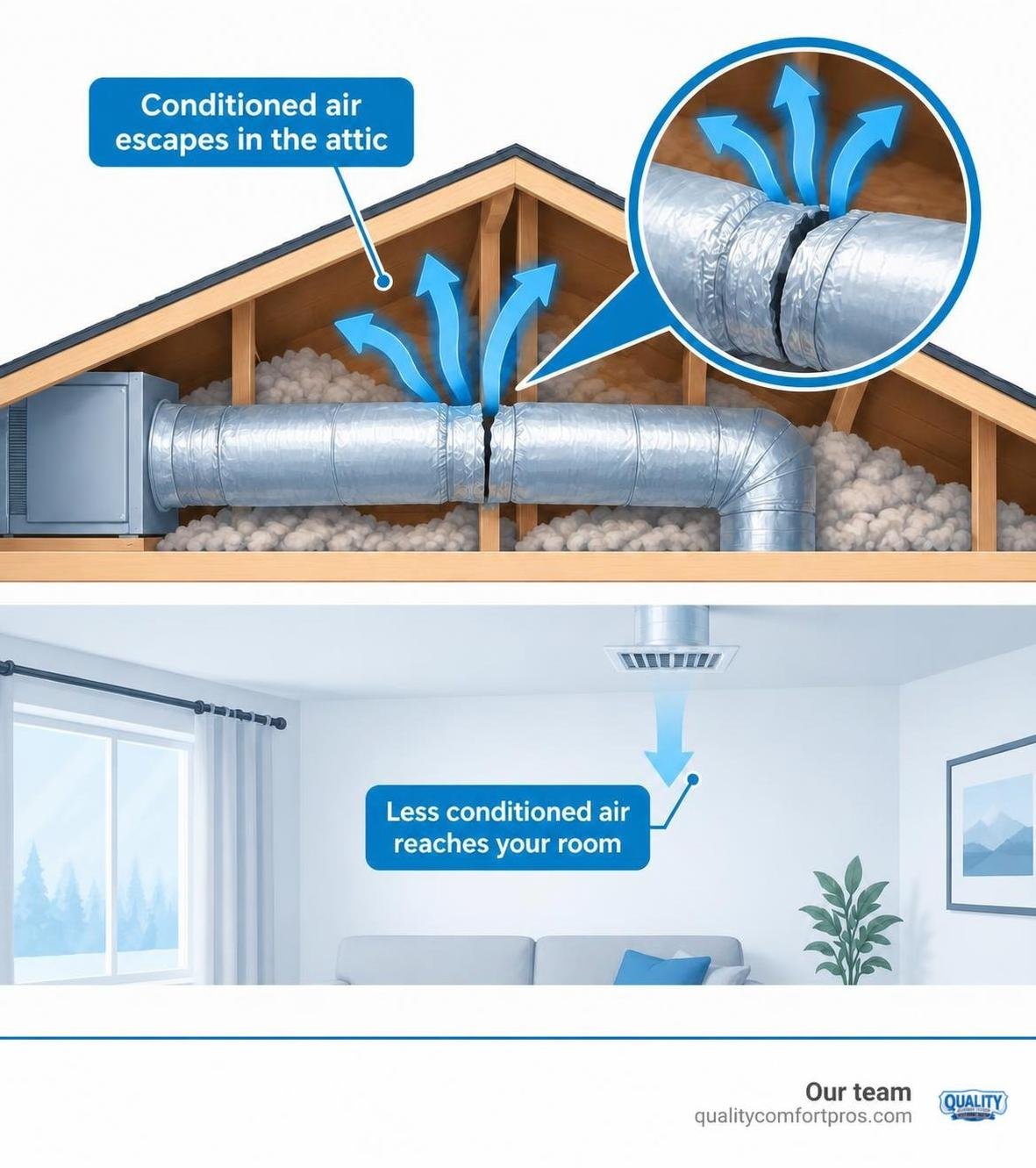
Where Gaylord Homes Lose Heated Air
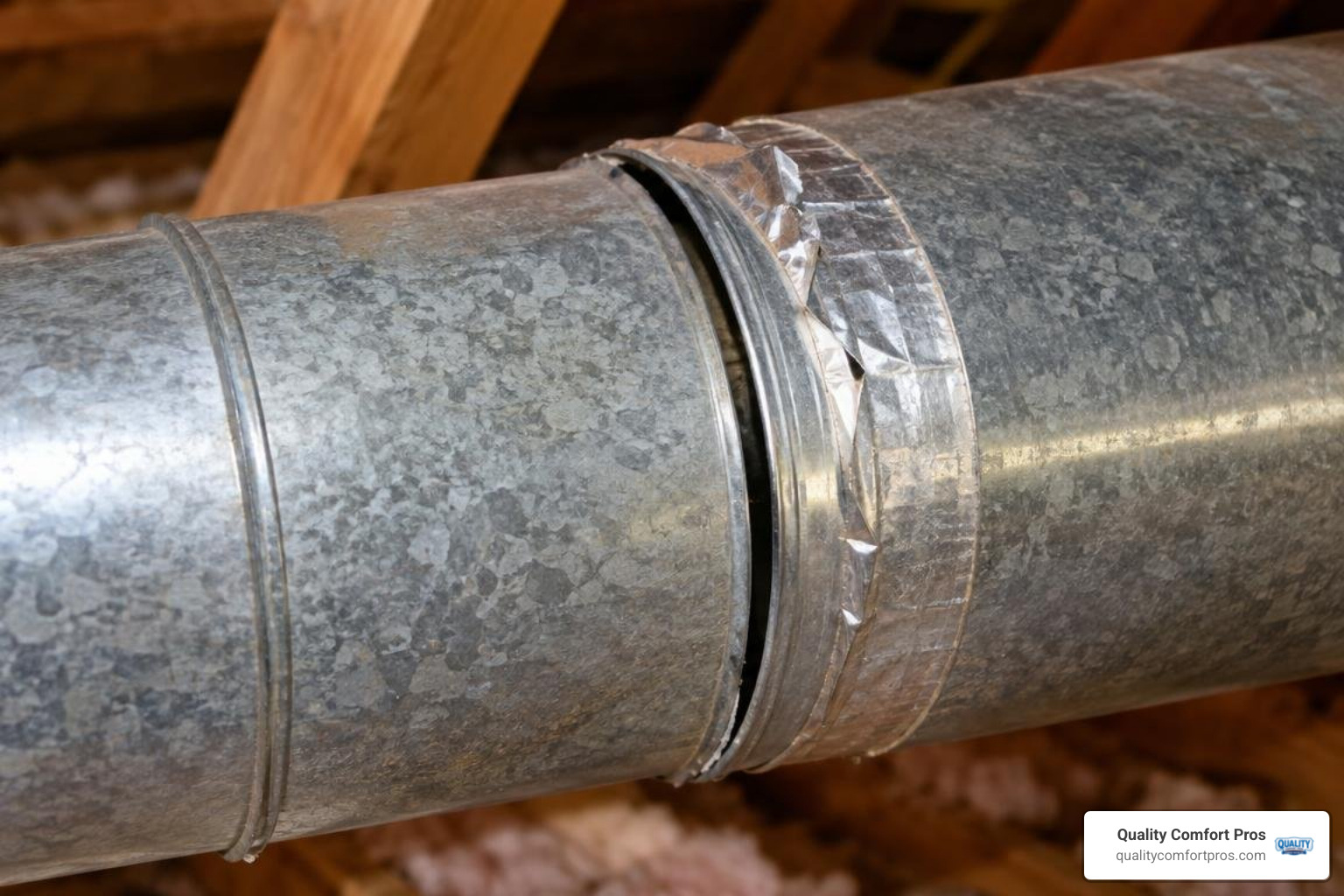
Ducts outside conditioned rooms can lose heated air before it reaches supply registers. Attics, crawl spaces, garages, and older additions often contain runs exposed to extreme seasonal conditions. Freeze-thaw cycles can loosen connections, while older flex duct and duct board can deteriorate over time. Rodents, missing insulation, and weak takeoff connections can create additional airflow problems in Northern Michigan homes.
Warning Signs That Your Home Needs Air Duct Sealing
Northern Michigan homes often lose heated air through ducts outside the living space. ENERGY STAR duct sealing notes that in a typical house about 20 to 30 percent of the air that moves through the duct system is lost due to leaks, holes, and poorly connected ducts. Uneven comfort can point to a ductwork concern when ordinary filter and register checks do not explain the change.
Rooms That Never Warm Up
Cold bedrooms can signal that heated air is escaping before reaching distant registers. Compare how each room feels while the heating system operates normally. Persistent differences may point to duct disconnections, crushed flex duct, or poor airflow balance. Common duct problems can help homeowners recognize patterns worth reporting.
A Furnace That Runs Constantly
A furnace may run longer when heated air does not reach the rooms it serves. This concern can also relate to filters, thermostat settings, or equipment performance. Note which rooms remain cold and when the system seems to run continuously. A winter furnace checkup can help identify related heating concerns.
Dust, Stuffy Rooms, and Uneven Airflow
Leaky return ducts can pull dust, insulation fibers, and damp air into the system. Rooms may feel stuffy when supply airflow weakens before reaching the register. Whistling sounds near vents can also indicate restricted or disconnected duct pathways. Our team can determine whether duct leakage contributes to these comfort concerns.
Ducts You Can See in the Attic, Crawl Space, or Garage
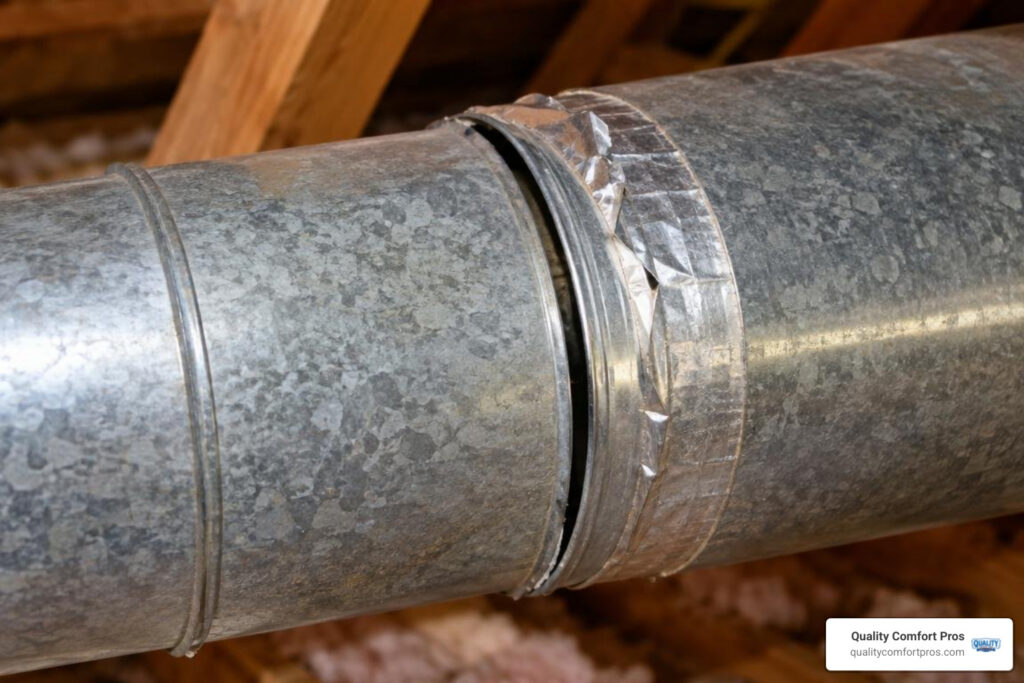
Visible gaps, sagging flex duct, rodent damage, and missing insulation can expose parts of the system. Avoid entering unsafe attic spaces, cutting insulation, or attempting to seal duct joints. Those tasks require our team and the right service process.
Safe Checks Before You Call
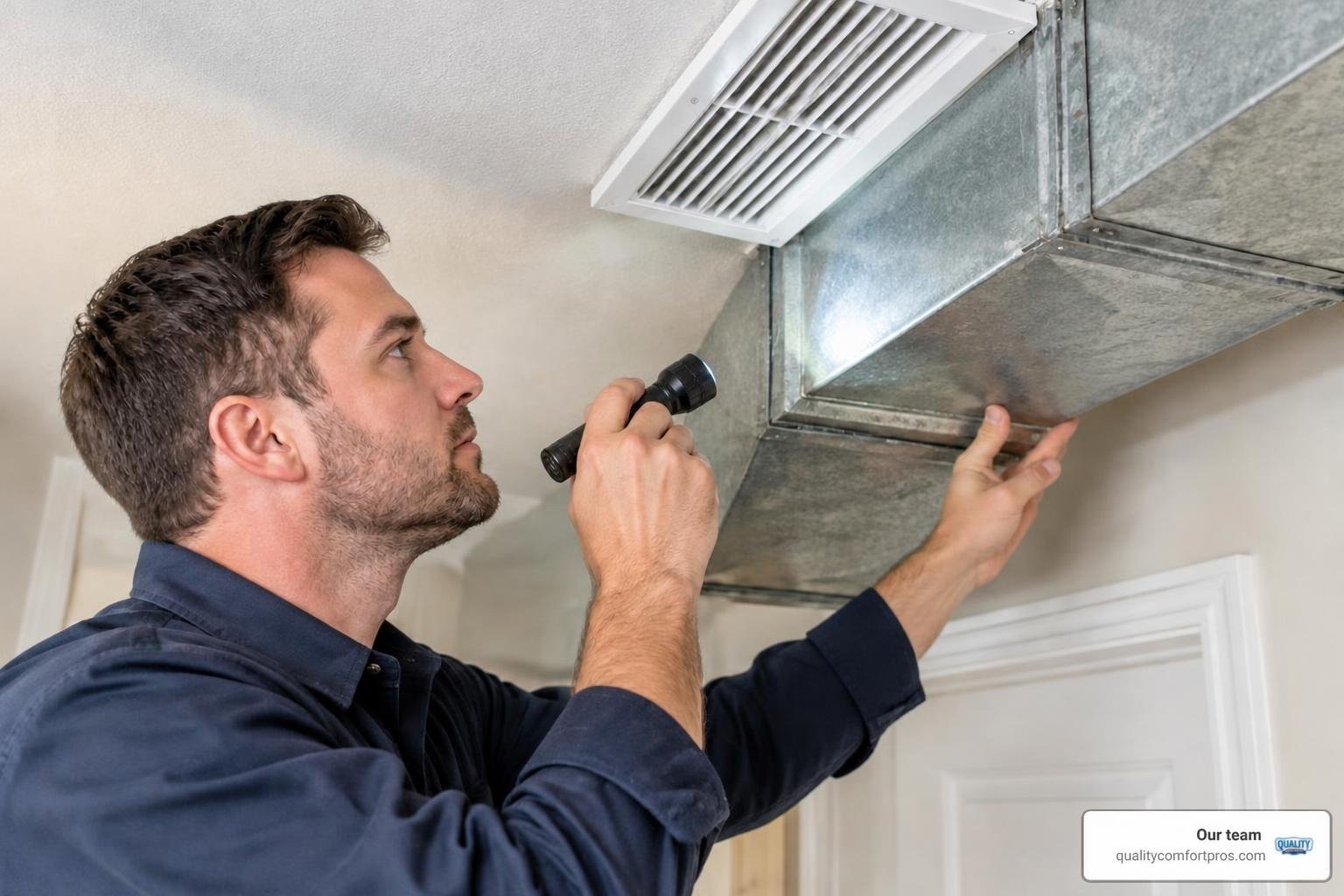
With the fan running, compare airflow at registers in different rooms without removing equipment covers. Check that return grilles are clear of furniture, rugs, and household items that restrict circulation. From a safe location, look for visible disconnected or kinked flex duct near accessible attic, crawl space, or garage areas. Replace a loaded filter if it is due for routine replacement.
Climbing into an attic during winter can create safety and insulation concerns. Cutting insulation, reconnecting ductwork, and sealing joints are jobs for our team. We inspect accessible attic and crawl space sections, register connections, and visible duct runs. We also measure airflow at key points and check each register before leaving.
Keep notes about the rooms that feel cold, stuffy, or unusually dusty before scheduling service. Mention whether the concern appears during heating, cooling, or both seasons. Those details give our team useful context before inspecting the duct system. They can also help distinguish a duct issue from another HVAC concern.
How Our Technician Finds and Seals Duct Leaks
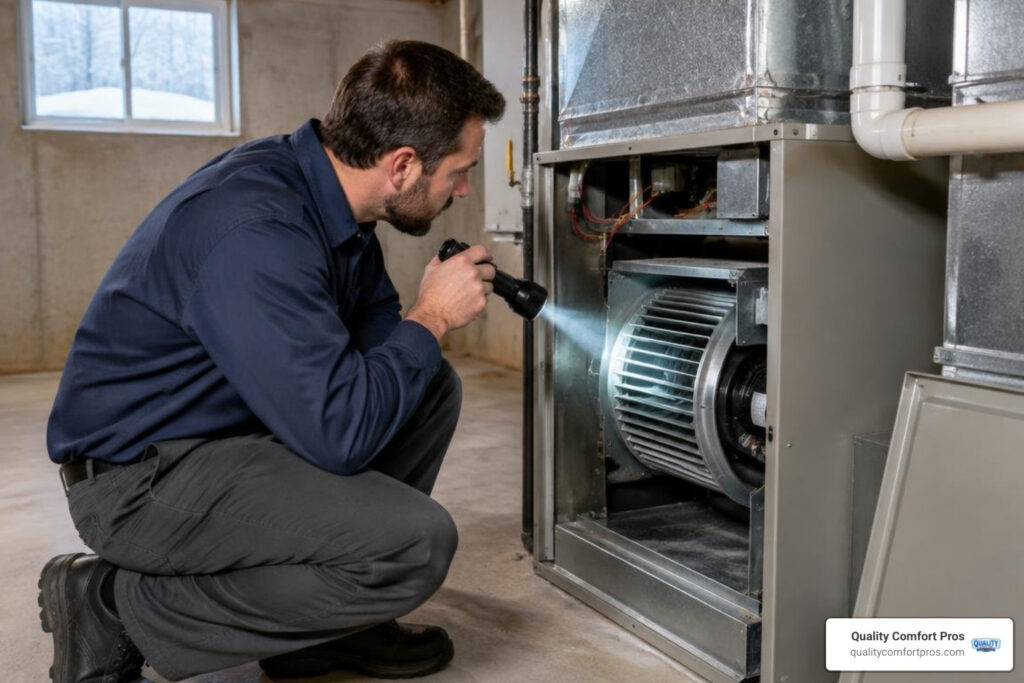
Our team begins with a full visual inspection of accessible duct runs, attic and crawl space sections, and register connections. We look for separated connections, loose takeoffs, damaged flex duct, compromised duct board, and missing insulation. Airflow measurements at key points show which parts of the system need closer attention. Before leaving, we check airflow at each register to confirm how air reaches the rooms it serves.
| Service Step | What Our Team Checks | Why It Matters |
|---|---|---|
| Visual inspection | Accessible runs, connections, duct supports, and register connections | Identifies visible damage or separation |
| Airflow measurement | Airflow at key points and at each register | Shows which rooms get too little air |
| Duct repairs | Connections, takeoffs, insulation, and dampers | Restores dependable airflow |
We reconnect separated duct runs and seal accessible joints and takeoffs. Exposed sections may also need insulation when they run through unconditioned areas. Damper adjustments can improve airflow delivery to rooms that receive too little heat. Our duct repair service addresses damaged or disconnected ductwork safely.
Before repairs begin, our team checks whether loose duct supports contribute to the problem. Secure support helps prevent flex duct from sagging and pulling at connections. We also examine takeoffs where branch lines meet larger trunk ducts and boots where ducts meet room registers. Those joints are common leak points because movement and seasonal temperature changes can gradually loosen them.
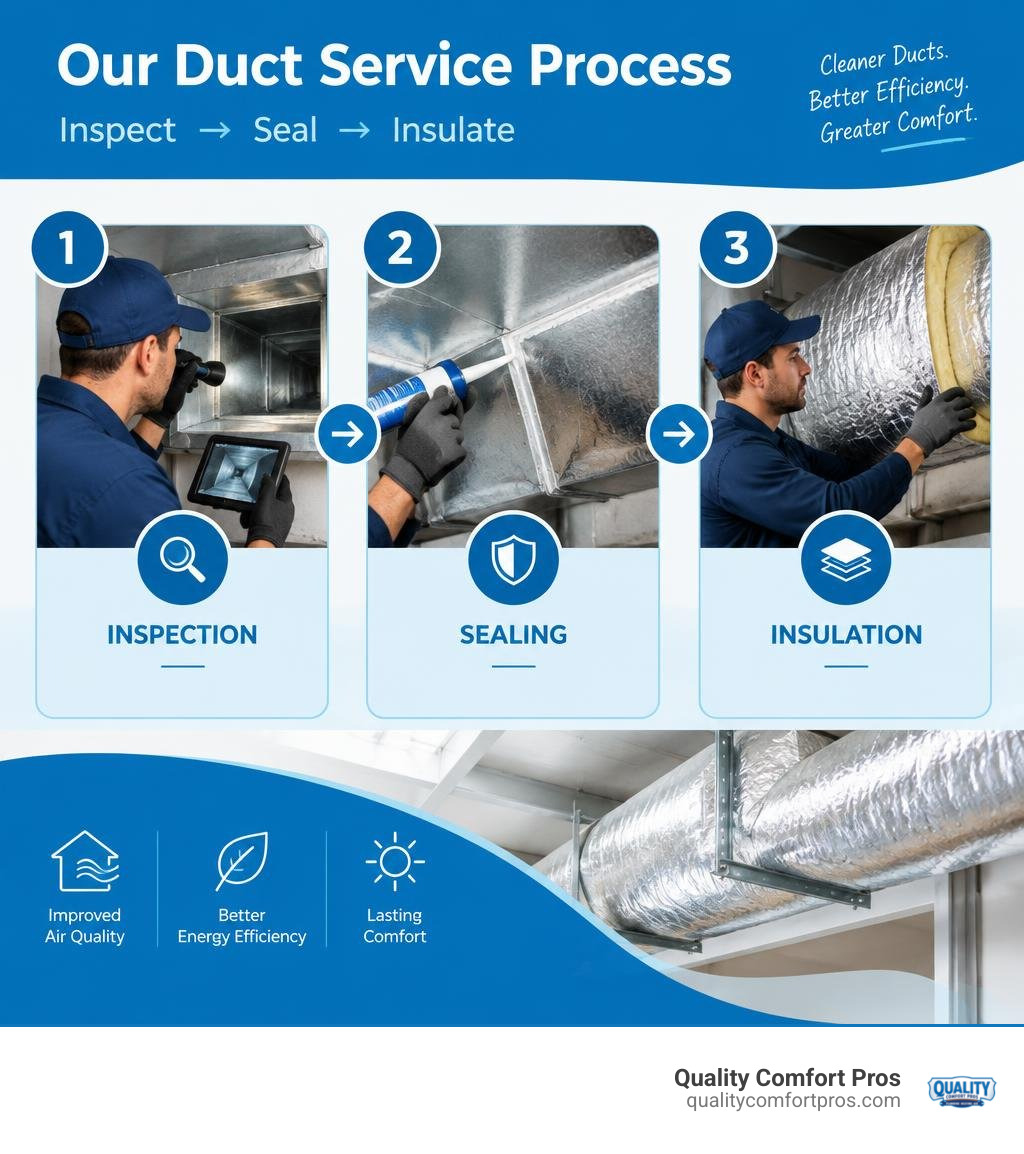
Some duct systems need more than a simple connection repair. Fiberglass duct board can deteriorate at seams over decades, while flexible duct can sag, tear, or separate when supports weaken. We check furnace airflow after repairs and confirm airflow at each affected register. A duct installation assessment can help when the duct layout needs broader attention.
After repairs, we compare airflow at the equipment and affected rooms. This follow-up helps confirm that reconnected ducts and adjusted dampers support more balanced comfort. If a damaged run cannot be repaired reliably, our team explains replacement options based on the duct layout, accessibility, and condition found during service.
Repair planning also considers surrounding materials and access points. Damaged insulation, unsupported runs, and repeated disconnections can affect which repairs will last. Cloth duct tape is not a dependable repair because normal movement and temperature changes can cause it to lose its hold. We explain visible concerns and the practical next steps without asking homeowners to attempt risky repairs.
Homeowners do not need to diagnose the exact location of a leak before calling. Noting uneven temperatures, weak airflow, or visible damage provides a useful starting point. We handle the inspection, airflow measurements, and repair work while protecting the home. After sealing, homeowners often notice rooms feel closer in temperature, furnace run times become shorter, and less dust moves through the living space.
A Recent Service Call in Gaylord
A homeowner in Gaylord had two bedrooms that stayed cold all winter while the rest of the house was comfortable. The furnace ran constantly but could not close the gap. Our technician found that the flex duct runs serving those rooms had come disconnected at two takeoffs and were dumping heated air directly into the attic. We reconnected and sealed both runs, added insulation wrap to the exposed sections, and balanced the dampers at the trunk line. The rooms reached temperature for the first time in years, and the furnace run time dropped noticeably. Homeowners with similar concerns can explore Gaylord ductwork services.
Sealed Ducts and Indoor Air
Leaky return ducts can pull dust, insulation fibers, and moisture into the circulating air stream. Sealing helps keep the air path closed between the equipment and living spaces. The EPA mold guide explains that the key to mold control is moisture control, and that wet or damp spots should be dried within 24 to 48 hours to prevent mold growth. Moisture concerns near ductwork should be evaluated before they spread into surrounding materials.
Our team performs a full visual inspection of accessible duct runs, attic and crawl space sections, and register connections. We measure airflow at key points, then check airflow at each register before leaving. These observations show which rooms receive too little conditioned air and guide the repairs that make sense for the system.
This review also separates duct leakage from other heating concerns. Restricted filters, closed registers, and equipment issues can create symptoms that resemble leaking ducts. Our team considers those factors before recommending a repair, so the solution is based on the home’s actual airflow pattern.
Keeping the Air Path Closed
Sealed and insulated duct runs help keep attic air, dust, and moisture outside the air stream. This matters most when ductwork passes through attics, crawl spaces, garages, or other areas outside the living space. Takeoffs and register boots deserve attention because they connect moving air paths at joints that can loosen over time. Homes with older ductwork may benefit from a service visit when comfort changes from room to room.
We check accessible ducts for loose connections, damaged insulation, and areas where outside air may enter. After sealing work, we measure airflow at key points and check each register to see whether the system is delivering air more evenly. Clear findings make it easier to address duct concerns without unnecessary disruption inside the home. Routine furnace maintenance can also help identify airflow concerns before they continue affecting comfort.
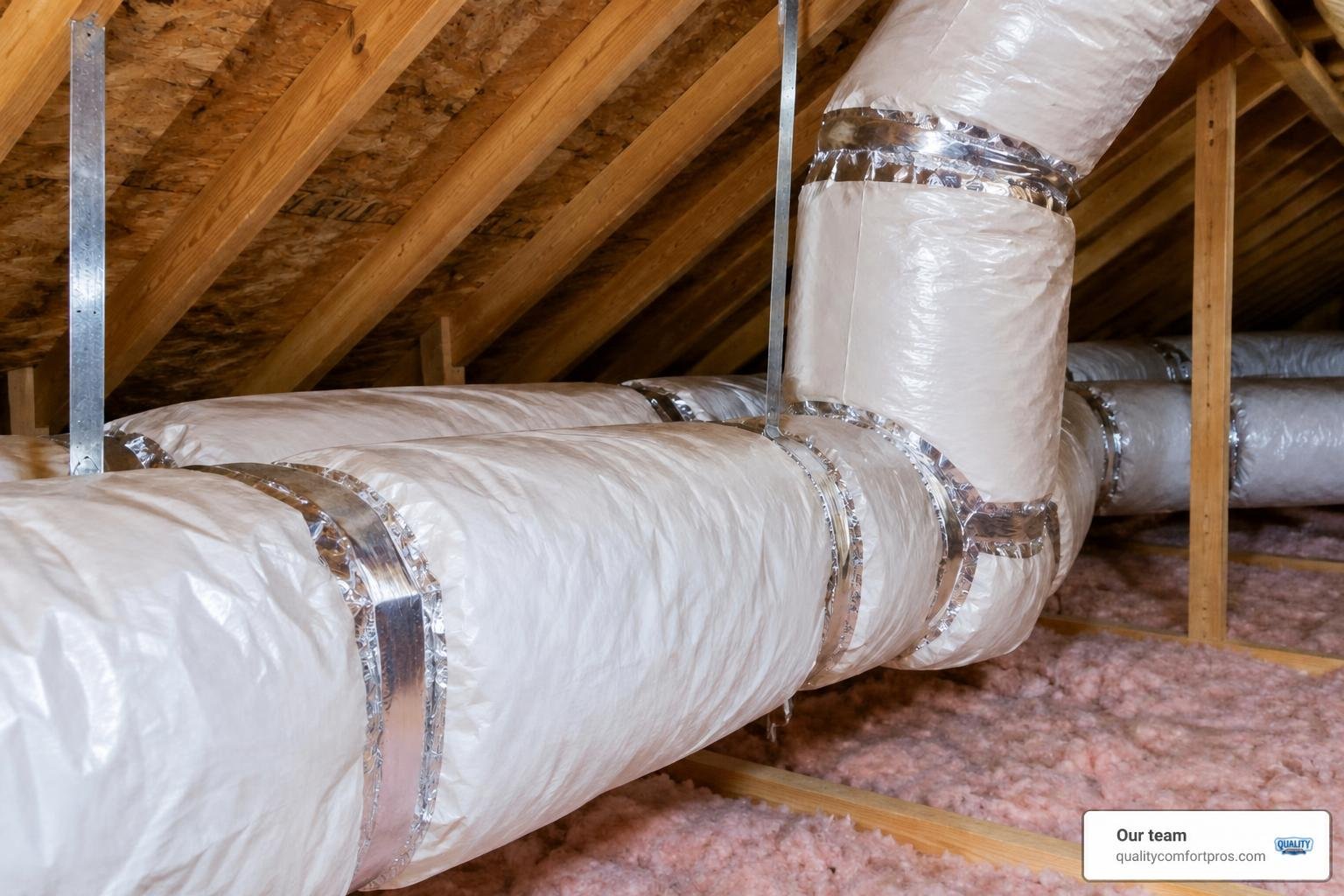
Insulated ductwork can reduce temperature swings along runs outside the living area. Attic and crawl space conditions place additional stress on exposed duct materials, especially older flex duct and fiberglass duct board. We check insulation condition during service and recommend appropriate repairs that support more even comfort across rooms.
Indoor air concerns can become more noticeable when return ducts draw from dusty spaces. Keeping return pathways sealed helps reduce unwanted material entering the airflow. Our team also checks for obvious moisture conditions around accessible ductwork. Those observations help homeowners address comfort and air-quality concerns with appropriate service.
Duct leakage can affect comfort differently from room to room. A distant bedroom may receive less heated air while nearby rooms remain comfortable. We compare these patterns with the duct layout and available return airflow. This information helps identify whether duct repairs are likely to improve the imbalance.
Frequently Asked Questions About Air Duct Sealing
How do I know if my ducts are leaking?
Duct leaks can cause rooms to feel unevenly heated or cooled, especially when the system runs normally. Weak airflow, persistent dust, and unusual noises near vents can also suggest a ductwork concern. Our team can inspect accessible runs and determine whether leakage contributes to those symptoms.
Why are my bedrooms colder than the rest of the house?
Bedrooms farther from the heating equipment may receive less airflow when ducts are disconnected, damaged, or poorly supported. Closed registers, blocked returns, and equipment concerns can create similar comfort problems. Our team evaluates the duct layout and airflow patterns before recommending repairs.
Can leaky ducts make my furnace run longer?
Leaky ducts can let heated air escape before it reaches the rooms your furnace is meant to serve. The system may then run longer while some rooms remain uncomfortable. Our team checks ductwork and related airflow conditions to identify the source of the problem.
Is cloth duct tape a good way to seal ducts?
Cloth duct tape is not a dependable long-term repair for ductwork connections or damaged runs. Temperature changes and normal system movement can cause temporary household repairs to fail. Our team selects an appropriate sealing approach based on the condition and location of each accessible joint.
Should ducts in an attic or crawl space be insulated?
Ducts in unconditioned spaces often need insulation to help protect the conditioned air moving through them. Insulation works best when accessible duct connections are properly sealed first. Our team can assess exposed runs and recommend practical repairs for the home’s layout.
Does duct sealing reduce dust in the house?
Sealing return ducts can help limit dust, insulation fibers, and damp air entering the circulating air stream. It may also reduce the amount of unwanted material pulled from attics or crawl spaces. Our team can determine whether duct leakage is contributing to indoor comfort concerns.
Can mice damage ductwork?
Mice and other rodents can damage flexible duct runs, insulation, and connections in attics or crawl spaces. This damage may reduce airflow or allow conditioned air to escape before reaching rooms. Our team can inspect accessible areas and explain which repairs are appropriate.
How does our technician test for duct leaks?
Our team begins with a full visual inspection of accessible duct runs, attic and crawl space sections, supports, and register connections. We measure airflow at key points and check airflow at each register before leaving. The findings guide repairs and show which rooms receive too little air.
Does duct sealing help in summer too?
Duct leakage can affect cooling comfort when conditioned air escapes before reaching supply registers. Rooms may feel warmer, stuffier, or less balanced during hot weather. Our team can evaluate whether duct repairs may improve airflow during both heating and cooling seasons.
When should I call Quality Comfort Pros about my ductwork?
Reach out when one area feels consistently colder or warmer than nearby rooms despite normal system operation. A review is also useful if airflow changes suddenly, dust becomes more noticeable, or ductwork looks damaged from a safe viewing area. Our team can identify whether the concern involves ducts, airflow balance, or another part of the HVAC system.
Conclusion
Quality Comfort Pros has been serving Northern Michigan since 1997. When rooms stay cold, airflow feels uneven, or dust seems persistent, a duct inspection can clarify the cause. Our team can evaluate accessible runs, measure airflow, and recommend appropriate repairs. For help with your home, contact our team to schedule a ductwork inspection.
A ductwork evaluation helps homeowners understand uneven comfort without attempting unsafe repairs. Our team can explain the findings and recommend practical next steps for the home’s duct system. That service is especially useful when visible damage or persistent cold rooms create recurring concerns.
Quality Comfort Pros, 1641 S Otsego Ave, Gaylord, MI 49735