Is Replacing Your Furnace and AC With a Heat Pump Actually Worth It?
Choosing between a heat pump vs AC and furnace is one of the most important home comfort decisions you can make, and the answer is not the same for every household. As energy landscapes shift and technology advances, homeowners are increasingly looking for ways to optimize their indoor climate control while keeping operational costs manageable. Historically, the standard approach to home heating and cooling in regions with distinct seasons has been a split system, consisting of a central air conditioner for the summer and a combustion furnace for the winter. However, modern electric heat pumps have emerged as a highly viable alternative, capable of handling both heating and cooling demands within a single, integrated unit.
Here is a quick summary to help you decide:
| Factor | Heat Pump | AC + Furnace |
|---|---|---|
| Heating and cooling | One system handles both | Two separate systems |
| Energy efficiency | Up to 3x more efficient for heating | Gas furnace: 95-97% AFUE |
| Best climate | Mild to moderate winters | Cold climates with harsh winters |
| Upfront cost | Comparable, rebates available | Comparable total system cost |
| Annual savings potential | $300 to $1,500 in mild climates | Lower operating costs where gas is cheap |
| Lifespan | 12 to 15 years (runs year-round) | Furnace: 15 to 20 years |
| Environmental impact | Lower carbon footprint | Higher emissions from gas combustion |
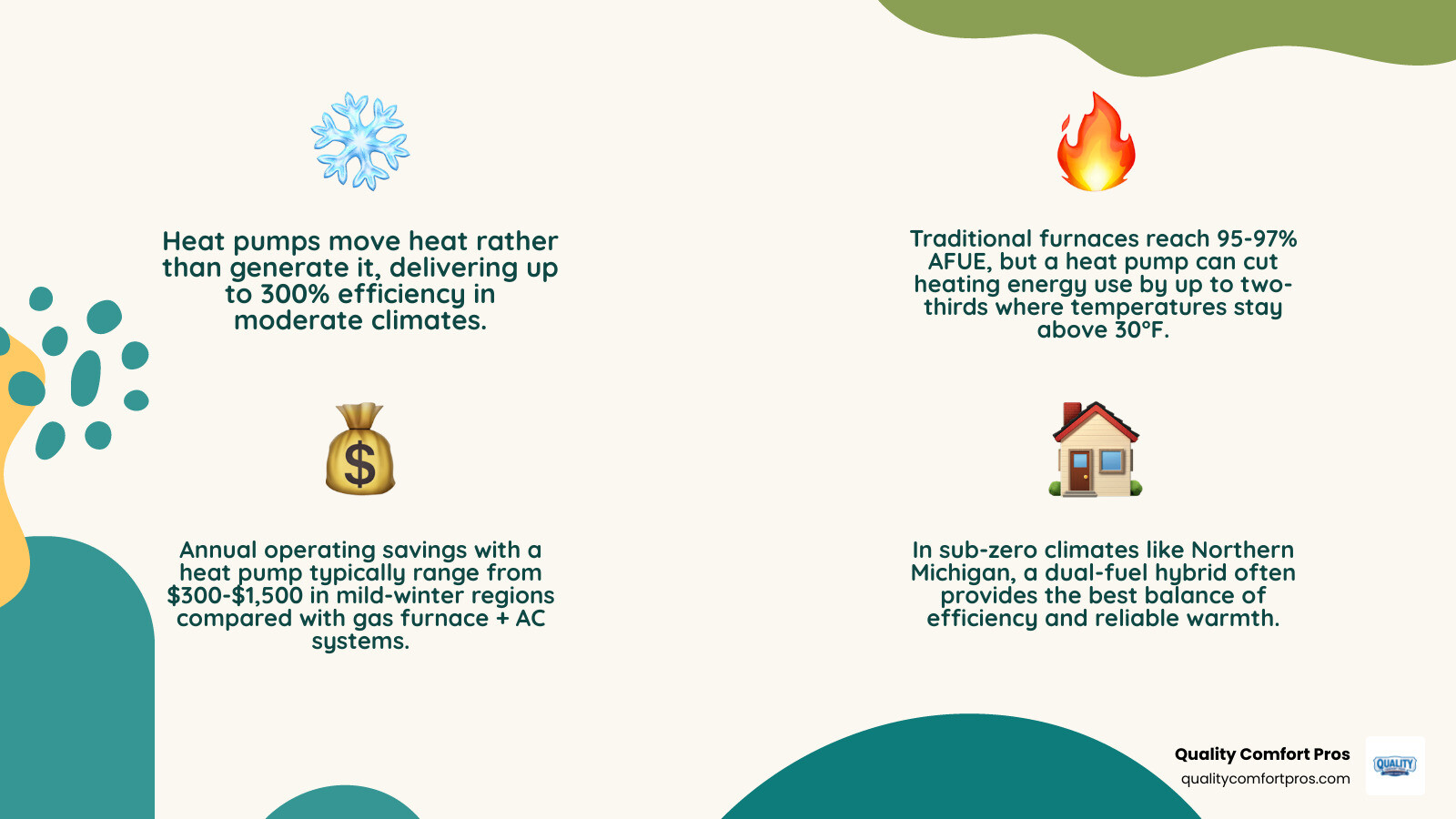
Bottom line: A heat pump can replace both your AC and furnace in one efficient unit, and it makes strong financial sense in mild to moderate climates. In colder regions like Northern Michigan, a dual-fuel hybrid system, pairing a heat pump with a gas furnace backup, often delivers the best of both worlds.
If your current HVAC equipment is aging, your energy bills are climbing, or you are planning a full system replacement, you have probably started wondering whether a heat pump could do the job better than your existing setup. It is a smart question. The HVAC industry has changed significantly, and homeowners today have more options than ever, from all-electric heat pumps that handle every season to hybrid systems that automatically switch between electricity and gas depending on the outdoor temperature.
The challenge is that the comparison is not straightforward. Climate, local energy rates, your home’s existing infrastructure, and how long you plan to stay in your home all play a role in which system wins for your specific situation. What works for a homeowner in Georgia may not be the right call for someone dealing with Northern Michigan winters in Gaylord, MI.
This guide breaks down everything you need to know clearly and honestly, so you can make a confident, well-informed decision.
I’m JD Osman, a home services industry expert and business owner at Quality Comfort Pros with over 20 years of experience in customer-focused solutions, including guiding homeowners through complex decisions like choosing between a heat pump vs AC and furnace system. I have helped countless Northern Michigan homeowners evaluate their HVAC options based on real-world performance, energy costs, and long-term reliability, and I will bring that same practical perspective to every section of this guide.
Understanding the Core Differences: Heat Pump vs AC and Furnace
To make an informed decision for your home, you must first understand how these systems differ fundamentally in their mechanical operations. While a traditional split system relies on two completely independent appliances to handle heating and cooling, a heat pump performs both tasks using a single refrigeration cycle.
The primary difference lies in the presence of a reversing valve in the heat pump. This specialized valve allows the system to change the direction of the refrigerant flow, essentially turning the cooling process backward to provide warmth. When you are looking at the key differences between a heat pump and an HVAC system, you find that a traditional central AC and furnace setup is highly specialized, with each unit operating for only half the year, whereas a heat pump is designed to operate year-round.
What is a Heat Pump and How Does It Differ From an AC?
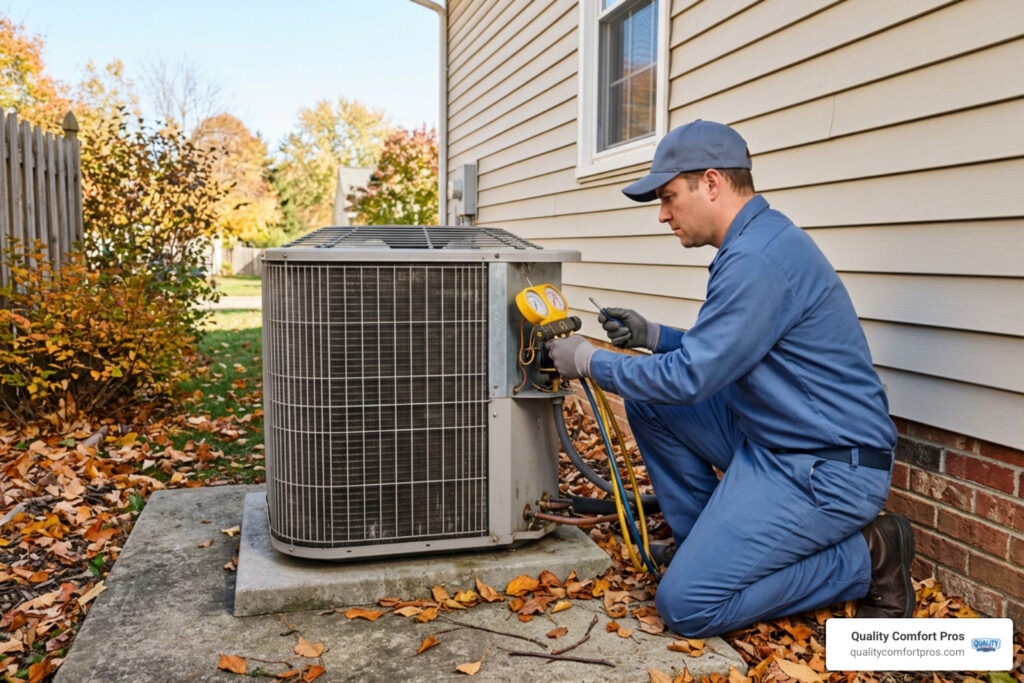
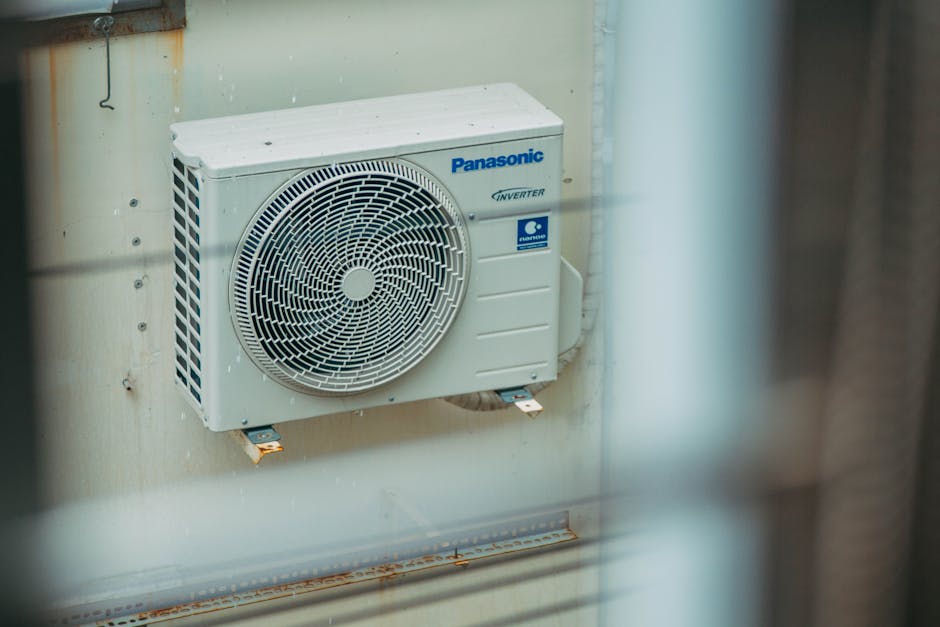
Visually, an outdoor heat pump looks nearly identical to a standard central air conditioner. In cooling mode, it performs the exact same function: it absorbs heat from your indoor air and transfers it outside. It relies on a compressor, an outdoor condenser coil, and an indoor evaporator coil to cycle refrigerant and lower indoor temperatures.
The magic happens when the weather cools down. While a standard AC shuts off for the winter, a heat pump reverses its cycle. It extracts heat energy from the cold outdoor air, compresses it to increase its temperature, and releases that heat indoors. According to the EnergySage guide on heat pump technology, heat pumps do not actually create heat; they simply move it from one place to another. This makes them incredibly energy efficient. In fact, you might even discover why your AC might actually be a heat pump in disguise if your outdoor unit has a reversing valve installed but is only configured for cooling.
The Upfront Investment: Heat Pump vs AC and Furnace Systems
When comparing the upfront financial commitment of a heat pump vs AC and furnace, you must look at the total system cost rather than individual component prices. Pricing can vary depending on several factors, including the size of your home, the efficiency ratings you select, and whether your existing ductwork requires modifications.
Generally, a standalone heat pump costs slightly more than a standalone central air conditioner of the same efficiency rating. However, because a heat pump replaces both your AC and your furnace, installing a single high-efficiency heat pump is often comparable to, or even more affordable than, purchasing a brand-new central AC and matching gas furnace together.
Furthermore, financial incentives have made heat pumps exceptionally attractive. Under the Inflation Reduction Act of 2022, which remains highly relevant in May 2026, homeowners can take advantage of substantial federal tax credits and state-level rebates for qualified high-efficiency installations. Choosing a professional heat pump installation ensures that your system is sized correctly and qualifies for these maximum savings.
| Cost and Incentive Factors | Heat Pump System | Traditional AC + Furnace |
|---|---|---|
| Equipment Components | Single outdoor unit + indoor air handler | Outdoor AC unit + indoor evaporator coil + indoor furnace |
| Installation Complexity | Moderate (all-electric setup or hybrid connection) | High (requires both electrical and gas line connections) |
| Federal Tax Credits | Up to 30% of total cost (capped at $2,000) | Up to $600 for AC; up to $600 for gas furnace |
| State and Utility Rebates | Up to $8,000 depending on household income | Smaller local utility rebates (typically under $500) |
How Heat Pumps and Traditional Systems Work in Different Seasons
To truly appreciate the engineering behind these systems, it helps to look at how they manage comfort during the transition from hot summer afternoons to freezing winter nights.
Cooling Mode: Why a Heat Pump and AC are Virtually Identical
During the summer, a heat pump and a standard central air conditioner operate in the exact same manner. Both systems utilize a closed loop of refrigerant to absorb heat from your home’s indoor air via the indoor evaporator coil. The compressor pumps this heated refrigerant to the outdoor condenser coil, where a large fan dissipates the heat into the outdoor air.
As the refrigerant cools and condenses, it returns indoors to repeat the cycle. Both systems provide excellent dehumidification, which is essential for staying comfortable during muggy summer days. If you choose systems with identical SEER2 (Seasonal Energy Efficiency Ratio 2) ratings, they will consume the exact same amount of electricity and cool your home with identical efficiency. If your cooling system ever struggles to keep up on a hot July afternoon, securing expert AC repair will restore your home’s comfort quickly, regardless of whether you own a heat pump or a traditional AC.
Heating Mode: Heat Pump vs AC and Furnace Efficiency
The real divergence occurs when the thermostat calls for heat. A traditional furnace relies on fuel combustion to generate heat. Whether burning natural gas, propane, or heating oil, the furnace ignites the fuel inside a heat exchanger, and a blower motor pushes the warmed air through your ductwork. Even the most advanced modern gas furnaces max out at around 98.5% AFUE (Annual Fuel Utilization Efficiency), meaning that for every dollar you spend on fuel, 1.5 cents is still lost through the exhaust flue.
A heat pump does not burn fuel. Instead, it uses electricity to run a compressor and circulate refrigerant, pulling existing heat from the outdoor air. Because it transfers heat rather than creating it, a heat pump can achieve a Coefficient of Performance (COP) of 3 to 4 under moderate conditions. This means it can deliver three to four times more heat energy than the electrical energy it consumes, making it up to 300% to 400% efficient. According to this guide on heat pumps and air conditioners, this heat transfer process drastically reduces a home’s carbon footprint, making heat pumps the most environmentally friendly heating option available today.
Climate Performance: Surviving Cold Winters in Gaylord, MI
While the high efficiency of a heat pump sounds incredible on paper, local climate is the ultimate deciding factor. In Northern Michigan, we experience some of the most demanding winter weather in the country.

When temperatures drop well below freezing in areas like Petoskey, MI, Charlevoix, MI, or Grayling, MI, your heating system must be incredibly robust. If your current heating system is struggling to keep up with the winter chill, exploring furnace replacement options is a critical step to ensure your family remains safe and warm.
How Cold Weather Affects Heat Pump Performance
As the outdoor temperature drops, the amount of heat energy available in the outdoor air decreases. Consequently, a standard heat pump must work much harder to extract that warmth, and its heating capacity drops.
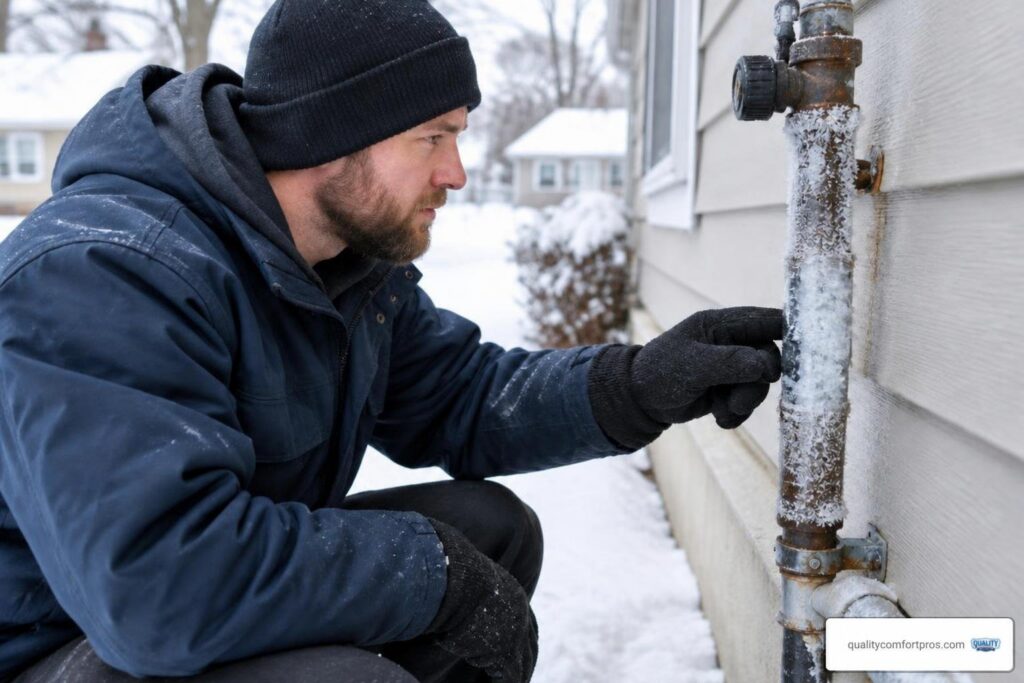
Historically, traditional heat pumps struggled to provide sufficient heat once temperatures dipped below 40 degrees Fahrenheit. However, modern cold-climate heat pumps feature variable-speed inverter compressors and advanced refrigerant chemistry, allowing them to operate efficiently at temperatures as low as -13 degrees Fahrenheit. While these systems are highly advanced, their efficiency does decrease during extreme sub-zero cold snaps, which are common in Northern Michigan.
Auxiliary Heat and Backup Systems
To prevent homeowners from freezing during extreme cold spells, heat pumps are installed with an auxiliary heating source. In an all-electric home, this backup heat typically comes in the form of electric resistance heat strips installed inside the indoor air handler.
Electric resistance heat is highly reliable, but it is also incredibly expensive to run. If your heat pump relies heavily on these backup electric strips during a long, freezing Northern Michigan winter, your monthly electric bills can skyrocket. This is why pairing a heat pump with a gas or propane furnace is often the most sensible solution for our local climate.
Comparing Lifespan, Maintenance, and Long-Term Reliability
Investing in a new heating and cooling system is a long-term commitment. Understanding how each setup handles wear and tear over time will help you budget for future maintenance and eventual replacement.
System Lifespan and Wear
A traditional gas furnace typically boasts a lifespan of 15 to 20 years. Because it only operates during the heating season, its mechanical components rest for half the year, preserving their condition. A central air conditioner, running only during the summer, can easily last 15 years with proper care.
In contrast, a heat pump works year-round. It operates as your air conditioner in the summer and your primary heater in the winter. Because it accumulates twice as many operating hours annually, a heat pump typically has a shorter service life, usually lasting between 12 and 15 years. Regular checkups are essential to protect your investment, and scheduling seasonal heating maintenance is the best way to prevent unexpected breakdowns when you need comfort the most.
Maintenance Requirements for Each Setup
Because a heat pump never gets a season off, its maintenance schedule is more demanding than a traditional setup:
- Traditional AC + Furnace: Requires an AC tune-up in the spring and a furnace inspection in the fall.
- Heat Pump: Requires professional service twice a year, before the cooling season starts in the spring and before the heating season begins in the fall.
- Air Filters: Regardless of the system you choose, you must replace your indoor air filters every 30 to 90 days to maintain proper airflow and indoor air quality.
The Dual-Fuel Hybrid System: The Best of Both Worlds
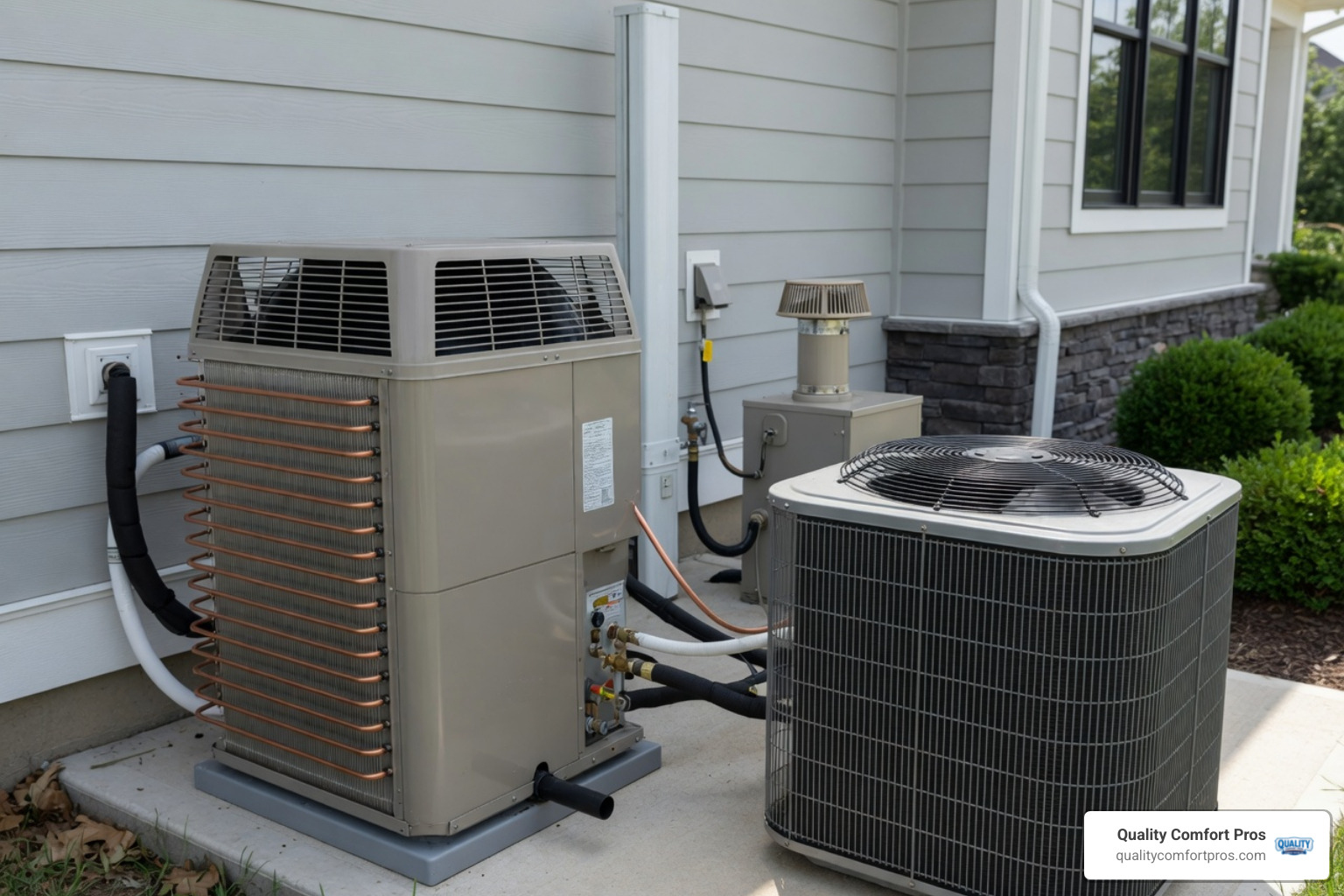
For homeowners in Northern Michigan, choosing between a heat pump vs AC and furnace does not have to be an all-or-nothing decision. A dual-fuel hybrid system combines the exceptional efficiency of an electric heat pump with the raw heating power of a gas or propane furnace.
In a hybrid system, the heat pump serves as your primary cooling source in the summer and your primary heating source during the mild days of spring and autumn. When the outdoor temperature is above 35 degrees Fahrenheit, the heat pump heats your home highly efficiently using electricity.
Once the temperature drops below that threshold, the system automatically switches to your gas furnace. This transition ensures that your home remains perfectly warm while keeping your utility bills as low as possible. If you are ready to upgrade your home comfort, exploring comprehensive HVAC services will help you find the perfect hybrid setup customized for your home.
Frequently Asked Questions about Heat Pumps and Furnaces
What is the main difference in a heat pump vs AC and furnace setup?
A heat pump is a single all-in-one system that handles both heating and cooling by reversing its refrigerant flow. A traditional AC and furnace setup relies on two separate systems: an air conditioner for cooling and a gas or oil furnace for heating.
How does a heat pump work in freezing temperatures?
Modern cold-climate heat pumps use advanced inverter compressors to extract heat energy from outdoor air even in sub-zero temperatures. However, in extreme cold, they typically rely on a backup heating source, such as electric resistance heat or a gas furnace, to maintain indoor comfort.
Is a heat pump more energy efficient than a gas furnace?
Yes, under moderate conditions. A heat pump can deliver up to three to four times more heat energy than the electricity it consumes, achieving up to 400% efficiency. In contrast, even the most efficient gas furnaces max out at around 98.5% efficiency.
Can I use a heat pump for both heating and cooling?
Yes. A heat pump is designed to handle both seasons. It functions exactly like a standard central AC in the summer and reverses its operation to heat your home in the winter.
What are the upfront costs of a heat pump vs AC and furnace?
The upfront costs can vary depending on several factors, including system size and efficiency. While a heat pump is slightly more expensive than a standalone AC, its total installation cost is highly comparable to purchasing a new AC and furnace together, especially when factoring in federal tax credits and rebates.
How long does a heat pump last compared to a furnace?
Because a heat pump operates year-round for both heating and cooling, it typically lasts 12 to 15 years. A traditional gas furnace, which only runs during the winter, can last between 15 and 20 years.
Are there federal tax credits available for heat pump installation in 2026?
Yes. Under the Inflation Reduction Act, homeowners can qualify for federal tax credits of up to 30% of the total installation cost, capped at $2,000, for qualifying high-efficiency heat pumps.
What is a dual-fuel hybrid heating system?
A dual-fuel system pairs an electric heat pump with a gas or propane furnace. The system automatically switches between the heat pump during mild weather and the furnace during extreme cold to optimize comfort and energy savings.
Does a heat pump dry out indoor air like a furnace does?
No. Because a heat pump transfers existing heat rather than burning fuel, it does not dry out your indoor air as severely as a traditional combustion furnace, resulting in more consistent indoor humidity levels.
Which system is better for the climate in Gaylord, MI?
Due to the extremely cold winters in Gaylord, MI, a dual-fuel hybrid system is highly recommended. This setup allows you to enjoy the high efficiency of a heat pump during the spring, summer, and fall, while relying on a powerful gas furnace during the coldest winter months.
Conclusion
Deciding between a heat pump vs AC and furnace comes down to your home’s unique layout, your budget, and your local climate. While an all-electric heat pump is an incredibly efficient and eco-friendly choice for milder regions, homeowners in Northern Michigan often find that a dual-fuel hybrid system offers the ultimate balance of energy savings and winter reliability.
Whether you need fast AC repairs, seasonal HVAC maintenance, or a complete system replacement, the team at Quality Comfort Pros is ready to help. Schedule your professional HVAC service today to discuss your options with our experienced technicians and find the perfect comfort solution for your home.