How to Prevent Frozen Pipes During a Northern Michigan Winter
Why Plumbing Freezes and Bursts in Cold Climates
#
To prevent frozen pipes, keep your home heated to at least 55 F, insulate exposed water lines, seal cold-air leaks, open sink cabinets on exterior walls, and let vulnerable faucets run at a slow drip during severe cold. Before temperatures plunge, also disconnect garden hoses, shut off and drain outdoor faucet supply lines, and make sure everyone in the home knows where the main water shutoff valve is.
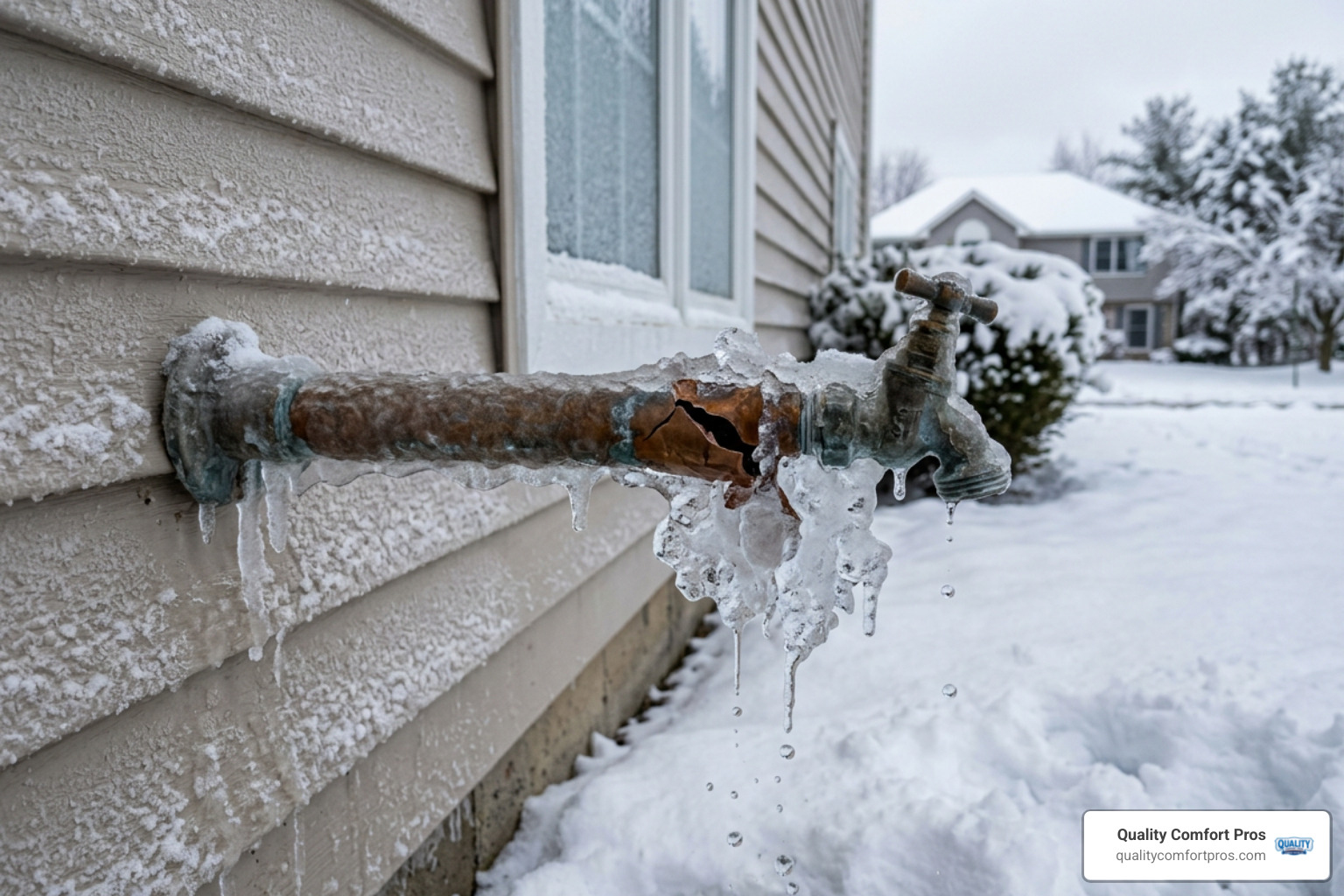
Northern Michigan winters can expose plumbing to long periods of freezing weather, especially in crawl spaces, garages, attics, exterior walls, and under kitchen or bathroom sinks. Water expands when it freezes, and an ice blockage can trap pressure in the pipe until a weak point cracks, sometimes far from where the ice formed.
The Quality Comfort Pros team brings more than 28 years of family-owned home service experience to Northern Michigan homeowners. In this guide, we will walk through how to prevent frozen pipes with practical steps that support year-round comfort, safety, and peace of mind.

Living in Northern Michigan means experiencing true winter beauty, but it also brings prolonged stretches of deep sub-freezing temperatures. When outdoor conditions plunge below freezing, the water inside residential plumbing systems begins losing thermal energy rapidly. If a plumbing line is positioned in an unheated zone or exposed to cold drafts, that stagnant water inevitably turns to ice.
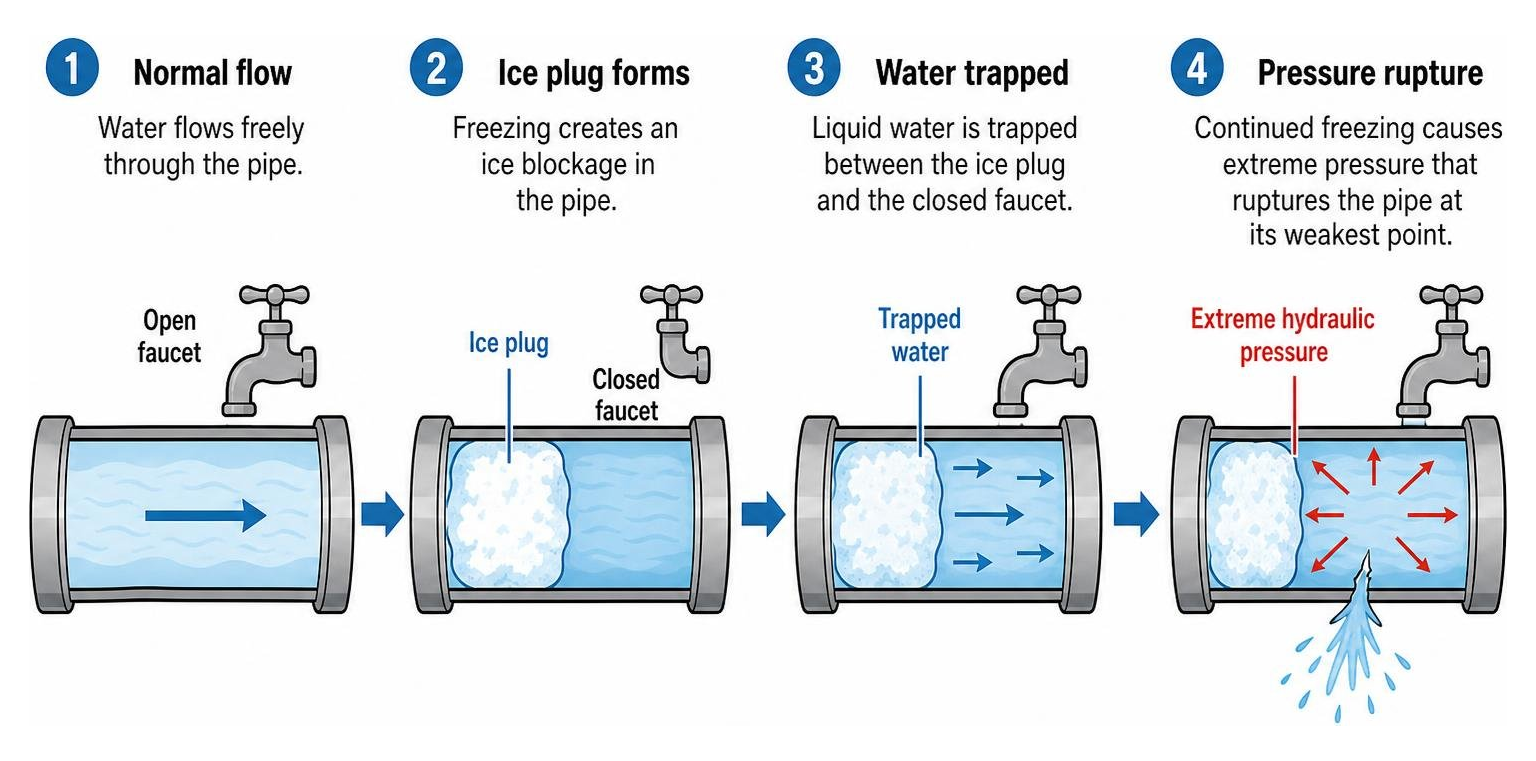
Many homeowners assume that ice itself tears through the pipe by expanding directly against the metal or plastic walls. While ice does expand, the actual mechanism behind catastrophic ruptures is hydraulic pressure buildup. When an ice blockage forms, it acts as an immovable plug inside the line. As freezing continues along the pipe, the trapped liquid water between the ice plug and a closed faucet has nowhere to go. That pressure dynamic can turn what seems like a minor cold snap into an emergency.
The Science of Ice Expansion and Hydraulic Pressure
The physics of freezing water are remarkably powerful. Water expands by roughly 9 percent in volume when transitioning from liquid to solid ice. This phase change can create extreme hydraulic pressure inside a closed plumbing line.
To put that into perspective, standard residential copper pipes are generally rated for much lower working pressures than severe ice-blockage pressure can create. When downstream water is trapped between a solid ice plug and a closed faucet fixture, the trapped water cannot compress. The resulting pressure spikes can exceed the structural limits of copper, CPVC, and even flexible plastic piping like PEX. The pipe wall inevitably fails at its weakest point, which might be a soldered fitting, a hairline flaw, or a section several feet away from the actual freeze point.
Most Vulnerable Locations for Pipe Freezes in Gaylord, MI Homes
Plumbing lines are not uniformly exposed to cold throughout a house. In our local climate across Gaylord, Grayling, Petoskey, and surrounding areas, specific architectural zones account for the vast majority of frozen pipe incidents:
- Exterior Walls: Kitchen and bathroom supply lines run inside outer walls that lack adequate insulation barriers.
- Unconditioned Crawl Spaces: Vented or uninsulated crawl spaces allow frigid winter air to blow directly across supply lines.
- Unheated Basements and Rim Joists: Cold drafts penetrating foundation sill plates directly chill exposed overhead plumbing.
- Attics: Lines routed through attic insulation rather than beneath the thermal boundary face extreme cold.
- Attached Garages: Water lines serving bonus rooms, laundry tubs, or hose connections in unheated garages freeze quickly when overhead doors open.
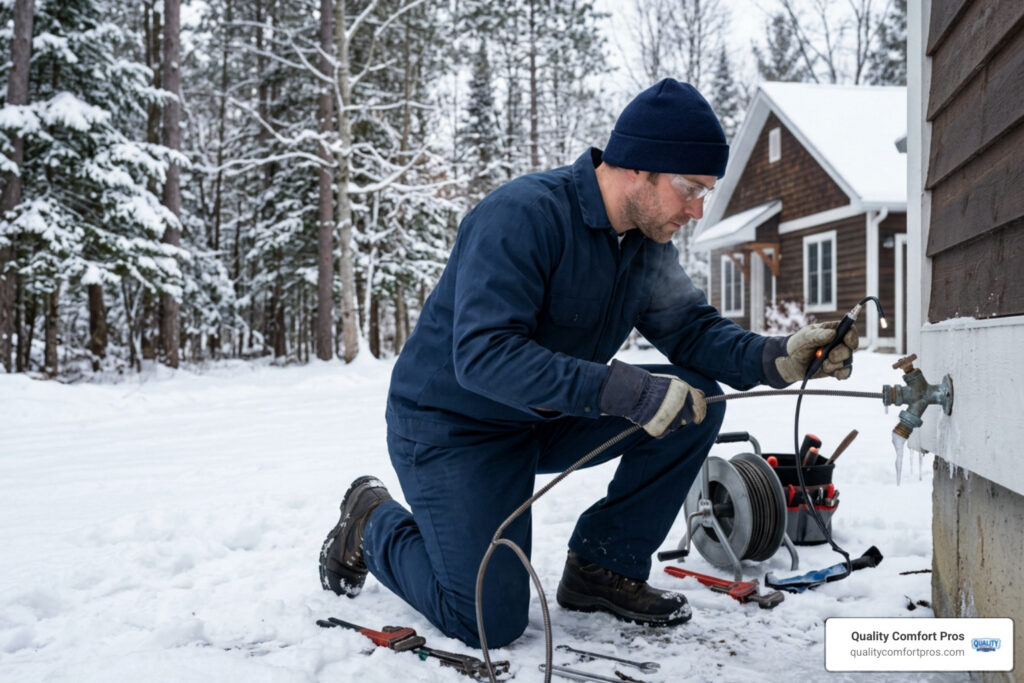
- Outdoor Spigots and Sillcocks: Exterior hose bibs that remain connected to hoses or lack interior shut-off protection.
To help residents navigate severe weather risks, state winter preparation recommendations emphasize addressing these vulnerable structural points before the hard freeze sets in.
5 Core Strategies: How to Prevent Frozen Pipes This Winter
Protecting your plumbing requires a layered defense. Relying on a single tactic, such as pipe wrap alone, is rarely enough when temperatures drop below the critical 20°F benchmark for extended hours. By combining continuous circulation, thermal barriers, and air sealing, you can safeguard your home against unexpected water disasters.
How to Prevent Frozen Pipes with Proper Thermal Insulation
Thermal insulation slows the transfer of heat out of your water pipes, giving indoor ambient warmth more time to protect the lines. For comprehensive freeze defense, you should insulate all exposed pipe runs in crawl spaces, basements, utility closets, and garages.
There are three primary insulation options for residential plumbing:
- Closed-Cell Foam Sleeves: Pre-slit polyethylene or rubber foam tubes slip easily over copper, CPVC, or PEX lines. They provide reliable baseline protection against general ambient cold.
- Self-Regulating Heat Cables: Electric heating cables adjust their heat output automatically based on surrounding pipe temperatures. When installed along the underside of pipes beneath foam insulation, they provide active freeze defense during deep sub-zero conditions.
- Fiberglass Pipe Wrap: Foil-backed fiberglass wraps are ideal for irregular fittings, valves, and junctions where rigid foam sleeves cannot form a snug seal.
| Insulation Material | Best Application | Freeze Protection Level | DIY Installation Difficulty |
|---|---|---|---|
| Closed-Cell Polyethylene Foam | Straight exposed indoor pipe runs | Moderate passive protection during cold snaps | Very Low |
| Self-Regulating Heat Cable | High-risk crawl spaces and unheated garages | Maximum active heating for severe winter conditions | Moderate |
| Foil-Backed Fiberglass Wrap | Valves, tees, elbows, and irregular joints | Moderate to high when installed with a snug vapor seal | Low |
For high-risk areas like vented crawl spaces in Northern Michigan, combining self-regulating heat cable with a closed-cell foam overlay creates the ultimate thermal barrier.
How to Prevent Frozen Pipes Using Air Circulation and Controlled Drips
When outdoor temperatures drop below 20°F, simple daily habits inside your living spaces can make a significant difference:
- Open Cabinet Doors: Vanity and kitchen sink cabinets along exterior walls act like unheated boxes, trapping cold air and blocking warm indoor air. Opening these cabinet doors allows room heat to circulate freely around the supply lines and P-traps.
- Run a Controlled Faucet Drip: Allowing a vulnerable faucet to run at a slight, continuous trickle keeps water moving through the supply lines. Moving water requires lower temperatures and more time to freeze than stationary water. More importantly, leaving the faucet slightly cracked provides an open escape path, eliminating the catastrophic hydraulic pressure spikes that cause pipes to burst.
Winterizing Outdoor Spigots, Garden Hoses, and Irrigation Lines
Exterior hose bibs are often the first plumbing components to freeze. Leaving a garden hose connected to an outdoor spigot traps residual water inside the faucet body. When that trapped water freezes, it expands into the home’s interior piping, splitting the valve casing or interior pipe.
- Disconnect and Store Hoses: Remove all hoses, splitters, and timers from exterior spigots in early autumn. Drain and store them indoors.
- Isolate and Drain Interior Valves: Locate the indoor shut-off valve supplying each outdoor bib. Close this interior valve, go outside to open the exterior spigot, and leave it open. Then, remove the small bleeder cap on the indoor valve to drain any remaining water into a bucket before tightening the cap back on.
- Upgrade to Frost-Free Sillcocks: Modern frost-free sillcocks position the actual valve seat 8 to 14 inches inside the warm boundary of your home.
If your property features complex exterior plumbing or underground irrigation systems, scheduling professional plumbing winterization services ensures every drop of water is cleared from vulnerable outdoor lines using regulated compressed air.
Homeowners who discover damage after a hard freeze can also rely on professional pipe repair to restore cracked, split, or leaking lines safely before the problem spreads behind walls or under flooring.
Sealing Foundation Drafts and Rim Joists
A tiny draft of sub-zero winter air blowing directly onto an uninsulated pipe can freeze the line in under an hour, even if the surrounding basement feels relatively warm. Eliminating drafts is one of the most cost-effective winterization steps you can take.
Inspect your basement and crawl space perimeter for air infiltration points:
- Use expanding spray foam or exterior-grade silicone caulk to seal gaps around cable entries, gas lines, dryer vents, and outdoor water lines.
- Check the rim joists and foundation sill plates for daylight or cold drafts.
- Ensure foundation crawl space vents are closed tightly before winter weather arrives.
- Repair cracked basement window panes or missing weatherstripping.
This prevention work also supports broader winter leak protection because drafts, pressure spikes, and hidden moisture often work together. The Quality Comfort Pros article on why pipes leak in cold Michigan winters explains how cold-weather pipe stress can turn small vulnerabilities into larger plumbing problems.
Maintaining Steady Indoor Heating and Thermostat Settings
Setting your thermostat consistently day and night during severe cold snaps prevents indoor structural framing from cooling down. Avoid dropping your thermostat setting overnight when sub-zero winds are strongest.
- Maintain a 55°F Minimum: Never let your indoor heating system drop below 55°F, even when leaving your home for a weekend trip.
- Bump Up Settings During Arctic Outbreaks: If temperatures are projected to plunge well below zero, raising your indoor thermostat to 68°F or 70°F provides a safety buffer for pipes hidden inside exterior walls.
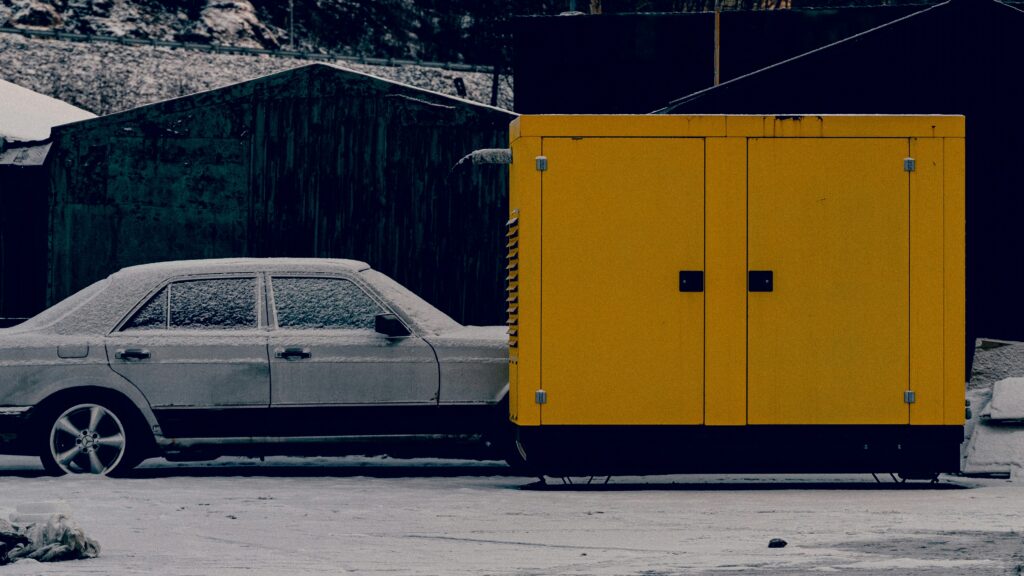
- Prepare for Outages: Homes generally retain safe indoor plumbing temperatures for three to five hours during a winter power outage. Having a secondary heating source or a standby generator helps ensure your heating equipment remains operational through winter storms.
Emergency Protocols: Thawing Frozen Lines and Responding to Bursts
Recognizing the early signs of a frozen pipe allows you to take corrective action before hydraulic pressure triggers a costly rupture.
Early warning signs of a frozen pipe include:
- Only a slight trickle or no water emerges when you open a faucet.
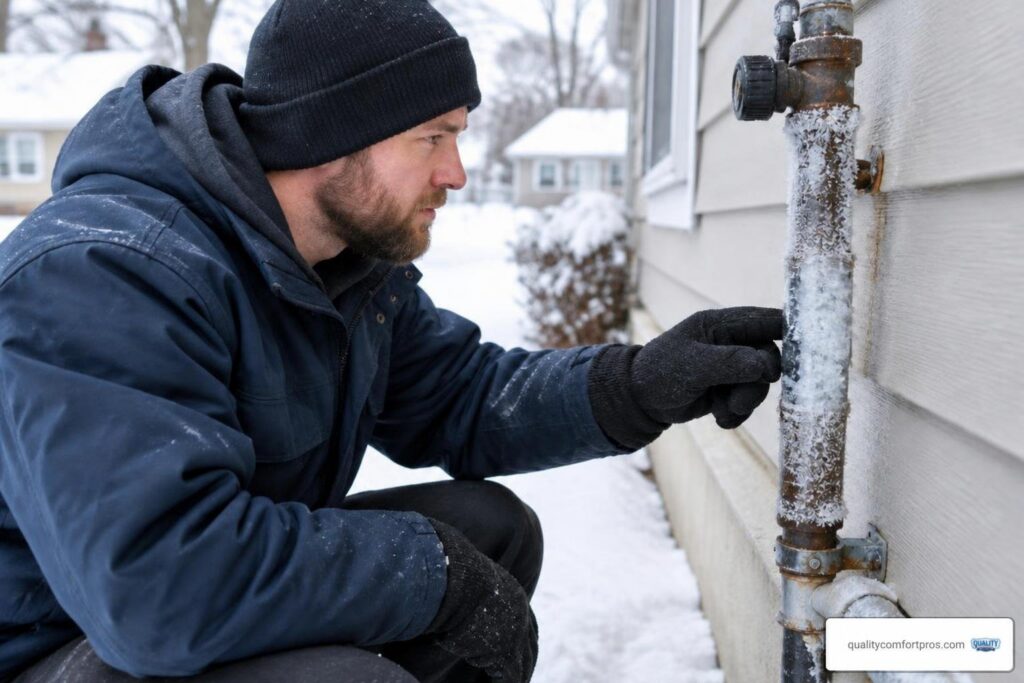
- Frost forms visibly on the exterior surface of an exposed pipe.
- Strange whistling, bubbling, or clunking sounds occur when you turn on a fixture.
- Unusual damp odors emerge from cabinets or wall cavities where pipes are located.
If you notice these signs, information about the ultimate guide to leak detection can help you identify hidden moisture before it spreads.
Safe DIY Thawing Techniques vs Dangerous Practices
If you suspect a pipe is frozen but has not yet ruptured, you can attempt to thaw it safely using gentle, controlled heat sources.
Safe Thawing Steps:
- Open the Faucet Fixture: Open both the hot and cold handles on the affected faucet. As you thaw the ice blockage, melting water and steam need an open path to escape and relieve internal pressure.
- Start Heating from the Faucet End: Apply heat along the pipe starting near the open faucet and gradually work your way back toward the frozen blockage. This allows melting water to drain freely rather than getting trapped behind the ice plug.
- Use Safe Heat Tools:
- A handheld hair dryer on medium or high heat.
- An electric heating pad wrapped around the pipe.
- Towels soaked in hot water wrapped around the frozen section.
- A portable space heater placed at a safe distance and plugged directly into a GFCI wall outlet. Never use unrated extension cords.
Dangerous Practices to Avoid:
- Never use open-flame tools: Blowtorches, propane heaters, and charcoal burners present severe fire hazards and can cause localized steam explosions inside copper pipes.
- Never leave heating devices unattended: Always monitor the thawing process continuously.
Immediate Steps if a Pipe Ruptures
When a frozen pipe thaws and reveals a split pipe wall, water can flood into your home quickly. Taking immediate, calm action minimizes structural damage:
- Shut Off the Main Water Supply: Immediately close the main water shut-off valve for your house. Every family member should know the location of this valve, typically near the water meter, pressure tank, or front basement wall.
- Shut Down Electrical Circuits: If water is pooling near electrical outlets, appliances, or your service panel, turn off power to those zones at the breaker box only if you can safely reach it without stepping in water.
- Open Faucets to Relieve Pressure: Open remaining fixtures on lower levels to drain standing water from the home’s plumbing system into safe drains.
- Begin Water Extraction: Remove standing water using wet/dry vacuums, mops, and towels. Elevate furniture and rugs away from damp flooring.
- Call for Professional Assistance: Contact certified professionals for immediate plumbing repairs to restore your system safely. If flooding is severe or occurring outside normal business hours, reaching out for dedicated emergency plumbing support ensures fast containment and structural protection.
After the immediate water flow is controlled, check surrounding cabinets, wall cavities, flooring, and nearby rooms for lingering dampness so hidden moisture does not continue causing damage after the pipe leak or burst.
Winterizing Seasonal Cabins, Vacation Homes, and Insurance Protection
Northern Michigan is home to thousands of seasonal cabins, lakefront cottages, and vacation retreats across communities like Walloon Lake, Bellaire, and Boyne City. Leaving a property unoccupied during winter creates unique plumbing risks.
The Vacant Property Shutdown Checklist
If you plan to leave your seasonal property vacant for weeks or months, a thorough winter shutdown prevents catastrophic unmonitored flooding:
- Shut Off Main Water: Turn off the primary supply valve or switch off the well pump breaker.
- Drain All Plumbing Lines: Open every faucet, showerhead, and outdoor sillcock until all water clears the lines.
- Drain the Water Heater: Turn off the power or gas supply to the water heater before draining the tank completely through its bottom drain valve.
- Clear Appliance Lines: Disconnect and drain supply lines to washing machines, dishwashers, and refrigerator ice makers.
- Protect Plumbing Traps: Pour non-toxic, plumbing-rated RV antifreeze into all sink drains, shower drains, and toilet bowls to keep sewer gases out while preventing P-traps from cracking.
- Install Smart Freeze Sensors: Place cellular or Wi-Fi-enabled temperature and flood sensors in your utility room and kitchen to receive instant mobile alerts if indoor heat fails.
Navigating Homeowners Insurance Claims for Winter Water Damage
Winter freeze damage is among the most frequent homeowner insurance claims. However, coverage is not automatic.
Standard homeowners insurance policies typically cover “sudden and accidental” water damage resulting from a burst pipe. However, insurers frequently enforce strict “reasonable care” clauses. If an adjuster determines that you turned off the heat, allowed the home to drop below safe temperatures without winterizing, or failed to take basic preventative measures, the claim may be denied. Maintaining documentation of heating maintenance, keeping utility bills showing continuous heating service, and installing smart monitoring systems provides clear proof that you exercised proper care.
Frequently Asked Questions About Preventing Frozen Pipes
At what temperature do pipes typically start to freeze?
Pipes typically begin freezing when outdoor temperatures drop to 20°F or below for six consecutive hours. However, uninsulated pipes running through unconditioned crawl spaces, exterior walls, or areas with direct cold-air drafts can freeze at higher outdoor temperatures, especially when strong winds infiltrate foundation gaps.
How does letting a faucet drip protect residential plumbing?
A dripping faucet provides two critical layers of protection. First, moving water requires lower temperatures and more time to freeze than stagnant water. Second, an open faucet provides a pressure relief escape route, preventing trapped water between the fixture and an ice plug from generating the extreme hydraulic pressure that splits pipe walls.
Why is opening cabinet doors effective during extreme cold?
Plumbing fixtures mounted on exterior walls are often enclosed within cabinetry that acts as an insulated barrier against indoor heating. Keeping sink and vanity cabinet doors open allows ambient warm room air to circulate directly around the pipes, keeping the surrounding air space well above freezing.
Can I safely use a hair dryer to thaw an ice blockage in a pipe?
Yes, a handheld hair dryer is one of the safest and most effective household tools for thawing an exposed frozen pipe. Always ensure the faucet is open before applying heat, and slowly move the hair dryer along the pipe starting from the faucet fixture back toward the frozen blockage. Never use open-flame torches.
What are the earliest warning signs that a pipe is frozen?
The most common early warning sign is a faucet that produces only a slight trickle or no water at all when opened. Other signs include visible frost on exposed metal pipes, strange gurgling or clunking sounds when opening taps, and localized damp or musty odors behind walls or inside vanities.
Does homeowners insurance cover water damage from burst pipes?
Most standard homeowners insurance policies cover sudden and accidental water damage caused by burst pipes, as well as subsequent cleanup and structural repairs. However, policies generally exclude claims if the homeowner failed to maintain adequate indoor heat (typically at least 55°F) or neglected proper property winterization while the home was vacant.
How long does a home retain heat during a winter power outage?
A standard, well-insulated home generally retains enough heat to protect interior plumbing for three to five hours after a power outage begins. If an outage extends beyond this window during severe winter weather, homeowners should open cabinets, initiate controlled faucet drips, and consider draining the home’s water lines if indoor temperatures drop below 50°F.
How should homeowners in cold climates prepare for sudden deep freezes?
Before an Arctic front arrives, homeowners should disconnect all garden hoses, close interior shut-off valves for outdoor bibs, seal crawl space vents, open under-sink cabinet doors, ensure indoor thermostats are set to a constant temperature of at least 55°F day and night, and identify the location of their main water shut-off valve.
Is foam pipe insulation alone sufficient to prevent freezing in unheated crawl spaces?
No, foam pipe insulation alone only slows the rate of heat loss and cannot generate warmth. In unheated, vented crawl spaces during sustained sub-zero temperatures, stagnant water inside foam-insulated pipes will eventually freeze. For full protection in severe climates, foam insulation should be paired with thermostatically controlled, self-regulating heat cable.
When should I call a licensed plumber instead of thawing pipes myself?
You should contact a licensed plumber if the frozen pipe section is located behind finished drywall, inside ceilings, or within inaccessible crawl spaces. You should also call a professional immediately if you discover visible cracks or bulges in the pipe, if gentle heating fails to restore water flow within 30 to 45 minutes, or if a pipe has ruptured and begun leaking.
Conclusion
Protecting your plumbing from winter freezes is all about preparation, awareness, and consistent maintenance. By insulating exposed runs, sealing foundation drafts, keeping cabinets open during deep freezes, and properly winterizing outdoor spigots, you can keep your home safe and warm throughout the toughest winter months.
If you encounter stubborn frozen lines, want help winterizing a seasonal property, or need a trusted local team after a cold-weather plumbing problem, Quality Comfort Pros is here to help. Serving Gaylord, MI, and communities across Northern Michigan for over 28 years, we deliver reliable, family-owned plumbing and heating solutions you can trust all winter long. Please contact our professional frozen pipe prevention specialists today to enjoy total peace of mind no matter how low the thermometer drops.