Understanding Gas Leak Detection Sensor Technologies and Options
Combustible gases like natural gas, primarily methane, and liquid propane provide efficient heat and power for homes and recreational vehicles throughout Northern Michigan. However, when these gases escape piping, fittings, or appliances, they introduce severe safety hazards. Fuel gases are dangerous because they can ignite when mixed with ambient oxygen within a specific concentration window known as the lower explosive limit (LEL) and upper explosive limit (UEL).
For methane, the LEL is approximately 5% concentration by volume in air. For propane, the LEL is roughly 2.1%. Gas leak detection sensors are engineered to detect trace amounts of these combustible compounds long before they reach flammable thresholds, often measuring concentrations in parts per million (ppm) or as a direct percentage of the LEL. To understand how gas monitoring fits into an overall home safety plan, you can read our comprehensive leak detection overview for a broader look at household pipe integrity.
Different sensor technologies serve distinct purposes depending on whether you need targeted troubleshooting or broad-area protection.
Solid-State and Catalytic Bead Gas Leak Detection Sensor Mechanisms
Solid-state and catalytic bead sensors are the most common detection technologies used in portable sniffing devices and affordable wall monitors.
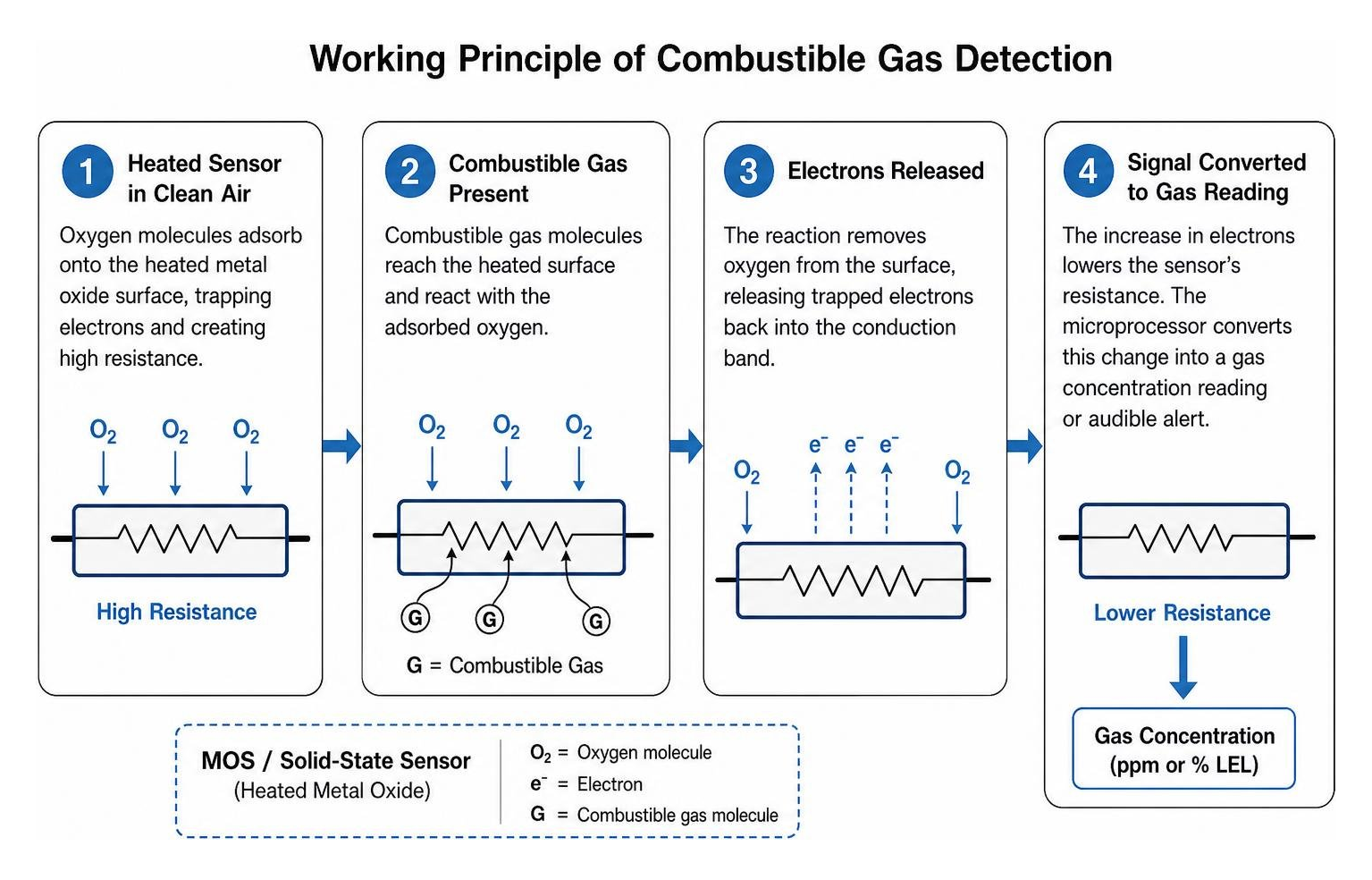
- Metal Oxide Semiconductor (MOS) / Solid-State Sensors: These sensors utilize a heated metal oxide element, such as tin dioxide. In clean ambient air, oxygen molecules adsorb onto the crystal surface, trapping electrons and maintaining high electrical resistance. When combustible gases or volatile organic compounds pass across the heated element, they react with the surface oxygen, releasing trapped electrons back into the conduction band. This causes a measurable drop in electrical resistance, which the internal microprocessor converts into a gas concentration reading or an increasing audible tick rate. Solid-state sensors are exceptionally sensitive, often capable of registering methane down to 50 or 100 ppm, making them useful for locating pinhole leaks around pipe threads.
- Catalytic Bead (Pellistor) Sensors: Catalytic sensors use a pair of miniature, coiled platinum wire beads. One bead is treated with a special catalyst, while the other remains inert as a reference element. When combustible gas enters the sensor chamber, it oxidizes on the catalytic bead, generating localized heat. This temperature rise increases the electrical resistance of the active wire relative to the inactive reference wire. Catalytic bead sensors deliver reliable, linear readings directly proportional to the lower explosive limit, making them standard for industrial combustible gas monitoring.
Non-Dispersive Infrared and Ultrasonic Acoustic Detection
For high-demand environments and specialized applications, optical and acoustic detection methods offer strong reliability and zero risk of sensor element degradation:
- Non-Dispersive Infrared (NDIR) Sensors: NDIR sensors operate on optical absorption principles. Specific gas molecules absorb light at characteristic infrared wavelengths. For instance, the carbon-hydrogen bonds in methane absorb light strongly around the 3.3 to 3.4 micrometer infrared spectrum. A dual-channel NDIR sensor emits infrared energy through an optical chamber toward a detector. By measuring the light attenuation in the target band compared to a reference channel, the sensor determines the precise gas concentration. NDIR sensors are immune to sensor poisons like silicone vapors, require minimal recalibration, and provide strong methane selectivity without reacting to common household solvents.
- Ultrasonic Acoustic Detection: Unlike chemical or optical sensors that require gas molecules to physically reach the sensor element, ultrasonic detectors listen for the high-frequency acoustic signature produced by pressurized gas escaping through an orifice. Modern ultrasonic systems monitor sound frequencies around 12 kHz to 40 kHz, using artificial neural networks (ANN) to differentiate real leak noise from mechanical plant sounds or ambient weather. This allows detection within fractions of a second across distances up to 28 meters, which is particularly useful for outdoor natural gas metering manifolds and high-pressure storage tanks.
Core Features of Portable Combustible Gas Sniffers
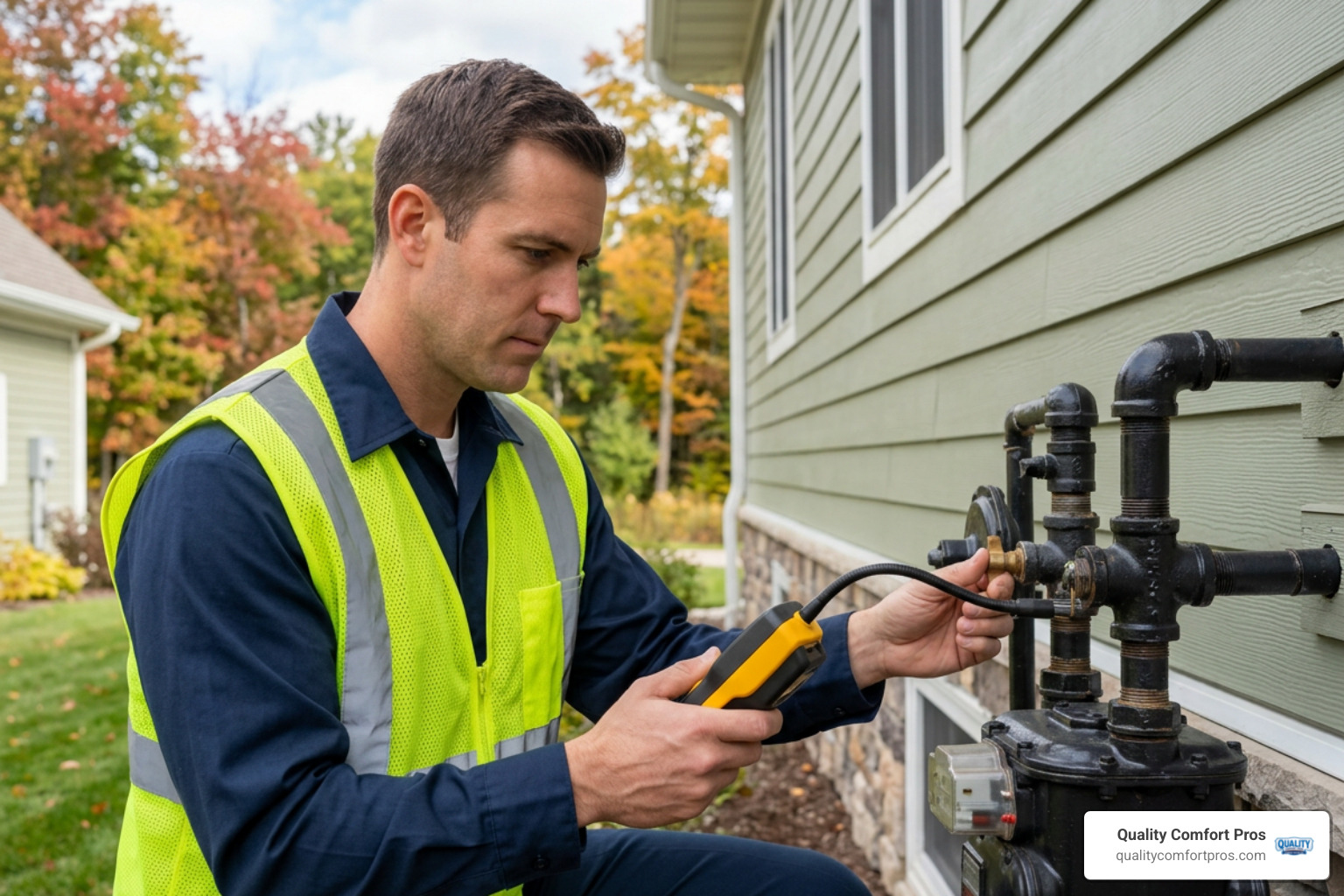
A portable gas sniffer is an indispensable handheld tool for inspecting gas line repairs, verifying appliance hookups, and locating the source of faint odors. Because combustible gas can ignite from tiny electrical sparks, any handheld sniffer used in environments where gas might have accumulated must meet strict safety and operational standards.
When choosing a portable combustible gas sniffer, look for models engineered with intrinsic safety certifications, such as Class I, Division 1, Groups A, B, C, and D ratings. Intrinsic safety helps ensure that the internal electronics, switch contacts, and battery compartments cannot produce an electrical spark or thermal effect capable of igniting an explosive gas atmosphere.
For homeowners dealing with recurring odors, damp spots, or unexplained utility changes, professional plumbing leak detection can help identify hidden issues before they put the home at risk. If an inspection confirms a damaged fitting or line defect, timely plumbing leak repair gives the team a clear path to correct the problem safely.
Older properties with aged black iron pipe, tight mechanical rooms, and finished basements often require a broader maintenance plan. Helpful blog resources on identifying hidden pipe leaks and dealing with frozen or leaky pipes in winter can support safer decisions between service visits.
Key ergonomic and functional features include:
- Audible Tick Rate: As the probe approaches higher gas concentrations, the audible ticking sound accelerates, allowing you to trace pipes without keeping your eyes glued to the screen.
- Visual LED Indicators and Backlit LCDs: Visual segmented light bars and numeric ppm/LEL displays provide clear data even in poorly lit basements or mechanical closets.
- Mute and Headphone Connections: For noisy boiler rooms or tight mechanical spaces, headphone capability ensures you never miss a subtle change in alarm tone.
Flexible Probe Reach and High-Sensitivity Detection
Gas lines and appliance manifolds frequently run through cramped cabinet bases, behind water heater jackets, or inside ceiling joists. A portable detector equipped with a 12-inch flexible gooseneck probe allows you to snake the sensor tip directly around 360-degree pipe joints, union fittings, and shutoff valves.
High-grade portable sniffers offer sensitivity thresholds down to 5 ppm for methane and 1 ppm for gasoline or fuel vapors. Advanced units also incorporate an auto-zeroing feature. Auto-zeroing allows you to power on the device, establish a clean baseline in fresh outdoor air, and then ignore minor background concentrations while searching for the exact origin of a localized leak.
Selecting the Right Portable Gas Leak Detection Sensor for Home, RV, and Industrial Use
Different environments demand distinct capabilities from a portable gas sniffer:
- Residential Homes: In homes with natural gas furnaces, water heaters, and ranges, a sniffer must easily switch between broad tracing and tight-joint verification.
- Recreational Vehicles (RVs): RV travel trailers rely heavily on liquid propane (LPG) for cooking, absorption refrigeration, and space heating. Road vibrations can loosen copper flare fittings and regulator threads over time. A portable sniffer that detects propane, butane, and fuel vapors is a critical safety item for checking LP bottle compartments and under-chassis piping before every camping trip.
- Commercial and Industrial Spaces: Commercial kitchens, boiler rooms, and light manufacturing plants require rugged, multi-gas detectors that withstand heavy daily use, measure up to 100% LEL, and support rapid bump testing and digital datalogging.
Fixed Gas Detection Systems vs. Portable Sniffers
While portable gas sniffers excel at locating the exact point of an active leak during an inspection, fixed gas detection systems provide continuous, unattended protection. Understanding the differences between these two systems ensures your living space or facility has complete coverage.
| Feature / Capability | Portable Combustible Gas Sniffer | Fixed Gas Detection System |
|---|---|---|
| Primary Function | Active pinpointing and leak tracing | 24/7 continuous area monitoring |
| Power Source | Replaceable or rechargeable batteries, typically 8 to 12 hours | Hardwired line power with battery backup, or long-life lithium cells |
| Sensor Reach | 12-inch flexible probe for direct fitting contact | Fixed diffusion sensor monitoring ambient room air |
| Alarm Integration | Onboard beeper, tick rate, and LED indicators | 85+ dB siren, strobe, smart home alerts, and automated shutoff integration |
| Response Trigger | Low ppm, often 5 to 50 ppm, for tracing micro-leaks | Set threshold, typically 10% to 25% LEL, to prevent false alarms |
| Ideal Use Case | Appliance installation, pipe repair verification, RV pre-trip checks | Kitchens, mechanical rooms, boiler closets, and rental properties |
Fixed gas monitors can be integrated directly with smart home automation platforms and emergency shutoff hardware. According to the U.S. Environmental Protection Agency (EPA), maintaining healthy indoor air quality requires proactive management of combustion appliances and potential chemical hazards. When a fixed sensor detects fuel accumulation exceeding safe thresholds, it can trigger an automated solenoid valve to shut off the main gas supply line before an explosive concentration develops.
Safe Operation, Calibration, and Leak Verification Protocols
Using a gas leak detection sensor safely requires proper operating discipline. Sensors are precision instruments that require clean reference points, regular testing, and proper verification procedures to deliver reliable performance.
Follow these field-tested protocols when operating and maintaining your equipment:
- Fresh Air Warm-Up: Always turn on your portable gas sniffer in fresh, outdoor ambient air away from any suspected gas source. Most semiconductor sensors require a 10-second to 60-second warm-up cycle to heat the internal element to stable operating temperatures.
- Conduct Daily Bump Tests: Before relying on a sniffer for leak testing, conduct a brief bump test using a known, safe gas source, such as a brief unlit flick of a standard butane lighter, to verify that the audible alarm and visual displays trigger correctly.
- Adhere to Calibration Schedules: Professional-grade detectors should undergo regular calibration using certified calibration gas canisters, such as a 2% or 2.5% methane-in-air mixture, in accordance with manufacturer specifications. Routine calibration compensates for sensor drift caused by temperature, humidity, and natural aging of the sensing element.
- Avoid Sensor Poisoning: Never expose solid-state or catalytic gas sensors to silicone sprays, leaded lubricants, corrosive acid vapors, or high concentrations of pure fuel. These substances can coat or degrade the catalytic surface, desensitizing the sensor and leading to dangerous false-negative readings.
- Confirm with Bubble Solutions: When your electronic sniffer flags a suspect fitting, verify the leak visually by applying a certified, non-corrosive gas leak detection bubble solution. Escaping gas will produce distinct, expanding bubbles at the exact thread or seam that requires mechanical repair.
Seasonal pipe shifts and freezing temperatures can stress mechanical joints and piping throughout our cold Northern Michigan winters. These routine precautions help protect both water and gas delivery systems from unexpected structural stress.
Frequently Asked Questions About Gas Leak Sensors
What types of gases can a portable gas leak detector identify?
A quality portable combustible gas detector can detect a wide range of flammable and volatile gases, including methane (natural gas), propane, butane, liquefied petroleum gas (LPG), liquefied natural gas (LNG), gasoline vapors, kerosene, forming gas (hydrogen/nitrogen mixtures), industrial solvents, and hydrogen sulfide or methane found in sewer gas.
How does a combustible gas detector with a flexible probe work?
The instrument uses an articulated 12-inch gooseneck probe containing or routing air to an internal metal oxide semiconductor or catalytic sensor. As you maneuver the probe tip around pipe joints and valves, ambient air diffuses across the heated sensor element. If combustible gas molecules are present, they react chemically with the sensor surface, changing its electrical resistance and causing the device to accelerate its audible tick rate and illuminate visual indicators.
Can a gas leak detector differentiate between natural gas and propane?
Most standard combustible gas sniffers detect the presence of hydrocarbons generally, meaning they will alarm for both natural gas (methane) and propane without labeling the specific gas name. However, specialized multi-gas monitors can be calibrated for specific target gases. In practical terms, physical behavior helps distinguish them: natural gas is lighter than air (specific gravity ~0.6) and rises toward the ceiling, while propane is heavier than air (specific gravity ~1.5) and pools along floors, basements, and crawl spaces.
What is the difference between a portable gas detector and a fixed gas detection system?
A portable gas detector is a battery-powered handheld tool used for active, close-proximity troubleshooting and pinpointing leaks along pipes and appliance valves. A fixed gas detection system is mounted permanently to a wall or ceiling to provide continuous 24/7 monitoring of an entire room, sounding an 85+ dB siren and potentially signaling automated shutoff valves if gas reaches dangerous concentration levels.
What key features should I look for in a natural gas sniffer?
Look for a flexible gooseneck probe (typically 12 to 16 inches) for reaching confined fittings, high sensitivity down to at least 50 ppm (or lower for fine tracing), adjustable sensitivity or auto-zeroing, rapid response times (under 3 seconds), clear audible and visual tick rate alarms, long battery life, and recognized intrinsic safety certifications for explosive environments.
How fast is the response time and detection range for a typical gas sniffer?
Most handheld electronic sniffers respond within 1 to 3 seconds once the sensor tip encounters gas molecules, with recovery times under 5 seconds when moved back into clean air. Handheld sniffers rely on diffusion or small internal sample pumps, requiring the probe tip to be placed within millimeters or inches of the pipe joint. By contrast, industrial acoustic or ultrasonic detectors can register high-pressure gas leaks up to 28 meters away in less than 1 second.
What safety precautions should be followed when operating a gas leak sensor?
Always power on and zero the device in fresh, clean outdoor air before entering the inspection area. Never flip wall switches, unplug appliances, or use non-intrinsically safe electrical equipment inside a room with a noticeable gas odor, as electrical arcing can ignite the fuel. If a detector registers rising gas levels approaching flammable limits (such as 10% to 20% LEL or higher), immediately evacuate the building and contact emergency responders and your gas utility from a safe distance outside.
How often should a portable gas detector be calibrated and maintained?
For commercial and professional use, detectors should undergo daily bump testing before field use and formal calibration every 6 to 12 months using certified calibration gas. For homeowner use, regular functional checks with a safe test source and routine battery replacement are recommended. Sensing elements typically have a useful service lifespan of 3 to 5 years, after which the sensor module or unit should be replaced.
Where are gas leak detectors most commonly used in homes and RVs?
In residential homes, detectors are commonly deployed around furnaces, boilers, tankless and tank water heaters, gas fireplaces, kitchen ranges, dryer hookups, and meter sets. In RVs and travel trailers, detectors are essential near LP storage cylinders, dual-stage pressure regulators, underbelly supply lines, absorption refrigerators, and radiant furnace cabinets where road vibration can loosen mechanical fittings.
What immediate steps should be taken if a gas detector triggers an alarm?
If a gas detector triggers an alarm or you detect a strong rotten-egg sulfur odor:
- Immediately evacuate all people and pets from the structure or vehicle.
- Leave doors open behind you as you exit to assist ventilation, but do not operate electric light switches, garage door openers, or landline phones.
- If accessible safely from the exterior, shut off the main gas supply valve at the meter or propane cylinder.
- Call your local gas utility, 911, or emergency services once you are a safe distance away.
- Do not re-enter the property until certified emergency personnel have declared it safe.
Conclusion and Professional Gas Line Inspection Services
A dependable gas leak detection sensor is one of the most valuable investments you can make for property safety, whether you are managing a residential home, maintaining an RV, or overseeing a commercial facility. Choosing the right device, whether a flexible gooseneck sniffer for tight pipe tracing or a continuous fixed monitor with automated shutoff capabilities, ensures you catch small joint leaks long before they escalate into dangerous combustion hazards.
To keep your fuel piping and appliances operating at peak safety, maintain these routine practices:
- Schedule seasonal inspections of all gas-fired heating systems, water heaters, and ventilation flue pipes.
- Conduct regular visual and electronic checks of exposed piping, regulator vents, and flexible appliance connectors.
- Keep batteries fresh in all fixed and portable safety sensors, replacing sensing units according to manufacturer timelines.
- Never ignore faint gas odors, whistling pipe noises, or sudden increases in utility fuel usage.
Gas line safety requires precision, proper tools, and certified expertise. According to the U.S. Department of Energy (DOE), ensuring combustion appliances are properly installed and maintained is essential for both home energy efficiency and occupant safety.
For 28 years, Quality Comfort Pros has provided reliable, expert, family-owned HVAC, plumbing, water heater, and drain solutions throughout Gaylord, MI and Northern Michigan, including communities like Petoskey, MI, Boyne City, MI, Charlevoix, MI, and Grayling, MI. If a gas odor, appliance concern, or suspected hidden line issue has you worried, contact our professional gas leak detection technicians for safe, team-based support that keeps your home comfortable year-round.