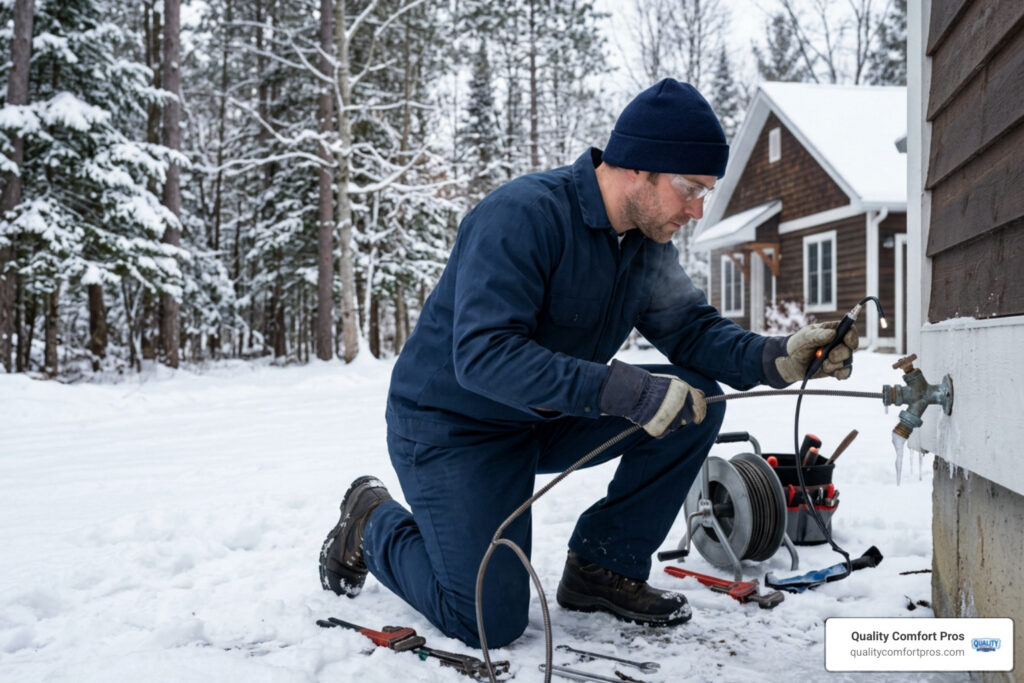
Emergency Sewer and Drain Cleaning Services to Save Your Home Today
When a Drain Backup Strikes, Every Minute Counts
24 hour emergency sewer and drain cleaning is available around the clock to stop sewage backups, protect your home from water damage, and restore your plumbing fast. Here is what you need to know right now:
Quick Answer: What to Do During a Sewer or Drain Emergency
- Stop using all water fixtures immediately, including sinks, toilets, and showers.
- Shut off the main water supply if sewage is actively backing up.
- Avoid contact with standing water or sewage, as it carries serious health hazards.
- Call a licensed 24 hour emergency plumber right away, any time of day or night.
- Clear the area around floor drains and the main cleanout for technician access.
Most emergency plumbing companies dispatch a technician within a matter of hours, and many aim to arrive within one to two hours of your call.
A sewer backup does not wait for a convenient moment. It can happen at midnight on a holiday weekend, in the middle of a cold Northern Michigan winter, or right before guests arrive. When it does, the damage moves fast. Raw sewage carries harmful bacteria, and standing water can begin causing structural damage and mold growth within hours.
The good news is that professional help is a phone call away, any hour of the day.
Service needs can vary depending on the severity of the blockage, the method required, and the time of the call, but acting quickly almost always reduces the disruption compared to waiting.
Our team has spent considerable time studying what homeowners truly need when facing a 24 hour emergency sewer and drain cleaning situation. In this guide, we will walk you through everything from the root causes of sudden backups to the professional methods that clear them fast.

What Causes Sudden Sewer and Drain Emergencies?
Sewer and drain lines are out of sight, which means we rarely think about them until they stop working. Under the surface, several factors work together to create sudden, catastrophic blockages. In Northern Michigan, our distinct seasonal shifts, sandy or clay soils, and older underground infrastructure make our pipes especially vulnerable to sudden failure.
When a main line fails, it is rarely a single event that caused it. Instead, a slow-moving problem finally reaches a tipping point, completely blocking the flow of wastewater. Understanding these causes can help you identify risks before they turn into a full-blown emergency. If you are already dealing with a backup, professional drain clog removal is the only reliable way to clear the line and protect your property.
Tree Root Intrusion in Older Pipes
Tree roots are incredibly strong and persistent. They naturally seek out moisture and nutrients, which are abundant inside your sewer lines. In older residential areas with clay or cast iron pipes, small cracks or loose joints allow microscopic root fibers to slip inside.
Once inside, the roots thrive on the warm, nutrient-rich water. They grow quickly, forming a thick, hair-like web that acts as a net. This root net catches toilet paper, grease, and other debris flowing down the pipe. Over time, the pipe becomes completely choked off, leading to a sudden, stubborn backup that standard retail drain cleaners cannot touch.
Grease and Sludge Accumulation
Pouring fats, oils, and grease down the kitchen sink is one of the most common causes of sewer emergencies. While grease might be liquid when it is hot, it cools quickly once it hits the cold underground pipes. As it cools, it solidifies and sticks to the pipe walls.
Over months and years, this grease layer catches food particles, soap scum, and hair, forming a thick, waxy substance known as sludge. This sludge restricts the diameter of the pipe, slowing down your drains. Eventually, the opening becomes so narrow that even a small amount of debris can completely seal the pipe, causing a sudden backup in your lowest household drains.
The Critical Need for 24 Hour Emergency Sewer and Drain Cleaning
When a major drain line backs up, it is more than just a minor inconvenience. It is a genuine plumbing emergency that requires immediate professional intervention. Waiting even a few hours to call for help can dramatically increase the risk of repairs, cleanup, and damage to your home.
Wastewater systems are designed to carry hazardous materials away from your living spaces. When the system reverses, those hazards enter your home. According to guidelines on EPA Wastewater Management, proper maintenance and rapid response to sewer overflows are critical to protecting public health and preventing local water contamination.
Why You Need 24 Hour Emergency Sewer and Drain Cleaning Immediately
The primary danger of a sewer backup is the health risk associated with raw sewage. Wastewater contains pathogens, viruses, and bacteria that can cause serious illnesses if they come into contact with your skin or become airborne.
Additionally, water damage happens rapidly. Within minutes of a backup, drywall, flooring, and furniture begin absorbing contaminated water. Within 24 to 48 hours, mold and mildew can begin to grow, creating long-term air quality issues in your home. Professional 24 hour emergency sewer and drain cleaning stops the active flooding and allows the restoration process to begin immediately, helping protect your property from permanent structural damage.
Warning Signs of an Impending Sewer Disaster
Most sewer emergencies do not happen completely out of nowhere. Your home will usually give you a few warning signs that a major blockage is forming. Recognizing these signs early can save you from a messy cleanup:
- Gurgling Toilets: If your toilet bubbles or makes gurgling noises when you run the bathroom sink or washing machine, air is trapped in the line by a blockage.
- Multiple Slow Drains: A single slow drain usually means a localized clog. If your kitchen sink, shower, and laundry drains are all slow at the same time, the main sewer line is likely blocked.
- Foul Odors: The smell of sewer gas near your floor drains or sinks is a clear sign that wastewater is not flowing properly.
- Sewage in Floor Drains: If water backs up into your basement floor drain or shower when you flush the toilet, your main line is nearly completely blocked.
Advanced Professional Methods for Clearing Stubborn Blockages
Clearing a main sewer line requires specialized tools and expert training. While a simple hand plunger or retail drain snake might work for a shallow toilet clog, they are ineffective against deep, heavy blockages like tree roots or thick grease. Professional plumbers use advanced diagnostics and powerful equipment to clear the line safely without damaging your pipes.
Before any cleaning begins, a technician will typically perform a video camera inspection. By inserting a waterproof camera into the sewer line, they can see exactly what is causing the blockage and where it is located. This takes the guesswork out of the process, ensuring the correct tool is used for the job.
What to Expect from a Professional 24 Hour Emergency Sewer and Drain Cleaning Service
When you call for emergency service, you should expect a fast, organized response. Reliable companies dispatch technicians in fully stocked service trucks, which act as mobile warehouses containing the necessary tools, cameras, and replacement parts to solve many problems on the spot.
Once on-site, the technician will assess the situation, explain their findings, and provide clear options. Because sewer backups can involve hazardous waste, professionals follow strict safety protocols, including wearing protective gear and using containment barriers to keep the rest of your home clean. For more information on handling water hazards safely, refer to the CDC Guidance on Floodwater and Sewage.
Hydro Jetting vs. Sewer Rodding
The two primary professional methods for clearing main line blockages are hydro jetting and sewer rodding. Both are highly effective, but they are used for different types of clogs.
Hydro jetting uses a high-pressure machine that blasts water through the pipe at pressures up to 4,000 PSI. This intense water pressure scrubs the pipe walls clean, removing years of built-up grease, sludge, and scale. It is the best method for restoring a pipe to like-new condition when the pipe is structurally sound.
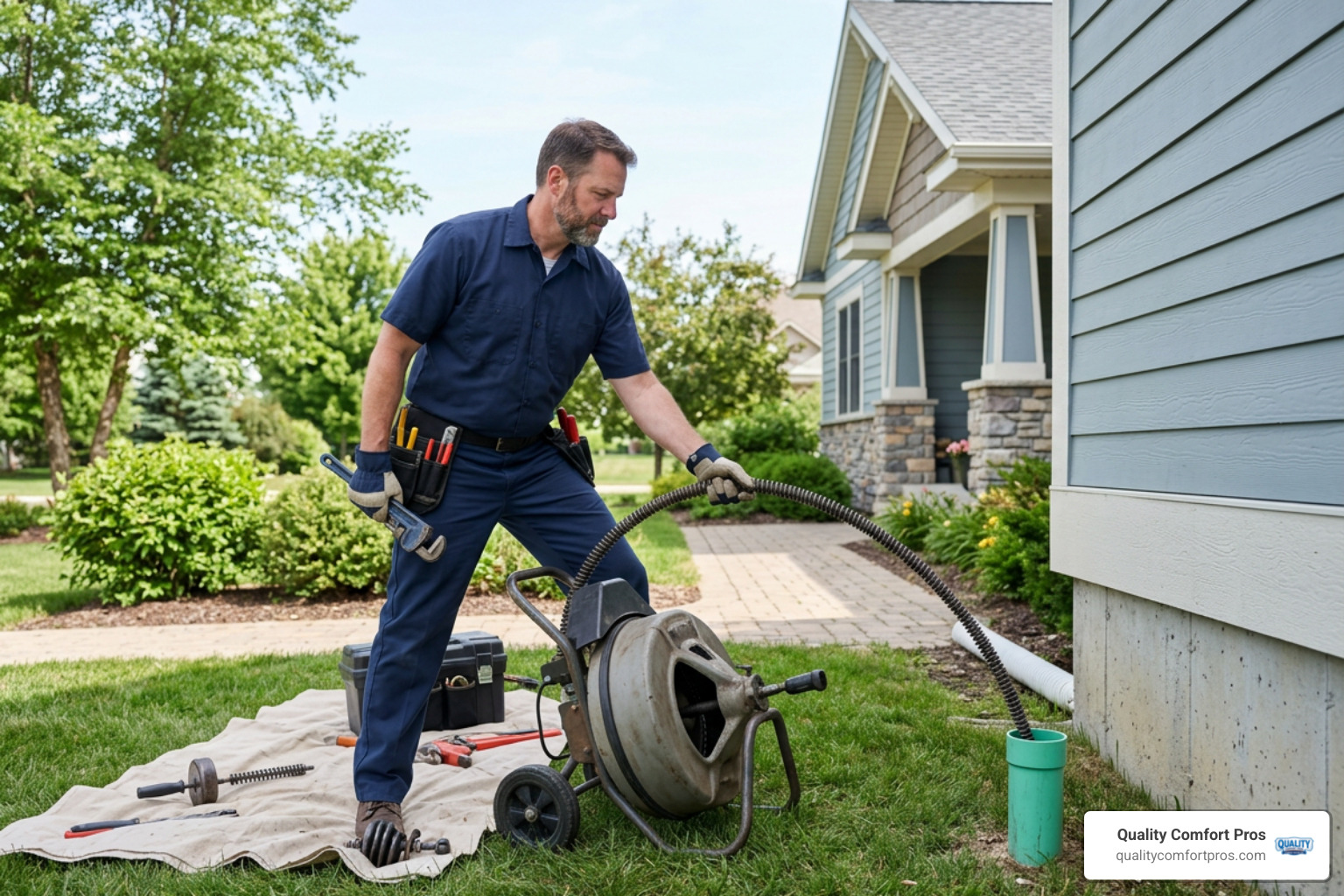
Sewer rodding, also known as power snaking, uses a flexible steel cable with a motorized cutting blade on the end. The cable is threaded into the pipe, and the spinning blade cuts through tough obstructions like tree roots and solid debris.
| Feature | Hydro Jetting | Sewer Rodding |
|---|---|---|
| Primary Tool | High-pressure water stream | Motorized metal cutting blade |
| Best Used For | Grease, sludge, scale, and soft clogs | Tree roots and solid blockages |
| Pipe Cleaning | Scrubs the entire pipe wall clean | Clears a path through the blockage |
| Safety | Safe for solid pipes; can damage weak ones | Safe for most pipes; can nick worn spots |
For comprehensive pipe maintenance, we often recommend professional drain cleaning that combines these methods to ensure your system is completely clear.
How to Prevent Future Sewer and Drain Disasters
Once your emergency is resolved, the goal is to make sure it never happens again. Most sewer and drain emergencies are entirely preventable with a combination of good habits and routine professional care. By taking a proactive approach, you can protect your home, avoid costly repairs, and keep your plumbing system running smoothly for years to come.
Regular maintenance also supports the rest of your home comfort systems, from plumbing to HVAC and AC equipment, because it reduces moisture problems and helps prevent emergency disruptions. To learn more about how a proactive approach can protect your property, see how preventative plumbing protects homes during routine service planning.
Emergency drain problems often start as small warning signs that homeowners overlook. The Quality Comfort Pros blog offers practical seasonal maintenance advice, including drain and plumbing tips, so local homeowners can use the home service blog as a resource before small issues become emergencies.
Best Practices for Homeowners
The daily habits of your household play a massive role in the health of your plumbing. Implementing a few simple rules can prevent the vast majority of drain clogs:
- Never Pour Grease Down the Drain: Collect cooking oils, bacon grease, and butter in a disposable container and throw them in the trash once they cool.
- Watch What You Flush: The only things that should ever go down a toilet are human waste and toilet paper. Even wipes labeled as flushable do not break down quickly enough and are a leading cause of sewer line blockages.
- Use Drain Screens: Install mesh hair catchers in your showers and tubs, and use sink strainers in the kitchen to catch food particles before they enter your pipes.
- Dispose of Hair Safely: Avoid washing loose hair down the sink or shower drain; instead, wipe it up and throw it in the trash.
The Value of Regular Professional Maintenance
While daily habits are essential, they cannot prevent every issue. Over time, minor buildup is inevitable. Scheduling an annual professional drain inspection and cleaning is the best way to catch small problems before they become major emergencies.
During a routine visit, a plumber can use a sewer camera to check for early signs of tree root intrusion, pipe sagging, or grease accumulation. This allows you to schedule repairs or a thorough hydro jetting service on your own terms, rather than dealing with an unexpected backup in the middle of the night.
Frequently Asked Questions About Emergency Sewer Services
What is considered a sewer or drain emergency?
A sewer or drain emergency is any situation where wastewater cannot safely leave your home, resulting in an active backup or a high risk of property damage. Common examples include raw sewage backing up into your bathtubs or floor drains, multiple clogged drains throughout the house, and an overflowing toilet that cannot be cleared with a plunger. If you cannot use your water fixtures without causing water to back up elsewhere, you need emergency service.
How quickly can an emergency plumber arrive?
Response times can vary depending on your location, the time of day, and current weather conditions. Most reputable emergency plumbing companies in Northern Michigan aim to dispatch a technician to your home within one to two hours of your call. Because we are a local, family-owned business, we prioritize emergency calls to minimize water damage and restore your comfort as fast as possible.
Can I use chemical drain cleaners for an emergency clog?
No, you should never use chemical drain cleaners to clear a major sewer line blockage. These chemicals are highly corrosive and can generate intense heat, which can warp plastic PVC pipes or crack older cast iron and clay lines. Furthermore, chemical cleaners rarely clear deep main line clogs completely, leaving your pipes filled with toxic, standing water that makes it dangerous for a professional technician to work on the line.
What should I do while waiting for the emergency plumber to arrive?
While you wait for help to arrive, turn off your main water supply valve to prevent anyone in the home from accidentally running water. Do not flush any toilets, run sinks, or use appliances like washing machines and dishwashers. If it is safe to do so, clear a path to your main sewer cleanout and floor drains so the technician can begin working immediately upon arrival.
How does a video camera sewer inspection work?
A video camera inspection involves feeding a flexible, waterproof fiber-optic camera through your sewer cleanout or a drain line. The camera transmits real-time, high-definition footage to a monitor, allowing the technician to see the exact condition of the inside of your pipes. This process pinpoints the precise location and cause of the blockage, such as tree roots, grease buildup, or a broken pipe, without any digging.
Is hydro jetting safe for older pipes?
Hydro jetting is highly effective, but it must be used with caution on older, fragile pipes. Before performing a hydro jetting service, a professional plumber will always conduct a camera inspection to assess the structural integrity of your lines. If the pipes are made of worn clay or heavily corroded cast iron, the technician may adjust the water pressure or recommend a gentler cleaning method like mechanical rodding to avoid damaging the pipe.
What are the health risks of a sewer backup?
Raw sewage is a biohazard that contains a variety of harmful pathogens, including bacteria like E. coli and Salmonella, viruses, and parasites. Exposure to wastewater can cause skin infections, respiratory issues, and severe gastrointestinal illnesses. Additionally, the high moisture levels from a backup can trigger rapid mold growth, which degrades indoor air quality and can cause long-term health complications for sensitive individuals.
How often should I have my main sewer line cleaned?
For the average household, we recommend having your main sewer line professionally inspected and cleaned every one to two years. If your property has mature trees with aggressive root systems, or if your home has older clay pipes, you may need more frequent maintenance to prevent roots from completely blocking the line.
Does homeowner’s insurance cover emergency sewer cleaning?
Standard homeowner’s insurance policies typically do not cover damage caused by sewer backups unless you have a specific water backup endorsement or rider on your policy. If you have this coverage, it may help pay for the cost of professional cleanup, water extraction, and structural repairs. It is always best to review your policy details with your insurance agent before an emergency occurs.
What is trenchless sewer repair?
Trenchless sewer repair is a modern, minimally invasive method used to fix damaged underground pipes without digging up your entire yard. Technicians use specialized equipment to insert a resin-saturated felt tube into the existing pipe, which is then inflated and cured to create a brand-new, seamless pipe within the old one. This process preserves your landscaping, driveway, and sidewalks while restoring your sewer system in a fraction of the time required for traditional excavation.
Conclusion
A sudden sewer backup is one of the most stressful events a homeowner can face, but you do not have to handle it alone. When your drains fail, acting quickly is the single best way to protect your property and ensure your family’s safety. Professional 24 hour emergency sewer and drain cleaning provides the rapid, reliable solutions you need to restore order and comfort to your home.
Whether you are dealing with an active backup in Petoskey, MI, a clogged drain in Gaylord, MI, or need preventative maintenance in Grayling, MI, our team is ready to help. We proudly serve residential and commercial properties across Northern Michigan, including Alba, MI, Atlanta, MI, Bellaire, MI, Boyne City, MI, Boyne Falls, MI, Charlevoix, MI, East Jordan, MI, Frederic, MI, Johannesburg, MI, Mancelona, MI, Vanderbilt, MI, Walloon Lake, MI, and Wolverine, MI.
When you need immediate help, contact our professional emergency sewer and drain cleaning technicians at Quality Comfort Pros to get your system flowing smoothly again.