The Complete Guide to 50 Gallon Water Heater Installation Costs
Average Cost to Install a 50 Gallon Water Heater in 2026
The average cost to install a 50-gallon water heater depends on the fuel type, equipment efficiency, installation location, and whether plumbing, venting, or electrical updates are needed. Standard electric models usually occupy the lower end of the budget spectrum, while power-vented gas units and high-efficiency hybrid heat pumps fall into higher investment tiers.
The total investment for a 50-gallon setup covers two primary pillars: the equipment itself and the certified labor required to assemble, wire, pipe, and test the system safely. A straightforward swap in an easily accessible utility room generally takes a few hours of labor, keeping installation expenses modest. On the other hand, complex installations that require running new venting lines, adjusting fuel supplies, or bringing older pipe layouts up to modern safety standards demand more dedicated labor and specialized fittings. Choosing a trusted team for professional water heater installation ensures that every safety check, pressure relief connection, and electrical termination is completed according to strict industry standards.
Homeowners who want a deeper breakdown of what affects project scope can use our water heater installation cost guide to understand how access, fuel type, code updates, and equipment choices influence the final recommendation.
| Water Heater System Type | Relative Equipment Investment | Installation Complexity | Primary Operating Expense |
|---|---|---|---|
| Standard Electric Tank | Low to Moderate | Low (Direct wiring and plumbing) | Moderate to High Electricity Usage |
| Atmospheric Gas Tank | Moderate | Moderate (Requires vertical chimney venting) | Low to Moderate Natural Gas/Propane |
| Power Vent Gas Tank | Moderate to High | High (Requires dedicated electrical outlet and PVC venting) | Low to Moderate Natural Gas/Propane |
| Hybrid Heat Pump | High | Moderate to High (Requires condensate drain and clearance) | Very Low Electricity Usage |
| Solar Thermal System | Premium | Very High (Roof collectors and storage loop) | Minimal Auxiliary Power |
Gas vs. Electric: Cost to Install 50 Gallon Water Heater by Fuel Type
The fuel source powering your home plays a major role in your installation plan. Standard electric storage tanks typically offer a straightforward setup because they do not require exhaust venting or gas safety tests. As long as your electrical panel provides a dedicated 240-volt circuit, an electric model can be connected quickly and safely.
Natural gas and propane models require specialized handling of fuel lines and combustion exhaust. Standard atmospheric units utilize natural convection to push exhaust gases up through a chimney or roof flue. If your home lacks a vertical masonry chimney, a power vent model uses an integrated electric fan to push exhaust horizontally through exterior side walls using solid PVC or polypropylene piping.
Hybrid electric heat pump water heaters pull ambient heat from surrounding air to warm the water. While they represent a higher initial equipment tier, their superior energy factor reduces daily power draw substantially. Solar thermal units occupy a specialized tier, utilizing roof-mounted solar collectors paired with a backup storage tank to supply residential hot water.
Regional Pricing Variations Across the United States
Plumbing labor rates and regional climate demands vary throughout the country. In cold-climate regions like Northern Michigan, freezing winter weather significantly lowers incoming municipal and well groundwater temperatures. When groundwater enters a home near freezing, a water heater must work much harder and consume more energy to raise that water to a comfortable temperature compared to homes in warmer southern climates.
Local building regulations, mandatory inspections, and seasonal demand also influence project planning. During freezing winter stretches, plumbing technicians manage higher volumes of emergency burst-pipe calls and sudden tank failures. Geographic labor markets and local code adoptions shape overall service requirements across communities such as Alba, MI, Atlanta, MI, Bellaire, MI, Boyne City, MI, Boyne Falls, MI, Charlevoix, MI, East Jordan, MI, and Frederic, MI.
Key Factors Influencing Water Heater Replacement Expenses
Every home has unique structural and mechanical conditions that determine the true scope of work. When scheduling a timely water heater replacement, several core elements shape the project:
- Plumbing Labor and Experience: Certified plumbers carry specialized insurance, safety tools, and trade licensing to handle high-pressure water lines and combustible fuels safely.
- Project Complexity: Replacing a tank with an identical model in the same spot takes significantly less time than shifting the tank across a basement, converting fuel supplies, or re-routing supply plumbing.
- Physical Accessibility: Units tucked away in tight utility closets, low-clearance crawlspaces, or attics require additional labor time and careful handling to remove and position.
- Component Upgrades: Adding essential safety devices, shut-off valves, and dielectric unions to prevent galvanic corrosion adds minor material requirements while extending the lifespan of your plumbing.
If your existing tank is aging, leaking, or becoming unreliable, our water heater repair team can evaluate the system, explain safe options, and help you choose the right next step for your household demand.
Hidden Factors Affecting the Cost to Install 50 Gallon Water Heater
Beyond the water heater tank itself, a complete and code-compliant installation often involves auxiliary components that protect your home from water damage and dangerous pressure spikes. Understanding these components helps prevent surprises on your final service invoice:
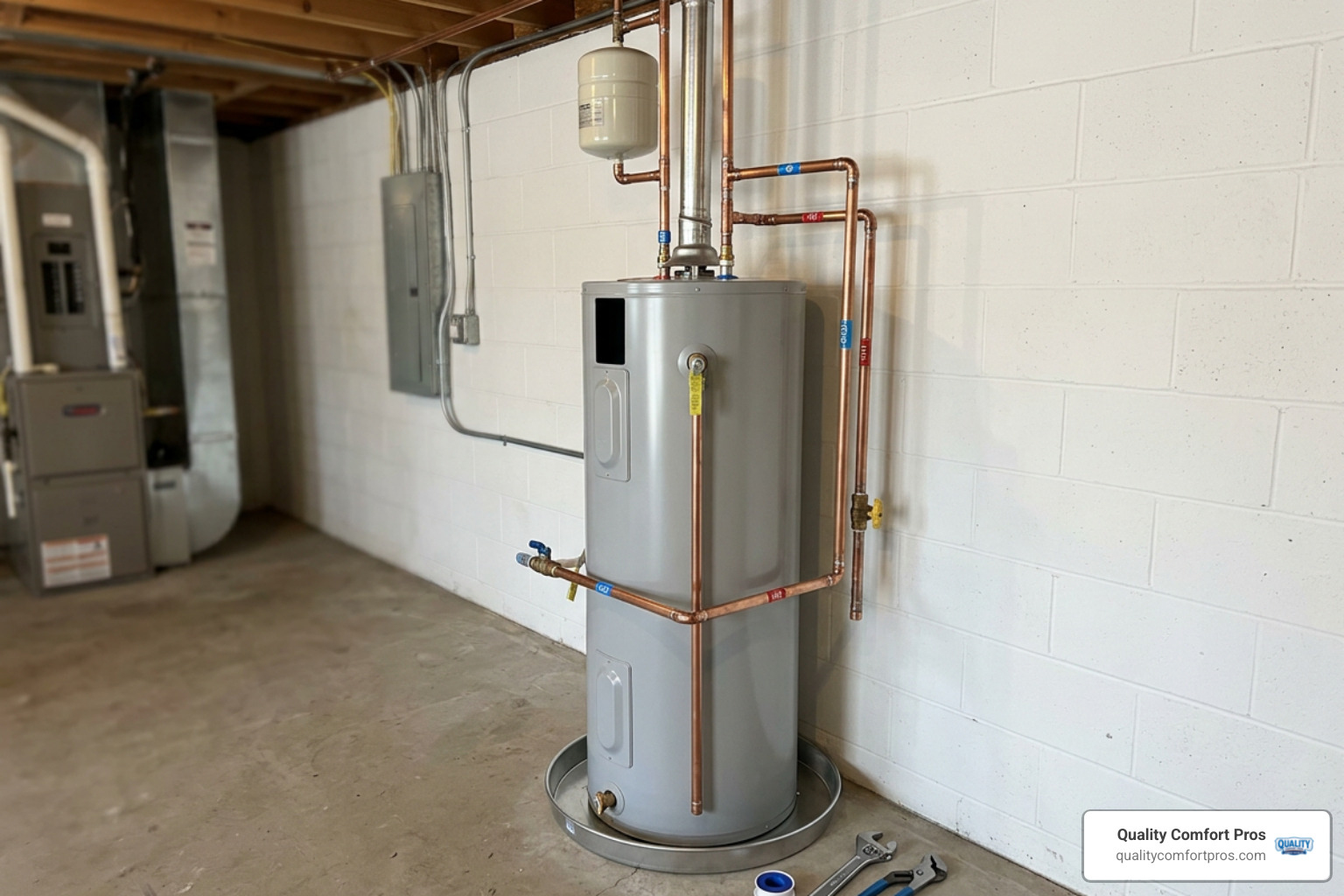
- Thermal Expansion Tanks: In closed residential plumbing systems featuring a backflow preventer or pressure-reducing valve, heated water expands and has nowhere to go. An expansion tank absorbs this extra volume, protecting internal tank linings and household plumbing joints from premature rupture.
- Drip Pans and Drain Lines: Placing a corrosion-resistant drip pan with a dedicated exterior drain line beneath the tank prevents catastrophic water damage to flooring, subflooring, and finished living spaces in the event of a leak.
- Venting Upgrades: Older venting systems may need re-lining or replacing to safely exhaust modern combustion gases and prevent backdrafting hazards inside living spaces.
- Gas Line and Electrical Modifications: Upgrading to higher-capacity units may require upsizing existing black iron gas pipes or adding dedicated circuit breakers to your home electrical panel.
- Old Tank Haul-Away and Disposal: Decommissioned 50-gallon tanks are heavy, waterlogged with sediment, and require proper environmental disposal or metal recycling.
Attempting to bypass these essential upgrades through unverified shortcuts creates severe hazards. Professional installation remains critical for household safety, building code compliance, and warranty coverage.
Repairing vs. Replacing an Aging Water Tank
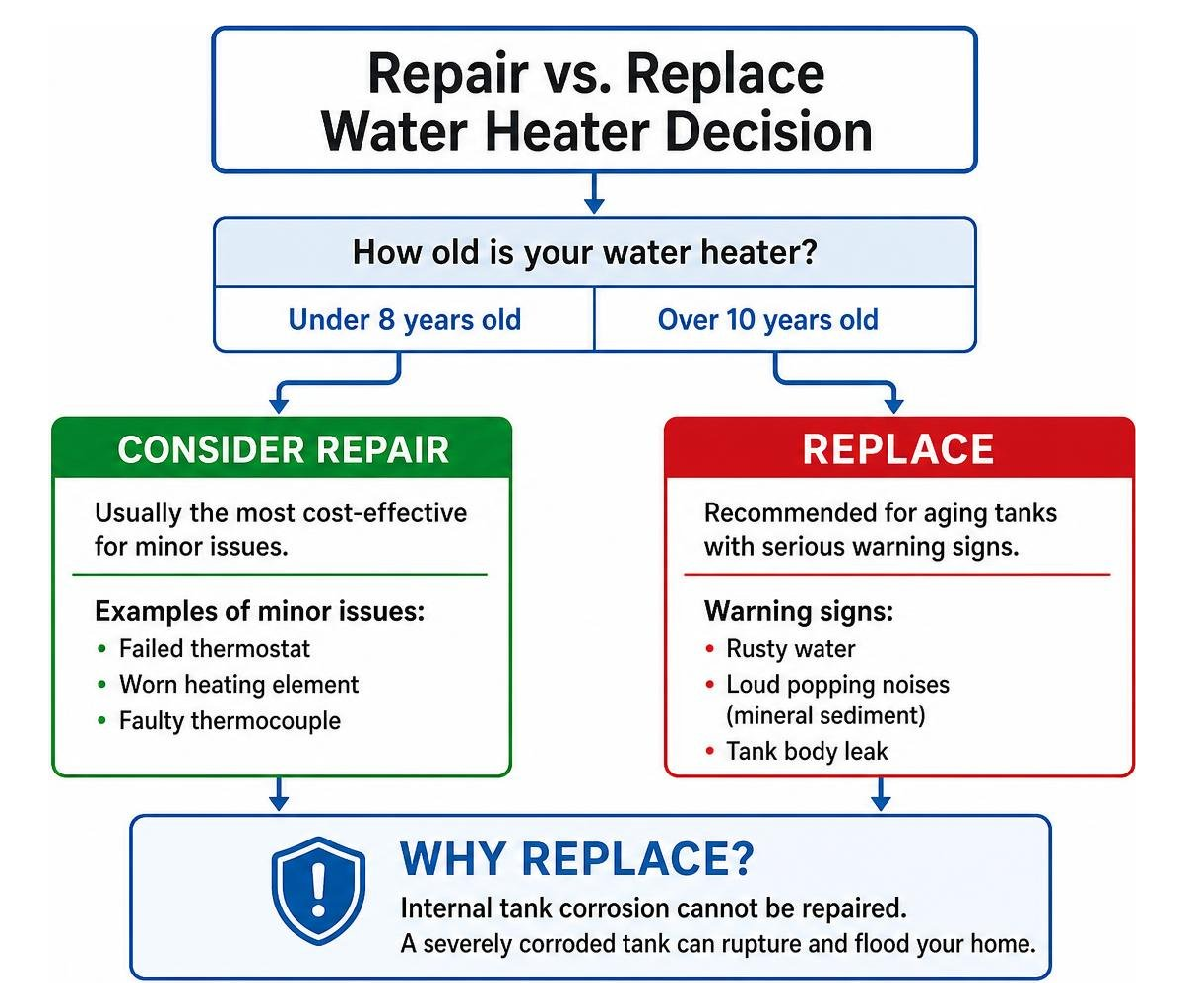
Homeowners often face a difficult choice when an existing water heater shows signs of trouble: should you invest in a targeted fix or replace the entire system? Evaluating the unit age, frequency of breakdowns, and visible warning signs helps make a sensible decision.
If your water heater is newer and experiences a minor component failure, such as a failed thermostat, a worn heating element, or a faulty thermocouple, scheduling focused water heater repair may be the most practical first step.
However, if your storage tank is past its expected service life, produces rusty water, makes loud popping noises due to heavy mineral sediment, or develops a tank body leak, replacement is usually necessary. Internal steel tank corrosion cannot be patched, and continuing to run a severely corroded tank increases the risk of sudden structural rupture and home flooding. Our guide on when to consider water heater replacement explains common warning signs so homeowners can plan before an emergency failure.
Comparing Long-Term Operating Costs and Efficiency Upgrades
The overall value of a water heater extends well beyond the initial installation day. Water heating accounts for a major portion of a home energy footprint. Evaluating efficiency ratings and estimated annual utility expenses ensures you select a system that delivers low operating expenses throughout its operational life.
Modern units carry a Uniform Energy Factor (UEF) rating established by testing standards from the U.S. Department of Energy. A higher UEF indicates that a larger percentage of supplied energy converts directly into hot water rather than escaping as standby heat loss.
Standard atmospheric gas and electric resistance tanks generally feature baseline UEF ratings, whereas advanced condensing gas models and hybrid electric heat pumps deliver substantially higher efficiency ratings. Investing in higher-efficiency equipment lowers ongoing monthly utility bills, compounding into noticeable household energy savings over time.
Standard Tank vs. Tankless Water Heaters
When replacing a traditional 50-gallon storage unit, many homeowners explore the advantages of on-demand systems. Tankless units eliminate standby energy loss by heating water only when a tap or appliance calls for it, providing continuous hot water without taking up valuable floor space.
Transitioning from a storage tank to an on-demand unit involves retrofitting gas supply lines to support higher burner output or installing high-amperage electrical circuits. While on-demand units involve higher upfront installation preparation, they often provide a longer service life than many standard storage tanks when properly maintained.
Maximizing Lifespan with Preventative Maintenance
A 50-gallon water heater represents an important home investment. Routine care keeps the unit operating safely at peak energy efficiency while avoiding unexpected emergency breakdowns. Establishing an annual care routine extends equipment life and keeps utility bills manageable. Our team provides thorough water heater maintenance to protect your investment year after year.
Key preventative maintenance tasks include:
- Annual Sediment Flushing: Heating hard water causes calcium and magnesium minerals to settle at the base of the tank. Over time, this sediment forms an insulating barrier that overheats the tank bottom, reduces heat transfer efficiency, and causes loud rumbling sounds. Flushing the tank once a year clears sediment accumulation.
- Sacrificial Anode Rod Inspection: The anode rod is a magnesium or aluminum rod inside the tank designed to attract corrosive elements in the water, sacrificing itself to protect the steel tank lining. Replacing the anode rod at regular intervals helps prevent internal rust and extend tank life.
- Temperature and Pressure (T&P) Relief Valve Testing: The T&P valve is a critical safety component designed to release water if internal pressure or temperature exceeds safe operating thresholds. Manually lifting the test lever periodically ensures the valve operates freely without sticking or clogging.
Available Rebates, Incentives, and Payment Options
Upgrading your home water heating equipment to high-efficiency technology often qualifies for valuable financial incentives. The federal government and various regional utilities offer incentives for qualifying high-efficiency heat pump and advanced gas models meeting strict efficiency benchmarks, such as those verified by ENERGY STAR.
To make essential home comfort upgrades manageable and budget-friendly, explore flexible financing plans designed to fit your family needs. Additionally, remember to check seasonal promotions to take advantage of savings on select equipment and professional installations.
Frequently Asked Questions
What is the average cost to install a 50-gallon water heater in 2026?
The overall investment for a 50-gallon water heater installation depends on the fuel type, equipment efficiency tier, and necessary plumbing or electrical updates. A basic like-for-like swap in an accessible space represents a modest investment, while power-vented gas models, hybrid heat pumps, and systems requiring code-mandated line upgrades fall into a higher investment tier.
Is a 50-gallon water heater large enough for a family of four?
Yes, a 50-gallon tank is the industry-standard recommendation for homes with three to five occupants. It provides sufficient storage and first-hour recovery capability to handle simultaneous hot water demands, such as running a dishwasher while someone takes a warm shower, without immediately running out of hot water.
How much does labor cost to install a 50-gallon water heater?
Installation labor is determined by the project duration and complexity. A direct, same-location replacement typically requires a few hours of certified labor, keeping the service charge modest. Jobs that require fuel line extensions, power vent installations, electrical panel work, or tight-space retrofits take longer and carry higher labor requirements.
Is it cheaper to install a gas or an electric 50-gallon water heater?
Standard electric storage water heaters typically have a lower upfront installation cost because they connect directly to home wiring without requiring exhaust venting or combustible fuel lines. However, natural gas models generally feature lower ongoing operating fuel expenses, which helps balance long-term total ownership costs.
How long does a 50-gallon water heater typically last?
A standard 50-gallon tank water heater often lasts for many years with proper installation and maintenance. Diligent annual maintenance, including regular sediment flushing and timely sacrificial anode rod replacements, helps preserve reliable service before replacement becomes necessary.
Do I need a permit to replace a 50-gallon water heater?
Most local municipalities require a plumbing or mechanical permit for water heater installations. Securing a permit ensures the installation is inspected for code compliance, proper ventilation, and safe pressure containment, which helps protect your home and preserves your homeowner insurance coverage.
Why is an expansion tank required with a new water heater?
An expansion tank is mandated by modern plumbing codes on closed water systems featuring check valves or pressure-reducing valves. When water heats inside the tank, it expands. The expansion tank absorbs this excess volume, preventing severe pressure spikes that damage plumbing joints and void manufacturer tank warranties.
How long does professional water heater installation take?
A direct, like-for-like replacement by an experienced installation crew typically takes a few hours from arrival to final cleanup. If the project involves converting fuel sources, installing power venting runs, or relocating the tank to a new area, the installation may require a longer service visit.
Is upgrading to a hybrid heat pump water heater worth the extra price?
Upgrading to a hybrid heat pump water heater provides strong value for homeowners seeking low long-term operating costs. Heat pumps use less electricity than traditional electric resistance tanks, allowing energy savings and available utility incentives to help offset the initial purchase cost over time.
What maintenance is required to keep a 50-gallon water heater running efficiently?
Essential annual maintenance includes draining and flushing the storage tank to remove mineral sediment, inspecting the sacrificial anode rod for corrosion wear, and testing the temperature and pressure relief valve. Regular maintenance preserves energy efficiency, prevents tank floor overheating, and extends system service life.
Conclusion
Choosing the right 50-gallon water heater ensures your household enjoys dependable, comfortable hot water while keeping monthly energy expenses manageable. Whether you need a standard electric tank, an efficient power-vented gas system, or an advanced hybrid heat pump, selecting the right equipment and ensuring a safe, code-compliant installation is essential for long-term peace of mind.
For over 28 years, Quality Comfort Pros has provided reliable, expert, family-owned home comfort solutions across Gaylord, MI, and the surrounding Northern Michigan communities. Our licensed technicians handle complete water heater installations, plumbing upgrades, and comprehensive maintenance for all makes and models. If you are planning an upgrade or need trusted guidance on your home plumbing, please contact our professional water heater technicians today.