Slab Leak Repair: Signs, Risks, and Proven Fix Options
Effective Slab Leak Repair Starts With Accurate Detection
The most effective approach to slab leaks repair is to act quickly, pinpoint the leak with professional, non-invasive testing, and choose a repair that fits the condition of the pipe system, not just the damaged spot. If you notice warm or damp flooring, a sudden water-bill increase, low pressure, musty odors, or water sounds when fixtures are off, take these steps:
- Shut off water if the leak appears active or damaging.
- Avoid breaking concrete until a licensed plumber identifies the leak location.
- Use pressure testing, acoustic listening, thermal imaging, or line tracing to confirm the issue.
- Select a targeted repair, pipe reroute, trenchless lining, or repipe based on the pipe’s age and overall condition.
A slab leak is a water-line leak beneath a concrete foundation. Left alone, escaping water can damage flooring, encourage mold, erode supporting soil, and contribute to foundation movement or cracking. For an isolated failure, a precise spot repair may be enough. For aging pipes or repeat leaks, rerouting or replacing vulnerable lines can be the more dependable long-term answer.
The Quality Comfort Pros team brings more than 20 years of home services experience to customer-focused strategy, operations, and helping homeowners make clear decisions about complex repairs, including slab leaks repair. The sections ahead explain how to recognize the problem, evaluate repair options, and protect your home from escalating damage.

Understanding Under-Slab Water Line Damage and Warning Signs
Slab foundations support a massive portion of modern residential construction, accounting for over 70% of new homes built in recent years. When water supply lines embedded inside or beneath that concrete structure fail, the resulting damage can remain hidden for weeks or even months. Water takes the path of least resistance, flowing under the concrete or saturating the soil long before it emerges on top of your finished floors.
Homeowners frequently discover these issues after noticing subtle changes around their property. Recognizing the initial signs can make the difference between a localized repair and major structural remediation. Common warning signs include:
- Unexplained spikes in monthly municipal water bills.
- Warm or hot spots localized on tile, vinyl, or hardwood floors.
- Damp carpeting, wet baseboards, or visible pooling along interior walls.
- Sounds of hissing or rushing water when all plumbing fixtures are shut off.
- Noticeable drops in household water pressure.
- Lingering musty odors or sudden mildew growth behind cabinetry.
- Hairline cracks emerging along drywall, door frames, or exterior foundation walls.
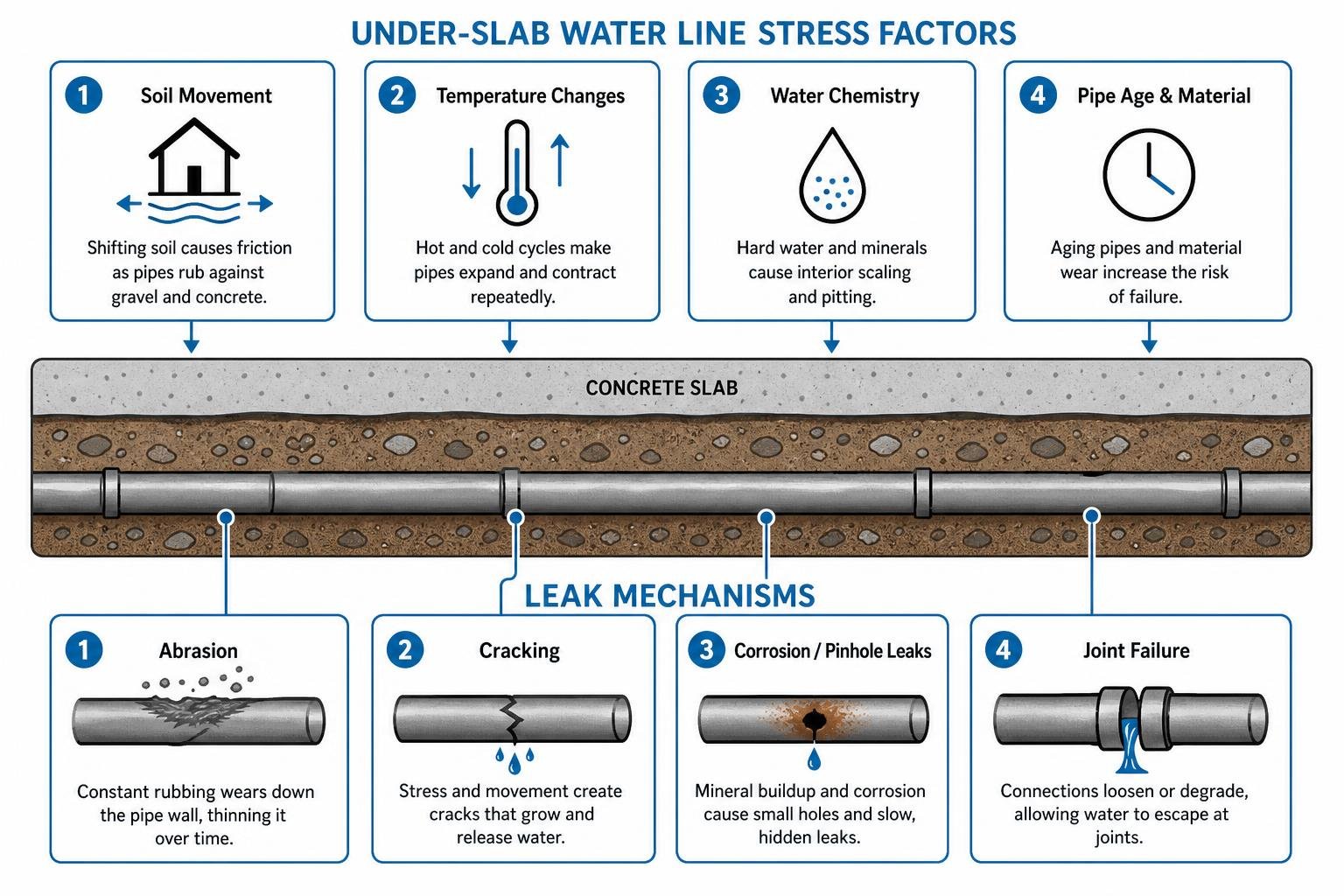
Under-slab plumbing failures develop from a combination of mechanical stress and chemical reactions. Soil movement beneath the foundation causes friction as pipes rub against coarse gravel and dense concrete. Temperature changes produce constant expansion and contraction cycles, particularly on hot water lines. Hard water chemistry and mineral content can also cause interior pitting and localized pinhole corrosion within older metallic lines.
If you notice moisture accumulating near cabinets or appliances, the Quality Comfort Pros team can help determine whether the problem is isolated to one fixture or related to a hidden under-slab line. Early evaluation protects flooring, cabinetry, and structural materials before moisture spreads farther through the home.
Kitchen symptoms often appear before a homeowner realizes the foundation line is involved. Our article on 7 warning signs of a kitchen slab leak and what to do next explains what damp baseboards, warm flooring, and unexplained water sounds can mean in everyday living spaces.
Advanced Methods for Accurate Slab Leak Detection
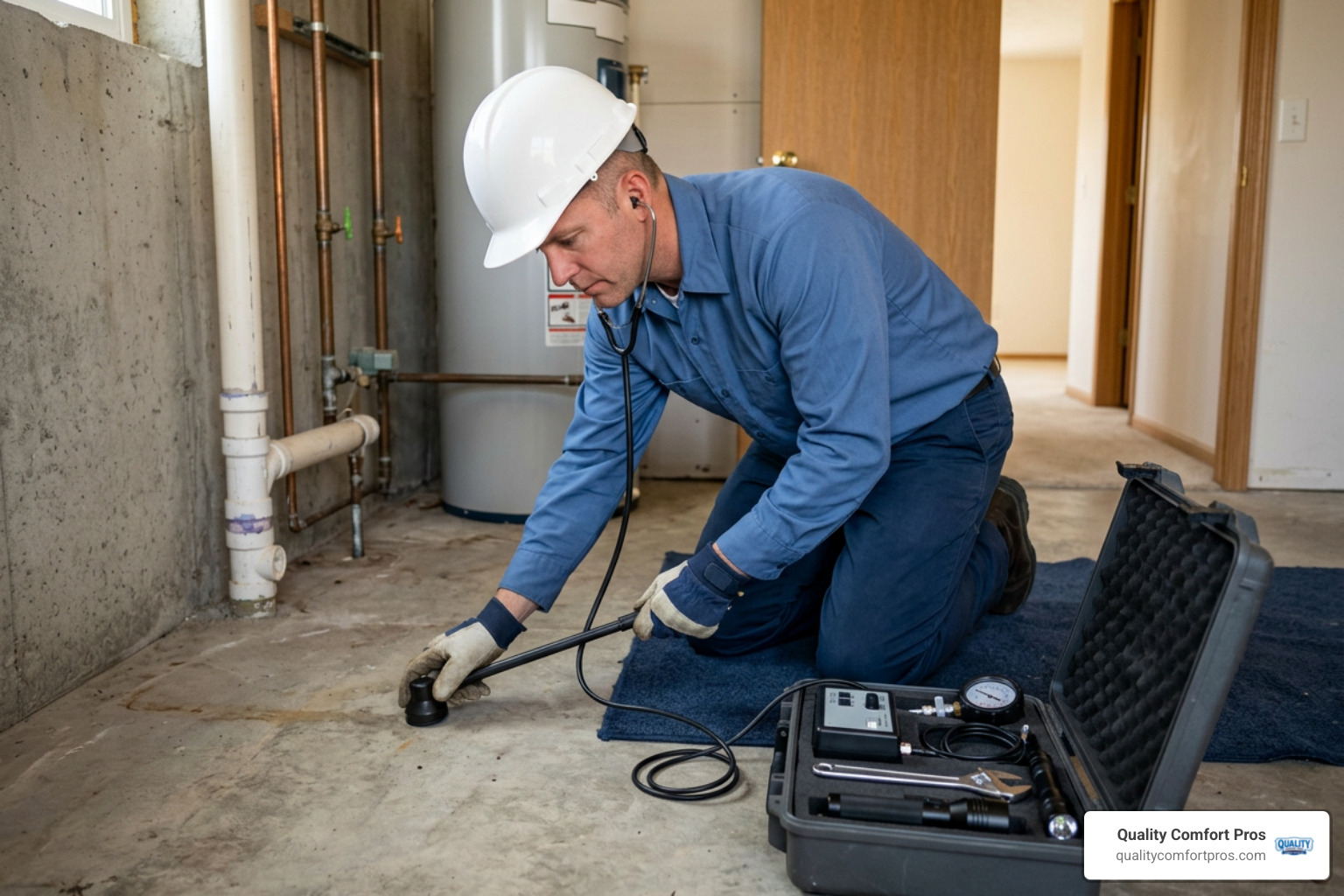
Locating a leak buried under inches of reinforced concrete and aggregate requires specialized diagnostic tools. Guesswork or indiscriminate jackhammering can weaken structural footings and create unnecessary mess. Professional technicians rely on non-destructive technology to pinpoint the exact source of escaping water before opening any floor surfaces.
Modern diagnostic procedures employ multiple complementary technologies:
- Acoustic listening equipment: High-sensitivity ground microphones and electronic amplifiers capture the distinct acoustic frequencies generated by pressurized water escaping from a ruptured pipe.
- Thermal imaging cameras: Infrared devices detect subtle surface temperature differentials on concrete floors, clearly highlighting hot-water line breaks or cool-water saturation zones.
- Electromagnetic pipe and cable locators: Technicians map the layout and depth of underground piping networks, ensuring precise spot targeting.
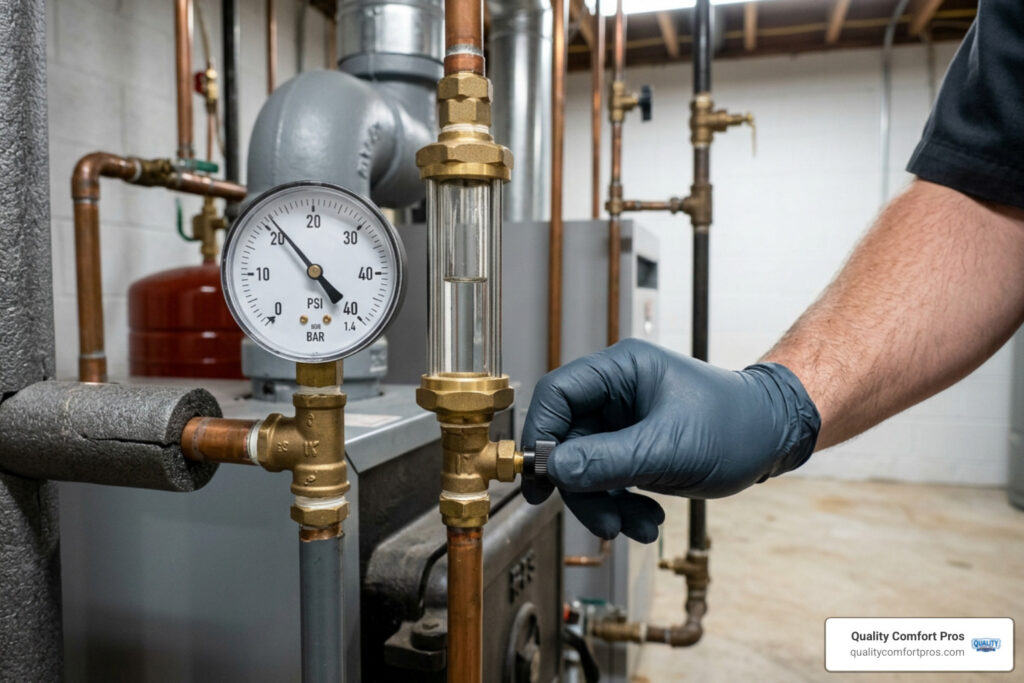
- Pressure decay and isolation testing: By isolating distinct plumbing loops and monitoring pressure drops on specialized gauges, technicians verify whether a failure exists on the hot, cold, or irrigation system.
Accurate testing protects finished flooring and keeps the repair plan focused on the actual failure point. The methods covered in the ultimate guide to leak detection show how professional diagnostics narrow the search before any concrete access is considered.
Scheduling specialized leak detection ensures your water lines are mapped accurately without destructive exploration.
The Most Effective Solutions for Slab Leaks Repair
Once the leak is mapped, choosing the most durable repair strategy depends on several factors: the age of the plumbing system, overall pipe condition, foundation design, and your long-term plans for the property. Every home requires a tailored evaluation rather than a one-size-fits-all fix.
A professional slab leak plan should balance speed, access, pipe condition, and long-term durability. When the issue points to a hidden water-line failure, scheduling slab leak repair helps protect your subfloor and preserve your property value.
| Repair Method | Best For | Typical Disruption Level | Foundation Impact | Long-Term Longevity |
|---|---|---|---|---|
| Direct Spot Repair | Isolated damage on newer pipes | Moderate localized demo | Minor concrete penetration | High for the patched spot |
| Pipe Rerouting | Older lines, inaccessible locations | Low to moderate wall access | None, avoids slab entirely | Excellent with a new pipe path |
| Trenchless Epoxy Lining | Accessible straight pipe runs | Very low, minimal digging | None, works internally | High with a seamless resin barrier |
| Whole-House Repiping | Aging systems with repeat leaks | Moderate across living areas | None, bypasses slab lines | Maximum with complete renewal |
Targeted Spot Repair: Direct Access Slab Leaks Repair
A direct spot repair involves accessing the damaged section of pipe by creating a small opening through the flooring and concrete slab. This technique is ideal for relatively new plumbing systems where an isolated failure has occurred, such as a localized installation defect or a single pinhole caused by external friction against a stone.
Technicians carefully open the slab at the exact leak coordinates, clear away the surrounding gravel, cut out the damaged pipe segment, and install a durable replacement fitting. Once the line passes rigorous pressure testing, the subbase is backfilled, the moisture barrier is resealed, and fresh concrete is poured flush with the floor. Choosing prompt pipe repair for isolated issues resolves the problem quickly while keeping work contained.
Pipe Rerouting: Overhead and Wall Bypass Methods
When pipes are deeply buried, located beneath expensive custom flooring, or showing signs of widespread thinning, digging through the foundation is rarely the best approach. Pipe rerouting abandons the leaking line beneath the slab entirely, installing a new, high-grade flexible line through interior wall cavities, drop ceilings, or attic spaces.
Rerouting offers multiple advantages:
- Completely eliminates the need to jackhammer indoor living spaces.
- Protects high-end floor coverings such as natural stone, imported tile, or finished hardwood.
- Moves critical supply lines into accessible areas, making future maintenance straightforward.
- Modern flexible lines resist mineral scale buildup and absorb pressure fluctuations smoothly.
Homeowners who opt for specialized leak repair using overhead reroutes protect their foundation while restoring full household water flow.
Trenchless Restoration: Cured-In-Place Pipe Lining
Trenchless cured-in-place pipe restoration provides a non-invasive alternative for qualifying lines. Rather than excavating concrete or opening wall chases, technicians use entry points to clean, dry, and line the interior of the compromised pipe with an epoxy resin sleeve.
The epoxy cures into a smooth, seamless structural barrier within the existing pipe, sealing existing leaks and preventing future internal corrosion. This trenchless approach works exceptionally well for straight pipe runs where excavation would cause excessive disruption to building interiors or landscaping.
Whole-House Repiping: Long-Term Slab Leaks Repair Strategy
In older properties with original metallic water lines that have exceeded their reliable service lifespan, fixing a single spot leak often proves to be a short-term band-aid. Corrosion rarely attacks just one isolated inch of pipe. If one section has thinned to the point of failure, adjacent sections under the slab may soon follow.
When pipe deterioration is widespread, permanent pipe replacement can upgrade the domestic water distribution network instead of repeatedly repairing failing under-slab lines. Modern flexible piping systems offer strong resistance to scaling, improved flow dynamics, and peace of mind against future foundation leaks.
Repair Costs and Homeowners Insurance Considerations in 2026
Evaluating slab leak resolution involves understanding diagnostic work, plumbing repairs, and necessary property restoration. Actual pricing varies by home layout, pipe access, repair method, flooring materials, and the extent of any water or structural damage, so an on-site inspection is the most reliable way to understand the investment.
Several variables influence overall repair costs:
- Repair method selected: A localized spot repair is usually more contained than a full reroute or whole-home repipe, but the best option depends on pipe condition and access.
- Labor requirements: Complex diagnostics, concrete access, pressure testing, and restoration coordination can affect total labor time.
- Finish restoration: Flooring, cabinetry, trim, and drywall restoration may be minor when damage is caught early or more involved when moisture has spread.
- Structural remediation: If a long-undetected leak has caused soil washout or foundation movement, stabilization work can become a separate and more complex project.
Navigating homeowners insurance policies requires careful attention to specific policy language. Standard property insurance policies frequently cover tear-out work to access a covered leak and secondary water damage restoration for flooring, walls, and cabinetry. However, policies commonly exclude the physical replacement part or pipe fitting itself, categorizing plumbing pipe wear as standard home maintenance.
Working with certified professionals who provide comprehensive photographic documentation and diagnostic reports helps streamline your insurance claim process while keeping your general plumbing system in top condition. Independent guidance on residential water efficiency and plumbing safety is also available through trusted resources like the EPA WaterSense Program.
Frequently Asked Questions About Slab Leaks
What is a slab leak and why is it dangerous?
A slab leak is a failure in the pressurized water supply lines or drainage pipes running beneath or embedded directly inside a home’s concrete foundation. It is dangerous because pressurized water can saturate surrounding subsoil, erode structural support, foster hidden mold growth, and eventually cause the foundation to crack, heave, or settle unevenly.
What are the earliest warning signs of an under-slab leak?
The earliest indicators include sudden increases in your utility water bill, localized warm spots on hard flooring surfaces, damp carpet or warped floorboards, low water pressure at plumbing fixtures, and the sound of running water when all taps are turned off.
How do technicians locate a slab leak without breaking the floor?
Plumbing professionals utilize non-invasive diagnostic tools, including acoustic ground microphones to listen for pressurized water escaping, thermal imaging cameras to track temperature variations, electronic line locators, and pressure decay testing to pinpoint the exact location without destructive concrete removal.
How much does slab leak repair typically cost?
Slab leak repair costs vary based on the repair method, pipe access, flooring type, diagnostic needs, and whether water or structural damage is present. A professional inspection is the best way to understand the right repair path and the expected investment for your home.
Does homeowners insurance cover the cost of slab leak repair?
Most standard homeowners insurance policies cover the cost of tearing out and restoring flooring or concrete to access the leak, as well as repairing resulting water damage. However, the cost of the actual plumbing repair or replacement pipe fitting is typically considered homeowner maintenance and is excluded from coverage.
How long does it take to repair a leaking pipe under concrete?
A direct spot repair typically takes 1 to 2 days to excavate, repair, test, and patch the slab. An overhead pipe reroute generally takes 2 to 3 days, while a complete whole-house repiping project may require 3 to 5 business days depending on property size.
Can I stay in my home during under-slab plumbing repairs?
Yes, in the vast majority of cases you can remain in your home during the repair process. Water service is typically shut off only during active plumbing work during the day and can often be temporarily restored in the evenings.
When should I choose pipe rerouting over direct spot repair?
Pipe rerouting is recommended when original metallic pipes show signs of widespread corrosion, when multiple leaks have occurred, when the leak is beneath permanent cabinetry or expensive flooring, or when you want to avoid breaking into the concrete foundation.
What happens if a foundation leak is left untreated?
Leaving a foundation leak untreated can lead to extensive structural cracking, foundation shifting, severe subfloor moisture damage, widespread toxic mold colonies, wasted water resources, and escalating repair expenses.
How can I prevent recurring slab leaks in older plumbing systems?
The most reliable way to prevent recurring leaks in older plumbing is to replace aging metallic lines with modern flexible piping via an overhead bypass or complete repiping project, alongside maintaining balanced household water pressure and addressing water quality issues.
Conclusion
A slab leak requires swift, decisive action to safeguard your home’s structural integrity and avoid costly secondary property damage. Modern non-invasive leak detection technologies allow skilled professionals to pinpoint plumbing failures precisely, eliminating unnecessary demolition and preserving your living spaces. Whether your home is best served by a targeted spot repair, an overhead flexible reroute, or a complete whole-house repiping upgrade, choosing a lasting solution ensures your plumbing operates safely for decades to come.
Quality Comfort Pros brings 28 years of reliable, family-owned expertise to homeowners throughout Northern Michigan, including Gaylord, MI, Petoskey, MI, Charlevoix, MI, Grayling, MI, and surrounding communities. Our licensed technicians provide comprehensive plumbing, water heater, drain, HVAC, AC, and A/C solutions compatible with major equipment categories. If you suspect hidden water line issues under your foundation, contact our professional slab leak repair technicians and restore lasting comfort and protection to your home.