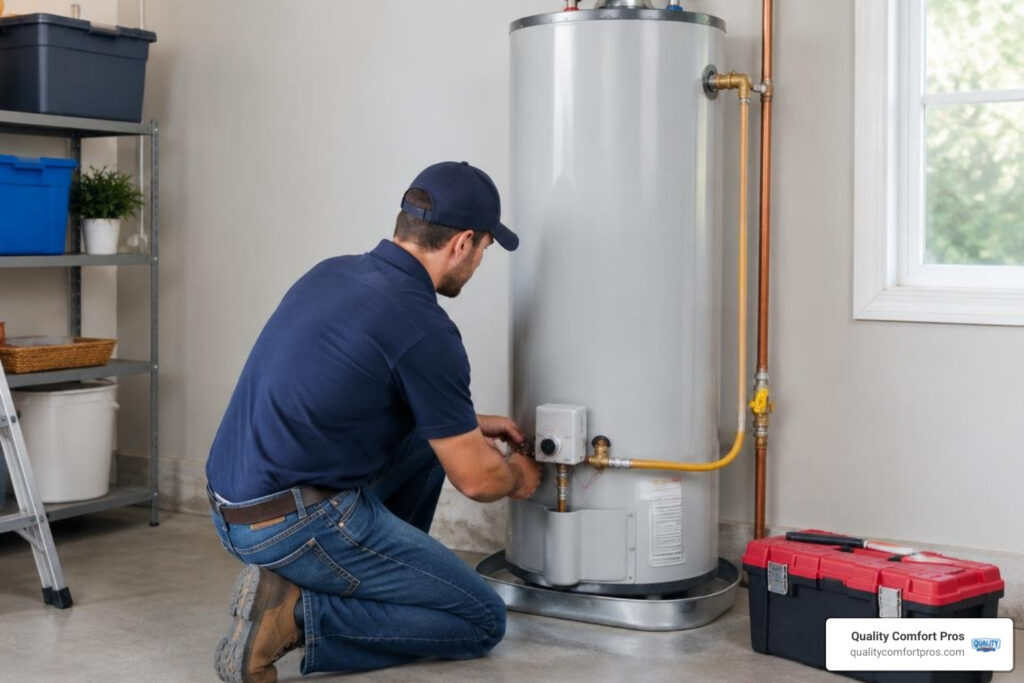
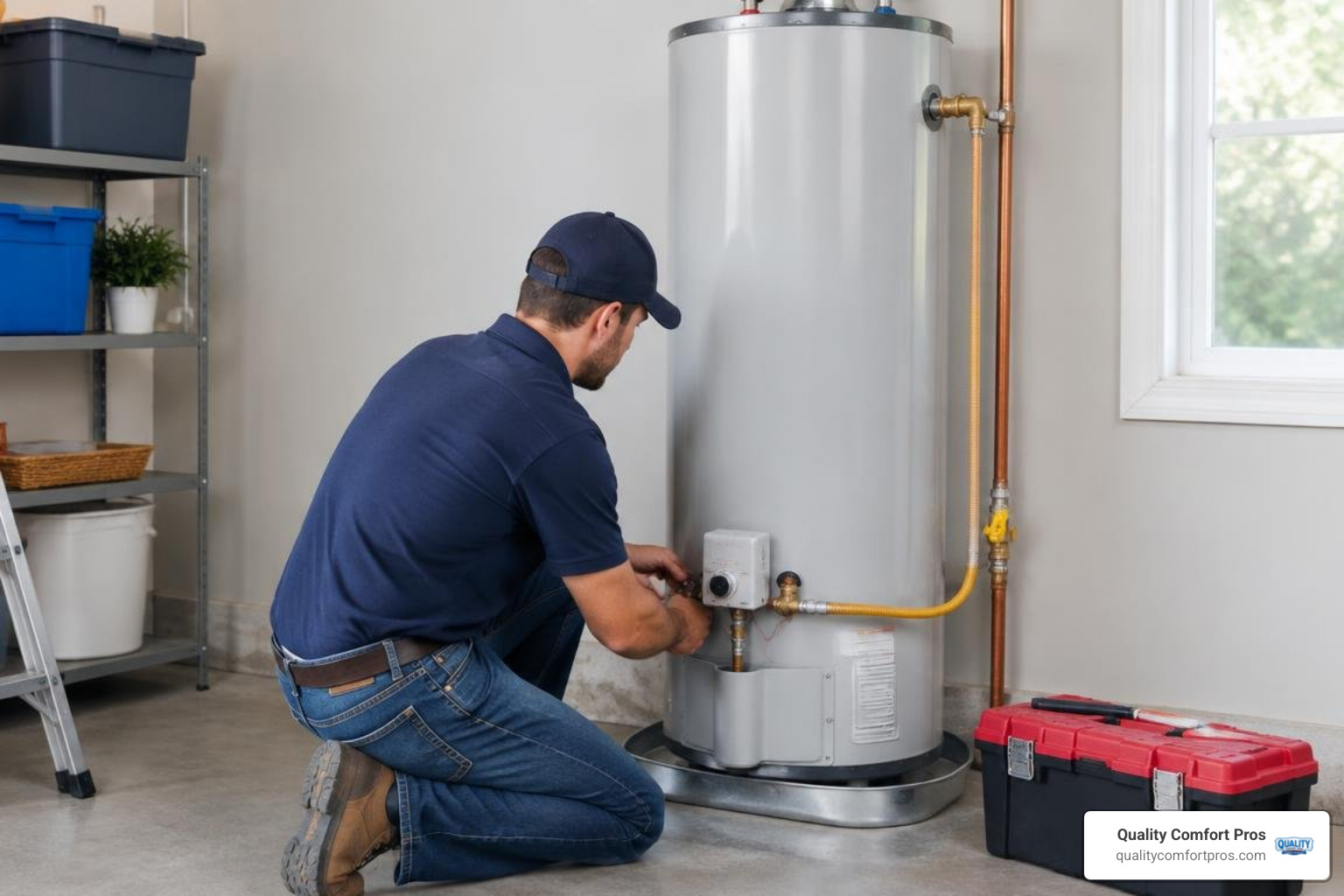
Understanding the Total Cost to Install 40 Gallon Water Heater Systems in 2026
Planning for a new hot water system involves looking at both upfront equipment expenses and the labor necessary to complete a safe, code-compliant setup. In 2026, the cost to install a 40 gallon water heater spans a moderate range depending on site accessibility, energy efficiency ratings, and whether you are staying with the same fuel supply.
When estimating the expense of replacing your existing system, breaking down the project into distinct categories prevents unexpected surprises. Equipment expenses reflect the tank build, warranty length, and internal component materials. Meanwhile, labor encompasses professional plumbing, electrical connections, code upgrades, and old-tank haul-away. Investing in a professional water heater replacement ensures that every safety shutoff, pressure relief line, and venting pipe meets strict standards.
| System Feature | Standard Electric Tank | Standard Natural Gas Tank | High-Efficiency Hybrid Heat Pump |
|---|---|---|---|
| Typical Equipment Profile | Affordable entry-level unit, dual heating elements | Mid-range equipment price, atmospheric or power vent | Higher upfront equipment investment, advanced compressor |
| Installation Complexity | Straightforward electrical wiring, basic plumbing hookups | Requires rigid gas lines, draft hood, or specialized venting | Requires condensate drain, ample airflow, dedicated electrical circuit |
| Operating Expense Profile | Higher annual electricity consumption | Moderate monthly gas utility expense | Lowest annual energy consumption (up to 70% reduction) |
| Estimated Lifespan | 10 to 15 years with routine maintenance | 10 to 12 years with routine maintenance | 10 to 15 years with active filter care |
Average Labor and Equipment Cost to Install 40 Gallon Water Heater Units
Labor and equipment work together to form your final estimate. Most licensed plumbing companies quote projects using flat-rate bids rather than open-ended hourly billing. Flat-rate pricing protects you from paying extra if a stubborn fitting takes longer to remove or if tight basement stairs slow down transit.
Equipment expenses vary according to the tank manufacturer, internal lining technology, and insulation density. Entry-level units often feature six-year manufacturer warranties, whereas mid-tier and premium models come with thicker insulation, commercial-grade heating elements or burners, and extended ten- to twelve-year warranty coverage.
According to the latest 2026 water heater installation pricing report, professional installation labor accounts for a substantial portion of the total project budget because it covers technical skill, municipal permitting, specialized tools, and commercial vehicle overhead.
How Fuel Type Impacts the Cost to Install 40 Gallon Water Heater Models
Your choice of energy source fundamentally shapes both the installation process and ongoing utility spending. The three primary residential power sources each come with unique considerations:
- Natural Gas: Gas-fired storage systems require dedicated gas supply lines, reliable shutoff valves, and strict ventilation. While the equipment generally carries a moderate price tag, running new gas piping or updating outdated exhaust chimneys will increase labor. Gas water heaters provide rapid recovery rates, heating fresh water quickly during peak household routines.
- Electricity: Electric storage tanks are generally the most affordable to purchase and simplest to put in place, provided your home electrical panel has sufficient breaker capacity. They eliminate the need for exhaust flues and gas leak testing, making them an attractive option for homes without utility gas access.
- Propane: Common across rural properties, liquid propane storage units require specialized burner orifices and dedicated fuel storage tanks. Installation requirements parallel natural gas systems closely, requiring precise pressure regulation and proper exhaust ventilation.
For an in-depth breakdown of how system configurations shape your overall project budget, review our detailed guide to water heater installation costs.
Key Factors and Hidden Expenses in Water Heater Replacement
When replacing an aging hot water system, the quote on paper should cover more than just removing the old cylinder and sliding a new one into the same footprint. Hidden expenses often arise from safety upgrades mandated by updated regional construction standards, structural modifications, or complex venting paths.
Homeowners transitioning between sizes can explore our 50-gallon water heater installation guide to evaluate how tank dimensions impact space requirements and total mechanical labor.
Code Compliance and Safety Additions
Plumbing and mechanical codes evolve constantly to protect residential properties from water damage, gas leaks, and thermal pressure failures. If your existing water heater was installed over a decade ago, bringing your utility area up to current standards may introduce essential safety add-ons:
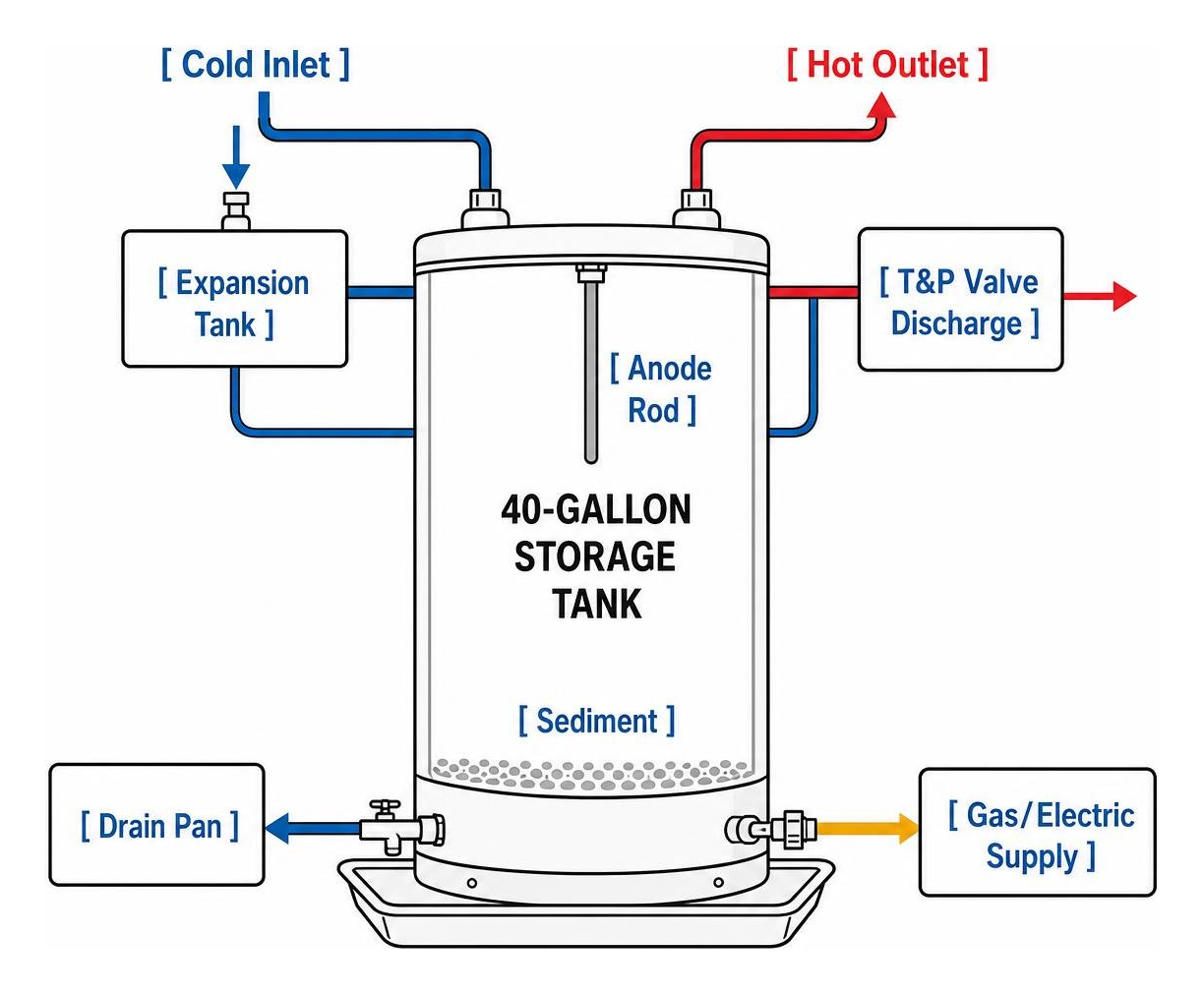
- Thermal Expansion Tanks: Closed-loop residential plumbing networks require a small bladder tank mounted above the heater. As cold water heats up, it naturally expands; without an expansion tank, this thermal expansion increases hydraulic pressure, stressing indoor fixtures and shortening tank longevity.
- Drain Pans and Discharge Lines: Installing a durable catch pan beneath the tank with a dedicated drain pipe routed to an approved drain protects surrounding flooring, subfloors, and finished basements from catastrophic leaks.
- Seismic and Structural Strapping: Heavy storage tanks full of hot water must remain stable during sudden structural shifts or accidental impacts. Secure strapping prevents fuel lines and water connections from snapping.
- Safety Shutoff Valves and Unions: Modern installations incorporate full-port brass ball valves and dielectric unions to allow swift emergency shutoffs while preventing galvanic corrosion between dissimilar metals.
Communities like Gaylord, MI, and across Northern Michigan enforce strict safety codes during professional replacements to safeguard residential comfort through demanding seasonal temperature shifts.
Venting and Utility Line Upgrades
Gas and propane water heaters generate combustion byproducts that must exit your living space safely. The style of exhaust system connected to your appliance heavily dictates mechanical labor:
- Atmospheric Venting: Relies on natural thermal buoyancy to carry exhaust fumes upward through a vertical chimney or metal flue. If your existing chimney flue is deteriorating or improperly sized, relining the exhaust path becomes necessary.
- Power Venting: Uses an electric blower fan mounted atop the tank to push exhaust gases horizontally through PVC or polypropylene piping routed through an exterior sidewall. Power vent appliances eliminate chimney reliance but require a nearby electrical outlet and specialized pipe materials.
- Direct Vent Systems: Pulls 100% of outdoor air directly into a sealed combustion chamber and expels exhaust outside, making them ideal for tightly sealed utility closets.
Comparing 40-Gallon Tanks with Alternative Water Heating Options
Selecting the right water heater capacity ensures your household never suffers from surprise cold showers while avoiding the unnecessary energy loss of keeping an oversized tank hot around the clock.
If your household experiences sudden hot water drop-offs during back-to-back morning routines, you may want to evaluate the signs you need water heater replacement before an unexpected tank rupture forces an emergency decision.
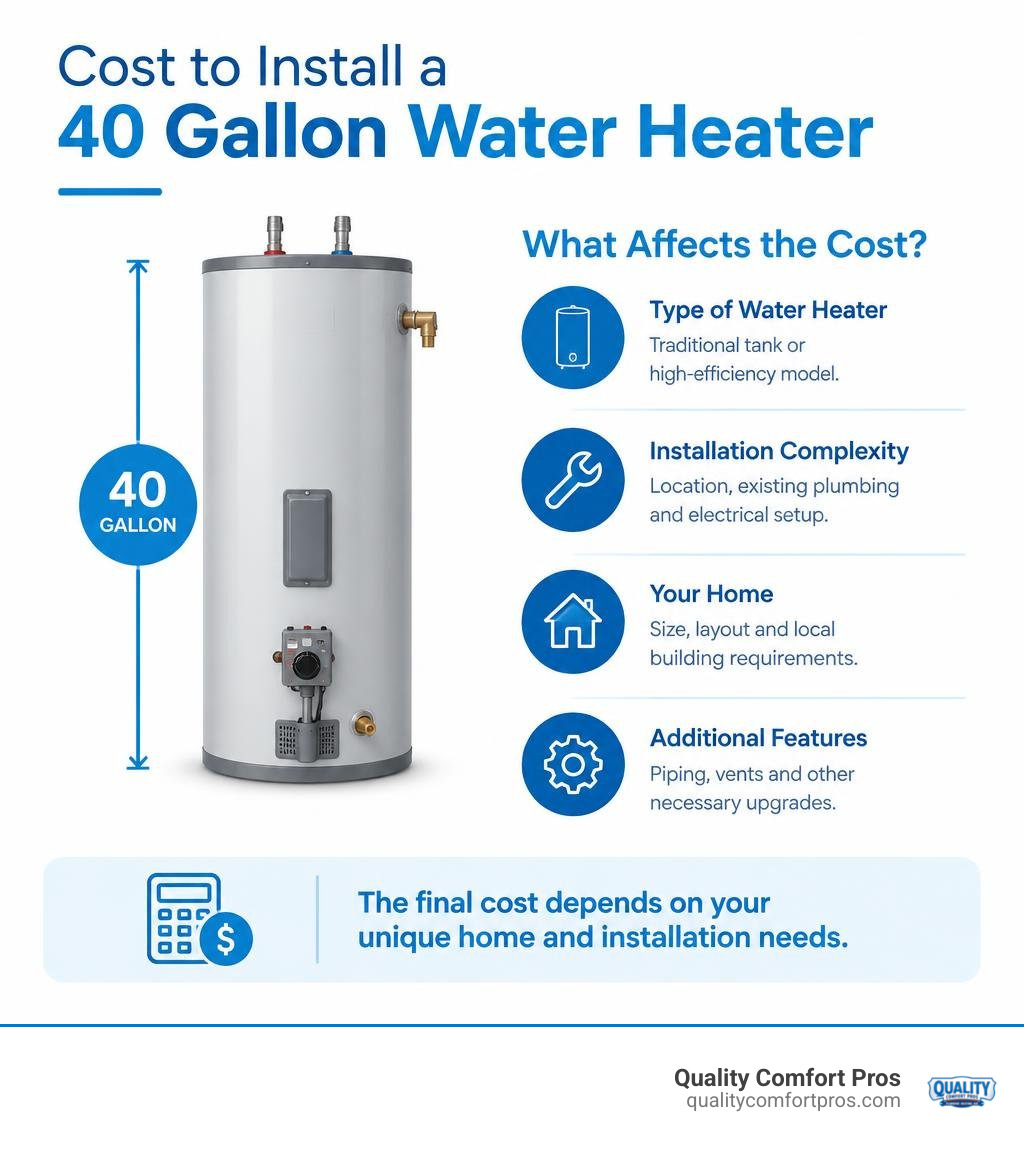
40-Gallon vs. 50-Gallon Storage Tanks
A 40-gallon storage tank serves as the benchmark capacity for small- to medium-sized households of two to three occupants. It offers a solid balance of hot water storage without taking up excessive floor space in tight basements, utility rooms, or manufactured home closets.
The critical metric to evaluate is the first hour rating (FHR), which measures how many gallons of reliable hot water the appliance can supply during an hour of heavy usage starting with a fully heated tank. A natural gas 40-gallon tank frequently delivers an FHR comparable to a 50-gallon standard electric unit because natural gas burners transfer heat energy into the water much faster than standard electric elements.
However, if your home features a large soaking tub, multiple simultaneous showerheads, or a growing family, stepping up to a 50-gallon tank provides extra buffer capacity against sudden temperature drops.
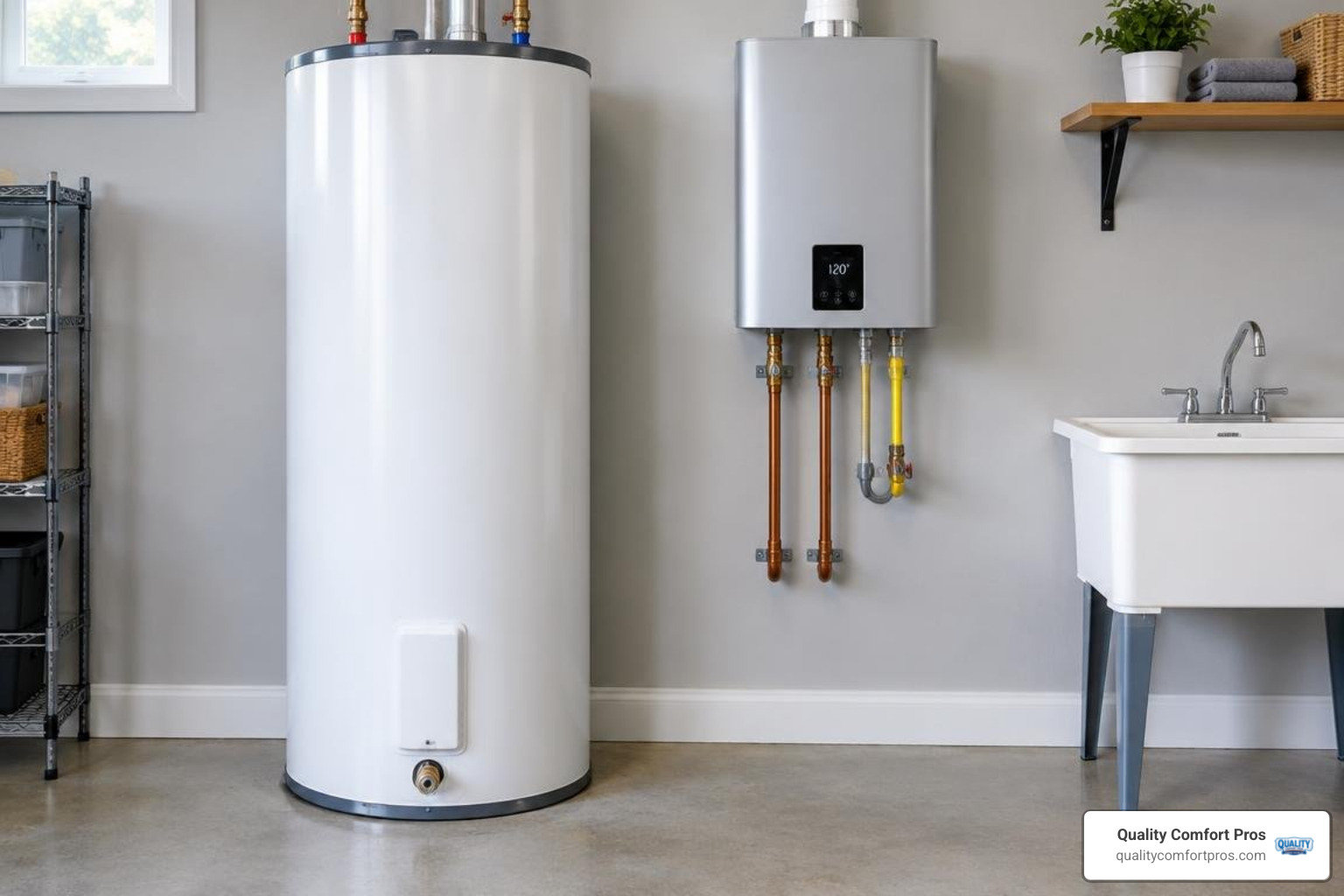
Upgrading to Tankless or Hybrid Heat Pump Systems
Homeowners seeking modern alternatives to conventional atmospheric storage tanks often weigh the benefits of high-efficiency equipment:
- Tankless Systems: Rather than storing dozens of gallons of hot water continuously, tankless units heat water on demand using high-output burner arrays or electric coils. They free up floor space and eliminate standby thermal losses. While retrofitting a tankless unit involves running larger gas lines and dedicated concentric venting, explore tankless water heater installation if endless hot water delivery matches your long-term household goals.
- Hybrid Heat Pump Water Heaters: These units pull heat from ambient air in your utility room and transfer it directly into the water tank using an integrated compressor system. Hybrid units consume a fraction of the electricity used by traditional electric resistance tanks.
Discover modern efficiency upgrades and smart diagnostics by reading about advanced water heater features that maximize household energy management.
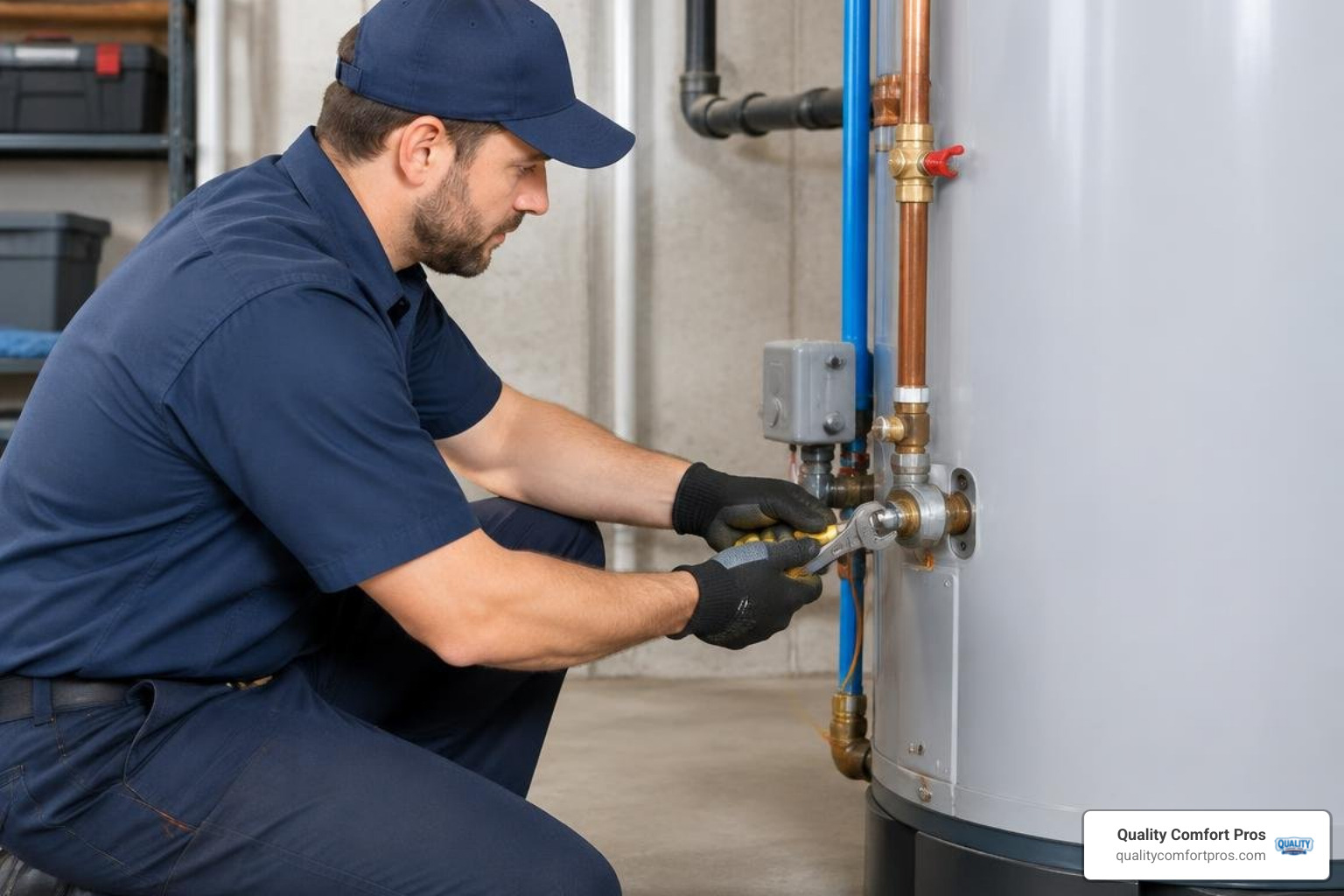
Professional Installation Process and Long-Term Value
Enlisting a licensed technician to handle your mechanical installation guarantees safety, preserves equipment warranty coverage, and protects your home from costly plumbing errors. Safe handling of high-voltage wiring, pressurized gas connections, and municipal building codes makes skilled installation a worthwhile investment.
When you are ready to update your system, our certified team provides seamless water heater installation services tailored to local mechanical guidelines.
What Happens During Installation Day
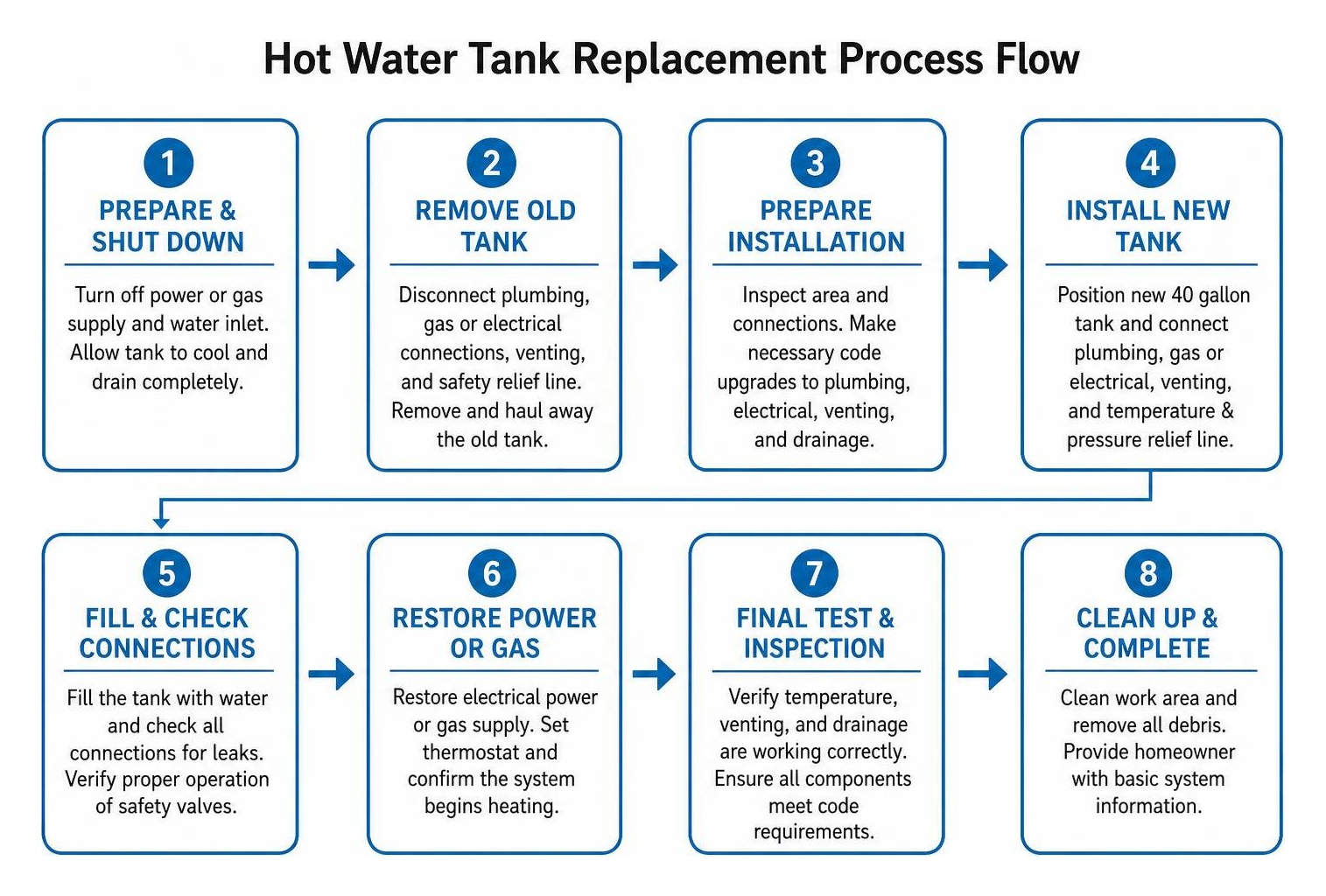
A seamless changeout follows a systematic, professional procedure designed to protect your home and minimize water service disruption:
- Site Inspection and Isolation: Technicians inspect the existing layout, turn off fuel supplies and main water lines, and lay down protective floor coverings.
- Controlled Tank Draining: Connecting a commercial-grade hose to the lower drain valve flushes out accumulated sediment and empties the heavy tank safely.
- Safe Disconnection: Water feed lines, electrical connections, gas supply unions, and exhaust flues are systematically detached and inspected for wear.
- Unit Positioning and Leveling: The new 40-gallon tank is positioned securely on an approved stand or pad, leveled, and fitted with seismic restraints if required.
- Plumbing and Utility Reconnection: Technicians install brand-new dielectric unions, an expansion tank, cold and hot supply lines, a temperature and pressure relief valve (T&P valve) discharge tube, and a gas sediment trap.
- Purging and Leak Testing: The plumbing lines are purged of trapped air, pressurized with water, and thoroughly tested for micro-leaks. Gas joints are checked using electronic sniffers and specialized bubble solutions.
- System Startup and Verification: The burner or heating element is activated, baseline water temperatures are calibrated, and exhaust drafts are tested for proper venting.
To avoid safety hazards, code violations, or voided equipment warranties, learn why avoiding DIY water heater pitfalls is the smartest route for homeowners.
Extending Tank Lifespan and Efficiency
Water heaters endure constant temperature fluctuations and mineral exposure. Taking proactive care of your equipment keeps performance optimal and prevents premature failures:
- Sacrificial Anode Rod Protection: A magnesium or aluminum anode rod hangs inside the tank, drawing corrosive elements toward itself to prevent the steel tank shell from rusting. Inspecting this rod every two to three years and replacing it when depleted can double your tank working lifespan.
- Annual Tank Flushing: Water supplies naturally contain dissolved minerals like calcium and magnesium. Over time, these minerals settle at the base of the tank, forming a thick sediment buildup layer that insulates the water from the heat source. Periodic flushing restores heat transfer efficiency and eliminates popping noises.
- Temperature Calibration: Setting your water heater thermostat to 120 degrees Fahrenheit provides ample hot water for sanitation while preventing scalding risks and reducing standby thermal loss.
Scheduling consistent, skilled water heater maintenance ensures that minor valve leaks, element wear, or flue obstructions are addressed before they turn into emergency repairs.
Frequently Asked Questions About 40-Gallon Water Heater Installation
What is the average cost to install a 40-gallon water heater in 2026?
The total expense to install a 40-gallon water heater generally falls within a moderate, accessible range for standard replacements. Straightforward, like-for-like swaps where existing gas, electrical, and venting hookups meet current building codes represent the most budget-friendly installations. Projects requiring new power venting, extensive pipe rerouting, or structural modifications will fall at the higher end of the project spectrum.
Is an electric 40-gallon water heater cheaper to install than a gas unit?
Yes, electric water heaters typically require a lower upfront installation investment than gas models. Electric units do not require exhaust venting pipes, chimney flues, combustion air pathways, or fuel line testing. However, gas-powered units often provide lower monthly operating expenses and feature faster recovery times, heating incoming cold water more rapidly during peak household demand.
How much does labor alone cost for a 40-gallon water heater installation?
Professional installation labor accounts for a balanced portion of the total project invoice. Labor fees cover the technical expertise required to safely drain and disconnect the old system, haul away heavy equipment, plumb new supply lines, install thermal expansion protection, connect gas or high-voltage electric feeds, and test for leaks and draft safety.
How long does a professional water heater replacement take?
A standard like-for-like replacement completed by a licensed plumbing technician typically takes between two and four hours. If your installation involves retrofitting older venting pipes, changing fuel types, running a new electrical circuit, or repositioning the unit to another area of your utility room, the job can take four to six hours.
Is a 40-gallon water heater big enough for a family of four?
A 40-gallon tank is ideal for households of two to three people with moderate hot water usage. For a family of four, a 40-gallon natural gas water heater may be sufficient if your family staggers morning showers and runs major appliances like dishwashers and washing machines at different times, thanks to gas rapid recovery. However, if multiple showers run simultaneously or your home has a large soaking tub, a 50-gallon tank or a tankless system is generally recommended.
What hidden or additional costs might appear on the final invoice?
Common items that can alter a baseline estimate include local plumbing permit and inspection fees, thermal expansion tanks, automatic shutoff flood protection valves, upgraded brass drain valves, drip pans with drain lines, seismic strapping, venting replacements, and disposal fees for recycling the old water heater.
What is the typical lifespan of a 40-gallon tank water heater?
A standard 40-gallon storage tank water heater lasts between 10 and 15 years. The exact longevity of your appliance depends heavily on local water hardness, operating temperature, and routine maintenance. Replacing the sacrificial anode rod every few years and regularly flushing mineral sediment from the tank bottom prevents internal corrosion and premature tank failure.
Are there rebates or tax credits for installing a 40-gallon water heater?
Standard electric and atmospheric gas water heaters rarely qualify for major utility incentives. However, high-efficiency hybrid heat pump water heaters and qualifying high-efficiency gas models often qualify for federal energy tax credits along with local electric utility rebates, which substantially offset the initial equipment purchase expense.
How much does it cost to operate a 40-gallon water heater annually?
Annual operating costs vary based on household water consumption and local energy rates. Natural gas water heaters generally carry lower annual operating expenses than standard electric resistance tanks due to fuel cost advantages. Hybrid heat pump water heaters offer the lowest operating expenses of all, consuming up to 70% less electricity than conventional electric models.
When should I replace my water heater instead of repairing it?
A good rule of thumb is the 50% rule: if your water heater is over eight to ten years old and a necessary repair costs more than half the expense of a new installation, replacing the unit is the more economical long-term choice. Furthermore, if the main tank body develops a leak, replacement is mandatory, as internal tank corrosion cannot be safely patched or welded.
Conclusion
Upgrading your home hot water system is an investment in daily comfort, efficiency, and property protection. By understanding how equipment quality, fuel selections, venting styles, and code-mandated safety items shape your overall estimate, you can budget confidently and choose the perfect system for your household routine.
For 28 years, the team at Quality Comfort Pros has delivered dependable, family-owned plumbing, heating, and cooling solutions across Northern Michigan, including communities like Gaylord, MI, Petoskey, MI, Charlevoix, MI, Boyne City, MI, and Grayling, MI. Whether you need a simple like-for-like tank swap, advanced hybrid heat pump guidance, or emergency plumbing care, Quality Comfort Pros is here to help you schedule a water heater installation estimate today.