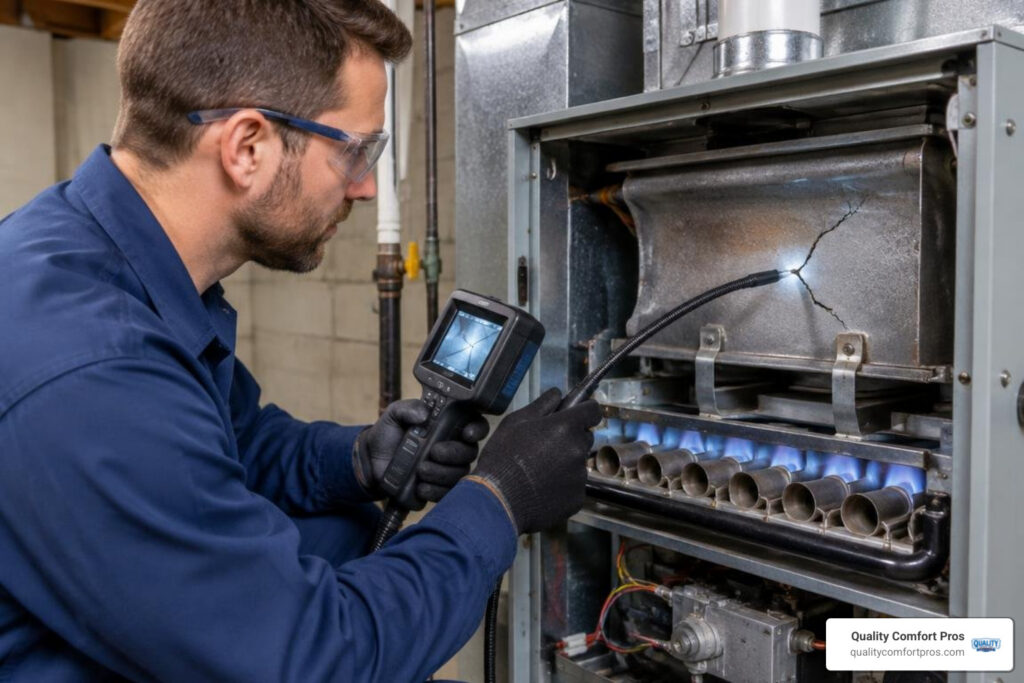
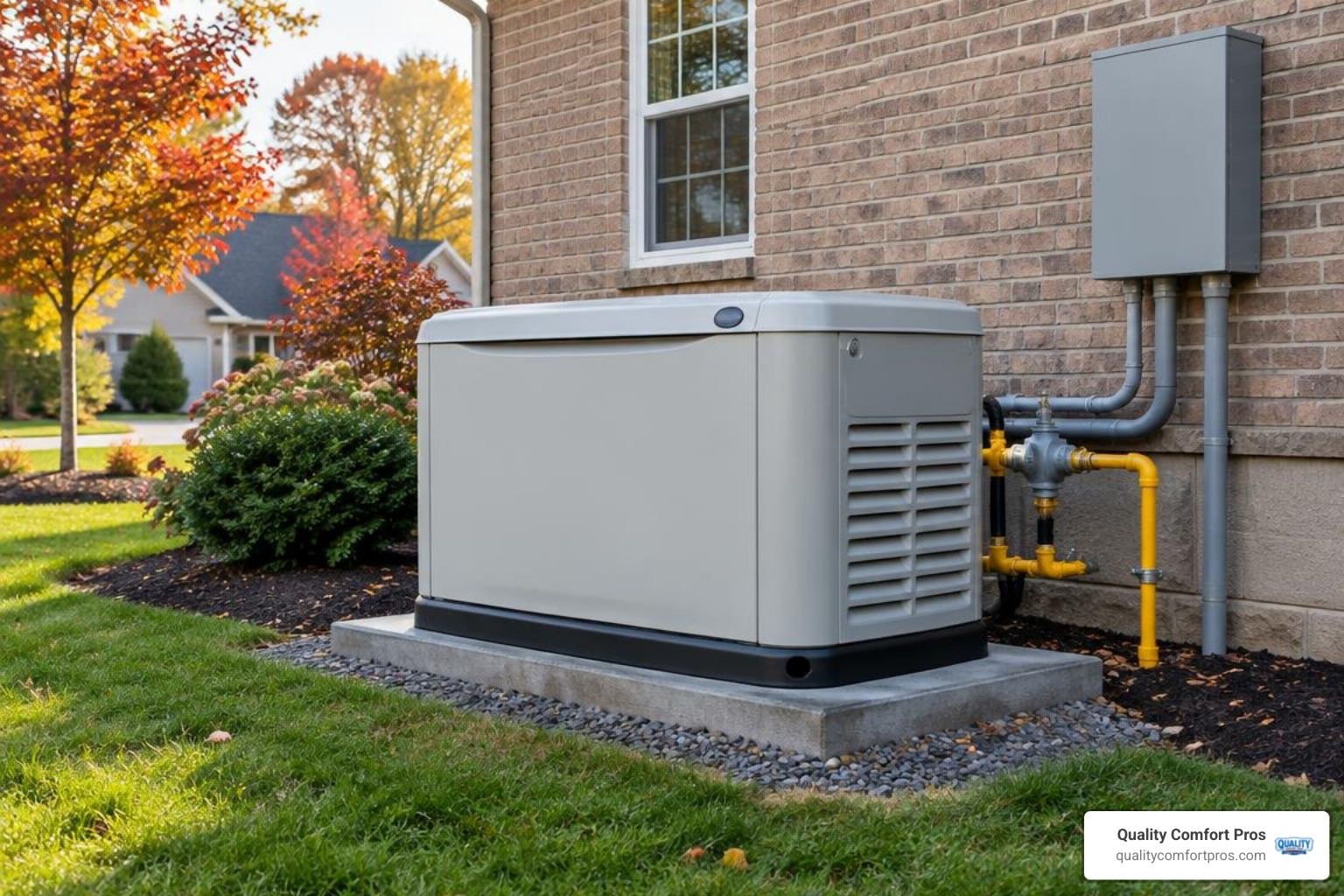
I’m JD Osman, owner of Quality Comfort Pros, and I bring more than 20 years of home services experience across Northern Michigan. In this guide, I’ll walk you through what a whole house generator installation involves, what decides the right generator for a home, and how the installation itself comes together. I’ll also explain the service steps that help a standby generator start reliably when an outage occurs.
Plan a Standby Generator Installation That Fits Your Home
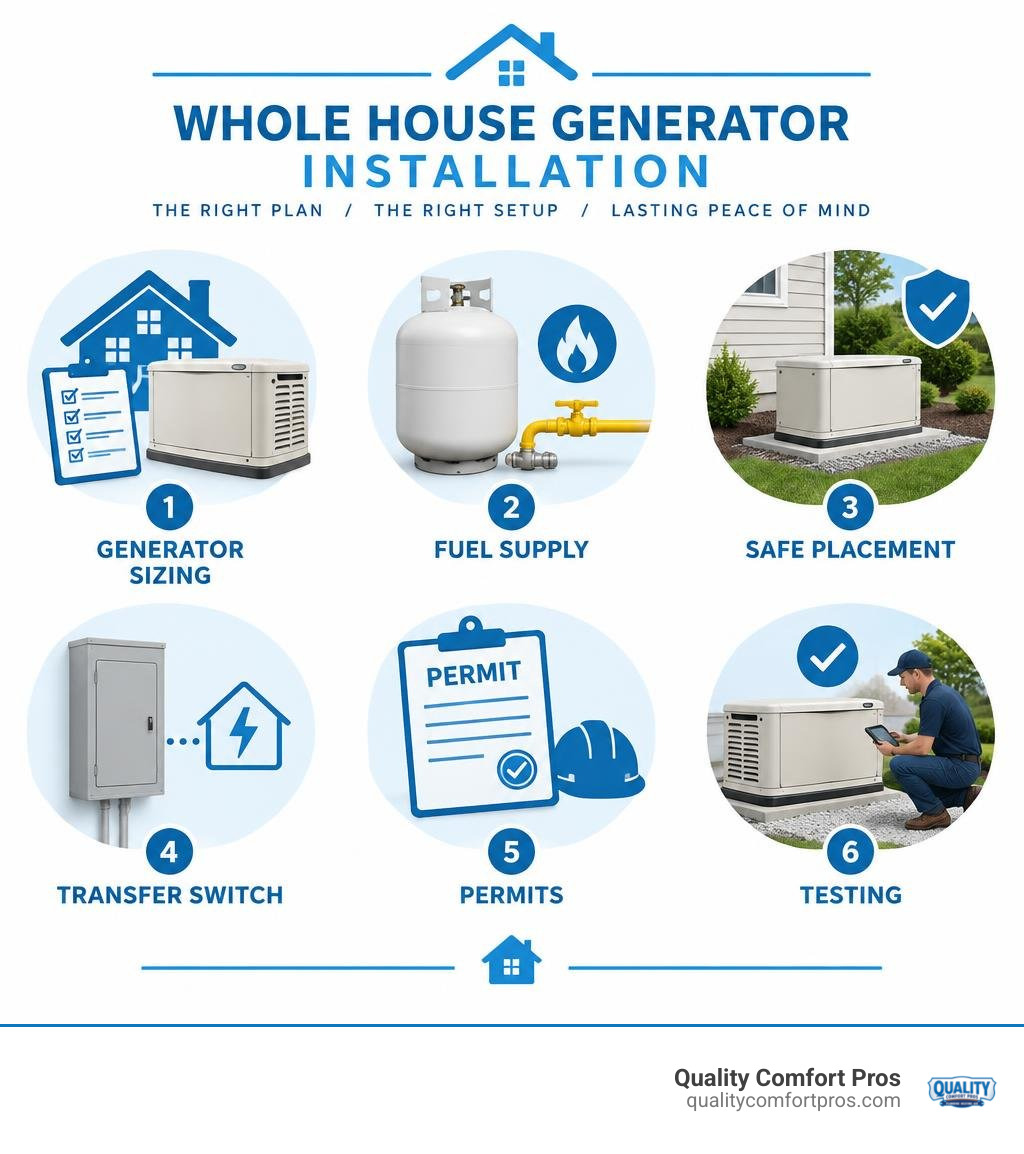
A whole house generator installation begins with a careful review of the electrical systems that matter most during an outage. A qualified installer calculates the expected load, reviews the fuel source, selects a safe location, and plans the automatic transfer switch. Permits, professional utility connections, inspections, and a final system test complete the work.
For Northern Michigan homeowners, that preparation can help keep heating, refrigeration, well equipment, and other essential systems available during an extended outage. It also gives the installer a clear path for coordinating electrical, fuel, and site work. As a result, the finished system can match the home’s daily needs and local conditions.
At Quality Comfort Pros, a local HVAC and plumbing company serving Gaylord, MI and Northern Michigan, the focus is on helping homeowners understand the installation process before work begins. Clear planning makes it easier to choose the right equipment and prepare the property for a permanent standby system. The sections below explain the decisions that shape a reliable installation.
What Decides the Right Generator for a Home
The right standby generator depends on the systems a household needs to keep operating during an outage. Load requirements, available fuel, electrical panel condition, placement options, and local permit requirements all shape the installation plan. Reviewing these details before equipment is selected helps prevent avoidable changes later in the project.
The site layout also matters because the generator, transfer switch, fuel connection, and service access must work together safely. A level location near the needed utility connections can simplify the installation while still meeting required clearances. Every home has different electrical and mechanical conditions, so an on-site evaluation remains important.
| Generator System Type | Typical Capacity Range | Engine Cooling Style | Ideal Property Application |
|---|---|---|---|
| Essential Circuit System | 10 kW to 14 kW | Air-Cooled | Small to mid-sized homes; supports heating, refrigeration, and lighting |
| Whole-Home Standard System | 16 kW to 22 kW | Air-Cooled | Mid-sized to large homes; supports central HVAC, well pumps, and appliances |
| High-Capacity Estate System | 24 kW to 60+ kW | Liquid-Cooled | Large properties with extensive electrical demand and multi-zone HVAC |
Equipment Sizing and Capacity Considerations
Equipment selection begins by comparing starting wattage with running wattage. Motors in air conditioners, well pumps, and furnace blowers can need a brief surge of power before settling into normal operation. A detailed load calculation accounts for those surges so the generator can support the selected circuits during an automatic transfer.
Modern systems can also use load-management modules to delay or shed selected high-voltage loads when needed. That approach can prioritize essential equipment, such as heating, refrigeration, and a well pump, without overloading the generator. It also helps the installer build a system around how the household actually uses power.
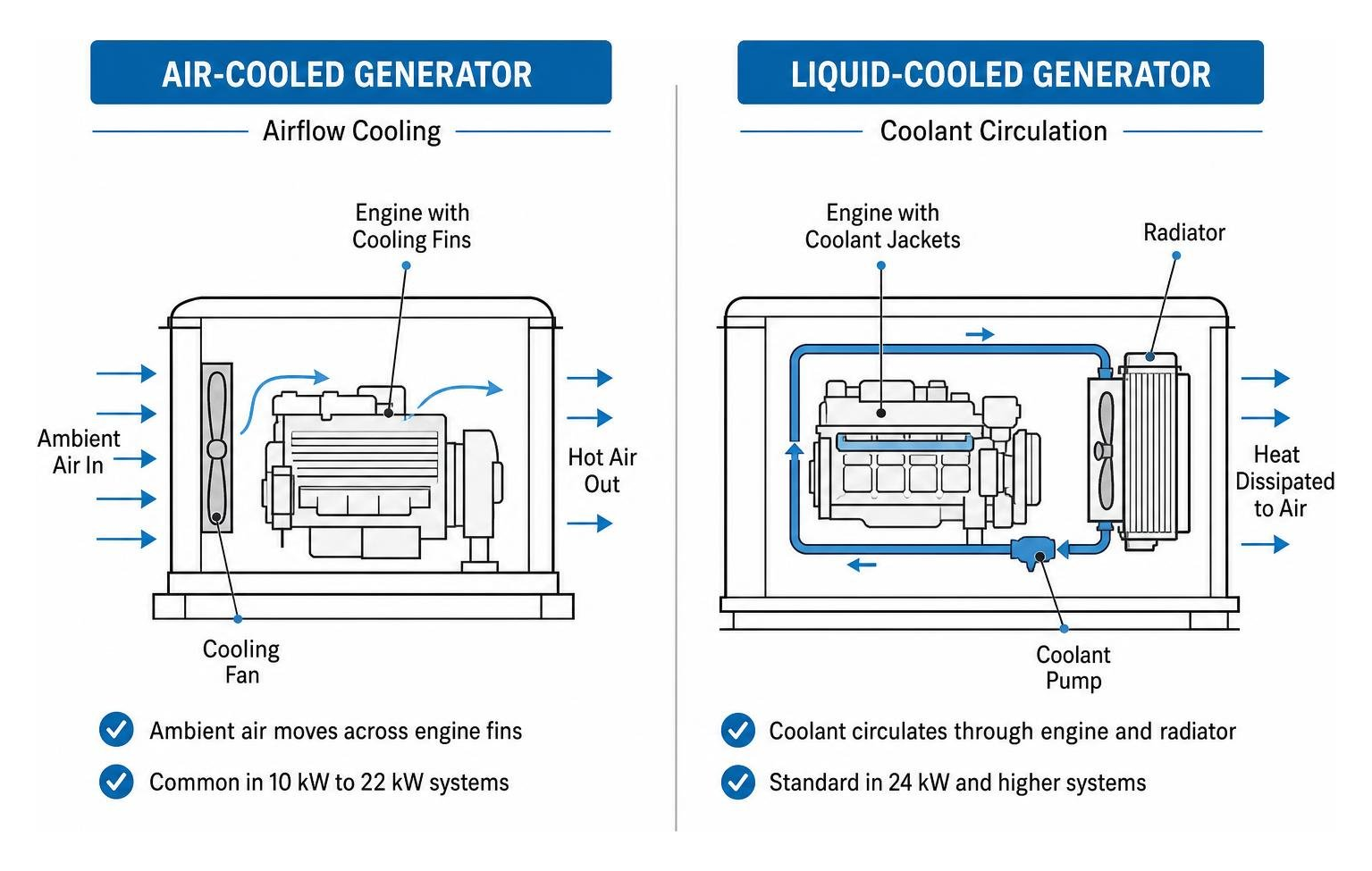
Air-Cooled vs. Liquid-Cooled Generator Systems
Standby generators use different methods to regulate engine temperature. The appropriate design depends on the generator size, the home’s electrical needs, and the expected length of outages. An installer can explain which option best fits the planned system.
- Air-Cooled Systems: Many residential installations use air-cooled engines that circulate air across engine fins with internal fans. They are commonly used for standard single-family homes and essential-circuit applications.
- Liquid-Cooled Systems: Larger units may use automotive-style engines that circulate coolant through an internal radiator. They are suited to homes with higher electrical demand or longer periods of operation.
Electrical Upgrades and Gas Line Requirements
A standby generator needs compatible utility infrastructure to operate safely. The installer evaluates the main electrical panel for available space and capacity before planning the transfer equipment. If the existing panel cannot support the new equipment, the installation plan may include the necessary electrical updates.
Fuel supply also requires close attention. Natural gas and propane systems need enough fuel volume and stable pressure for the generator to run alongside other household equipment. Reviewing the meter, piping, tank location, and connected appliances helps the installer plan a dependable fuel connection.
Comparing Fuel Sources for Standby Generators
Selecting a fuel source affects a standby generator’s readiness, fuel storage needs, and long-term operation during an outage. Residential systems commonly use natural gas, liquid propane, or diesel. The best option depends on the utilities available at the property and the equipment the system must support.
| Fuel Option | Supply Method | On-Site Storage Needs | Cold Weather Performance | Primary Advantage |
|---|---|---|---|---|
| Natural Gas | Municipal utility line | None required | Reliable when supply pressure is adequate | Continuous utility connection |
| Liquid Propane | Dedicated on-site storage tanks | Properly sized tanks | Stable storage with proper vaporization | Useful for homes without natural gas |
| Diesel | On-site fuel tank | Managed fuel storage | Requires cold-weather preparation | Common for heavy-duty applications |
For Northern Michigan properties, fuel availability during winter weather deserves careful attention. The storm preparation guide explains why homeowners should consider access, storage, and system readiness before an outage occurs. An installer can review the property and recommend a fuel arrangement that supports the planned generator.
Natural Gas Backup Systems
For homes connected to municipal natural gas, this option can provide a continuous fuel connection without on-site tank storage. The installer must confirm that the supply line and meter can deliver the needed volume and pressure while other household equipment is operating. This review is especially important during winter, when heating demand may be high.
Natural gas systems also need properly sized piping between the utility connection and the generator. The routing should allow safe installation, future service access, and reliable operation. A complete plan accounts for the furnace, water heater, and other gas appliances that may run during an outage.
Liquid Propane Fuel Options
Liquid propane is a dependable option for rural homes or properties without municipal gas service. Because it is stored on-site, the tank size and location should be planned around the home’s expected generator use. Proper tank placement also supports safe fuel delivery and reliable vaporization in cold weather.
A propane system may use one larger tank or multiple tanks based on the installation plan. The installer reviews the distance to the generator, underground routing, and clearance requirements before finalizing the layout. Regular coordination with the fuel supplier helps homeowners keep the system ready for outages.
Diesel Generator Configurations
Diesel generators are often chosen for heavy-duty applications that need strong torque and extended operation. Their on-site fuel storage requires a maintenance plan that accounts for fuel condition, moisture, and cold weather. The installer can explain whether a diesel configuration fits the home’s needs and site conditions.
When diesel is used, fuel should be monitored and maintained according to the equipment manufacturer’s guidance. Cold-weather preparation may include appropriate additives, fuel management, and equipment accessories. These steps help the system remain ready when severe weather arrives.
Essential Components of a Standby Generator System
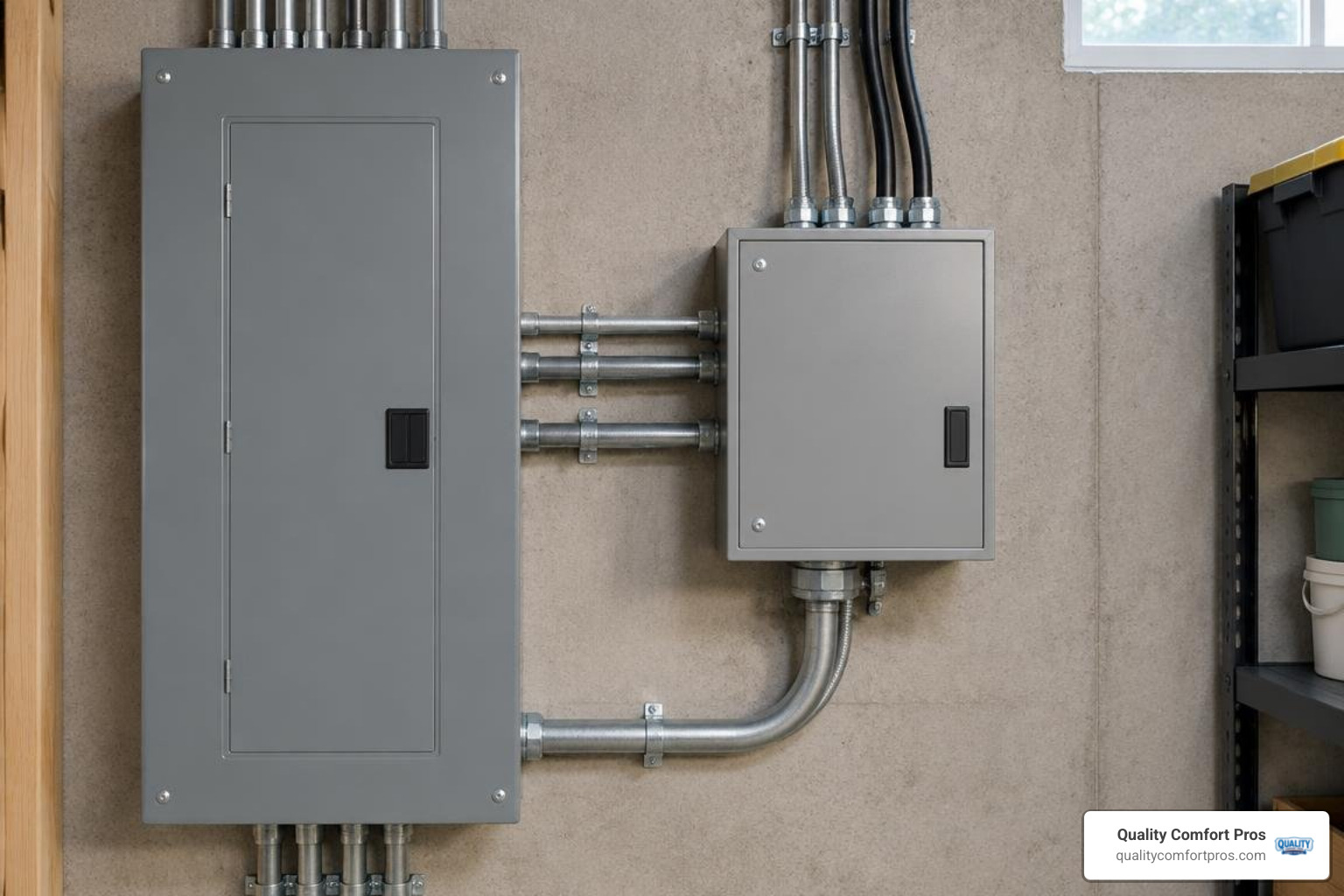
A permanent generator system connects directly to the home’s electrical infrastructure so power can be restored automatically during an outage. Unlike a portable unit, it does not rely on extension cords or manual startup. The generator, transfer switch, fuel connection, and electrical panel must be planned as one coordinated system.
Understanding the Automatic Transfer Switch
The automatic transfer switch monitors utility power and controls the changeover to generator power. When the utility supply fails, it signals the generator to start and then transfers the selected electrical loads once the unit is ready. When normal utility power returns, the switch safely moves those loads back and shuts the generator down after its cooldown cycle.
This equipment also isolates the home from the utility grid while the generator is running. That isolation helps prevent dangerous back-feeding into utility lines. Proper transfer-switch installation is a central safety requirement for a permanent standby system.
Mounting Pads and Site Clearance Requirements
Proper placement supports safe operation, equipment access, and long-term reliability. The generator should sit on a stable pad that keeps it level and above standing water or snow accumulation. The final location must also allow technicians to reach service panels and maintain the equipment.
Exhaust safety is equally important. Generators need clear separation from operable windows, exterior doors, and fresh-air intakes to reduce the risk of carbon monoxide entering the home. Review cdc carbon monoxide guidance alongside manufacturer instructions and local code requirements before finalizing the location. Ready.gov advises homeowners to install carbon monoxide detectors with battery backup in central locations on every level of the home and to run a generator only outdoors, at least 20 feet from windows.
The installer also checks clearances from walls, overhangs, vegetation, and property lines. These details vary by equipment design and local requirements, so they should be confirmed before the pad and connections are installed. Careful site planning helps protect the household while keeping the unit accessible for service.
Whole House Generator Installation: The Step-by-Step Process
Installing a permanent backup system requires coordination between electrical, mechanical, and site work. The project moves from a property review and load calculation to equipment placement, permits, connections, testing, and final approval. Each phase helps make sure the system can operate safely when utility power is interrupted.
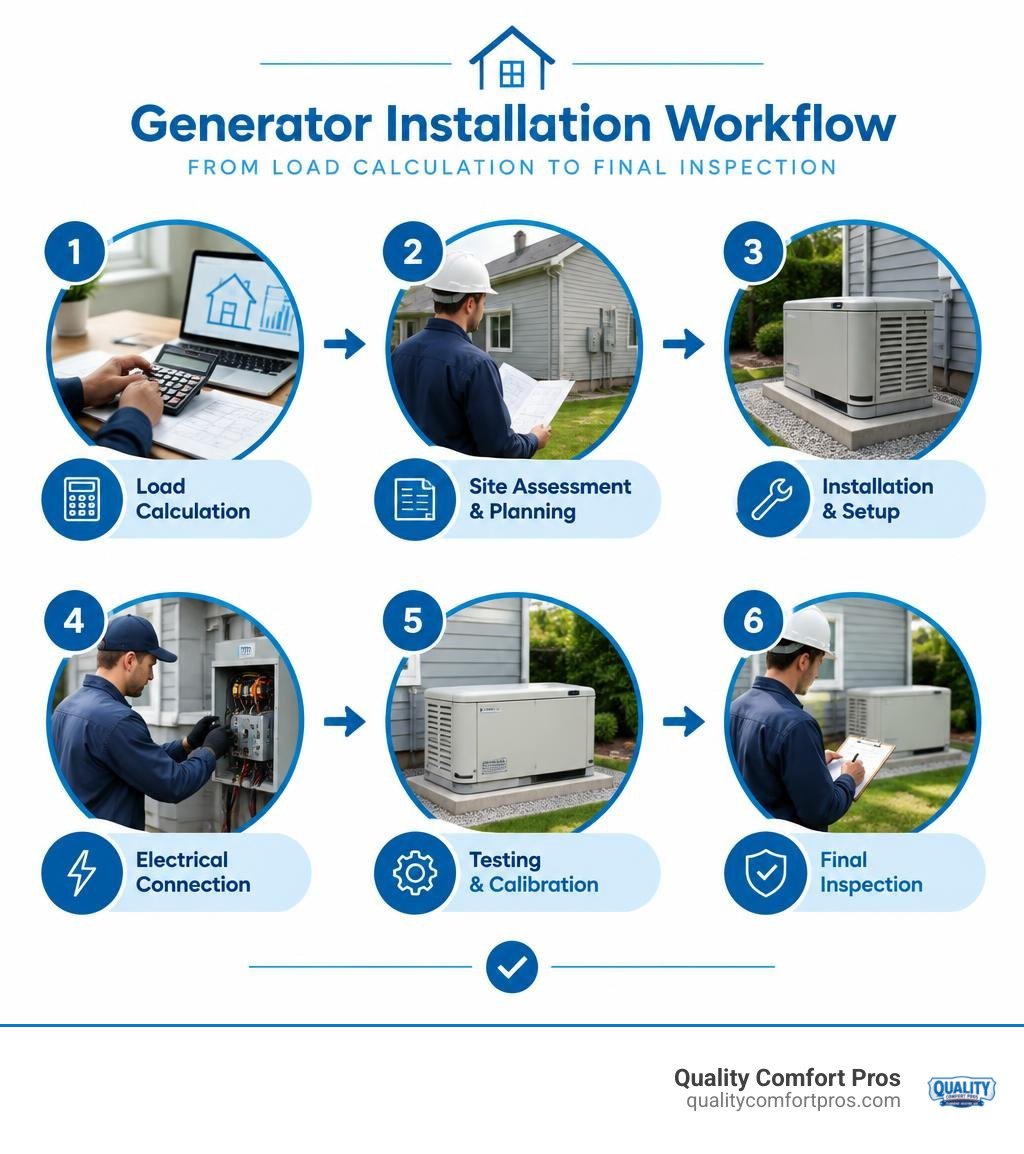
Homeowners who want a clear project plan can explore our generator installation service. A site visit helps identify the work needed for the electrical panel, fuel connection, pad, and transfer switch. It also gives homeowners an opportunity to ask questions before the installation is scheduled.
Preparing for Installation
The process begins with an on-site consultation to review the property layout, electrical routing, fuel connection, and past outage concerns. Our installation expectations outline the typical stages so homeowners can prepare for the visit. The installer then uses the findings to recommend an appropriate system layout.
During this preliminary phase:
- Technicians complete a whole-home load calculation.
- The installation plan identifies generator capacity, transfer-switch type, and unit placement.
- The team prepares the required municipal permit applications.
- Utility coordination is completed when it is required for the planned work.
Professional Installation Steps
Once permits are secured and equipment is delivered, the installation can begin. The team prepares the pad, positions and anchors the generator, installs the transfer switch, and completes the fuel and electrical connections. Each connection is checked against the equipment instructions and applicable local requirements.
- Pad preparation: Technicians clear and level the base before installing a composite pad or concrete slab.
- Unit placement: The generator is positioned, leveled, and secured to the base.
- Transfer switch integration: Electricians connect the transfer switch to the main service equipment and selected loads.
- Fuel line piping: Qualified professionals install the necessary fuel piping, shut-off valves, and related components.
- Control and power wiring: Wiring connects the generator, transfer switch, battery-charging system, and control components.
A Recent Generator Installation Near Gaylord
A family outside Gaylord had relied on a portable generator for years, using extension cords and starting the unit by hand during outages. When their well pump failed to restart after an outage, they called Quality Comfort Pros. The portable setup was replaced with a permanently installed propane-fuelled standby generator wired directly to the electrical panel.
The new system now powers the well pump, heating system, and critical appliances automatically. It eliminates extension cords and manual startup during an outage. Learn more about gaylord generator installation.
Code Inspections and System Commissioning
After physical installation, local inspectors may review the electrical, fuel, grounding, and placement work. Once the required approvals are complete, the system is commissioned through a controlled outage simulation. The team confirms that the generator starts, the transfer switch operates correctly, and the safety controls respond as intended.
Keeping a Standby Generator Reliable
A standby generator needs routine service to remain ready for an unexpected outage. Regular visits help identify worn parts, battery concerns, fluid issues, and control-system alerts before they affect operation. Following the manufacturer’s maintenance schedule also supports dependable performance through Northern Michigan weather.
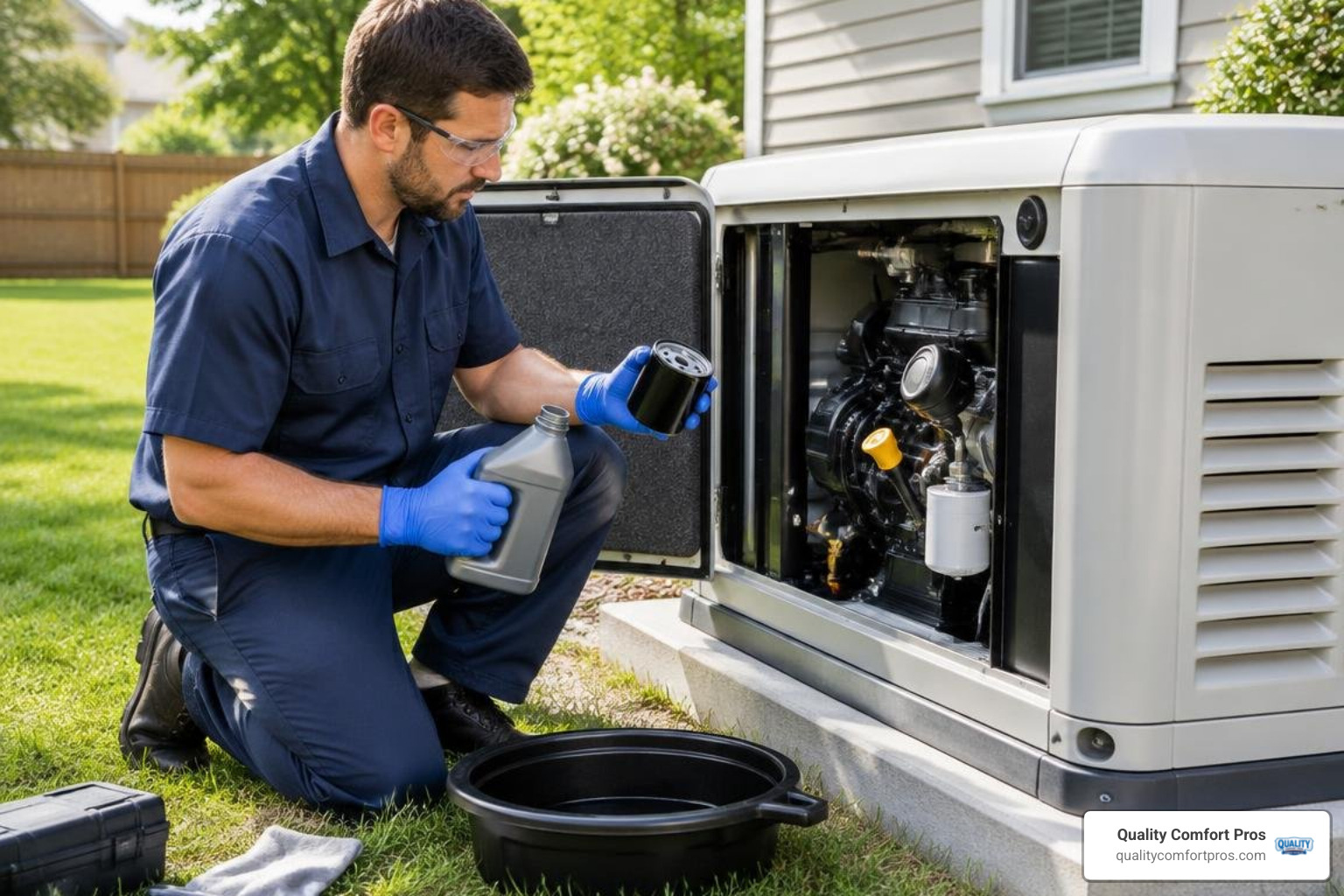
Scheduling generator maintenance service gives a technician time to inspect the equipment and confirm that it is ready to start. The visit can include an oil and filter review, battery testing, air-intake checks, and a review of transfer-switch operation. Any concerns can then be addressed before severe weather creates an urgent need for backup power.
Routine Maintenance Schedule and Inspection Checklist
Standby generators often run scheduled exercise cycles to circulate fluids and check key controls. A professional service visit adds a closer inspection of the engine, battery, fuel system, electrical connections, and safety components. The timing depends on the equipment manufacturer’s guidance, operating hours, and conditions at the property.
During a service visit, the technician may review oil condition, filters, spark plugs, battery terminals, charging components, fuel delivery, and generator alerts. They also confirm exercise settings and communication with the transfer switch. This approach helps identify small issues before they interrupt the system’s response during an outage.
Preparing for Winter Outages
Cold weather can make a generator’s fuel, battery, and engine systems work harder. Homeowners should keep the area around the unit clear of snow and debris while maintaining the required service access. A technician can also review accessories that support reliable starting in low temperatures.
Our winter safety guide covers practical steps for preparing before severe weather arrives. Cold-weather accessories may help protect the battery and engine fluids when they are appropriate for the equipment. Regular service and winter preparation work together to keep the system ready.
Frequently Asked Questions About Whole House Generators
What decides the right size for a standby generator?
Generator sizing starts with the appliances and systems a homeowner wants to run during an outage. A load calculation accounts for running demand and the higher starting demand of motors such as well pumps and air conditioners.
Can I install a whole-house standby generator myself?
A permanent standby system requires electrical panel work, fuel connections, utility isolation, permits, and inspections. Professional installation helps protect the home from electrical, fuel, and carbon monoxide hazards.
How long does installation usually take?
The timeline depends on permit review, equipment availability, site conditions, and the amount of electrical or fuel work required. Once the plan and permits are ready, the on-site installation is commonly completed over a short, coordinated work period.
What does an automatic transfer switch do?
An automatic transfer switch monitors utility power and signals the generator to start when an outage occurs. It then transfers selected circuits to generator power and safely returns them to utility power after service is restored.
Can a standby generator power a well pump and heating system?
It can when the generator and transfer-switch plan include those loads. The load calculation helps determine whether the system can support them alongside refrigeration, lighting, and other essential equipment.
What fuel source is best for a standby generator?
Natural gas, propane, and diesel can each be appropriate depending on the property and available utility connections. An installer reviews fuel availability, storage, line capacity, and expected use before recommending a configuration.
Where can a standby generator be placed?
The unit must be installed outdoors on a stable pad with proper clearances from windows, doors, vents, walls, and service areas. Manufacturer requirements and local codes determine the exact placement for each property.
How long can a standby generator run during an outage?
Run time depends on the fuel source, the connected electrical load, and the maintenance needs of the equipment. Natural gas systems can continue operating while utility fuel is available, while propane and diesel systems depend on their on-site fuel supply.
What does routine generator service include?
A maintenance visit typically reviews the engine oil, filters, battery, fuel system, electrical connections, exercise settings, and transfer-switch communication. The technician also checks for alerts or conditions that could affect reliable starting.
Does a standby generator help protect a home during an outage?
A properly planned system can keep selected equipment operating when utility power is unavailable. That support can help homeowners maintain heating, refrigeration, well equipment, lighting, and other essential functions.
Planning Backup Power Before the Next Outage
A permanently installed standby generator can help keep essential systems available when utility power fails. The strongest results come from a thoughtful plan that covers load calculations, fuel supply, safe placement, transfer-switch installation, permits, and ongoing service. Homeowners can explore backup generator services when they are ready to start that conversation.
For homeowners in Gaylord, MI and nearby Northern Michigan communities, Quality Comfort Pros provides installation and maintenance support for permanent standby systems. A site evaluation can clarify which circuits matter most and how the property should be prepared for the work. When you are ready, contact our team to plan your installation.