I’m JD Osman, owner of Quality Comfort Pros, and I have more than 20 years of experience in home services across Northern Michigan. In this water heater maintenance guide, I’ll walk you through the water heater checks a homeowner can safely handle and the tasks that belong to our plumber. The goal is to help you recognize routine concerns while keeping safety-sensitive work in professional hands.
Essential Safety Precautions and Tools to Gather First
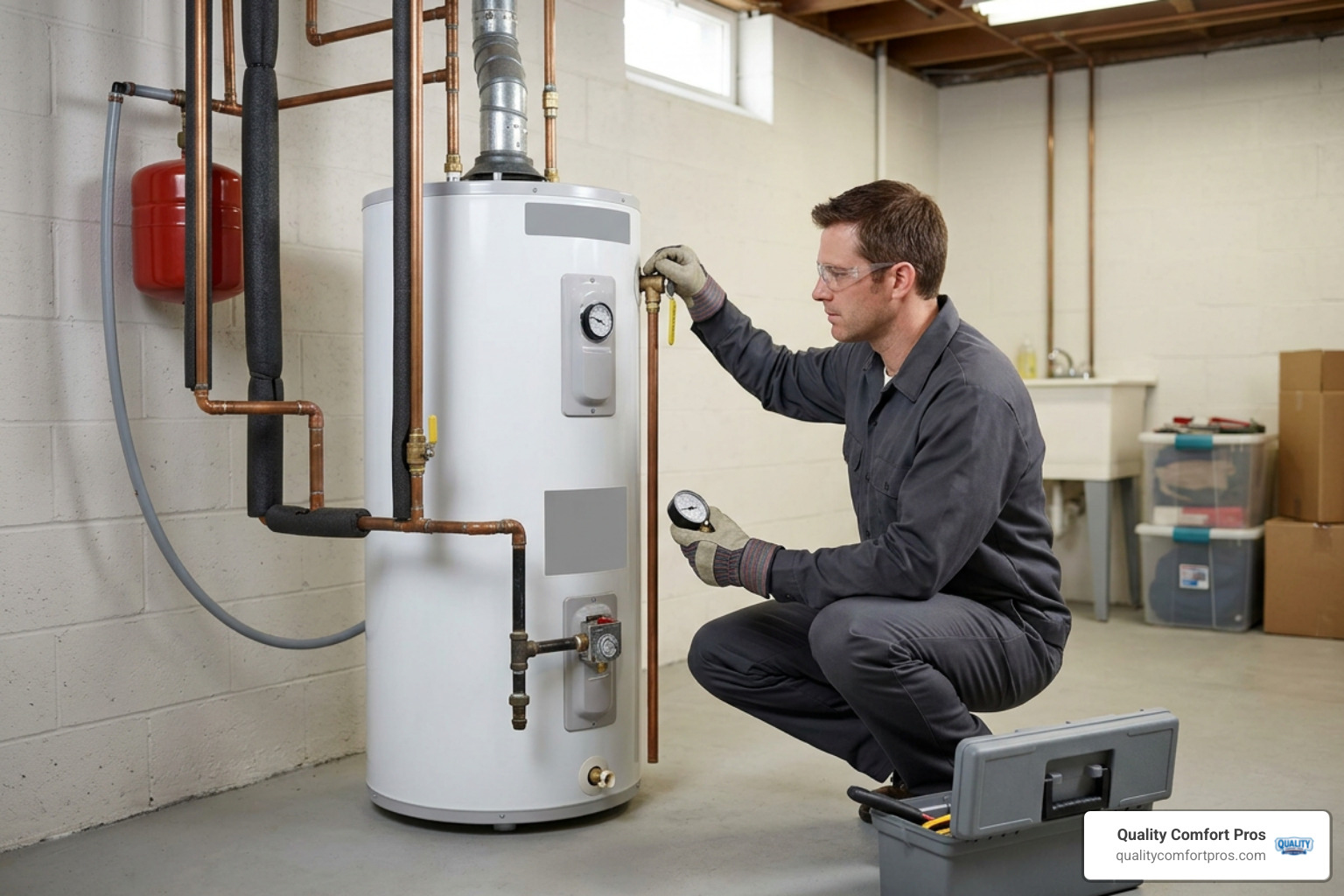
Proper water heater maintenance combines safe homeowner observations with professional service for pressurized, gas-fired, or electrical components. Homeowners can monitor the unit’s condition, temperature setting, surrounding area, and vent opening without disassembling equipment. Service involving drainage, internal parts, safety valves, or gas controls should be handled by a licensed plumber.
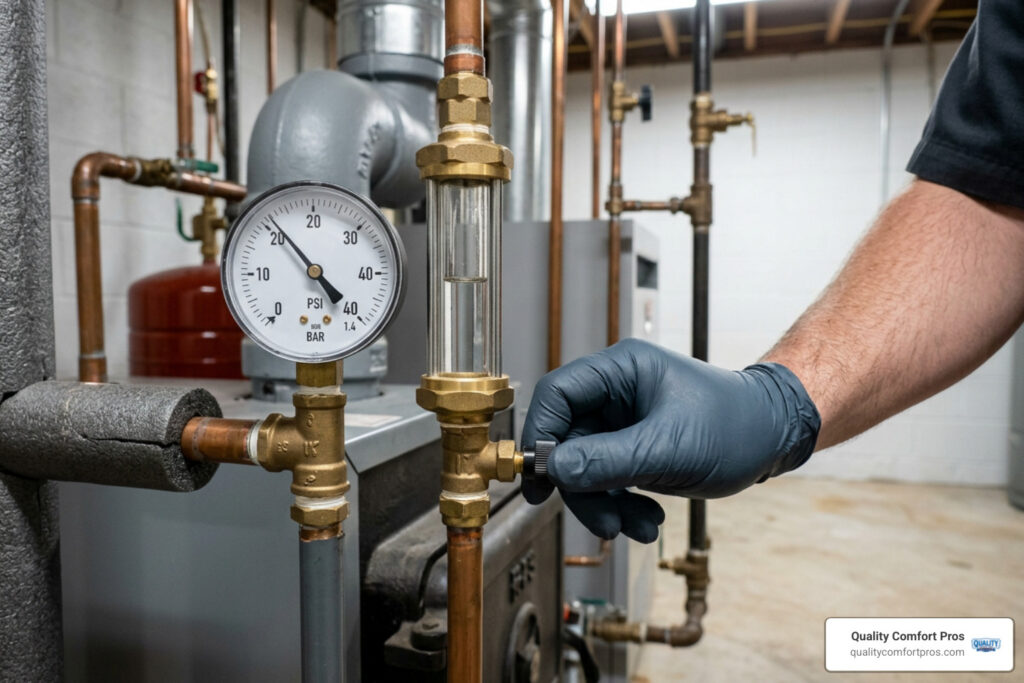
Water heaters hold hot water under pressure and may use high-voltage electricity or combustible gas. Before looking over the unit, keep the area dry, well lit, and clear of cardboard, paint, cleaning products, and other combustible materials. If there is an active leak, a gas odor, damaged wiring, or corrosion around the tank seam, stop and arrange professional service.
Basic observation requires only a flashlight, a clean work area, and clear access to the water heater. Avoid removing access panels, disconnecting pipes, or operating valves unless a qualified technician has directed the work. Keeping the owner’s manual nearby can also help identify the model’s controls and manufacturer-specific safety guidance.
| Required Tool / Gear | Gas Water Heater | Electric Water Heater | Primary Purpose |
|---|---|---|---|
| Safety Glasses & Work Gloves | Yes | Yes | Protect against hot spray and sharp sheet metal |
| Standard Garden Hose | Yes | Yes | Used by a plumber when draining a tank |
| Large Bucket | Yes | Yes | Used during professional safety-valve service |
| 1-1/16 Inch Deep Socket & Breaker Bar | Yes | Yes | Used by a plumber to remove an anode rod |
| Non-Contact Voltage Tester | No | Yes | Used by a qualified technician to verify power is off |
| Flathead & Phillips Screwdrivers | Yes | Yes | Used for approved exterior adjustments or technician access |
| Adjustable Channel-Lock Pliers | Yes | Yes | Used by a plumber for fittings and hose connections |
| Plumber’s Thread Seal Tape (PTFE) | Yes | Yes | Used for professional threaded-component replacement |
Tools and Safety Gear for Safe Upkeep
A homeowner’s inspection does not require opening the appliance or using specialty plumbing tools. A flashlight can help spot moisture, rust, corrosion, or vent obstructions around accessible exterior areas. A plumber brings the right equipment for drainage, electrical verification, anode-rod service, and component replacement.
Shutting Down Power, Gas, and Water Supplies
Do not flush, drain, or disassemble a water heater while its heating source is active. Exposed electric elements can fail quickly, and operating a gas burner against an empty tank can damage internal components. If professional service is scheduled, the technician can safely shut down the power, gas, and water supplies as needed.
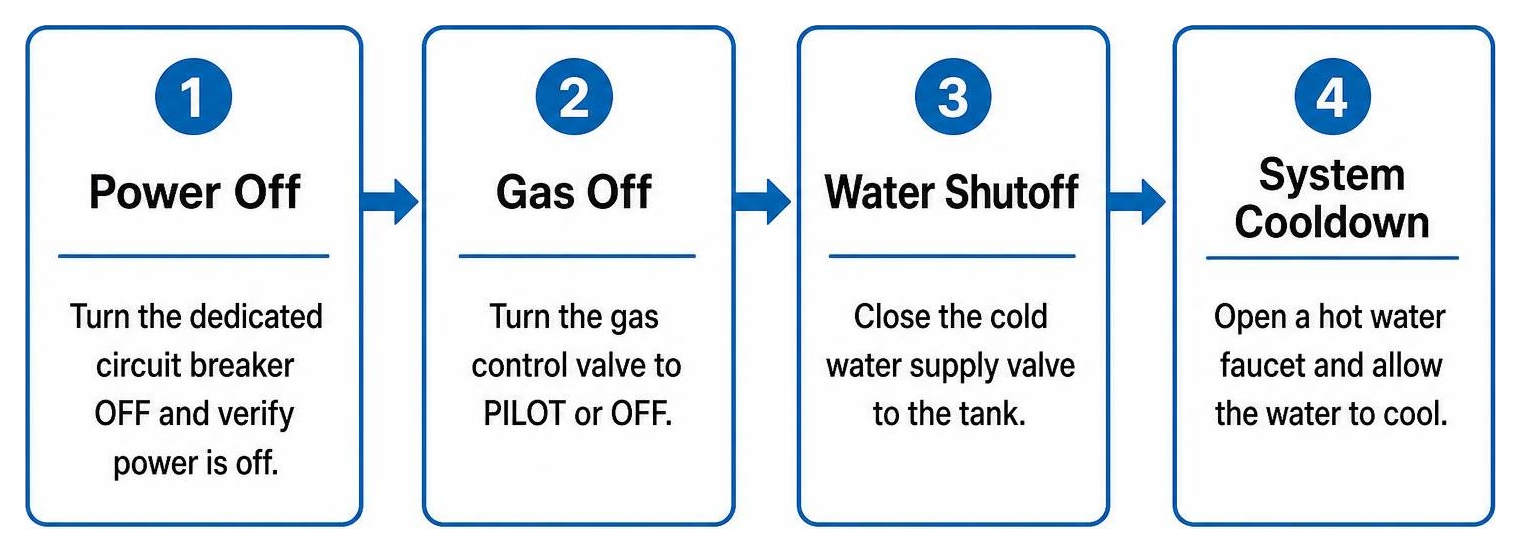
If a homeowner notices an urgent issue, such as a leaking tank, unusual gas smell, or electrical concern, avoid attempting a full shutdown sequence without guidance. Move people away from the immediate area and contact the appropriate emergency service if there is a suspected gas leak or electrical hazard. For non-emergency maintenance, a licensed plumber can evaluate the unit and complete the required shutdown steps before service begins.
What You Can Check Yourself and What Needs a Plumber for Water Heater Maintenance
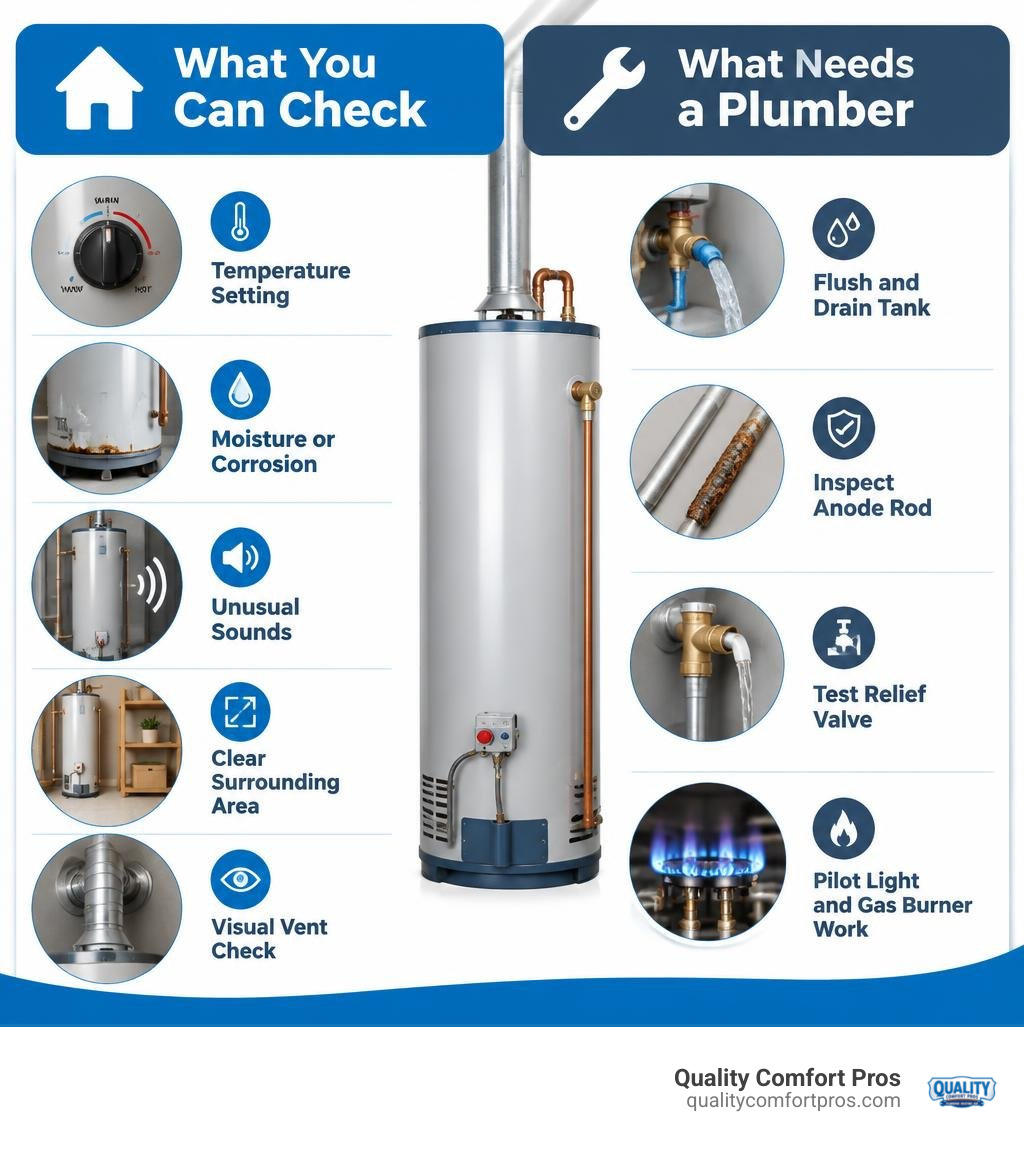
Regular observation helps homeowners identify changes before they become disruptive plumbing problems. The safe checks below do not require opening the tank, removing panels, operating safety valves, or working around gas controls. For complete water heater maintenance, Quality Comfort Pros can inspect the system and perform the service tasks that require professional equipment.
Homeowner Check: Review the Temperature Setting
A thermostat setting near 120 degrees Fahrenheit is commonly recommended for household comfort and scald-burn prevention. ENERGY STAR water heaters are high-efficiency gas storage models designed for energy savings and reliable performance. Homeowners may visually check and adjust an accessible exterior temperature dial according to the owner’s manual, but an electrician or plumber should address any setting that requires panel removal.
Homeowner Check: Look for Moisture, Rust, and Corrosion
Look around the tank base, nearby fittings, and connected pipes for moisture, rust-colored staining, greenish corrosion, or active dripping. A small amount of condensation can occur in some conditions, but repeated moisture or water around the base deserves prompt attention. The EPA’s Fix a Leak Week notes that household leaks waste water and small leaks can add up, so finding and fixing them early matters. Do not tighten fittings or remove corroded parts, because a plumber can determine whether the issue involves a connection, valve, or failing tank.
Homeowner Check: Listen for Rumbling or Popping
Rumbling or popping during a heating cycle can indicate sediment collecting along the bottom of a storage tank. The sediment can create a barrier between the heat source and the water, which may reduce efficiency and make the unit noisier. Record when the sound occurs and arrange service rather than trying to flush the tank yourself.
Homeowner Check: Keep the Area Clear
Keep the space around the water heater clean, dry, and free of stored items, particularly combustible materials near a gas unit. Clear access gives a technician room to inspect connections, controls, and the surrounding plumbing safely. It also makes new leaks, corrosion, or unusual sounds easier to notice early.
Homeowner Check: Visually Check the Vent
For a gas water heater, look at the accessible vent area to confirm it is not visibly blocked, crushed, disconnected, or surrounded by stored materials. Do not remove vent sections, adjust the draft hood, or insert tools into the vent. If the vent appears damaged or obstructed, contact a plumber promptly because safe combustion depends on proper venting.
Our Plumber Flushes and Drains the Tank
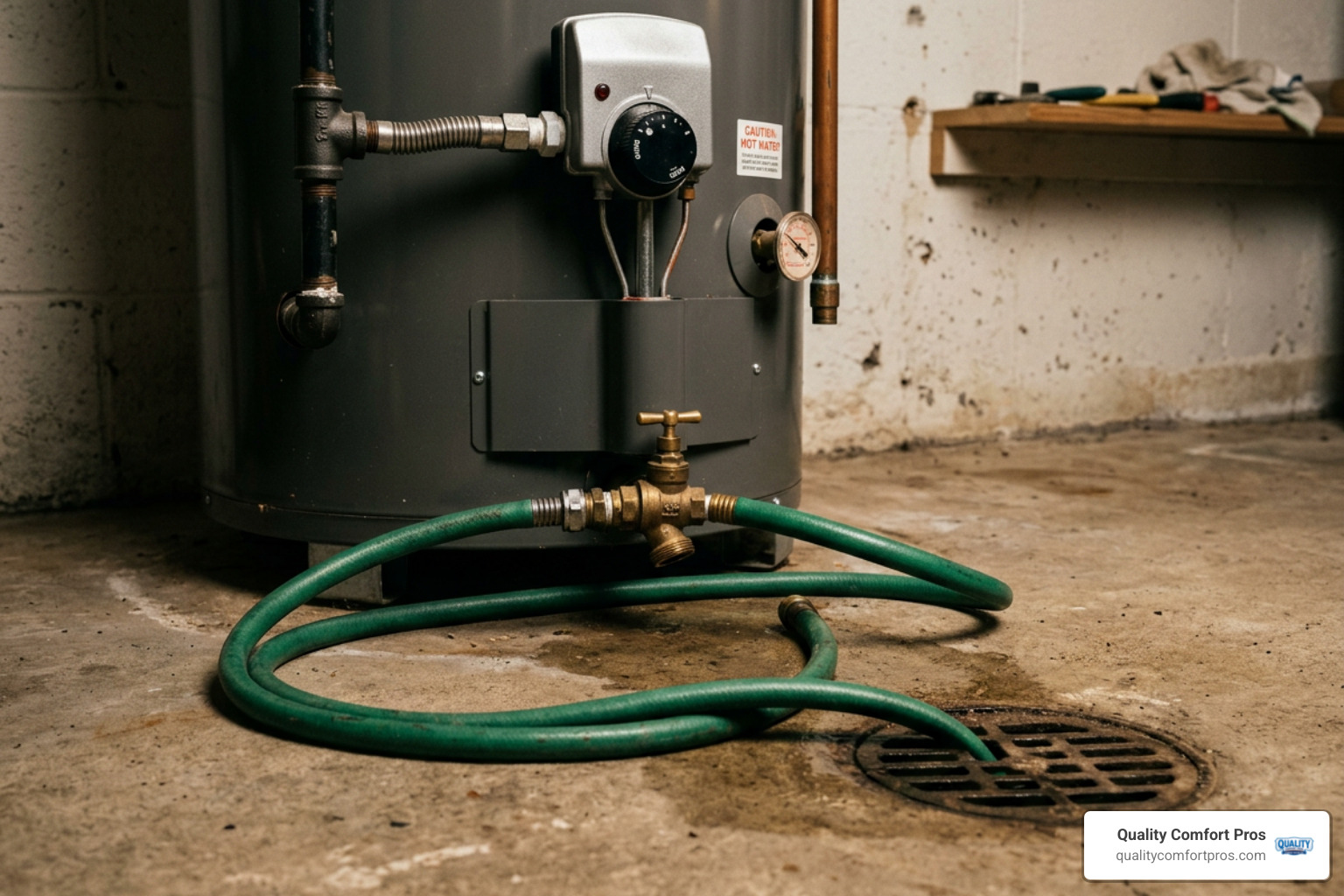
Our plumber performs tank flushing and drainage because the work involves shutting down the heating source, managing hot pressurized water, and confirming that the tank refills safely. Minerals such as calcium carbonate can settle at the bottom of the tank and form an insulating layer between the heat source and the water. Professional flushing removes sediment while reducing the risk of leaks, valve damage, and electrical or gas-related problems.
Our Plumber Inspects or Replaces the Anode Rod
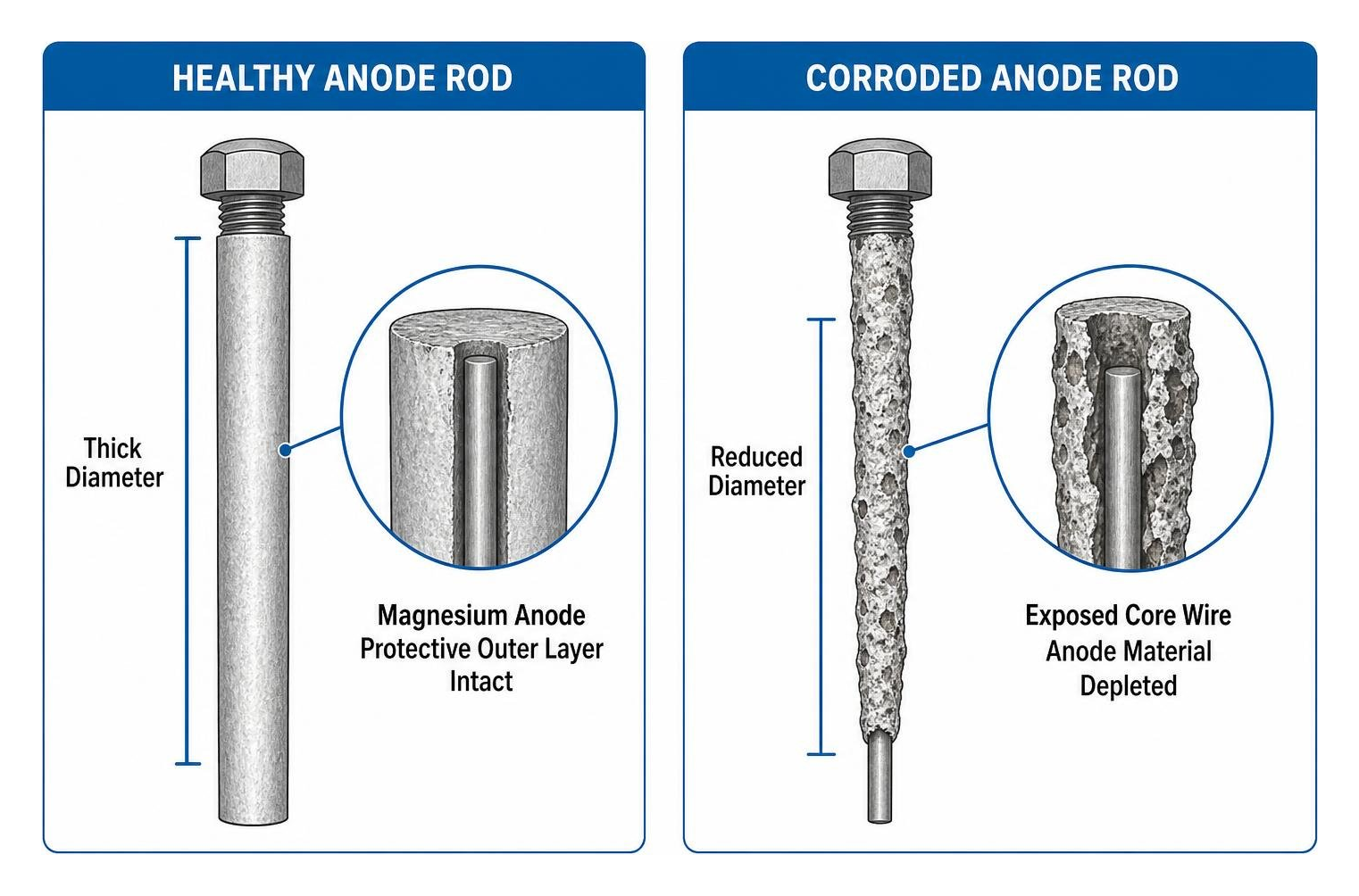
Our plumber inspects the sacrificial anode rod because removal can require specialized tools, controlled drainage, and enough overhead clearance to extract the rod safely. The rod is commonly made from magnesium, aluminum, or zinc and corrodes in place of the tank lining to help protect the steel tank. When the rod is heavily depleted or its core wire is exposed, a technician can recommend and install the appropriate replacement.
Our Plumber Tests the Temperature and Pressure Relief Valve
Our plumber tests the temperature and pressure relief valve because it is a critical safety device that releases water if temperature or pressure reaches an unsafe level. A seized, leaking, or damaged valve can affect the water heater’s ability to relieve excess pressure. Professional testing confirms proper discharge, closing action, and drainage conditions, and a technician can complete a replacement when necessary using our pressure valve guide.
Our Plumber Handles Pilot Lights and Gas Burners
Our plumber handles any work involving the pilot light, gas burner, gas control valve, or combustion components. These parts affect ignition, fuel flow, ventilation, and safe operation, so they should not be serviced as a homeowner project. If the pilot will not stay lit, the burner produces unusual flames, or there is a gas odor, turn away from the equipment and contact a qualified professional.
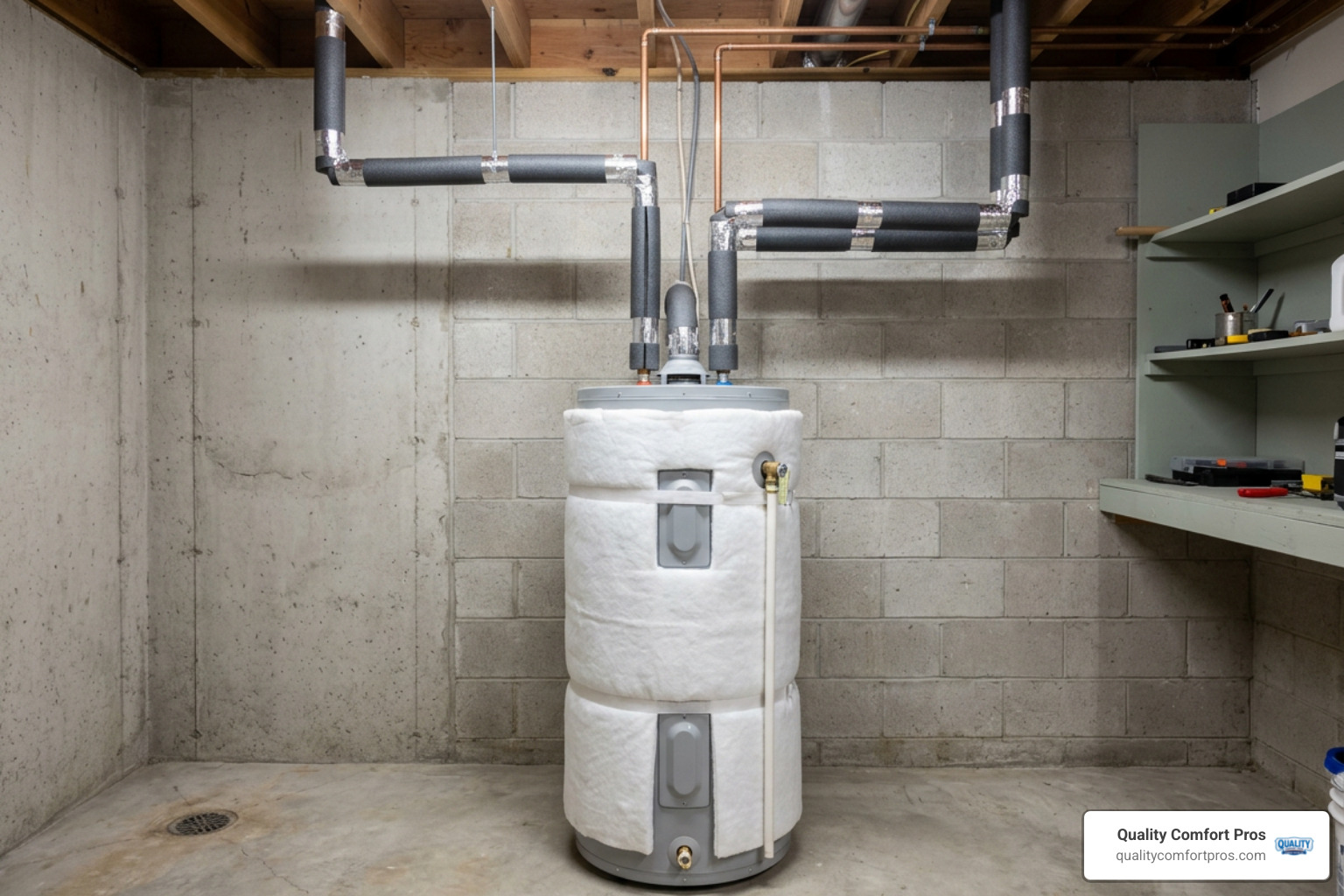
A plumber can also advise on pipe insulation or tank blankets when heat loss is a concern. Insulation can reduce standby heat loss in suitable locations, but gas units require clearances around vents, draft hoods, burner access doors, air intakes, and relief-valve discharge lines. A professional can recommend the right approach without blocking safety components.
Specialized Upkeep: Tankless Systems and Seasonal Care
Modern high-efficiency tankless water heaters require a different maintenance approach from conventional storage tanks. Their compact heat exchangers can collect mineral scale in narrow passages, which can restrict water flow and trigger fault codes. Because descaling involves isolation valves, hoses, pumps, and internal components, it is best handled by a qualified plumber.
Tankless System Descaling
A plumber can descale a tankless unit at an interval that fits the water conditions, model requirements, and system performance. During professional service, the technician isolates the unit, circulates an approved descaling solution through the heat exchanger, and inspects accessible filters and connections. This process helps remove mineral buildup while protecting the equipment and restoring reliable hot-water flow.
Professional tankless water heater maintenance also gives a technician an opportunity to evaluate sensors, burners, and electronic controls. Those components affect safe operation and should not be adjusted as a homeowner project. If the unit displays an error code or delivers inconsistent hot water, scheduling service is the safest next step.
Preventing Winter Freezes and Diagnosing System Leaks
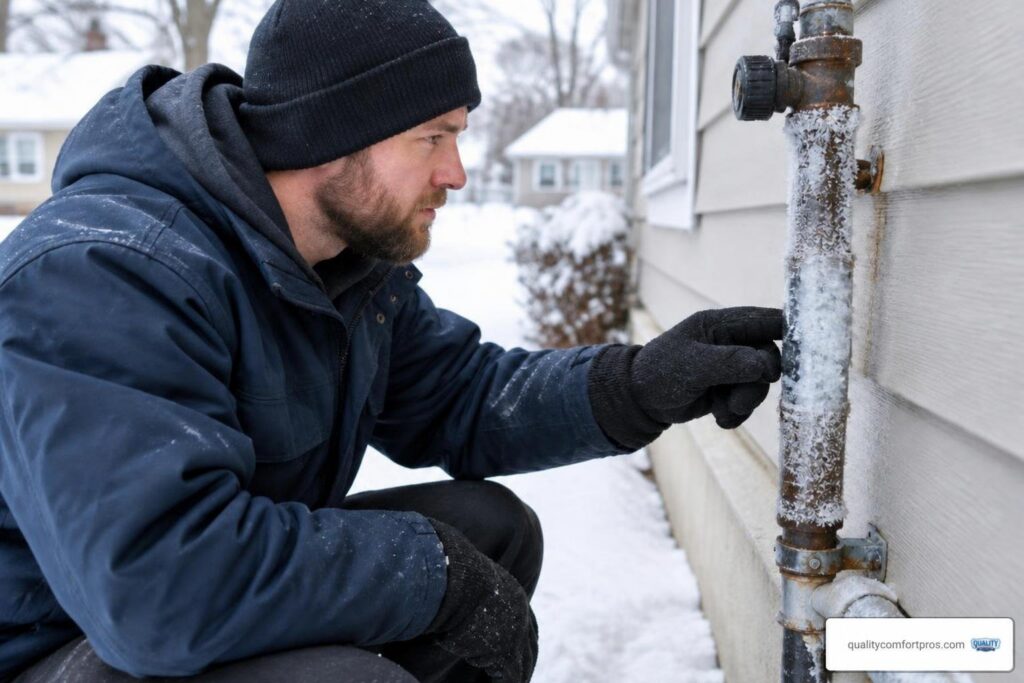
Cold Northern Michigan weather can place additional stress on exposed plumbing, vent terminations, and water-heating equipment. Homeowners can keep surrounding areas clear and report frost, moisture, or unusual operation, but a professional should diagnose frozen components or pressure concerns. Early service can help prevent small concerns from becoming water damage or an unexpected loss of hot water.
Understanding why water heaters leak can help homeowners recognize when prompt service is needed. Likewise, winter water heater noises can signal sediment or thermal-expansion concerns that warrant inspection. A plumber can identify the cause and recommend the appropriate repair or maintenance service.
Knowing When to Repair vs. Replace Your Water Heater
Even with consistent upkeep, every water-heating system eventually reaches the end of its useful service life. Recognizing the difference between a repairable component problem and structural tank failure can help prevent emergency water damage. A professional inspection can identify the cause and explain whether maintenance, repair, or replacement is the appropriate next step.
Reviewing repair or replacement options with a plumber helps homeowners make an informed decision before a tank failure occurs. Age, condition, hot-water performance, and visible corrosion are all relevant factors. A technician can also evaluate whether a newer, properly sized system would better fit the home’s needs.
Signs of Failing Components vs. Internal Tank Corrosion
Many water heater concerns can be repaired without replacing the entire unit. Heating elements, thermostats, drain valves, thermocouples, and temperature-and-pressure relief valves are individual components that a qualified professional can often replace. However, a leaking tank seam or widespread internal corrosion usually indicates that replacement is necessary.
Rust-colored hot water, pooling water at the tank base, severe exterior rust, and declining hot-water output can all warrant a service visit. Loud banging that continues after professional maintenance may also indicate substantial sediment or internal deterioration. A plumber can distinguish these warning signs from smaller connection or component issues.
A Recent Service Call in Petoskey
A homeowner near downtown Petoskey called after noticing that their water heater took nearly twice as long to produce hot water as it used to. Our technician found heavy sediment buildup inside an original tank that was more than 14 years old. We installed a new, properly sized unit and confirmed full hot-water recovery before leaving.
Professional Service and Upgrades
If a water heater is approaching the end of its service life, continuing to replace parts may not be the best long-term option. Modern high-efficiency systems, including hybrid heat-pump water heaters, can use less energy than older models and may qualify for available utility programs. A plumber can explain suitable options based on the home’s hot-water needs, installation conditions, and existing equipment.
Frequently Asked Questions About Water Heater Upkeep
How often should I flush my water heater?
A storage-tank water heater commonly needs professional flushing about once a year, although water conditions and manufacturer guidance can affect the schedule. Homes with hard water may need more frequent attention because minerals can accumulate faster. A plumber can recommend a service interval after inspecting the tank and local water conditions.
What is the recommended water heater temperature setting?
For many households, 120 degrees Fahrenheit balances comfort with lower scald-burn risk. Check the owner’s manual before changing an accessible exterior dial, since controls vary by model. If adjustment requires removing an access panel or working around electrical components, contact a professional.
How do I know if my sacrificial anode rod needs replacement?
An anode rod can become depleted as it protects the steel tank from corrosion. Warning signs may include heavy scale, exposed core wire, or a rod that has worn substantially thinner than its original size. Because inspection and replacement can require controlled drainage and specialized tools, a plumber should perform this service.
What should I do if my water heater is leaking?
First, look for visible moisture around accessible pipe connections, valves, and the base of the tank. If water is actively leaking, there is a gas odor, or water appears to be coming from the tank seam, contact a professional promptly. A technician can identify whether the source is a repairable connection or a failed tank.
How do I test the temperature and pressure relief valve?
The temperature and pressure relief valve is a critical safety component that helps release excess pressure. Testing it involves hot water, pressure, and a discharge path, so it should be handled by a qualified plumber. During maintenance, the technician can inspect its operation and recommend replacement if needed.
Can I maintain my water heater myself or should I hire a professional?
Homeowners can safely monitor an accessible temperature setting, look for moisture or corrosion, listen for unusual noises, keep the area clear, and visually check for obvious vent obstructions. A plumber should handle flushing, draining, anode-rod work, safety-valve testing, and any gas-burner or pilot-light concern. This approach helps protect the equipment while reducing avoidable safety risks.
What should I do if the pilot light goes out on a gas water heater?
Do not attempt to service a pilot light without following the manufacturer’s instructions and having the appropriate qualifications. A pilot that will not stay lit can indicate an issue with the gas control, thermocouple, burner, or ventilation. Contact a qualified plumber, especially if there is any gas odor or unusual burner behavior.
What causes rumbling or popping sounds during operation?
Rumbling and popping can occur when sediment settles near the bottom of a storage tank. Water heated beneath that sediment can create small steam pockets and audible noise. A professional flush and inspection can determine whether sediment is the cause and whether additional service is needed.
How much does it cost to service a water heater?
Water heater service needs vary based on the system type, condition, and work required. A technician can inspect the unit and explain the recommended maintenance or repair before work begins. This helps homeowners understand the condition of the equipment and choose an appropriate next step.
How do I know if my water heater needs to be replaced?
Replacement may be appropriate when a tank has a seam leak, widespread corrosion, unreliable hot-water recovery, or repeated performance problems. The unit’s age and condition also matter, especially when several components need attention. A professional evaluation can confirm whether repair or replacement is the safer long-term choice.
Conclusion
Water heater maintenance can help protect hot-water comfort, reduce avoidable plumbing problems, and support a longer service life for the equipment. Homeowners can watch for moisture, corrosion, unusual sounds, and obvious vent concerns while keeping the area around the unit clear. For drainage, safety-valve, anode-rod, or gas-burner work, a licensed plumber provides the safer solution.
At Quality Comfort Pros, our family-owned team has provided plumbing and heating solutions for homeowners in Gaylord, MI, and Northern Michigan since 1997. Whether the water heater needs maintenance, repair, or replacement, our experienced technicians service major makes and models with a focus on reliable hot-water performance. Contact our team to schedule professional water heater service.